Categories
Desserts Recipes

Rhubarb Crumble

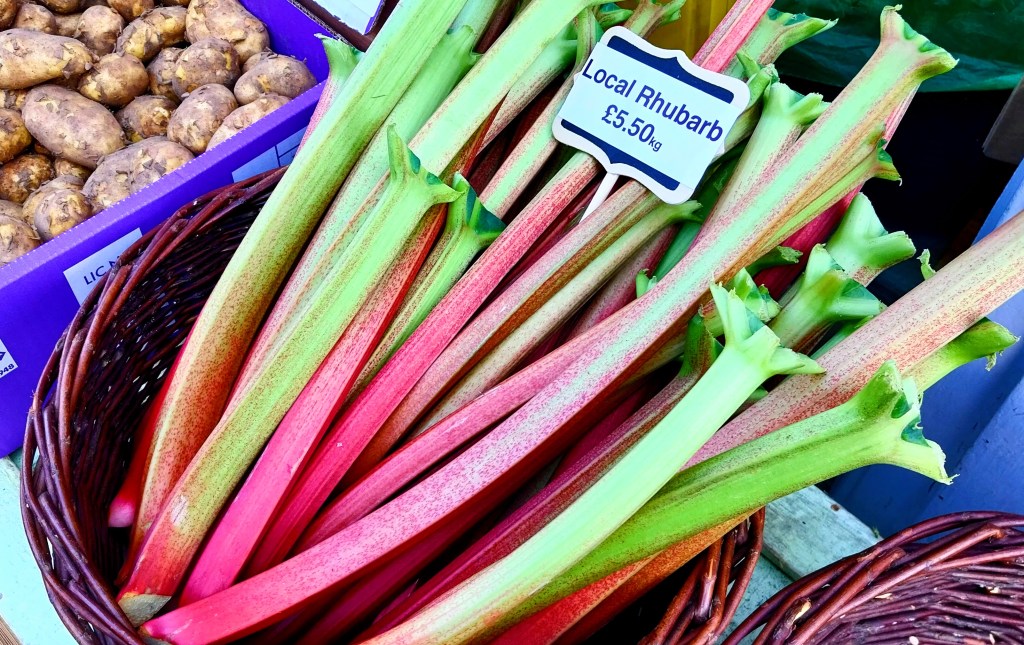
In recent weeks our local market stalls have become brightened by the appearance of a sure sign of spring – stalks of rhubarb cut fresh from the field. I love the way the red, green and pink hues blend and intertwine as if in a watercolour painting.
There are various dishes that can be made with rhubarb,  but in my view the simplest and least complicated is still the best way to enjoy its fresh, juicy, tangy and slightly tart taste. This crumble requires minimal extra ingredients and is relatively straightforward to make.

Servings

6 – 8 portions.

Timings

10 mins to prepare the fruit in a microwave, then 25 mins to bake the crumble in a fan oven at 180C.

You Will Need:

  • 500g fresh rhubarb
  • 1tbsp dark muscovado sugar
  • 225g plain flour
  • 110 g butter
  • 110g caster sugar

Method

  1. Chop the rhubarb stalks into chunks. Place in a bowl and sprinkle over the dark muscovado sugar. Microwave on full power, stirring once or twice to combine, until softened, with still a few chunks visible. Scrape the juicy, sweetened fruit into an ovenproof bowl.
  2. Turn on a fan oven to heat to 180C.
  3. Whizz the flour, butter and caster sugar together in a food processor with blade fitted, until combined and with the texture of breadcrumbs. Sprinkle the crumble over the rhubarb so that the fruit is fully covered.
  4. Place in the oven, when it has reached 180C, for 25 mins. Remove and serve in bowls.

Customise it!

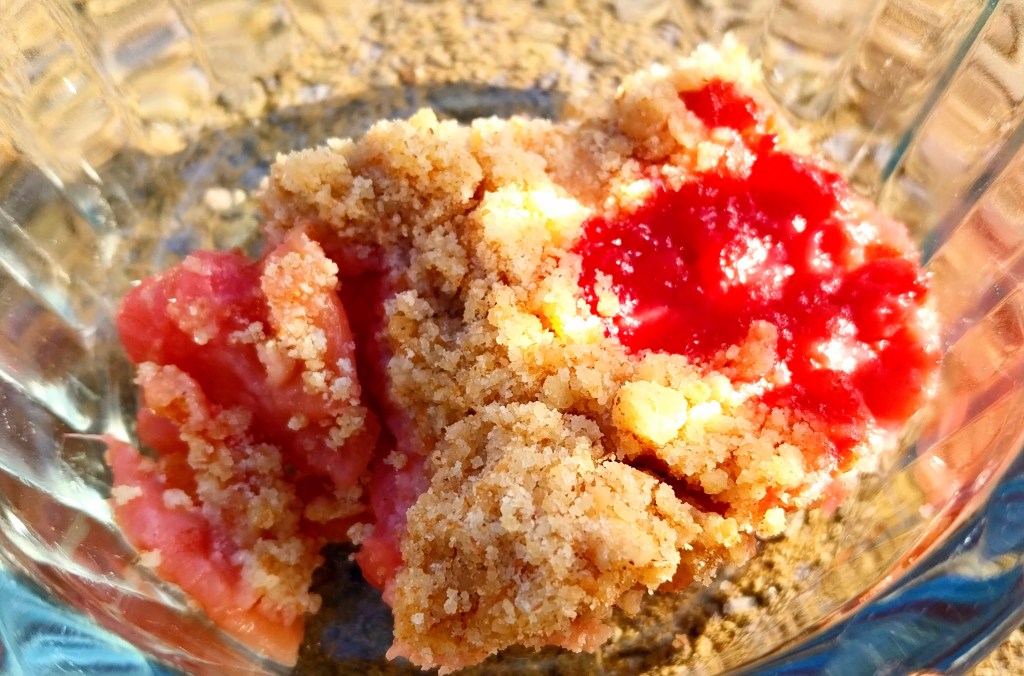
Serve warm from the oven with hot custard poured over – see my photo below.
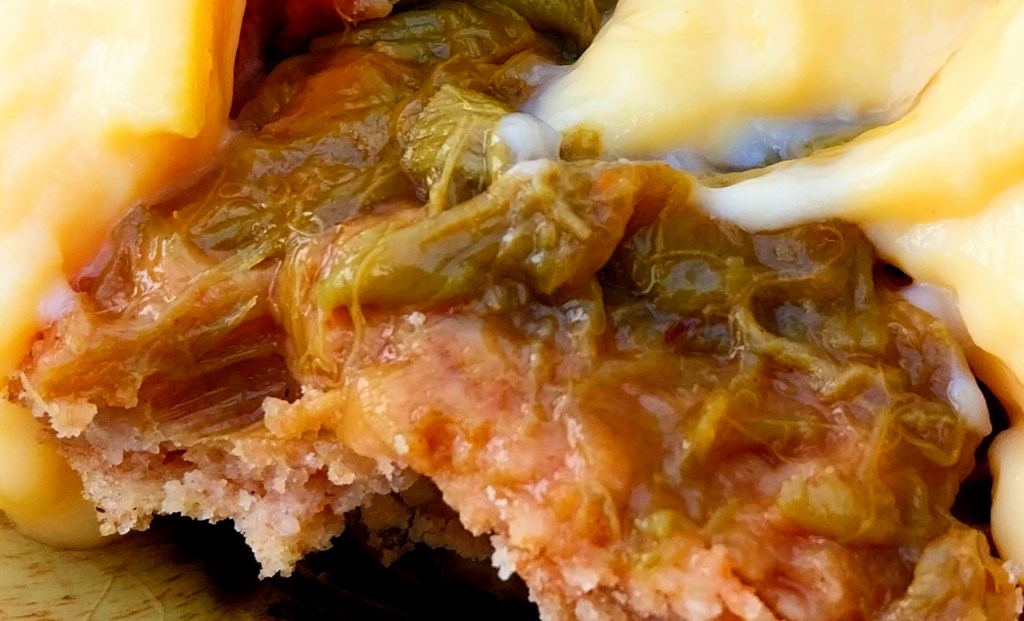
It’s also delicious cold with custard that has cooled and set, or with a few spoonfuls of natural yoghurt alongside.
Another colourful sign of spring is the World Snooker Championships taking place this time of year, at the Crucible Theatre in Sheffield. As in previous years, I have made the pilgrimage to Sheffield this week, along with other fans of the game. I was lucky enough to see many of the big names play, including Judd Trump, Luca Brecel and the amazingly talented young Chinese star, Zhao Xintong.

On the train up, I just had to play some of my favourite tracks from those famous sons of Sheffield, the Arctic Monkeys, including this one from the Humbug album: Dance Little Liar.

Categories
Blog Desserts

Stonehenge in the Spring

The clocks spring forward one hour this weekend into British Summer Time, and we have just had the Spring Equinox. Yes, it’s full speed ahead now towards sunshine, holidays and barbecues.

Time to bring the motorhome out of winterisation, therefore, and head off down to the west country. It’s turned out to be a pleasant few days experiencing the very old, and eating the very sweet!

I’ll start with a visit to Stonehenge: somewhere I always enjoy going, whatever time of year. The last time I was there it was just before the winter solstice, with a brisk wind blowing and moody skies above (see my post here). In contrast, my photo above shows the Stones on a calm and sunny Spring day this past week.

We still do not fully know why our Neolithic ancestors transported these huge rocks, sometimes hundreds of miles, and positioned them here, carefully aligned to celebrate the movements of the Earth and its connection with the heavens above. The Stones have stood here for nearly 5,000 years, the toil and sacrifice of prehistoric man bringing pleasure and inspiration to many subsequent generations.

It is remarkable that this impressive feat of celestial engineering was achieved with only the most rudimentary tools and materials. Let’s see Artificial Intelligence do that, eh? 🙂

Every day, people travel here in their droves from all corners of the globe, to walk around, taking in the sight and its surroundings, and gaze in wonder. It is a World Heritage Site, and everyone is welcome, whatever religion, nationality or creed.

There is certainly something mysteriously compelling about being in the presence of the Stones. Perhaps their longevity is a modern day reminder that, whatever struggles there are in the world, fundamental values of indomitable spirit, endeavour, strong will and respect for others will always endure.

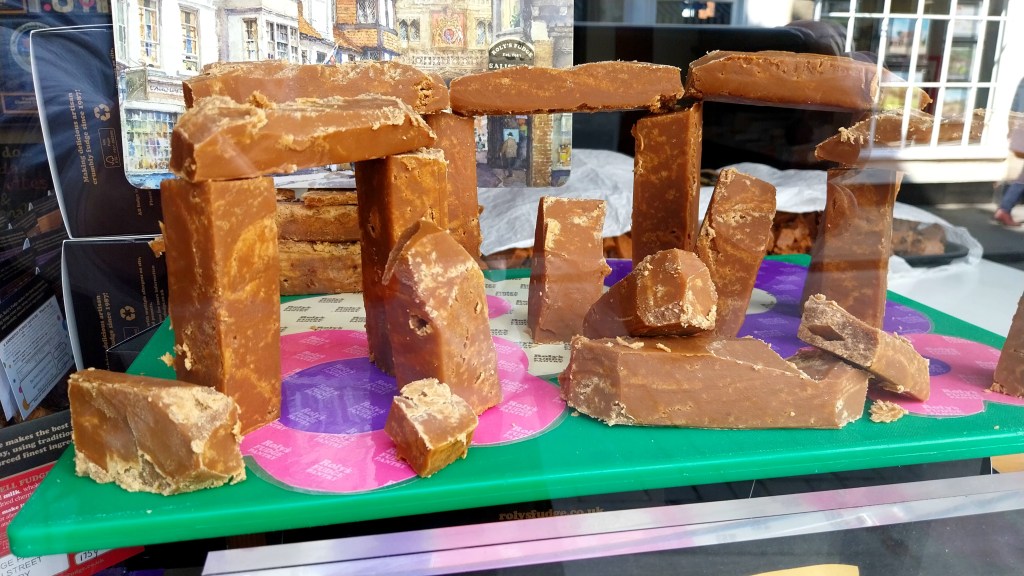
Inspiration comes in many forms, and this creation by Roly’s Fudge Shop, in nearby Salisbury, made me chuckle. Ladies and Gentlemen, I give you what Roly calls Fudgehenge.

Roly’s can be found near the entrance to Salisbury’s Cathedral Close, providing the perfect opportunity down the years for weary pilgrims to top up those flagging energy levels. The Cathedral itself is gearing up for the Easter season, and was looking splendid in the Spring sunshine.

Another fave refuelling station in these parts is the Boston Tea Party. I first came across BTP in Bristol a few years ago, and they now have a small number of cafes dotted around select west country towns. They do great coffee and choc brownies, so I can recommend a visit if you ever get the chance.

Well, that’s enough of a sugar rush for this week. I shall have to get back down the Farm Shop when I get home and make something a little healthier next week to compensate, haha.

Here’s a track from a legendary band who hail from the west country, as you can tell from singer Andy Partridge’s accent. this is XTC from the Drums and Wires album, with Helicopter.

Categories
Mains Recipes

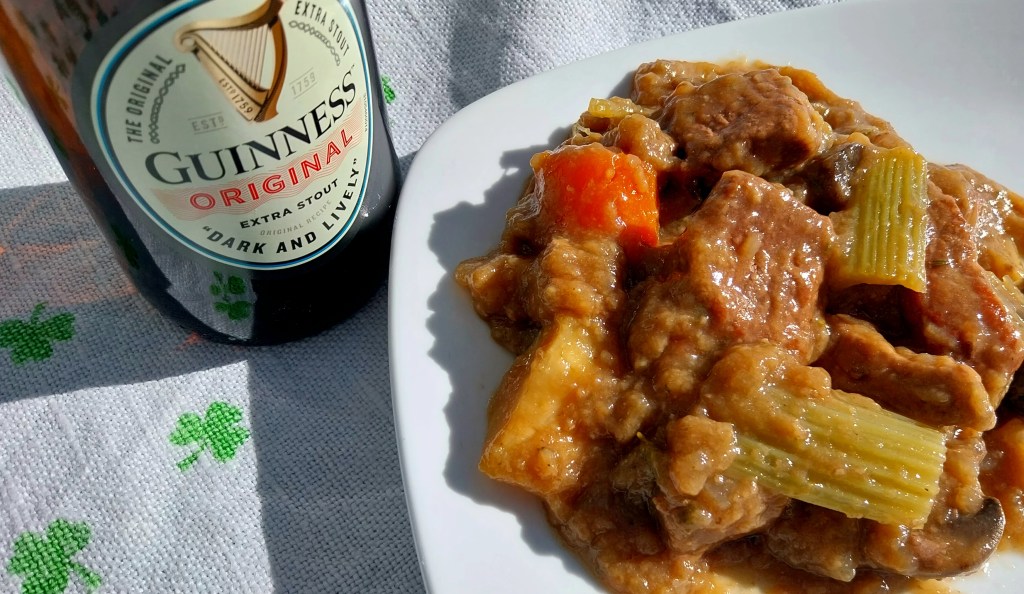
Slow Cooked Beef in Guinness

They say drinking a pint of Guinness is a little like attempting to solve a crossword: it always feels good to get One Down 🙂

Forever keen to promote our wellbeing here on A Different Kitchen, I’ve chosen to capture that taste in edible form this St. Patrick’s Day weekend.

This is an old family recipe that never fails: chunks of braising steak tenderised through slow cooking for up to 4 hours with some seasonal veg, in an entire bottle of the black stuff. With a tight-fitting lid, all that taste and goodness is sealed in, making for a gravy that is rich, dark, with a slightly bitter tang and the distinctive taste of Guinness.

Ready to give your wellbeing a dropkick? Cook on.

Servings

Enough here for at least 6 servings.

Timings

30 mins to prepare, then 4 hours in the slow cooker.

You Will Need:

  • 700g braising steak
  • 2 – 3 tbsp plain flour
  • sea salt and black pepper
  • 1 tbsp oil
  • 1 tbsp butter
  • 2 carrots
  • 1 parsnip
  • 1 onion
  • 3 celery sticks
  • 8 – 9 chestnut mushrooms
  • 500 ml beef stock
  • 500 ml Guinness
  • a handful of fresh or dried herbs
  • 1 tbsp tomato passata
  • 1 tbsp Dijon mustard
  • 1 tbsp light brown sugar
  • 2 tsp cornflour
  • 2 tsp cold tap water

Method

  1. Switch on the electric slow cooker at the high setting.
  2. Chop the beef into chunks if not already done. Sprinkle the flour across the base of a shallow dish, and twist in some sea salt and black pepper. Roll the beef chunks in the seasoned flour until covered on all sides.
  3. Heat the oil and butter in a large frying pan. Place the chunks of beef in the pan and let fry on the underside. After a few minutes, turn them over and fry again, until the chunks are lightly browned and sealed on all sides. Transfer to the slow cooker bowl.
  4. Chop the onion, carrots, celery and parsnip into chunks and tip into the warm frying pan. Halve the mushrooms (or quarter if large) and add in also. Let the veg come to a sizzle and turn over a few times with a spatula until lightly browned and starting to soften. Scrape into the slow cooker bowl on top of the beef.
  5. Add the stock, Guinness, passata, mustard and sugar to the warm pan and gradually bring to the boil, stirring all the time. Tear in the herbs and, when just starting to bubble, add in to the slow cooker bowl.
  6. Get your spatula into the slow cooker bowl and mix up all the contents. Put the lid on and leave on the high setting for around 30 mins. Then turn it down to the medium setting for another 3 and a half hours.
  7. When the cooking is done, mix up a roux in a ramekin, using the cornflour and tap water, until the cornflour is totally dissolved. Pour in to the slow cooker bowl and stir. The beefy, Guinness gravy will start to thicken. Repeat this stage as necessary until the gravy reaches your preferred consistency – you may need to do it 2 or 3 times.
  8. Serve with roast potatoes or boiled rice.

Customise It!

If you don’t have access to an electric slow cooker, you can still cook this in a casserole dish in the oven – start it off at 180C and turn it down to 140C at stage 6 above.

For the herbs, I had fresh thyme, sage and rosemary, but dried mixed herbs will do the job.

For St. Patrick’s Day I am choosing a favourite Irish track for the ADK Playlist. There are so many that I could choose from: The Undertones, Stiff Little Fingers, U2, The Corrs, Ash, Sinead O’Connor to name a few. I’ve settled on this one – The Divine Comedy, aka Neil Hannon from Enniskillen in County Fermanagh, with Love What You Do.

Categories
Mains Recipes

Vietnamese Rice Soldiers

I first came across Vietnamese Rice Soldiers on my travels to Australia, where there is a varied range of Asian cuisine and the quality is high.

Initially I thought they were uncooked sausages when I saw them in a deli takeaway. I soon learned that in fact they contain a mix of finely chopped protein, veg, herbs or spices, with rice or noodles, all wrapped up in a piece of transparent, edible rice paper. They are eaten cold as finger food, with a sauce for dipping, and usually accompanied by a stir fry side or noodles.

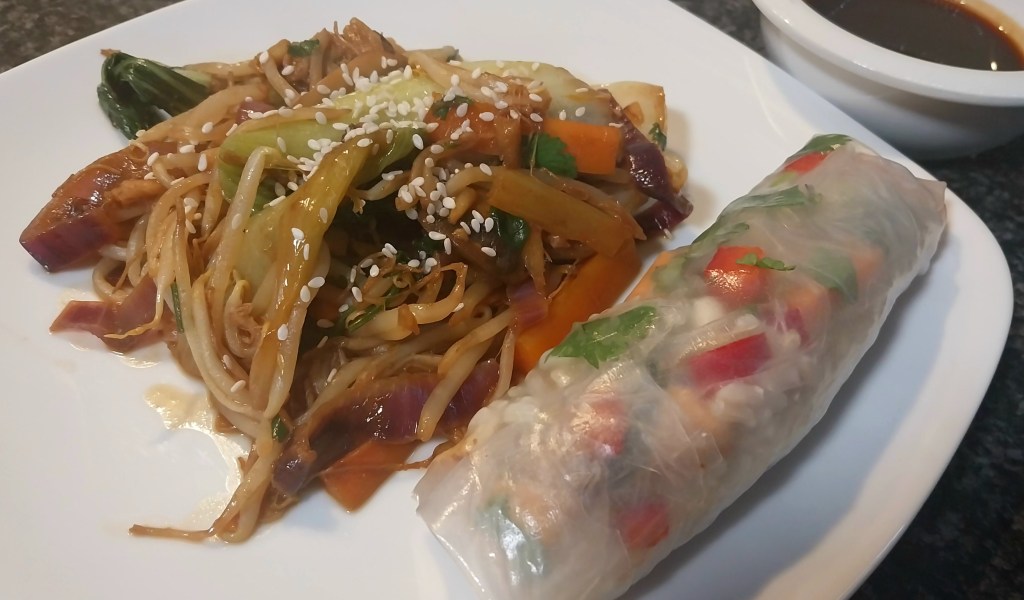
I sampled them in a restaurant in Little Vietnam, the name given locally to Victoria Street in Melbourne, and immediately became a fan! I brought home a pack of rice papers and am now able to make my own at home. Here is a photo of my latest batch:

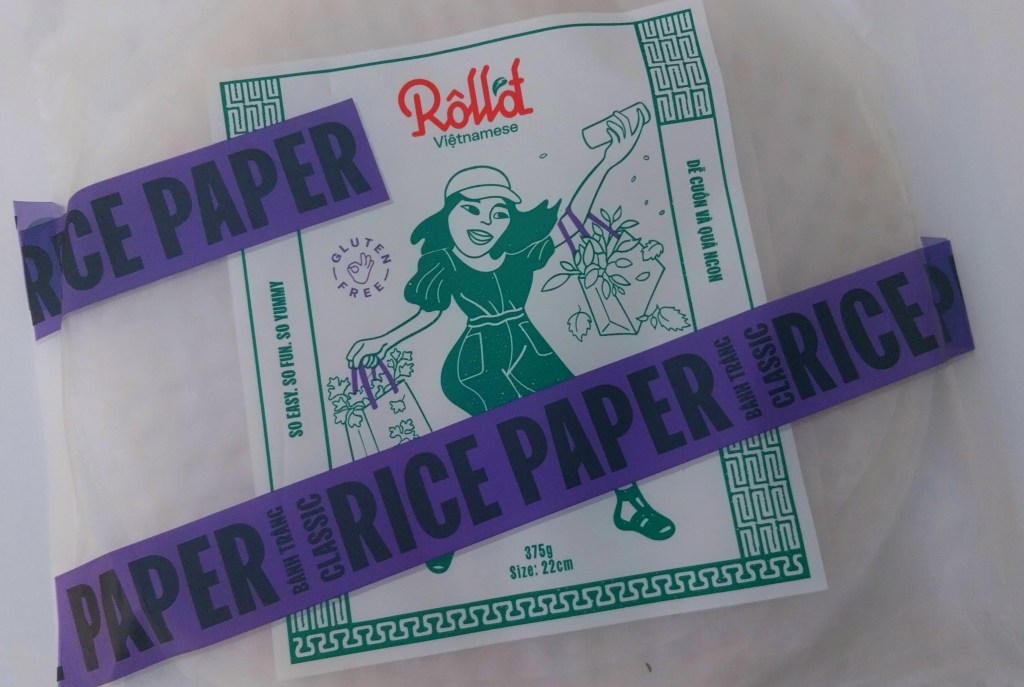
A pack of rice papers is essential if you want to give these a try. I bought mine (below) in Aussie supermarket chain, Coles. Availability will depend on where you are in the world, but in the UK I have seen some smaller packs in M&S. The best bet may be a specialist Asian food store or online.

They are made from simply flour, salt and water, requiring just some fresh, lukewarm water to rehydrate and make them soft and flexible.

Servings

This made 8 soldiers. At 2 per serving, that makes 4 adult portions.

Timings

30 mins to chop and prepare the filling. Rolling up takes seconds. The soldiers can be made up in advance and kept in the fridge for a day or two.

You Will Need:

  • 8 circular rice papers
  • a shallow dish filled half with just boiled water, and half with water cold from the tap (so that overall the water is lukewarm, around 50C)

    For the filling:
  • 120g boiled rice, cooled
  • 1 marinaded chicken breast, cooled
  • 1 carrot
  • around 10cm length of cucumber
  • 2 – 3 scallions/spring onions
  • half a red pepper
  • small bunch of coriander/cilantro

    For the dipping sauce
  • 2 tbsp chilli paste
  • 1 tbsp each of soya sauce, rice vinegar, honey and orange juice
  • a good squidge of tomato passata.

Method

  1. Chop the carrot and cucumber into tiny little batons. Chop the other filling ingredients into small pieces and lay everything out on a board.
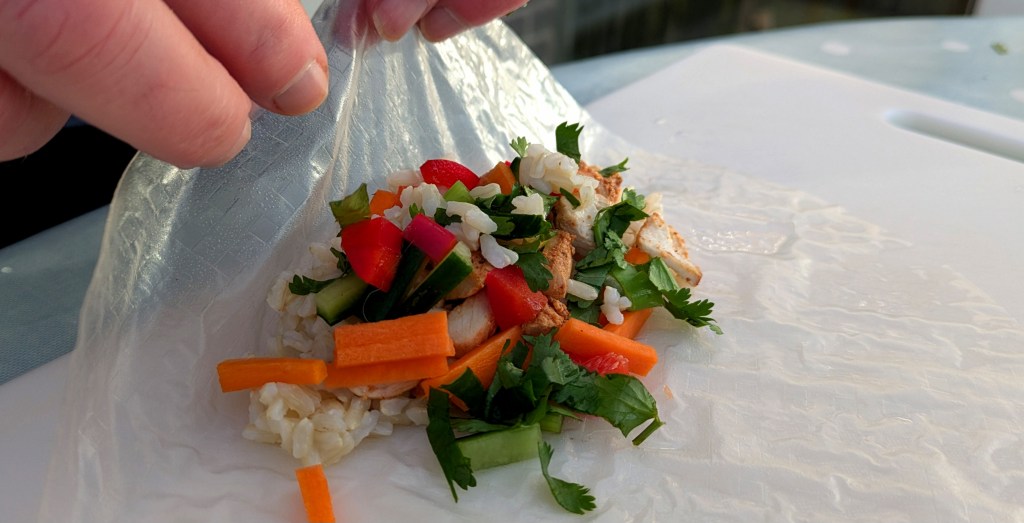
  2. Take one of the rice papers and submerge it in the lukewarm water. It will begin to soften and take on a slightly, sticky, stretchy feel. Lay it down on a chopping board and put a line of rice across the middle.
  3. Lay a line of chicken pieces on top of the rice, then follow with the carrot, cucumber, scallions, coriander and pepper. Use a little judgment here – you want the soldier to be well-filled but not overstacked.
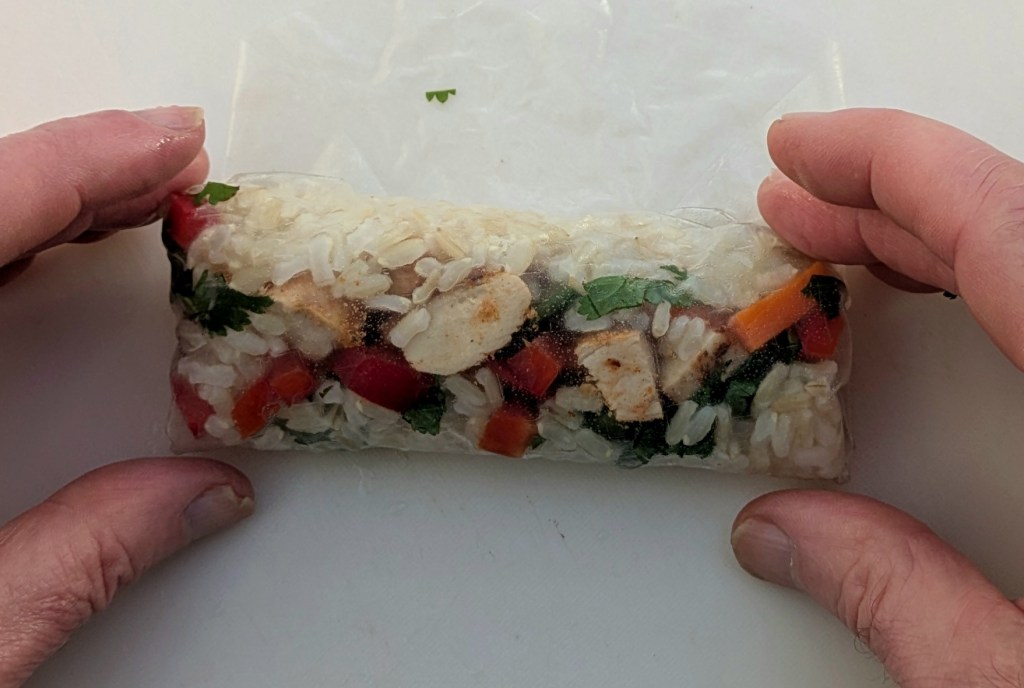
  4. Lift the flap of the rice paper nearest you and fold over the filling. Tuck in both sides, then roll the whole soldier forward until you have a sealed parcel. Check out my photos below, showing the rolling up in action! Set aside on a tray.
  5. Carry on until all the soldiers are made up.
  6. Put all the dipping sauce ingredients in a clean, screw top jar with lid on. Give it a good shake to combine, then pour into a serving bowl. The soldiers can be dipped into the sauce, or alternatively, once you’ve bitten off the top, spoon it on and let it drizzle down to mingle with the filling. Yum!

Customise It!

Vary the protein to include small pieces of fish, or use chopped cashews if you want to go vegan. A sprinkle of sesame seeds would be an excellent idea. Swap in fine, vermicelli noodles or bean shoots for the rice. Finely chopped root ginger, corn, celery are also options. As always on A Different Kitchen, use your imagination and go with the ingredients you like.

I served these with a side of stir fried bean shoots, pak choi, root ginger, garlic, red onion, carrot and mushroom topped with a sprinkling of sesame seeds (as shown in my main photo at the top of the post). For the stir fry sauce I simply made up more of the dipping sauce and poured that in. Hey – keep things simple!

It’s Superbowl weekend once more, and I am looking forward to staying up late this Sunday to watch the game. I can’t see any other outcome than the Kansas City Chiefs winning again, as they seem to be invincible when it comes to play-off season. Apologies to any Philly Eagles fans, but who knows, maybe you will surprise me?

Here’s a piece of classic Americana – Tom Petty with Running Down a Dream. Enjoy the Superbowl, everybody.

Categories
Blog

Around the World in 80(ish) Plates

As 2024 draws to a close, I’ve been looking back at some of the many dishes enjoyed on my travels over the past 12 months. I’ve reached some far-flung destinations over that period, as well as some places closer to home, in a bid to savour some of the best food and drink the cuisines of the world have to offer. It’s a tough job, I know, but hey, someone has to do it 🙂 .

I’ll start with my main photo above, taken in Satay by the Bay in Singapore, where I visited in March. They served up a plate of chicken and beef skewers grilled over hot coals, along with a pot of peanutty satay sauce for dipping. Perfect fast food.

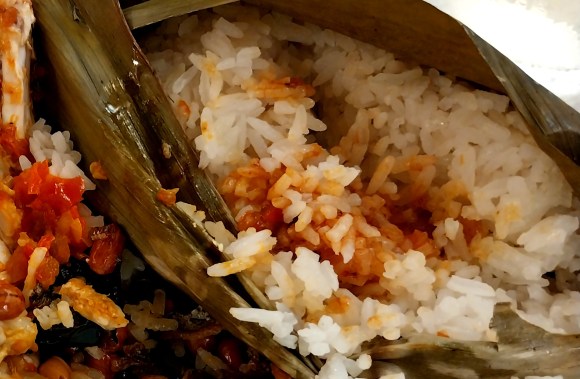
Kampong Gelam is the heartland of Singapore’s Malaysian community. The traditional Malay dish, Nasi Lemak (shown above), was excellent – a pandan leaf parcel is unwrapped to reveal steamed, soft and fluffy jasmine-scented and coconut-flavoured rice.

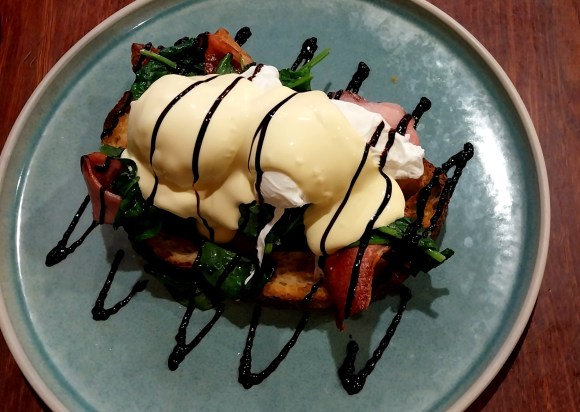
The breakfast shown above was a sight for sore eyes on arrival early one morning off a plane, very hungry, in Sydney, Australia : eggs benedict served with spinach and bacon on sourdough toast, with a balsamic drizzle.

I had wanted to try an Acai bowl for some time, and managed to do so at the Drip Bar in Melbourne, Australia. This purply-chocolate coloured acai berry smoothie is topped with fresh banana, crushed cacao, coconut, ground almonds, granola and a very generous (ahem) drizzle of peanut butter.

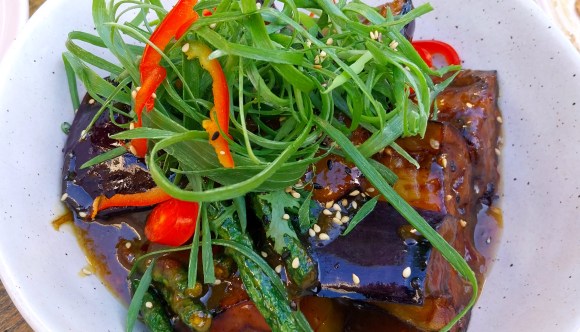
The Sunshine Coast in Queensland, Australia, saw my introduction to Asian Fusion – bringing together the sights and tastes from the culinary traditions of India, Thailand, Korea, Indonesia, China and Japan. Amongst a tasty and adventurous buffet, my fave was this Miso Caramel Eggplant shown above – chunks of roasted aubergine coated in a sticky sauce, topped with spliced snake beans, coriander and sesame.

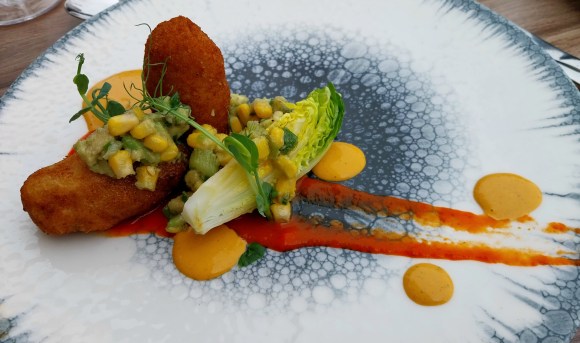
The month of June saw a trip to France, where they do food rather well. One highlight of several is shown above – an Entree of cod and yuzu croquette, served with baby gem lettuce, and a sweetcorn and avocado salsa. I liked the Gallic flair with which the dish was presented, resembling artistic brush strokes of red pepper aioli and lemony yuzu.

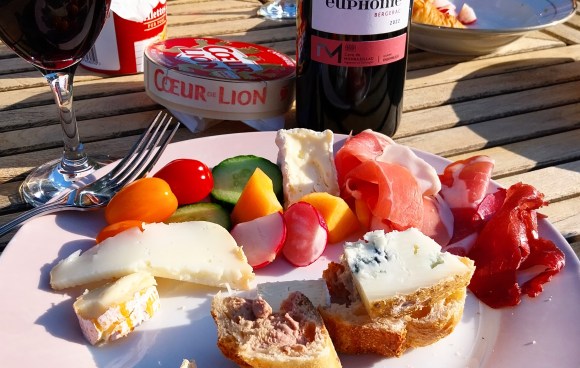
In summertime in France, it is always a simple pleasure to enjoy an evening al fresco buffet with purchases from the local fromagerie and charcuterie (see above) – along with a bottle of the the local vin rouge, of course.

A July trip to Belfast provided the opportunity to visit St. George’s Market to sample the best of traditional Ulster food. A breakfast of toasted soda farl, here filled with egg, bacon, roasted cherry tomatoes and avocado, certainly satisfied the appetite.

The month of September was spent motorhoming around Cornwall in England’s south-west, sampling numerous pasties like the one shown below. This one is named Veggie Power, and has the traditional filling of steak and potato replaced by mushroom and butternut squash.

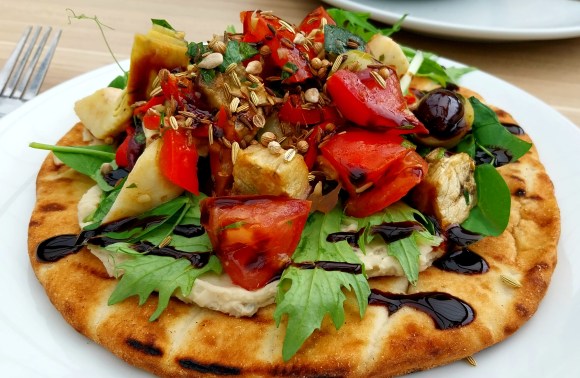
I found my visit to Cornwall’s Eden Project very inspiring, and an opportunity to learn more about sustainable food production. All the tea, coffee and chocolate now making its way into the ADK kitchen is certified Fair Trade. The dishes on the Eden menu are made from local ingredients, such as this griddled flatbread shown above, topped with white bean paste, leaves, marinated roasted vegetables, tomatoes, balsamic drizzle, herbs and toasted seeds.

Revisiting all of these meals has now made me hungry again, so I will leave it there! Thanks to everyone who has followed along, read, liked and/or commented in 2024. My travels, along with the home bakes and recipes, will be continuing into 2025 here, on Instagram and on X.

Happy New Year, everyone.

Categories
Recipes Sides

Semmelknödel

‘Tis the season of roast dinner feasts approaching, so why not liven up your dinner plates this winter with some traditional Austrian bread dumplings?

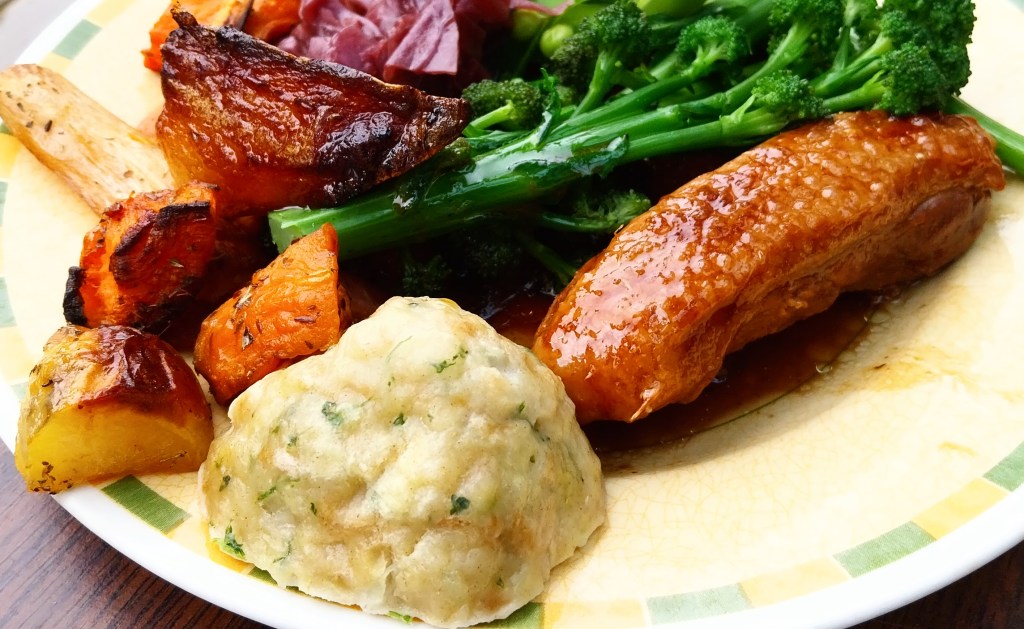
We were treated to a delicious lunch recently, prepared by our good friend Eva, an excellent cook specialising in Austrian cuisine. Home-made dumplings, or Semmelknödel, were served as an accompaniment to a tender roast duck breast, with roast vegetables, braised red cabbage and greens. You can see my filled plate in the main photo at the top of the post.

I especially enjoyed the dumplings – they have a light, succulent consistency with delicate herb flavouring, and absorb the gravy juices from the meat. I’m pleased to say that Eva has agreed to share this old family recipe. Many thanks, Eva and Happy Christmas!

Servings

Makes 18 dumplings.

Timings

15 mins to prepare the mixture, then 1 hour for it to soak. Then about another 30 mins to shape and boil the dumplings.

You Will Need:

  • 500g of dried white bread, which has to be cut into small 1-1.5cm cubes
  • 4 large onions
  • 2 eggs
  • 500-750ml of milk
  • Flour
  • 120-150g of fresh chopped parsley

Method

  1. Put all the bread cube pieces into a very large bowl.
  2. Chop the onions and fry until slightly browned, then add to the bread cubes.
  3. Add the milk, eggs and parsley, mix well together and let it stand for 1 hour so all the milk gets absorbed by the bread. Then cover with self-raising flour (you shouldn’t see any bread through the flour).
  4. Work the flour into the mixture, it should feel firm and not too soggy. You can adjust with either more milk or flour if needed.
  5. Start forming small dumplings (the mixture should make roughly 18 dumplings). Roll each individual one in flour (this will stop them from sticking to your hands or plate) and boil them in salted water, using a large enough pot to give them space for surfacing, after about 20 minutes of boiling.
  6. You can either eat them straight away or freeze the rest (after having been cooked) for another day! They keep very well in the freezer!

Dumplings are served with any type of roast as an alternative to rice or potatoes. They go particularly well with Gulasch.

Eva has chosen the latest track for adding to the ADK playlist, nominating this happy festive song: José Feliciano with Feliz Navidad.

Categories
Blog

Autumn Escape

Our motorhome has been back in action this week, on an autumn trip to Cranborne Chase, in England’s south-west.

The area is designated as a National Landscape, which is the new official name given to what were formerly called Areas of Outstanding Natural Beauty.

The name may have changed, but the landscape certainly hasn’t – not for hundreds of years in fact. This makes it a perfect environment for long country walks across an expansive, rolling green terrain. Gentle climbs take you up high to reveal dazzling views, while paths weave their way through water meadows with clear trickling, bubbling streams past ancient mills. There aren’t many people around and it is really quite remote. Am I painting a clear enough picture here?

It is particularly special this time of year because, as everyone knows, the countryside generally looks even better with autumn colours.

My main photo at the top of the post shows Philipps House, dating from the early 19th Century. It is at the centre of the massive grounds of Dinton Park, which is fully open to public access. We had very clear skies, and from the highest points it was possible to see the spire of Salisbury Cathedral to the east.

The intricate network of footpaths and bridleways takes in some very old buildings and traditional pubs. This photo shows St. Mary’s Church in Dinton village, dating from the 12th Century.

This photo was taken on a walk through woods and across fields to Baverstock, where St. Editha’s Church is located. It has been here since the 15th Century, and provided a perfect lunchtime picnic spot.

We pitched our motorhome in a small site in the middle of some woods, and spent the week off-grid with no electric hook-up. It is just as well the skies were clear and the sun shone as, along with our gas tank, we were rather reliant on that solar panel on the roof 🙂 .

In such a remote location, with no shops anywhere around within walking distance, we planned in advance and took a week’s worth of food and drink. Home-made butternut chilli soup helped keep us warm in the evening.

Quiches made the week before and warmed up in the gas oven came in very handy – those 10k treks certainly give one an appetite!

The solar powered battery helped keep my phone charged overnight, which meant I could still listen to the David Bowie Playlist I’d downloaded to my phone from Spotify. No first world problems here, mate 🙂 .

I can’t quite believe that it in just a few months it will be 50 years since the release of Young Americans, which is probably my fave album of his. Here’s a great track from it: Right.

There is one more motorhome trip planned for 2024, so watch this space for developments.

Categories
Bakes Recipes

Panela & Cacao Nib Muffins

I’ve been keen to try out a new ingredient I discovered on my recent travels, while visiting Cornwall’s Eden Project.

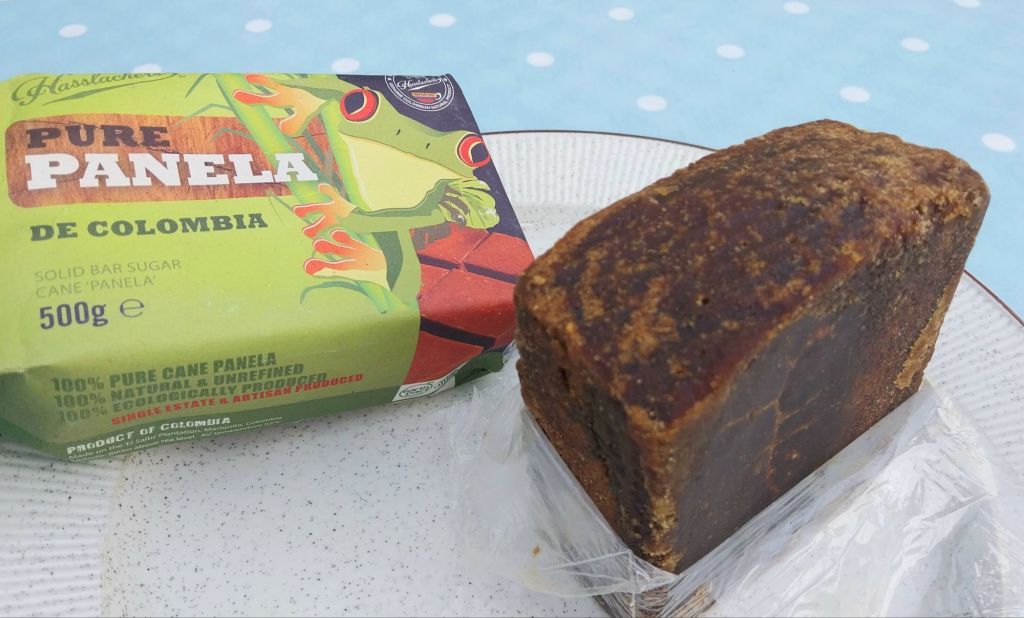
Panela is a block of totally unrefined raw sugar cane. Produced in Colombia, it retains the good nutrients and vitamins that are naturally present, but usually screened out by the refining process. It is reported therefore to be a healthier alternative to even unrefined brown sugar. Used in baking, it adds a golden colour (see my main photo above) and natural caramel, or toffee, flavour.

Panela was featured in the Eden Project’s Rainforest Biome, as a good example of organic and sustainable, small scale farming in South America. It’s available to purchase in their shop, sourced (of course) from the original producers on fair trade terms (I’ve since found that it can also be purchased via the internet).

I decided to keep the rainforest theme going in these muffins, by combining it with organic cacao nibs bought from a local refillery. Bitter, chocolatey, crunchy and naturally low in sugar, cacao nibs come with their own good mix of nutrients.

It all makes these some of the healthiest muffins I’ve featured yet on A Different Kitchen. And they’re delicious.

Servings

Makes 12 muffins.

Timings

15 mins to prepare, 25 mins to bake at 160C in a fan oven.

You Will Need:

  • 280g plain flour
  • 3 tsp baking powder
  • 1/2 tsp sea salt
  • 100g grated panela
  • 70g dried fruit
  • 1 egg
  • 150ml milk
  • 90ml rapeseed oil
  • 60g cacao nibs

Method

  1. Switch on a fan oven to 160C. Prepare a muffin tin or mould.
  2. Sieve the flour, baking powder and salt into a bowl. Stir in the dried fruit so it is evenly coated in the flour.
  3. Place another bowl on a weigh scale. Pick up the brick of panela and coarsely grate it into the bowl until you have around 100g. Add it to the flour. Originally I thought I would slice off a 100g piece, then grate it. However, the block of panela is so solid it is impenetrable by a knife!
  4. In another bowl, crack the egg and mix it with the oil and milk.
  5. When the oven has reached temperature, pour the egg mixture into the flour and combine. Spoon into the muffin tin or mould.
  6. Finally, stud the cacao nibs into the surface of the muffins, pushing them down gently so they adhere to the mixture.
  7. Place in the oven for 25 mins or until evenly browned.

Customise It!

If you are unable to source panela, then the best unrefined brown sugar you can find, such as muscovado, will do nicely. I included the soft dried fruit to complement the crunch of the cacao nibs and add interest to the texture. My choice was organic dried cranberries but you can use sultanas if you prefer.

Have you come across, or maybe even used, panela? I’ll be interested to hear in the comments.

Here’s a track from an album I’ve been rediscovering since returning from holiday. I really enjoyed The B-52s’ Cosmic Thing when it was first released, but haven’t played it in years. A few listens have reminded me how many brilliant tracks it contains. Here’s one of them: The B-52s with Roam.

Categories
Blog Desserts

Road to Nowhere

After several weeks travelling through Cornwall in our motorhome, we have finally run out of road. Yes, we have reached Land’s End, England’s most westerly point.

Out there beyond Longships Lighthouse, seen in my photo above, there is nothing but the Atlantic Ocean, stretching all the way across to the Eastern Seaboard. I waved a cheery hello to all our good friends and allies over there in Canada and the US of A 🙂 .

However, Cornish legend would have you believe that it wasn’t always just a great expanse of nothingness here. Back in the days of King Arthur (yes, him again), there was a kingdom known as Lyonesse that extended off the coast. That was until one particularly stormy night, when the city became engulfed by the waves, never to be seen again.

Lyonesse was reputed to have 140 churches. The story goes that, if you stand here surrounded by ocean on all sides, and listen carefully, you can sometimes hear the church bells ringing from the shadowy depths.

Well, I can’t say I heard any phantom bell-ringing (maybe I should come back at Halloween), but that didn’t stop me enjoying another enchanting tale from Cornish mythology.

To get here, we camped for 3 nights about a mile down the coast, near Sennen Cove, shown below. We walked the South-West Coast Path along some rugged headland to reach this famous land point.

Sennen is very remote and peaceful, with a relaxed way of life.

Just the place to enjoy some ice cream made with Cornish clotted cream, see below. That’s Cornish Sea Salted Caramel flavour on the left, and Cornish Strawberry on the right.

Having reached our journey’s end, it is time to head back home, which we will do gradually over the next 3 – 4 days. It’s been great fun travelling around Cornwall, enjoying the beaches, the legends, and of course the Pasties and Cream Teas.

I hope, like me, you’ve enjoyed the trip, and maybe learned something about the terrific food and drink this region has to offer.

Here are Talking Heads with Road to Nowhere.

I’ll be back next week with a new recipe.

Categories
Blog Snacks

Cornish Cream Tea

A cream tea is a must when visiting Cornwall. There are plenty of cafes offering it, wherever you go. This one we enjoyed while visiting the town of St. Ives.

It’s a very simple and delicious meal: freshly baked scones, halved and spread with Cornish clotted cream and fruit jam. Served up, of course, with a pot of tea.

A debate rages about whether the jam or the clotted cream should be spread first – I’m a firm fan of the clotted cream providing the under layer, and then topping off with the jam, as my photo above shows.

For this meal, we actually bought a bag of scones that were fresh from the oven, in the St. Ives Bakery (the just baked aroma in the shop was heavenly). We also bought a tub of Rodda’s clotted cream, and took these back to our motorhome pitch, on a site perched up on the edge of St. Ives, with views over the bay.

We already had a jar of locally made mixed fruit jam that we’d bought earlier on our travels, in Boscastle.

St. Ives is a beautiful coastal town. At low tide you can walk into the main port across the expansive golden beaches.

At high tide also, there are many vantage points for enjoying the views.

As you can see, the sun was shining, so we sat al fresco and enjoyed this classic lunch. With Cornish Tea, naturally.

Talking about clotted cream gives me a natural link to this track by the original supergroup, for adding to the ADK Playlist. This is Cream with Badge. Take it away, Eric!