Categories
Blog Snacks

Waterfront

Next stop on our motorhome tour of Scotland is Falkirk, to see the giant horse statues known as the Kelpies. And what a beautiful and impressive sight they are! Standing 30m tall, they tower over the many visitors from far and wide who rock up every day to see them.

The Kelpies can be found alongside the Forth and Clyde Canal, which for many years was key to Scotland’s industrial revolution. Joining the River Clyde with the Firth of Forth, it was in its day the main route by which goods could be transported from Glasgow on the west coast to Grangemouth on the east coast, and from there on to new markets in the Baltic and Russia. Strong, heavy set horses, known as kelpies were central to the operation. Led along the canal towpath by hand, they would haul the goods-laden boats behind them, making their way towards the coastal ports.

The Canal fell into disuse in the 1930s and was shut in the 1960s, rendered obsolete by the newer forms of transport of road and rail. However, in 2001 it was reopened, and is now mainly for leisure and recreational use, with new businesses and hospitality outlets popping up in its vicinity. The creation of artist Andy Scott, the Kelpies followed in 2013.

Another impressive sight is the Falkirk Wheel, an engineering wonder that opened in 2001, connecting the Forth and Clyde Canal with the Union Canal, even though the canals are on completely different levels.

It does this by picking up a boat from the lower canal (the Forth and Clyde) and rotating 180 degrees to release it on to the upper canal (the Union). In this way, it enables uninterrupted travel by water from Glasgow to Edinburgh.


The Wheel is also now a major tourist attraction for the area. Together, it’s all a great example of technology, art and culture driving economic regeneration in a post-industrial landscape.

We returned after dark to see the Kelpies illuminated. We weren’t disappointed.

The coloured lights are constantly changing, and the horses are visible from miles around.

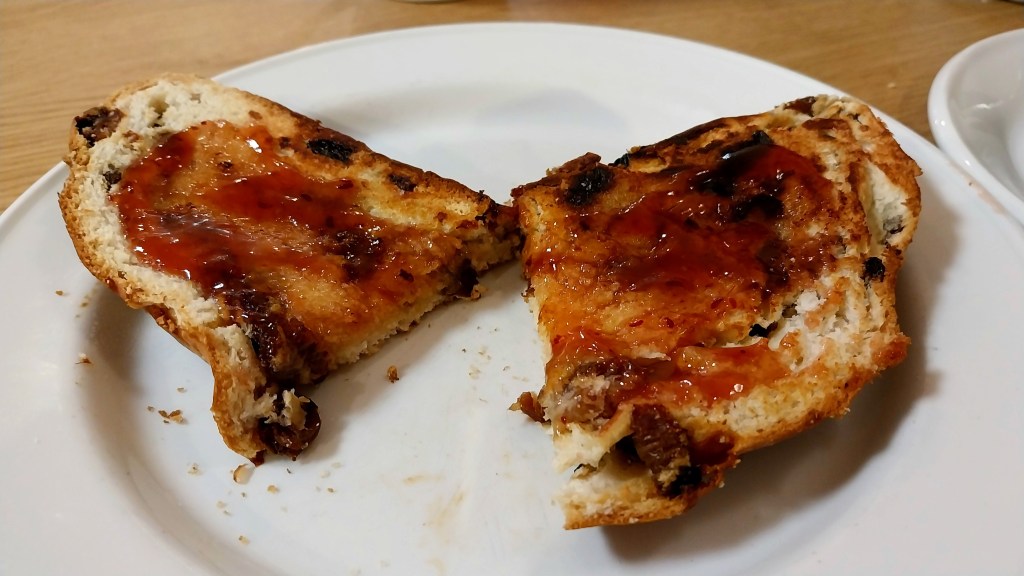
Foody highlight on this part of our trip was the Selkirk Bannock. I have featured this before on A Different Kitchen, when it was given to us as a gift from a friend who had visited the Scottish Borders area, from whence it comes (read much more about this traditional Scottish delicacy on my original post here). I have been looking out for it as I was keen to taste some while away on this trip – on its home turf, so to speak.

A rich tea loaf, packed with fruit, I had it served here toasted with melting butter and jam, alongside a pot of tea. Perfect for elevenses or a refined afternoon tea. Delicious!
Continuing the recent chain of Scottish bands featured on the ADK Playlist, here is a great track by Glasgow’s Simple Minds, that might just also have been inspired by the historic local setting of the Forth and Clyde Canal. This is Waterfront.

Categories
Breakfast Recipes

500 Miles?

We have walked a fair few miles so far on our motorhome tour of Scotland, though perhaps not quite the 500 that Scots duo Craig and Charlie – The Proclaimers – sing about in their popular singalong folk anthem.

My main photo above was taken on one such walk through terrific scenery – along the Aberdeenshire coast from Stonehaven to the centuries-old silhouetted ruins of Dunnottar Castle. Very gothic.

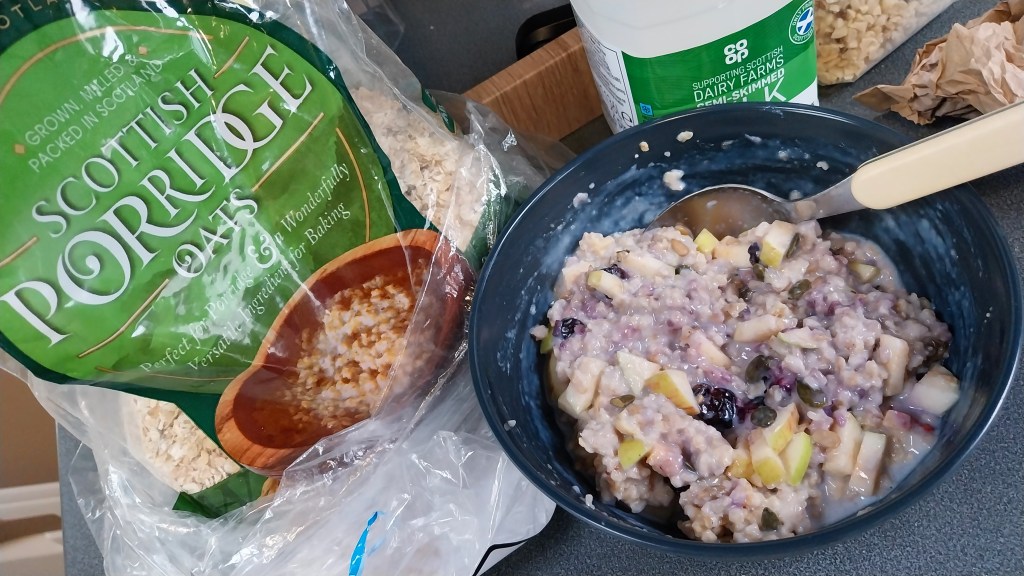
A hearty, filling breakfast is essential before setting out on a hike like this. It will probably come as no surprise that breakfast meal of choice on this trip has been Scots porridge oats. The classic Scots dish is incredibly nutritious, oats being a good source of fibre and healthy fats. Add in some fruit, nuts and seeds and you’ll have all the fuel you need for an active day in the great Scottish outdoors.

My version of porridge may not necessarily be one for the purists, as it is made in the motorhome’s microwave oven. However, it is is made entirely from local ingredients that we have picked up from shops, been gifted or, ahem, scrumped en route.

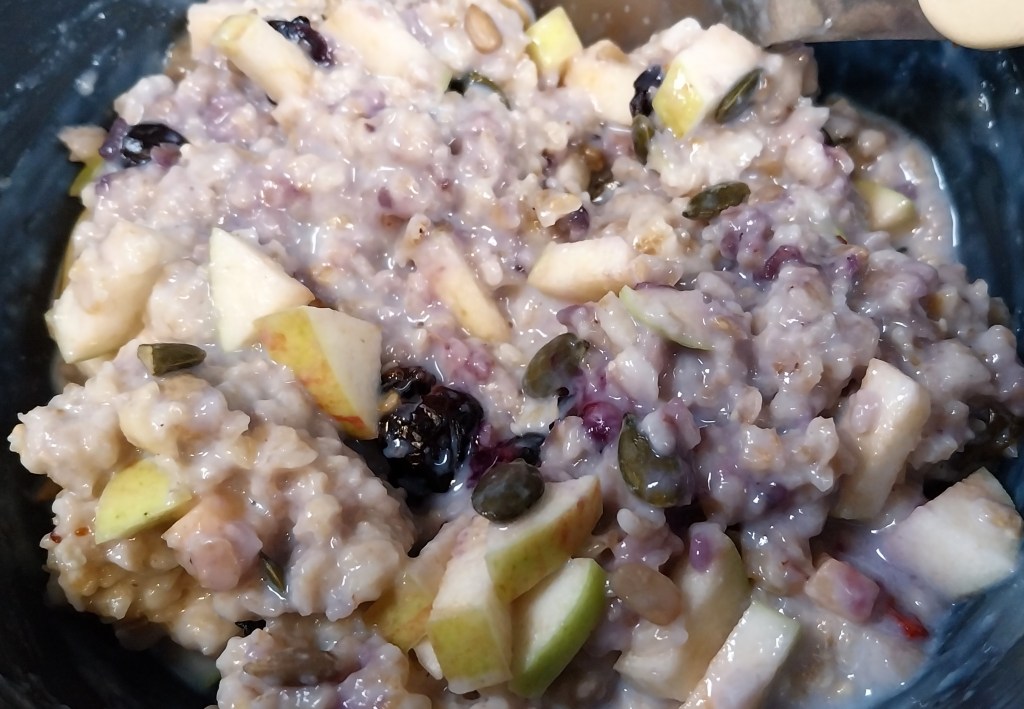
The core ingredients are oats and milk, the oats puffing up as they warm in the heat of the milk. To this I add at least one fresh fruit. At a small, very remote, rural site that we camped on in the Borders, the farmer told us to help ourselves to the plump fresh blackberries from the hedges. These work well in porridge as they burst in the heat, flavouring and colouring the oats purple.

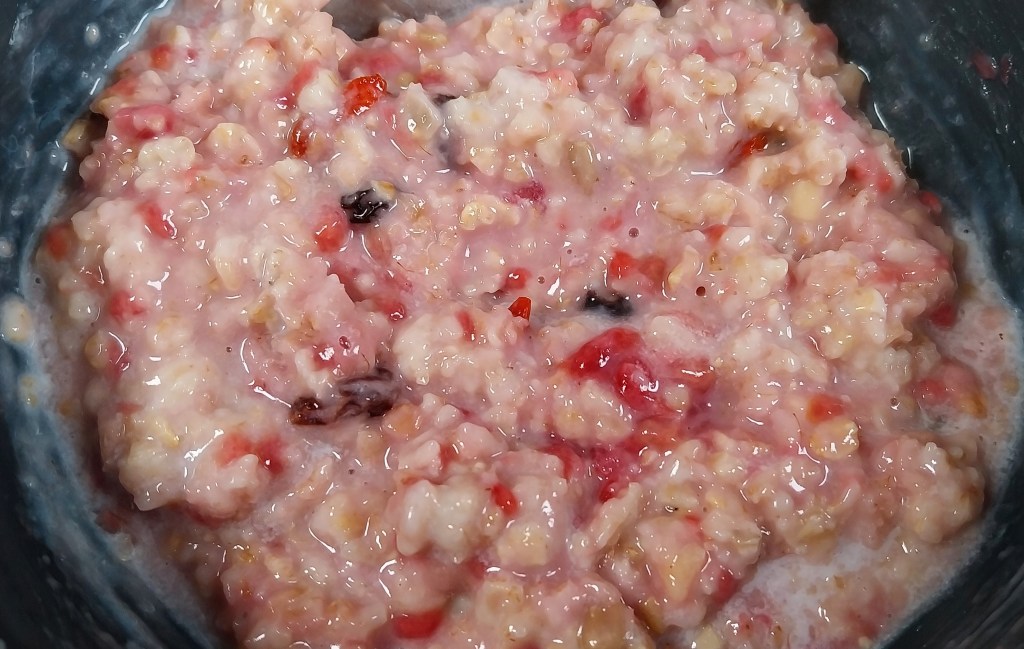
Scottish raspberries work just as well, giving the porridge a pinkish hue.

Another pitch in Aberdeenshire was in an orchard, where we were offered as many crisp apples from the trees as we wished. Chopped apple is great stirred into the warm oats.

We have also picked up various sprinkles at refilleries in Oakham and Stonehaven – chopped nuts, pumpkin and sunflower seeds, and some dried fruit. Refilleries are great for motorhoming as it’s possible to buy and carry on board just the quantity required.

The method is simple. Put 4 – 5 tablespoons of Scottish oats in a microwavable bowl, and cover it in semi-skimmed milk. Add in berries if using.

Microwave on full for around 3 mins, stirring half way through. Keep an eye on it, and when it starts to bubble up the sides of the bowl, remove it.

You may need to act pronto here, otherwise it can easily erupt, volcano-like, all over the sides of the bowl making a holy mess of your microwave.

Stir in your sprinkles of choice, a swirl of local honey if you like, and enjoy. With this warm, hearty fuel inside you, you’ll be ready for a healthy outdoor hike. Even if it’s not quite as far as Craig and Charlie’s. Here are the Proclaimers with I’m Gonna Be (500 Miles).

Categories
Bakes Blog Desserts

Sweet Dreams (Are Made of This)

At this point on our motorhome tour of Scotland we are at Brora, a small Highlands village on the north-east coast. Our camp site is a golf ball’s throw from a massive, deserted golden beach. I say a golf ball’s throw because, to reach the beach, you must first of all carefully traverse one of the many links courses that can be found along the Scottish coast.

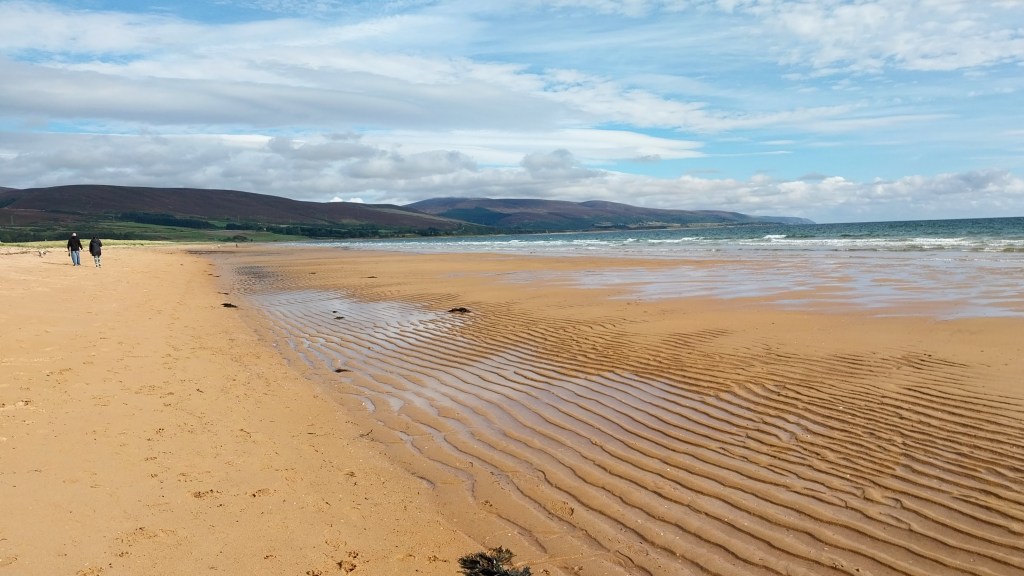
The beach then stretches for 2 miles, along which there are several benches where it’s possible to sit to take in the views (like this one in my photo below), and listen to the sounds of the gently rolling waves.

The walk along the beach leads to this picturesque little harbour, where each afternoon we watched the fishing boat come in from the North Sea to unload the day’s catch.

Everywhere is beautifully maintained, with a real sense that the local community take great pride in their surroundings.

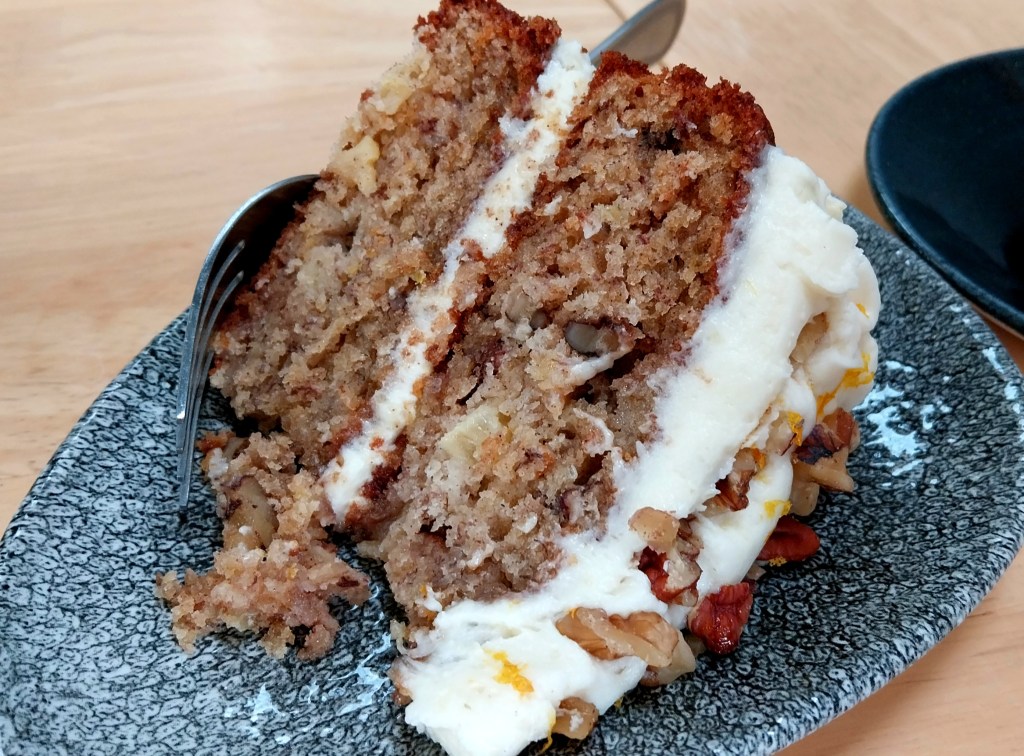
As if this is not idyllic enough, the village has an amazing cake shop, Cocoa Skye. On our first day, we shared a slice of hummingbird cake with our americanos. I hadn’t come across this type of cake before, but once the waitress explained how it was made, I just had to try it. It tastes like carrot cake but with pieces of banana and pineapple, with a reassuringly sweet and creamy frosted topping and chopped nuts. I will definitely be trying to recreate this cake when I get home!

On the next day, my choice was this raspberry and almond bakewell, which was also delicious.

Mild weather, beautiful views, a golden beach and delicious cake. A heavenly combination that brings to mind this track from the Eurythmics, featuring the voice of Scotland’s Annie Lennox: Sweet Dreams (Are Made of This).

Categories
Bakes Blog

Scone With The Wind

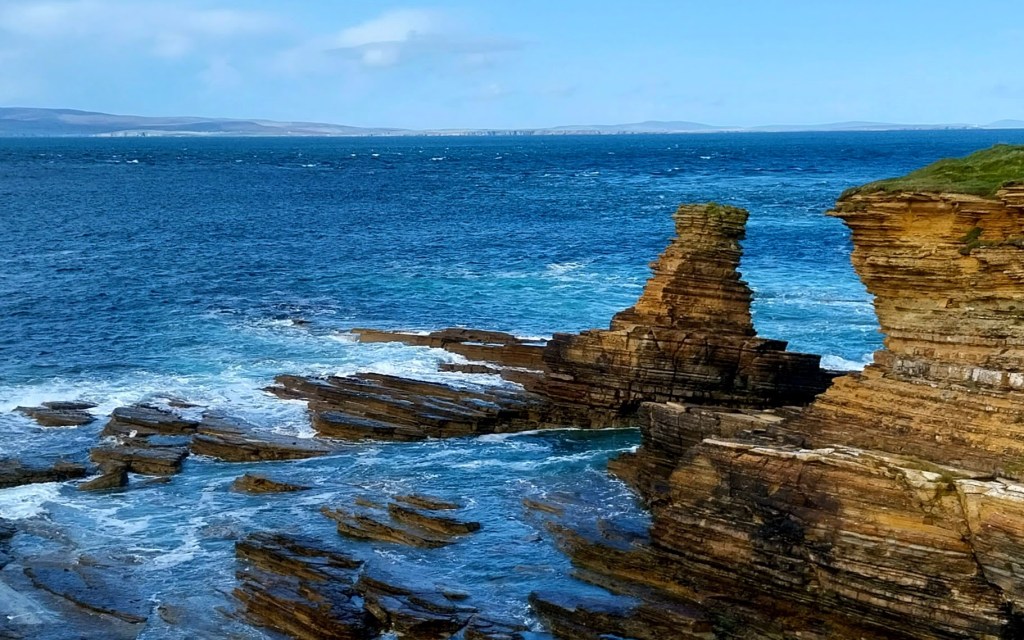
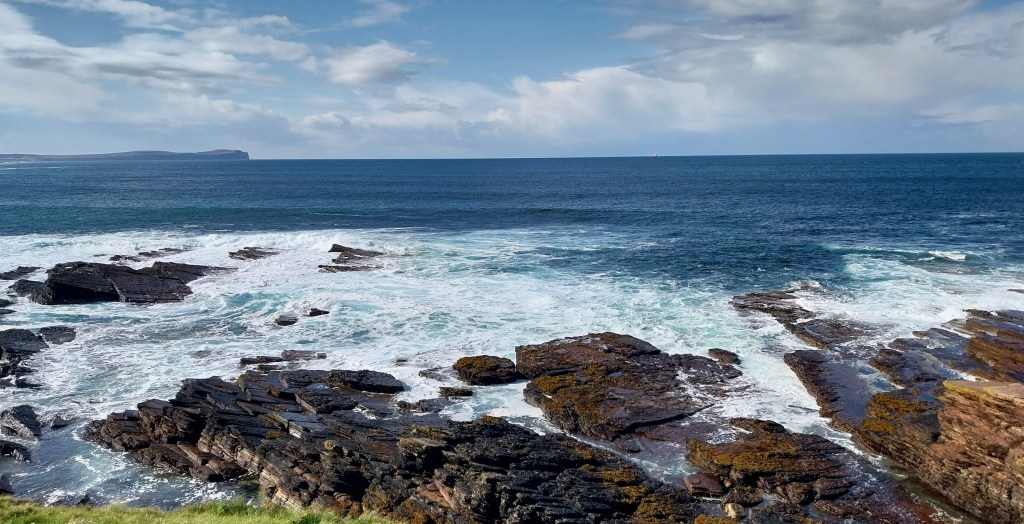
We have now reached the north coast on our motorhome tour of Scotland. The scenery here is wild and rugged, with sheer cliff faces where you peer down on powerful spraying waves crashing aggressively on to craggy, inaccessible rocky stacks.

The views are spectacular, looking directly across the foaming sea to the Orkney Isles – a barren and forbidding landscape dotted with abandoned crofters’ cottages. To the west is Dunnet Head, the most northerly point of the British Isles mainland.

And yet, our coastal walk soon brought us to a gentle cove, with a sandy beach where the seabirds fed and the seals lolloped playfully in the shallows. Nature at its wildest and best.

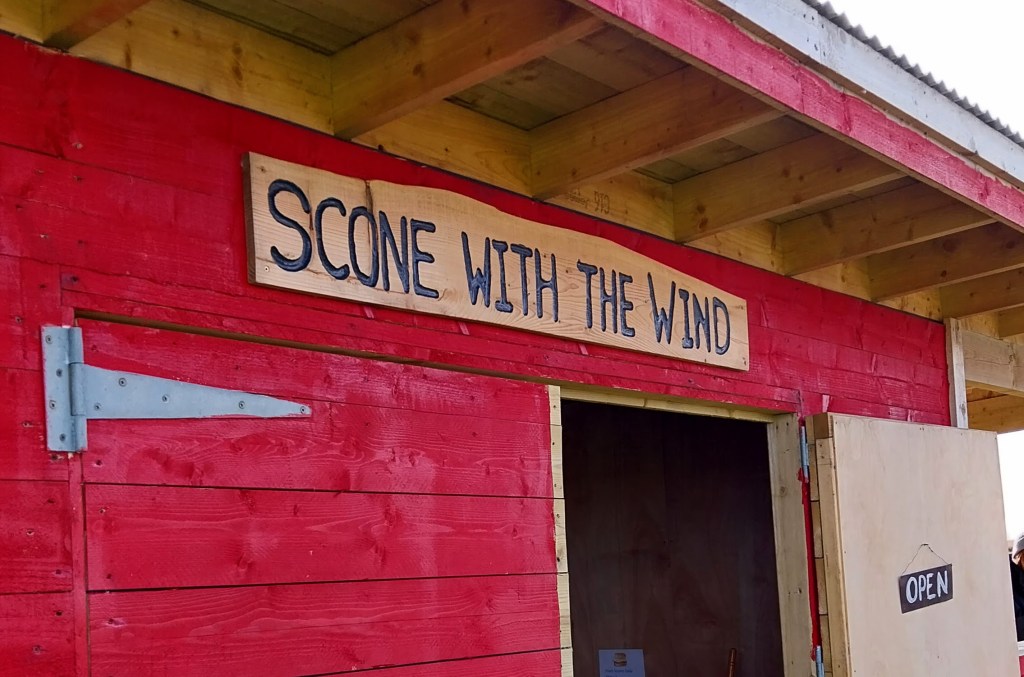
A constant is the steady onshore wind. It is this which gives its name to a little tea shop we came across. Scone With The Wind is no more than a wooden summerhouse in a local garden, where those brave souls hiking the coast can help themselves to homemade scones, tea and jam.

They are baked by the owner who lives in the house nearby. All that is asked in return is that you put a cash donation in an honesty box.

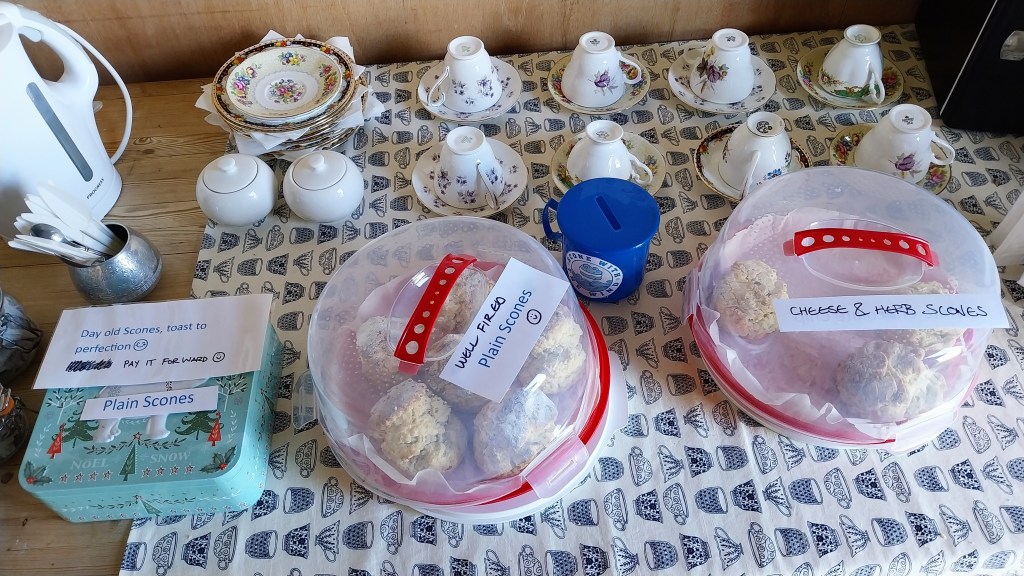
If you wish, you can sit down at one of the tables and enjoy the coastal view while you eat. The table cloths, china and napkins I think are a very civilised touch.

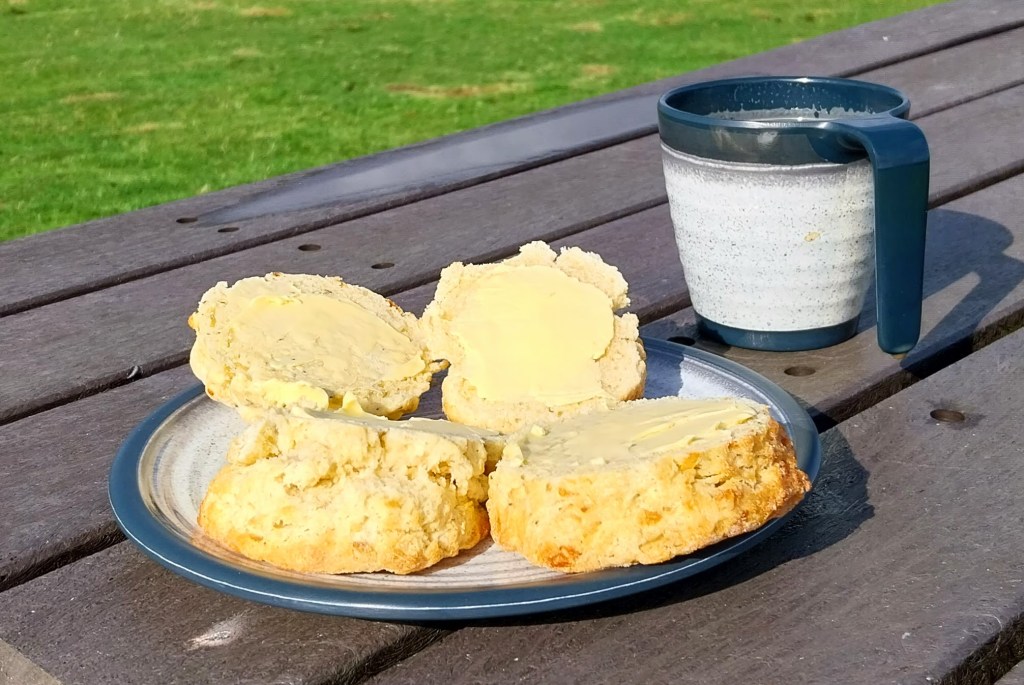
On the day of our visit, the flavours were Plain (Well Fired) and Cheese & Herb. We took ours away (having made our donation) and ate them later, spread with butter alongside a cup of tea, on a picnic between motorhome stopovers.

The owner also makes available any leftover one-day-old scones without any request for a donation. Callers are merely asked to Pay It Forward i.e. carry out a similar act of kindness to someone else in turn.

Now there’s a concept that could potentially reshape the world economy: what if we just decided to replace money with random acts of kindness to others as payment in commercial transactions?

Makes you think – and it all starts with a Scottish homemade scone.

We’ve been playing a lot of Scottish artists and bands over Android Auto as we drive along in the motorhome, especially as DAB radio doesn’t seem to have reached the Highlands yet. Here’s a track that goes well with the rugged landscapes we’ve been travelling through, featuring Stuart Adamson’s unmistakable bagpipe-guitar sound. Big Country with In a Big Country.

Categories
Blog

Arbroath Smokies

My foodie journey north in our motorhome has now reached Scotland. Climbing the east coast, we stopped in Angus to seek out the famous Arbroath Smokies.

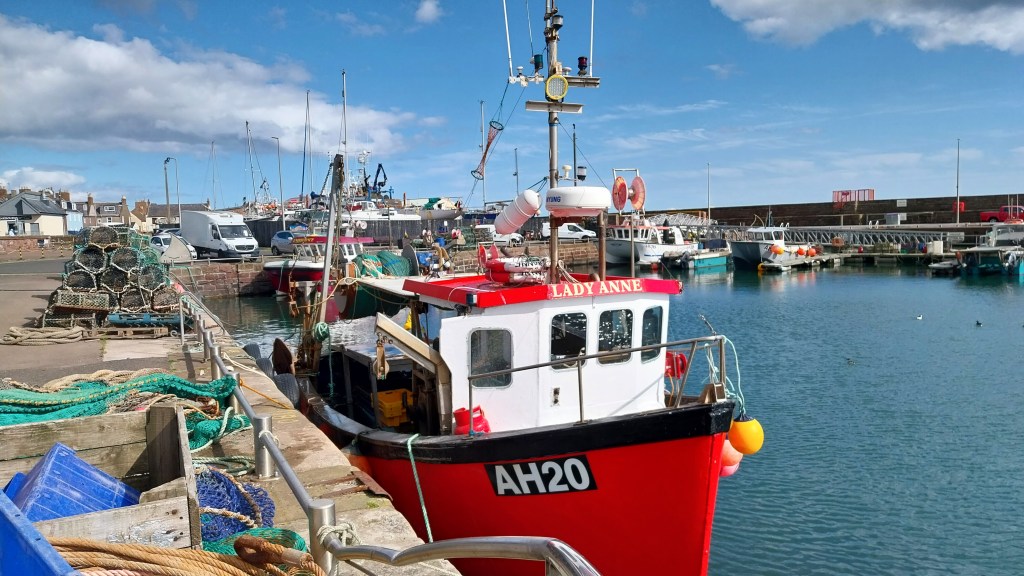
The Smokies are haddock, caught fresh in the North Sea and unloaded from the fishing boats in little Arbroath Harbour (shown in my photo below), where they are then smoked.

Smokies are one of those delicacies that benefit from a Protected Geographical Indication, or PGI. This is a status that is given to regional speciality foods that use traditional methods unique to a particular location. It is designed to stop cheap imitations that are made elsewhere, or to lower quality standards, being passed off on shoppers as the real thing. Other famous examples of a PGI are French Champagne and Parma Ham from Italy.

In such exalted company, you would be excused for thinking that, nowadays, the Arbroath Smokie might be the subject of the full celebrity foodie treatment: perhaps a modern visitor centre with an audiovisual introduction, factory tour, cafe and souvenir shop with a coach park outside full of tour parties. Well, prepare for a surprise.

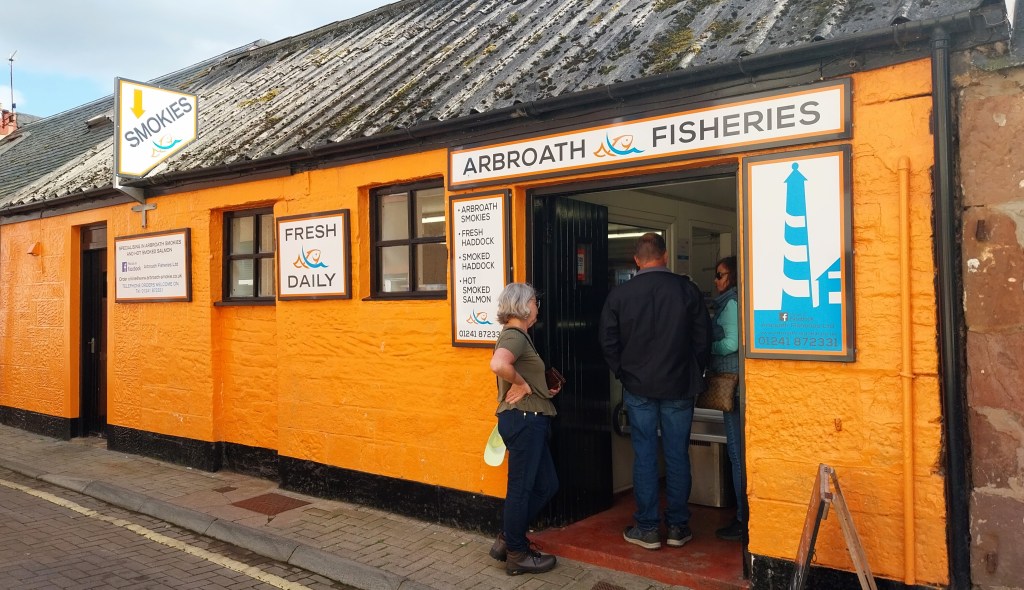
The process for catching, producing and selling the fish looks like it has hardly changed in decades. The centre of operations remains a modest-sized smokehouse and shop front on the harbourside, accessed on foot via some old narrow lanes.

The rear of the somewhat humble building still looks out directly on the North Sea. The whole operation is full of charm.

The service is friendly, with lots of free tasters over the counter, and the prices reasonable. We were momentarily tempted by the business’s other delicacy, Firecracker Salmon, which is local salmon smoked with a chilli kick, and which tastes amazing. However, we settled on a couple of Smokies to take away. The skilled shop assistant filleted them for us in seconds.

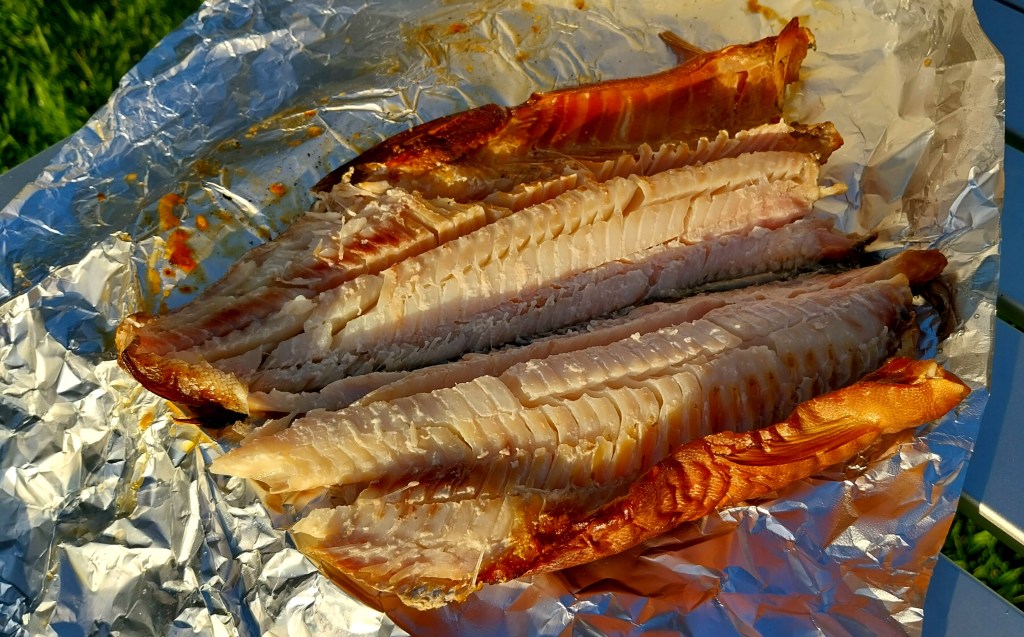
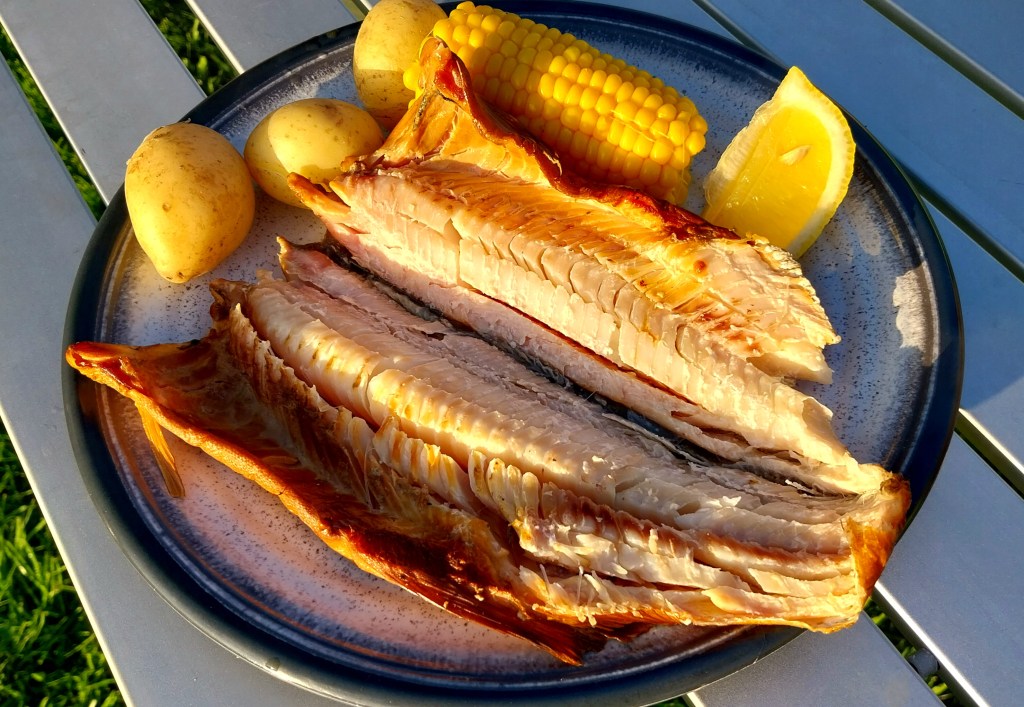
When we reached our motorhome stopover for the night, I wrapped the Smokies in a foil parcel and warmed them outside on the Cadac, for about 15 mins. The aroma that was released as the foil parcel opened was awesome. My main photo at the top of the post captures that moment.

I served them very simply in the evening sun, with a half of lemon to squeeze over, sweetcorn and some boiled new potatoes. They were delicious!

Coincidentally, around this time I managed to buy some tickets to see ABC early next year. With full orchestral backing, Martin Fry will be performing The Lexicon of Love in full, along with their other hits.

This tribute to a Motown legend just has to be the next track for the ADK Playlist, therefore: ABC with When Smokey Sings.

Categories
Blog

Leicestershire and Rutland

I am off on my travels again – this time a motorhome journey north with my wife to explore Scotland. First stop along the way is the East Midlands which, at the time of our visit, was basking in temperatures in the upper 20s Celsius. Or maybe it is just always this warm up here?

We’ve based ourselves on the south shore of Rutland Water, the largest man-made lake in England, and one of the largest in Europe. It’s a great environment for wildlife, sailing, walking and cycling. We carry our bikes on the back of the van, so enjoyed the off-road, waterside cycle track to the beautiful Normanton Church, captured in my main photo above.

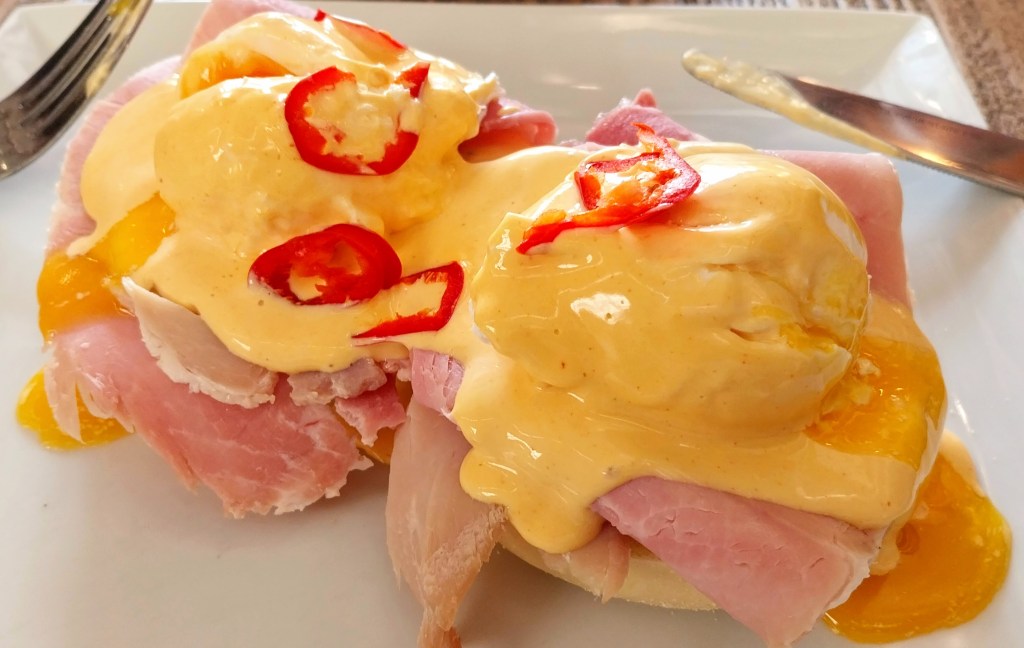
The local markets, delis and farmer’s shops have been great. Farndon Fields is an excellent farm shop in Market Harborough, well-stocked with lots of local fresh produce. We combined our visit with brunch in their on-site restaurant, the Farmer’s Kitchen. My Eggs Benedict had perfectly soft-poached eggs over slices of baked ham on a toasted muffin – chopped chillis topping off the Hollandaise Sauce with a spicy kick.

Saturday morning brings a foodie market to the village of Thrapston. I picked up these pork and chorizo sausages from a local butcher’s stall, to cook up later on the Cadac. The Cadac is my gas bbq that plugs directly into the motorhome’s gas tank via a socket on the outside wall. They tasted as great as they look here, glowing on the griddle in the evening sunshine.

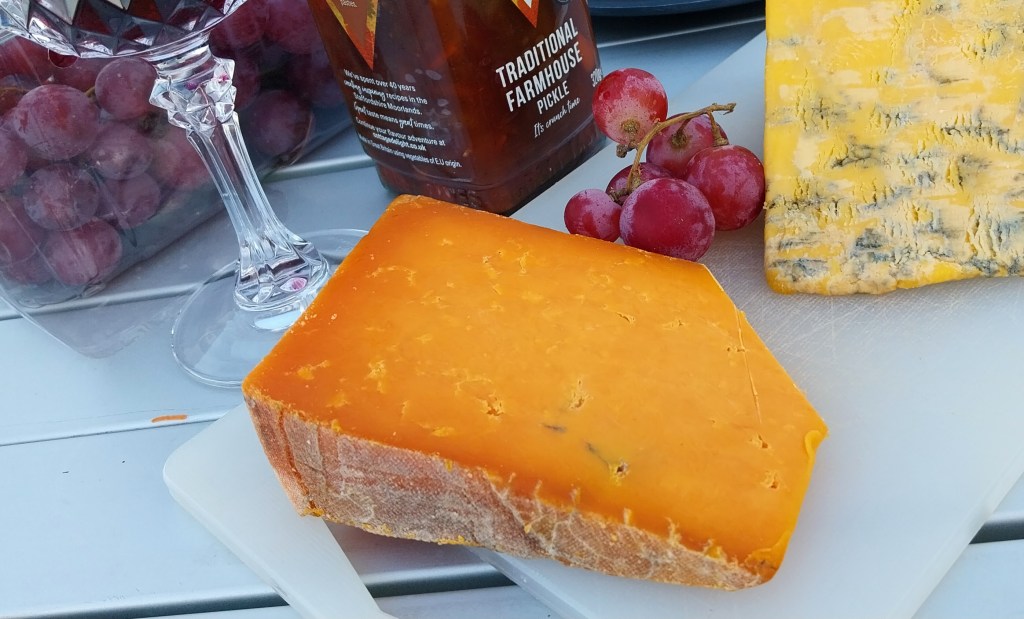
The people like their cheese an orangey shade of yellow here. Red Leicester is nationally famous, of course, but Rutland Red less so. It is a more mature, hard cheese, an even deeper shade of orange, but still mild tasting. Here it is adorning my evening cheeseboard with customary glass of red alongside. The blue cheese is from neighbouring Derbyshire.

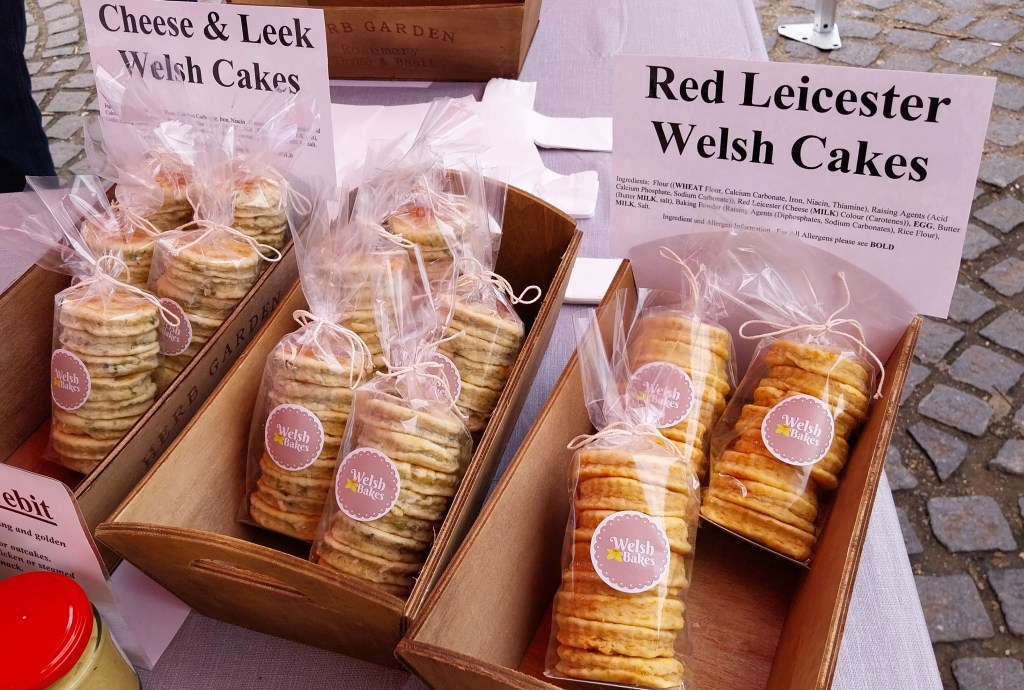
Speaking of Red Leicester, how about incorporating it when baking Welsh cakes? I bought these when I saw them at Thrapston Market. They were delicious.

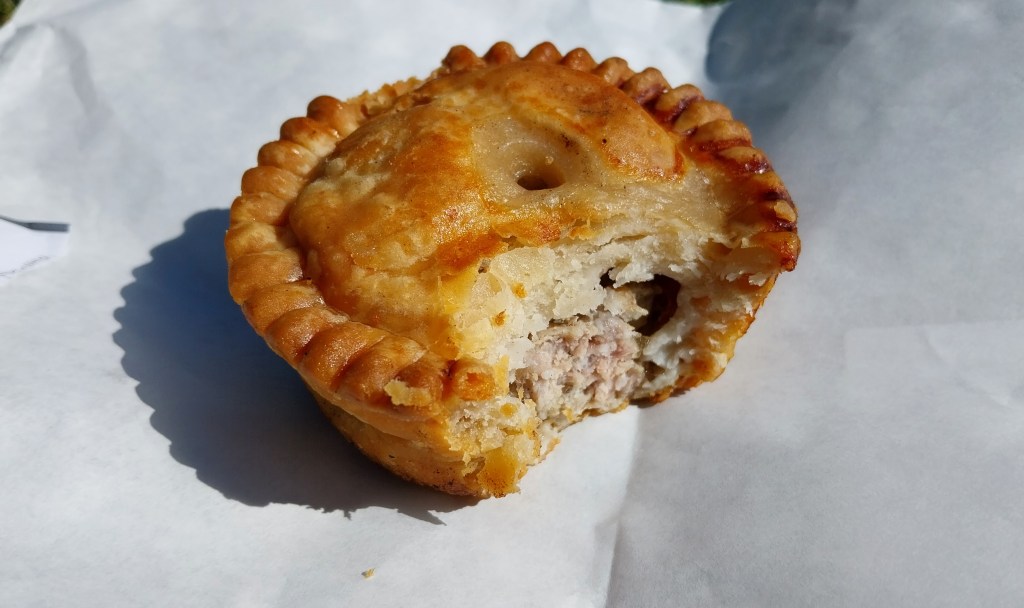
I understand that a pork pie is not necessarily everyone’s cup of tea, but I felt I had to try one of these famous Melton Mowbray delicacies when I found them in a butcher’s shop in Oakham. I found it had a good short pastry base, golden flaky top and soft salty filling – a very enjoyable lunchtime stop.

There you are – just some of the fine local produce I’ve been gorging on while visiting the scenic delights of Leicestershire and Rutland. It’s been a really enjoyable first stop on the journey north.

For the next track on the ADK Playlist I have turned to this band who were formed in Leicester in the 1990s. This track became a massive hit when it was remixed by Fatboy Slim – here’s Cornershop with Brimful of Asha.

Categories
Mains Recipes

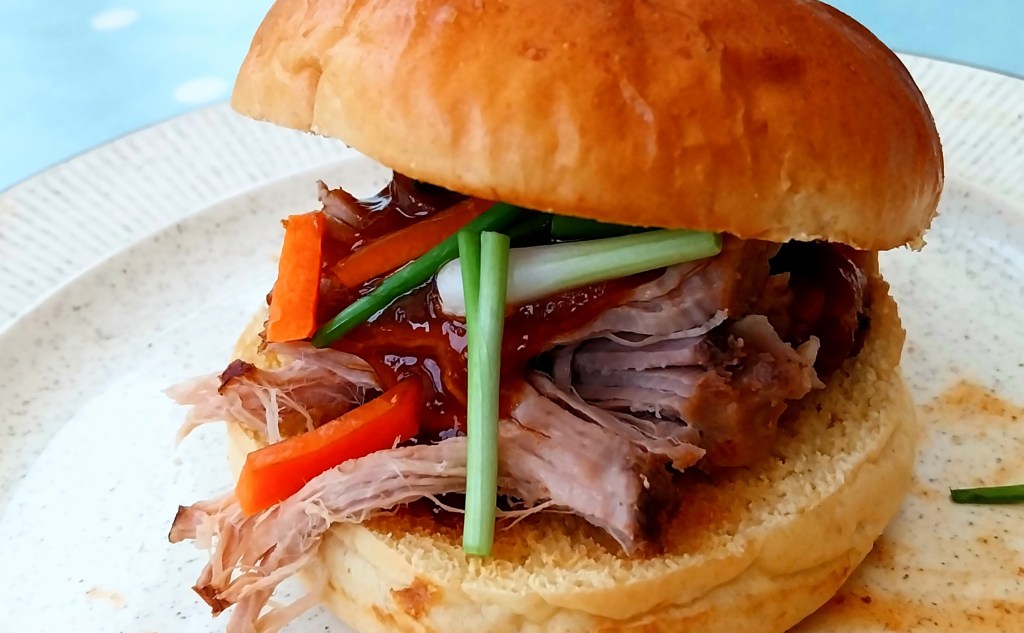
Korean Pulled Pork Sandwich

I ordered this for lunch recently in a hipster cafe-bar that had a very tempting variety of dishes on the menu. I thought it was amazing so decided I would try to recreate it myself.

I’ve roasted pulled pork before in my electric slow cooker, but hadn’t really created anything I could call a Korean sauce.

After a bit of reading up, I treated myself to a couple of specialist ingredients I hadn’t bought before, but which seemed to be quite key to the whole concept: rice vinegar and Gojuchang paste. The rest of the ingredients, such as dark soy sauce, honey, garlic, ginger and so on, are things that I tend to have in usually.

I’m glad I invested in the specialist foods – particularly the Gojuchang paste, which has a distinctive dark and smoky taste with a chilli kick. I found both in the Asian aisle of my local Sainsbury’s.

Servings

A meal for 4 with some left over for lunch the next day.

Timings

20 mins to prepare the pulled pork, then 6 hours in a slow cooker. It took me about 25 mins to make the sauce while the pork was finishing off.

You Will Need

For the Pulled Pork

  • Joint of shoulder of pork between 1kg – 1.4kg
  • sea salt and black pepper
  • 1 onion, chopped
  • 1 clove of garlic, crushed
  • 1 500g carton of tomato passata
  • 60ml cider vinegar
  • 1tsp paprika
  • 1tsp ground cumin

For the Korean Sauce

  • oil
  • 1 small red onion, finely chopped
  • 1 garlic clove, crushed
  • 2cm piece of root ginger, peeled and finely chopped
  • 1 red chilli, chopped into fine rings with seeds removed
  • 60ml dark soy sauce
  • 2tbsp rice vinegar
  • 50ml runny honey
  • 1tbsp Gojuchang paste
  • cornflour
  • water

To Serve

  • Brioche rolls
  • spring onions
  • half a carrot

Method

  1. Switch on the slow cooker and turn to a high setting.
  2. Heat a little oil in a wok or large frying pan and sear the pork on all sides. When nicely browned, transfer to the slow cooker bowl and season with a few twists of sea salt and black pepper.
  3. Put the other ingredients into the wok or pan, and stir to combine in the heat. When warmed, pour over the joint of pork. Put the lid on the slow cooker and leave on a high heat for 30 mins. Then reduce to medium setting and leave for 5 and a half hours more.
  4. Start making the sauce about 40 mins before the pork is due to finish.
  5. Heat some oil in a saucepan and add the onions, garlic, ginger and chilli. Leave until sizzling and softened.
  6. In a jug, combine the soy, rice vinegar, honey and Gojuchang paste, then pour into the saucepan. Give it all a stir and leave to simmer.
  7. When the pork has completed its 6 hours, remove it from the slow cooker and leave to rest in a rectangular serving dish.
  8. Tip the juices from the slow cooker into the saucepan and stir.
  9. Add a paste of 2 tbsp cornflour and 1 tbsp water, stirred so it forms a creamy liquid. Stir it in and watch the sauce thicken. Do this again until the sauce has a thickish consistency so it will cling to the pork when poured over.
  10. Using 2 forks, dive into the pork joint and pull it apart from the centre. You should have lovely soft, flaky fibres of tender meat. Pop one in your mouth to appreciate how good it tastes.
  11. Pour the sauce into a jug and serve alongside the dish of pulled pork.
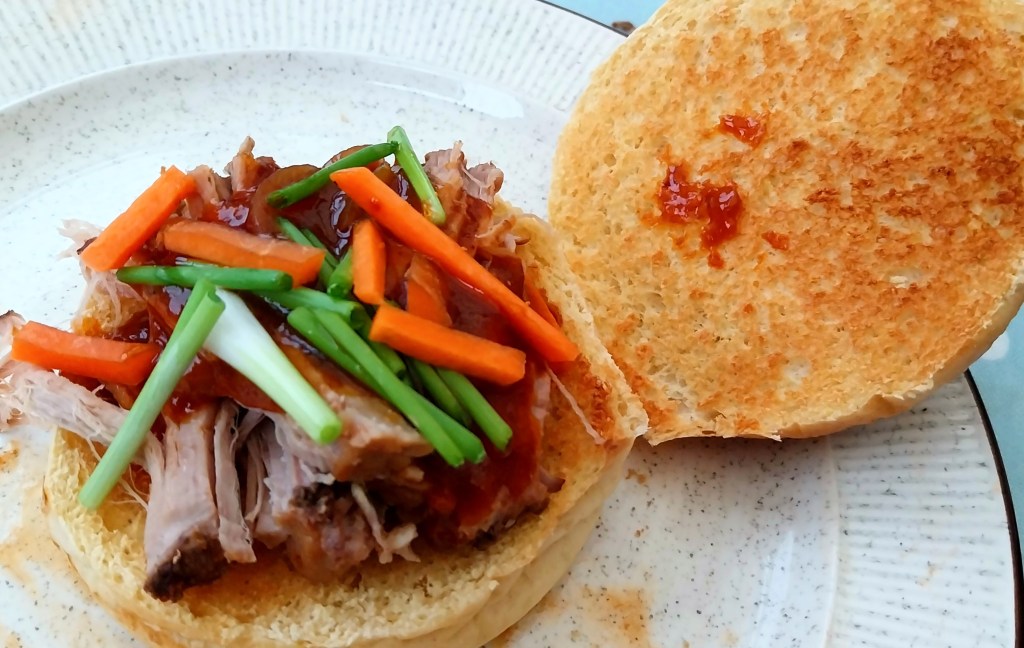
  12. Serve with the rolls, halved and lightly toasted on the inside, with a garnish of chopped scallions and carrot sticks.

Customise It!

I will be posting other recipes that use the Korean Sauce, but which will be vegetarian or vegan. For these, don’t add the pork juices, and use water instead.

Here’s a track for the Playlist from The Wedding Present. I’ve seen them live a few times and they are always worth the ticket price. Their sound is a cross between Buzzcocks and Orange Juice, so no surprise that I’m a fan. This is My Favourite Dress.

Categories
Bakes Recipes

Spiced Apple & Oat Muffins

I still have lots of apples from the garden around for baking with at the moment – you’d almost think they grow on trees…..

Even after making my Dorset Apple Cake, there were still plenty more to combine with oats and spices in these tasty muffins, shown in my main photo above. Great with a cup of tea, for dessert or breakfast, and lovely with a few spoonfuls of Greek yoghurt on the side.

Servings

12 muffins.

Timings

10 mins to prepare, 25 mins to bake at 180C.

You Will Need

  • 190g plain flour
  • 3 tsp baking powder
  • half tsp salt
  • 1 and a half tsp mixed spice
  • 120g caster sugar
  • 170g finely chopped apple
  • 60g sultanas
  • 1 egg
  • 60g oats
  • 150 ml milk
  • 90 ml vegetable oil

Method

  1. Warm the oven to 180C and grease a muffin tin or mould.
  2. Sieve the flour, baking powder, salt and mixed spice into a bowl. Add the sugar, chopped apple and sultanas, and mix so that the fruit is coated in flour.
  3. In a separate bowl, mix the egg, oats, milk and veg oil.
  4. When the oven is up to temperature, combine wet ingredients with dry, and stir to mix. Spoon into the muffin tin or mould and bake for 25 mins. Cool on wire rack before serving.

Customise It!

Cinnamon or nutmeg will go just as well as the mixed spice if you wish. A handful of toasted chopped nuts would be a good addition.

With a number of posts recently featuring spice, it’s amazing that I have thus far managed to avoid adding a track by the Spice Girls to the ADK Playlist. This probably has something to do with the fact that I am not a massive fan. This song, which I do like, comes fairly close, however. Bryan Adams and Mel C (aka the Sporty one) with When You’re Gone.

Categories
Breakfast Desserts Recipes

Spiced Plum Compote

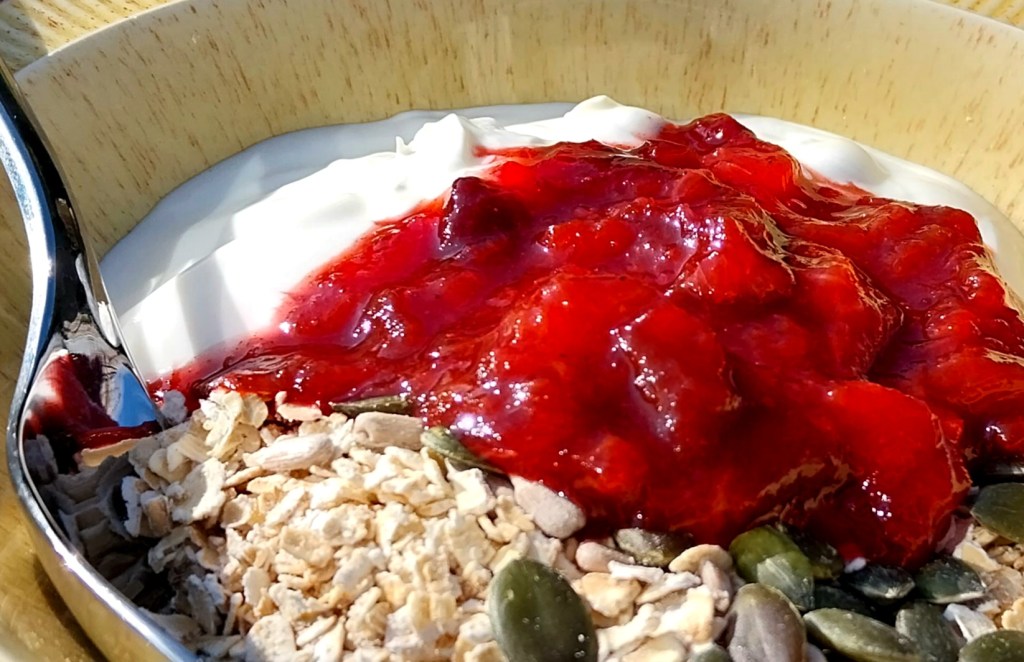
A plentiful supply of fresh plums has been arriving off the trees and into the ADK kitchen recently – I guess it’s that time of year. Here’s a very quick and easy way of cooking them up for use either as a breakfast topper, on oats or muesli, or as a dessert, with milk or natural yoghurt (see above). There are only 4 ingredients and the whole exercise will take about 10 mins.

And it’s delicious.

Servings

At least 6 servings.

Timings

10 mins.

You Will Need

  • 9 – 10 fresh plums
  • 1 tbsp demerara sugar
  • 1 tsp Chinese 5 spice powder
  • juice of 1 lemon

Method

  1. Chop the plums and discard the stones. Place in a saucepan with the other ingredients.
  2. Bring to a boil and stir, then reduce to a simmer for 5 – 10 mins. Switch off.
  3. Allow to cool, and serve over oats, nuts and seeds or muesli, with milk or natural yoghurt, as a breakfast or dessert dish.

Customise It!

If you don’t have 5 spice, then mixed spice, cinnamon or nutmeg will be fine. Another idea is to chuck a cinnamon stick into the saucepan as the compote is cooking, if you wish.

Today’s addition to the Playlist is a track that came on a few days ago while I was driving. I’d forgotten how great it was, especially with the unmistakable jangling sound of Johnny Marr on guitar. Add in Bernard Sumner from New Order on vocals and you have one mighty Mancunian supergroup. This is Electronic with Get the Message.

Categories
Bakes Recipes

Dorset Apple Cake

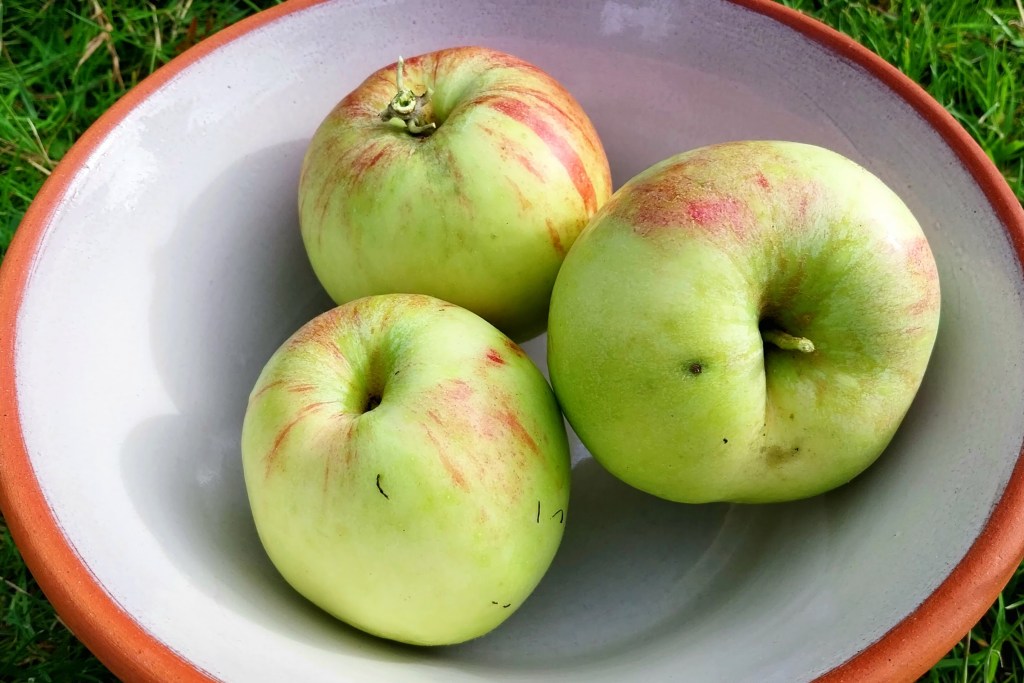
This time of year finds apples growing on the trees – fresh, crisp and a joy to bite into. Below is a photo of some I picked this week from the trees in our garden.

Having recently returned from a stay in the county of Dorset (see Dorset Calling) I had the idea of incorporating some of our apples in a classic British bake – the Dorset Apple Cake. You can see it in my main photo at the top of this post. It went down well with the family – there were already a few slices cut from it before I could take the photo!

Serve it on its own with a cup of tea, or with a few spoonfuls of Greek Yoghurt.

Servings

Around 16 slices.

Timings

15 mins to prepare, 1h 25 mins to bake.

You Will Need

  • 225g plain flour
  • 2 tsp baking powder
  • pinch of sea salt
  • 1 tsp mixed spice
  • 140g light brown sugar
  • 150g spread or margarine
  • 2 eggs
  • 3 medium sized crisp eating apples
  • demerara sugar to sprinkle over
  • flaked almonds to sprinkle

Method

  1. Switch the oven on to 160C and grease/line a 20 cm diameter baking tin.
  2. Put the flour, baking powder, salt, and mixed spice in a bowl and stir with a spoon. Add the apple, chopped, and stir again so that all the apple pieces are coated in the floury mix. Add in the sugar, spread and eggs, and use an electric mixer to combine.
  3. Tip into the prepared tin and level with a spatula so it reaches the sides. Sprinkle the demerara over.
  4. Place in the oven for 1 hour.
  5. Remove and sprinkle the flaked almonds over. Put back in the oven, still at 160C, for 20 mins.
  6. Remove and leave to cool off in the tin, then transfer to a wire rack to cool completely. Cut into slices (see photo below) to serve.

Customise It!

If you wish to cut down on the sugar content, feel free to omit the demerara topping. I left the peel on the apple so that the cake included a little more fibre, but you can remove it with a peeler if you prefer.

Many countries and cultures have their own recipes for apple bakes, including this one for Austrian Apple Cake posted previously on ADK.

Time to add another track to the ADK Playlist. I saw this band a few weeks back when they were supporting the Arctic Monkeys, and they were great. I did say I would feature them, so here they are: this is The Hives with Hate to Say I Told You So.