Categories
Desserts Recipes

Golden Crème Brûlée

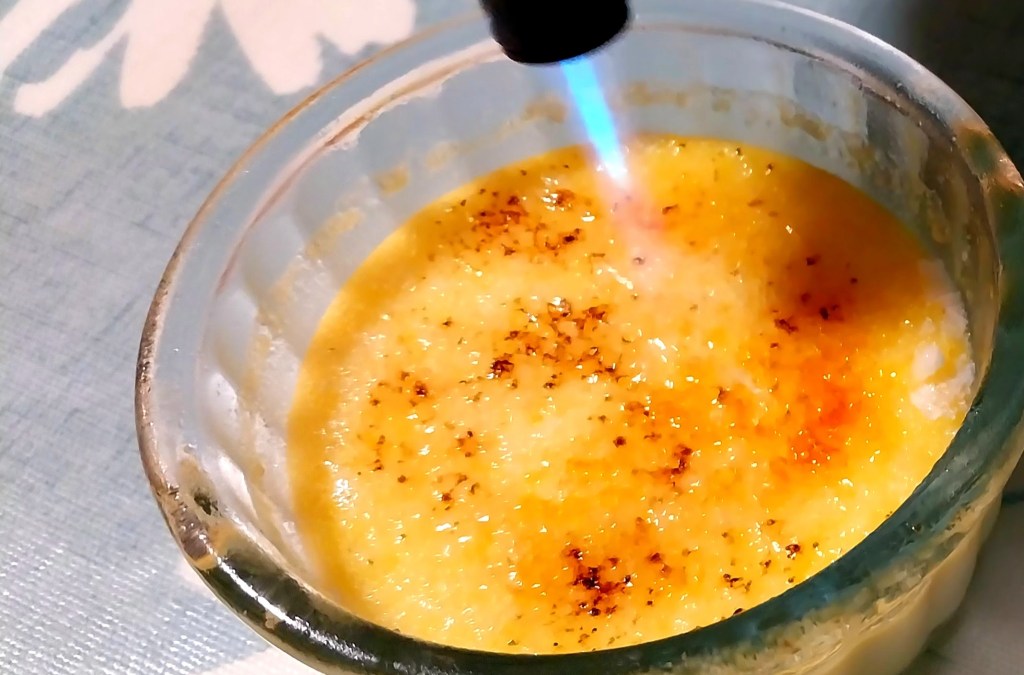
I love making Crème Brûlée – it gives me an excuse to fire up my chef’s mini blowtorch, which is always good fun! That’s it in action in my photo above.

It helps that it is also a magnificent dessert – silky vanilla custard nestled beneath a solid layer of brittle caramel shell, that splinters into shards when cracked with the side of a spoon. The soft underside, together with the crunchy topping, is simply sensational.
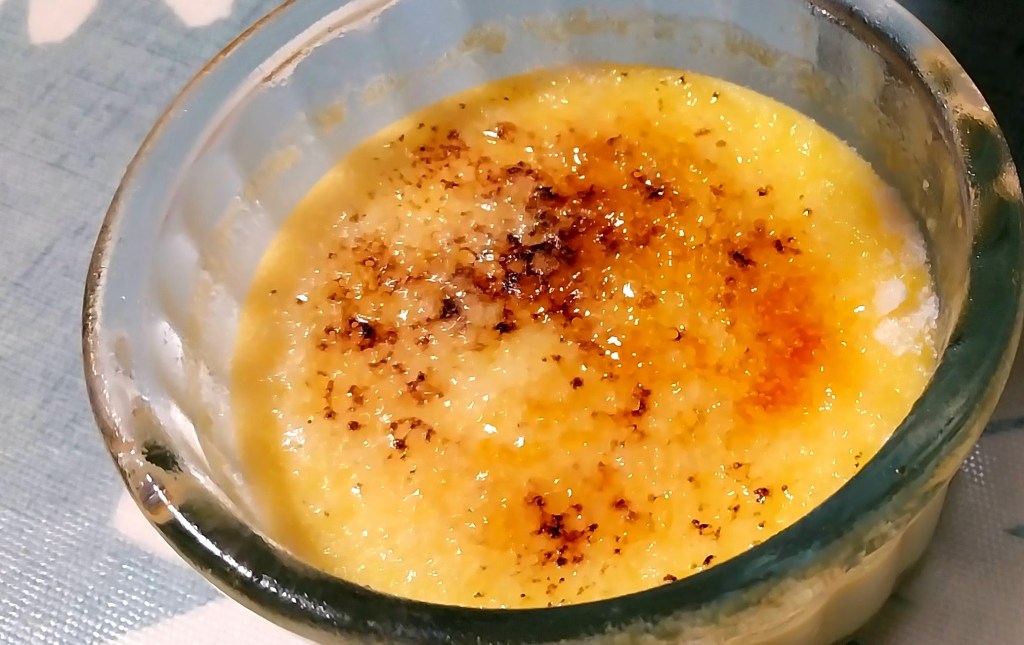
No blowtorch? No problem – just place the desserts under a hot grill to caramelise, keeping an eye on them so they don’t burn! You will need 4 individual ramekin dishes and a high-sided roasting dish to act as a bain-marie. Got that? OK, here we go…

Servings

This will make 4 individual desserts.

Timings

20 mins to prepare. 35 mins to bake. 5 – 10 mins for that all-important blowtorching before serving.

You Will Need:

  • some butter for greasing
  • 400 ml double cream
  • 1 tsp vanilla extract
  • 80g caster sugar (plus 4 tsp extra for the caramel topping)
  • the yolks of 4 large eggs

Method

  1. Preheat a fan oven to 140C.
  2. Prepare your bain-marie. That may sound posh, but really it is just a large roasting dish with deep sides, into which you will place 4 individual ramekin dishes. Grease the insides of each ramekin dish with butter.
  3. Tip the double cream into a saucepan and add the vanilla. Gradually bring it to a boil, stirring gently, then turn it down to a simmer for about 5 mins.
  4. Set out 2 bowls and crack the eggs carefully, catching the whites in one bowl and the yolks in the other. Set the whites aside to be used another time – we are working with just the yolks for making Crème Brûlée.
  5. Sprinkle the sugar into the bowl with the yolks, and whisk together till gold and creamy.
  6. Bring the double cream back to the boil stirring once again. When it just reaches the boil, pour it over the egg and sugar mixture, and whisk again to combine.
  7. Place a sieve over a jug, and pour the mixture through. This will take out any lumps that may have formed while heating the cream.
  8. Fill a kettle with water and boil.
  9. Take the jug of strained mixture and pour it equally between the 4 ramekins. Then pour boiling water into the bain-marie (roasting dish), so that it comes about halfway up the outside of the ramekin dishes.
  10. Cover the bain-marie with tin foil and place in the oven.
  11. Check after about 30 – 35 mins. The desserts are cooked when the custard has set. Note that the surfaces will not yet be golden caramel – that stage is yet to come!
  12. Using oven gloves, lift the ramekins from the bain-marie and set aside on a tray to cool. Carefully tip the hot water away.
  13. Once the ramekins have reached room temperature, place in the fridge to chill until you are ready to serve.
  14. Now the fun begins. Scatter a teaspoon full of caster sugar over the top of each ramekin. Fire up that blowtorch and heat so that they are caramelised and golden. Alternatively, place under a hot grill.
  15. Place each back in the fridge for a few minutes. The caramelised topping will set to a crisp.

Customise It!

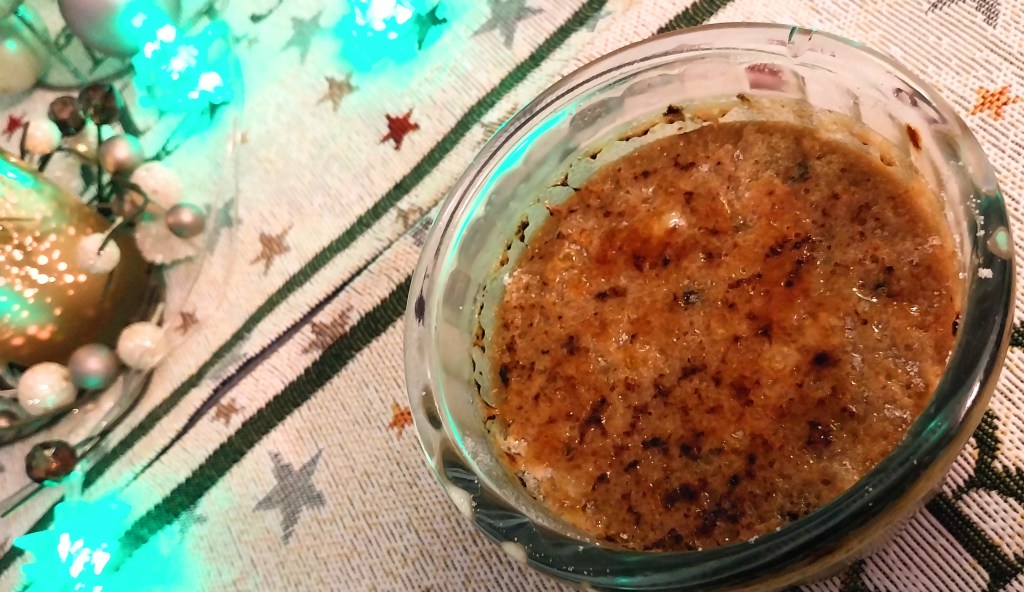
I made a coffee version of this at New Year, dissolving 4 teaspoons of instant coffee granules in the double cream as it warms. It’s a really good variation, giving a good coffee taste and colour (see below). You can check out the reel of it (Café Crème Brûlée) on my Instagram site if you wish @differentkitch.
We’re sticking with the dance theme for the ADK Playlist this January. It’s a brand new year and, hey, I just know that something good is going to happen. Cue Utah Saints with the Kate Bush-inspired Something Good.
Categories
Recipes Sides

Feta & Black Olive Quinoa Salad

Now it’s summer, I’ve been eating more and more salad bowls for lunch, so reckoned it was about time to feature one here on A Different Kitchen.

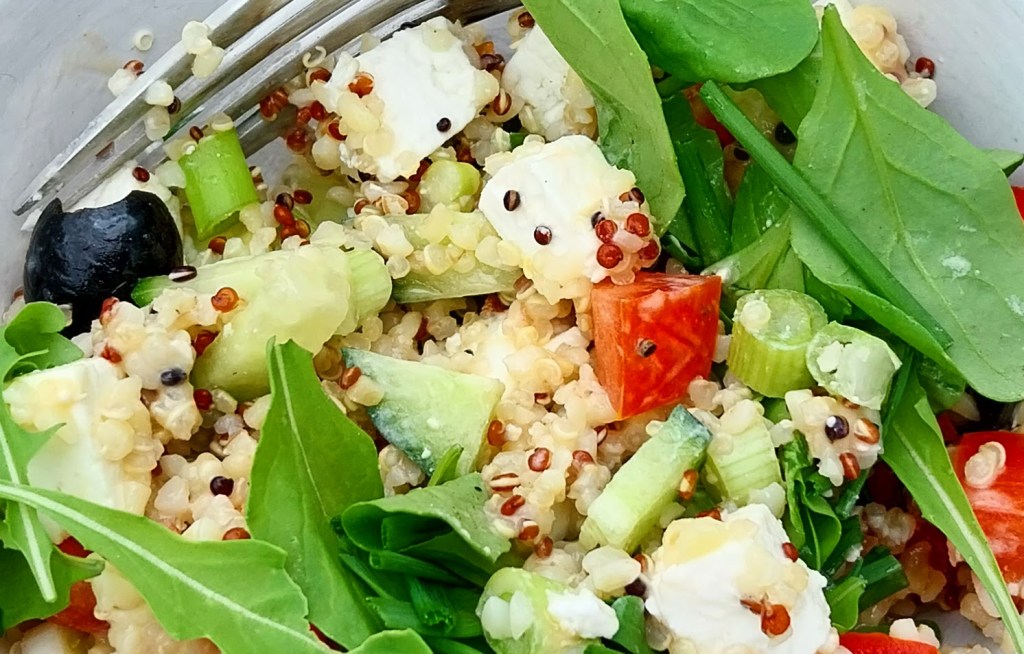
This one throws together some of my favourite tastes, including feta, black olive and rocket leaves, in a tahini dressing. The quinoa boosts the protein intake and fills you up without being heavy on the carbs. Good as a lunch bowl, but also suitable to serve as a side alongside a mains.

Servings

Enough here for a couple of servings.

Timings

12 – 15 mins. That’s how long it takes to boil and cool the quinoa, during which time you can be getting ready the rest of the salad and the dressing.

You Will Need:

  • 70g quinoa
  • about 70g feta cheese, cut into cubes
  • about 12 – 15 pitted black olives from a jar, cut in half
  • 1 tomato, diced
  • 5 – 6 slices of cucumber, diced
  • 1 scallion, cut into rings
  • a handful of rocket leaves

Check out this link for my tahini dressing.

Method

  1. Place the quinoa in a saucepan with boiling water. Reduce and simmer for 12 – 15 mins.
  2. While the quinoa is cooking, prep the other ingredients and place in a bowl. Make up the tahini dressing.
  3. Drain the quinoa when cooked, and cool in a sieve under cold running water. Shake dry and add to the salad ingredients, stirring in to mix. Coat with the dressing and serve.

Customise It!

I used a packet mix of black, white and red quinoa just because it helps the dish look more interesting, but plain quinoa will work just as well. Feel free to sprinkle a few sesame seeds over the bowl before eating.

Here’s a track that’s been popping up recently on the playlists Spotify auto-generates for me, based on my other listening – clever that, especially when the track turns out to be one I find I like. Here’s Moby with Bodyrock.

Categories
Mains Recipes

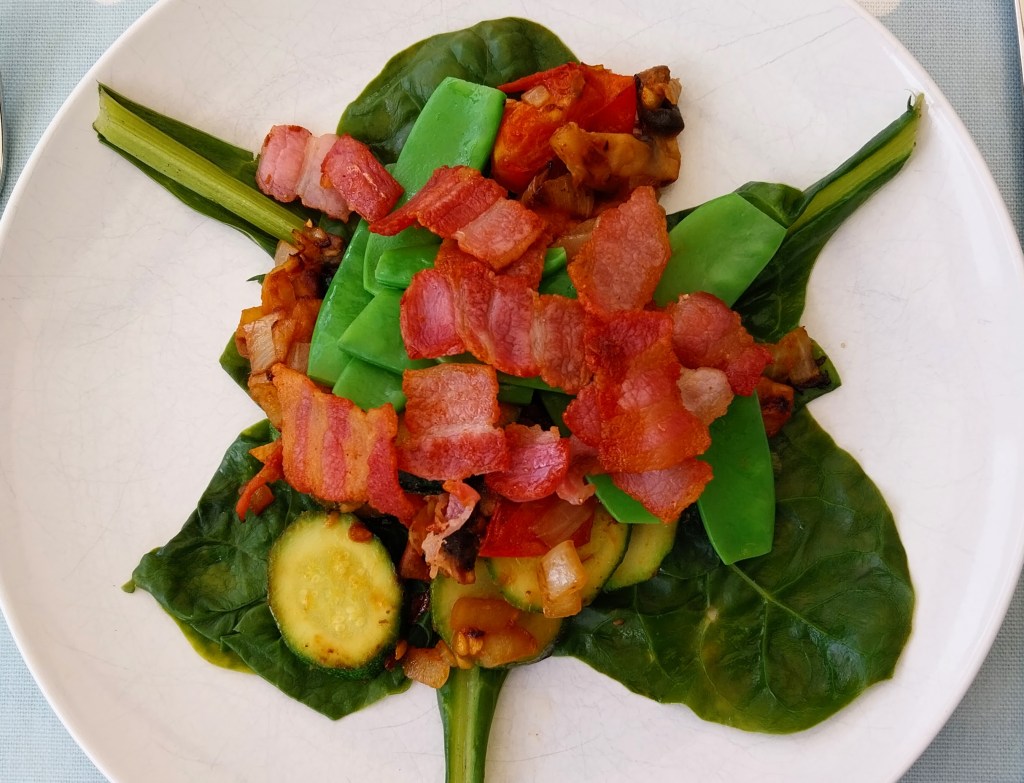
Summer Veg with Bacon on Chard

Today’s challenge was to cook up a consignment of summer veg, freshly picked at our local community farm, into a meal for 2. The veg selection included leaves of chard, tomatoes, a courgette, and mange tout. I combined it with a few ADK kitchen stand-bys – chopped mushroom, onion, bacon and crushed garlic into the meal shown above.

Servings

Light lunch for 2.

Timings

15 mins to prepare.

You Will Need

  • 6 leaves of chard
  • 3 slices streaky bacon
  • half an onion
  • 1 clove of garlic
  • 2 mushrooms
  • 1 courgette
  • 3 – 4 tomatoes
  • 12 – 15 mange tout

Method

  1. Chop the bacon and fry until crisped. Remove to a plate to stay warm.
  2. Crush the garlic clove and add to the warm frying pan. Chop the mushroom, onion and courgette, then add to the pan. Add in the tomatoes and let them reduce to form a squishy sauce.
  3. Wash the chard and place in a steamer for 5 – 10 minutes. Add the mange tout for the last 3 – 4 minutes.
  4. Remove the chard and mange tout, and pat dry with kitchen roll.
  5. Arrange a bed of chard on each of 2 plates. Top with the tomatoey mix, then place the mange tout and bacon on top. Serve.

Customise It!

You can add or swap in any veg that is seasonal or which you have to hand. Chopped peppers would be fine. I also had green beans to hand so could easily have swapped those for the mange tout. Leave out the bacon and sprinkle with roasted nuts for a vegetarian/vegan option.

Here’s a track I came across recently on my ear buds while out and about in the sunshine. I found myself pacing my walk in time with the beat. Great fun – try it out! This is Overseer with Pump Action.

Categories
Desserts Recipes

Gooseberry & Redcurrant Compote

They could be described as the forgotten fruits, so rarely do we see gooseberries and redcurrants on the shelves of our local supermarkets and market stalls.

However, this tasty compote cooked up by my wife, Lesley, serves as a timely reminder that both fruits have everything going for them: delicious, nutritious and packed with Vitamin C.

In this guest post, I will let Lesley explain….

When I was little, we had green gooseberry bushes in our garden. I didn’t like picking them as a child, as they had thorns! I also thought they looked like green marbles. However, I loved having them cooked up for tea along with custard. My job was to cut the little shrivelled flower off the fruit with scissors. 

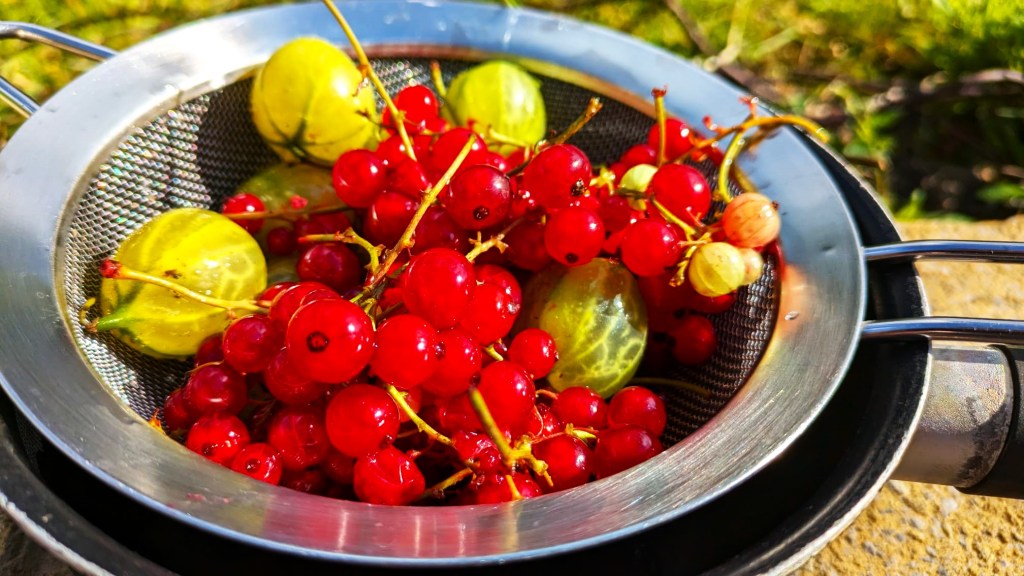
This year, they ripened at the same time as redcurrants at the local community farm I belong to. I brought them home and washed them, as you can see from the main photo at the top of this post.

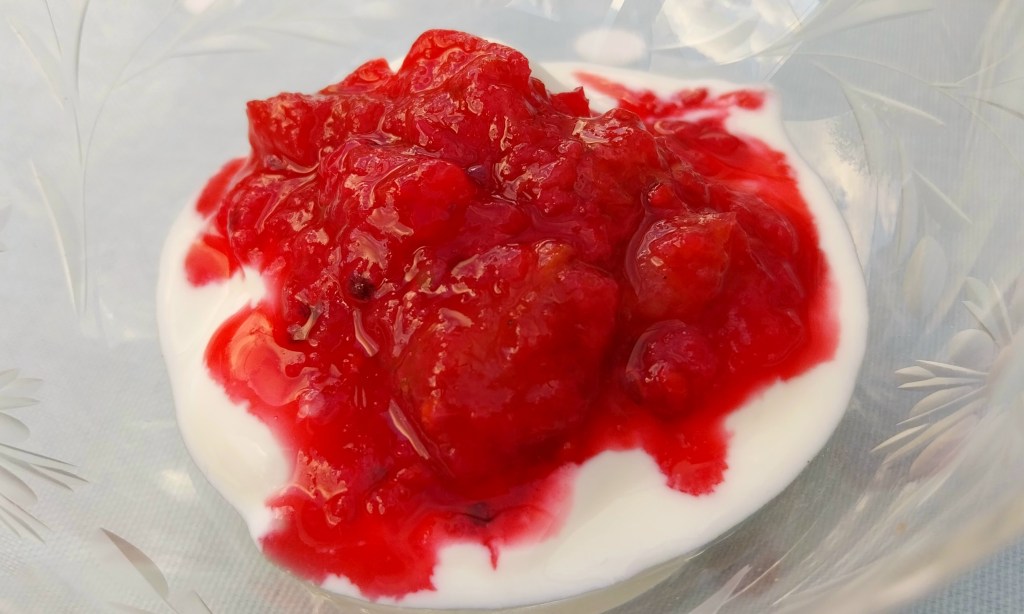
It seemed natural to cook them up together, so I made the compote shown in my photo below. It is a beautiful rich, red colour, so summery and light. I had made elderflower cordial a few weeks ago so used that as a sweetener, meaning I didn’t need to add in any extra sugar. This helps in appreciating the natural, slightly tart taste of the fruit.

Servings

This will give 4 adult servings.

Timings

15 mins to make.

You Will Need:

  • 200g redcurrants
  • 100g gooseberries
  • 2 tablespoons elderflower cordial

Method

  1. Put all the ingredients in a saucepan and heat it up until the fruit is soft, and the  juice reduces to make a jammy compote. This takes about 10 mins. Alternatively, you can cook it in a microwave on full power until the fruit is soft. 
  2. Leave to cool, then transfer to the fridge to chill.

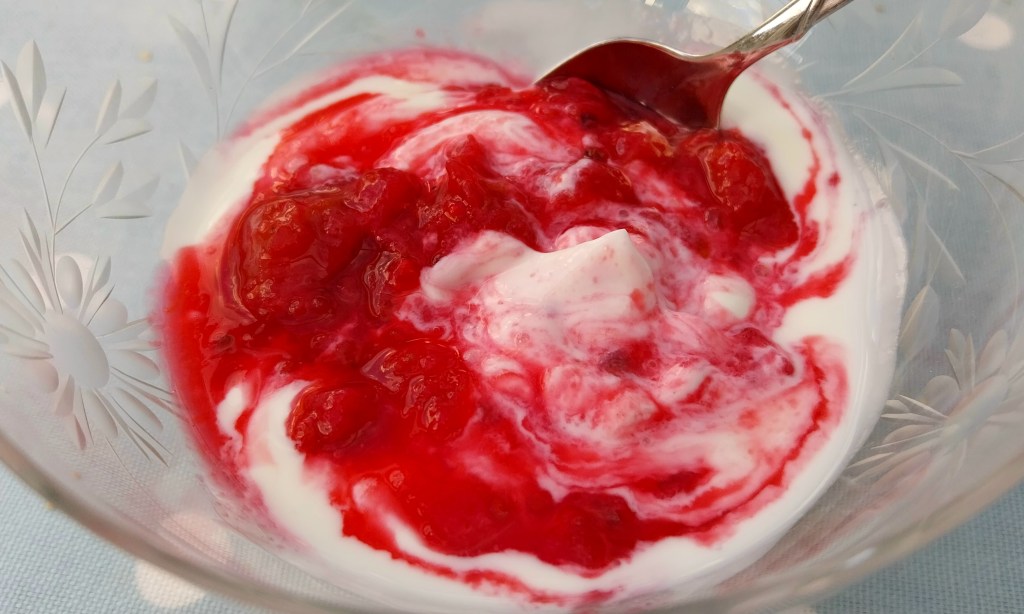
Once chilled, I served the compote with yoghurt. It looks amazing when swirled in with a spoon (see below), but you can also have it with ice cream or custard.

As a guest poster on A Different Kitchen, I get to choose the latest track for Kevin’s Spotify Playlist. I have gone for a light and fun track to go with my summery compote. This is Chic with disco hit, Le Freak.

Categories
Blog Snacks

Au Revoir, Bergerac

The time has come to leave the Dordogne after a lovely holiday, and head back to the UK.

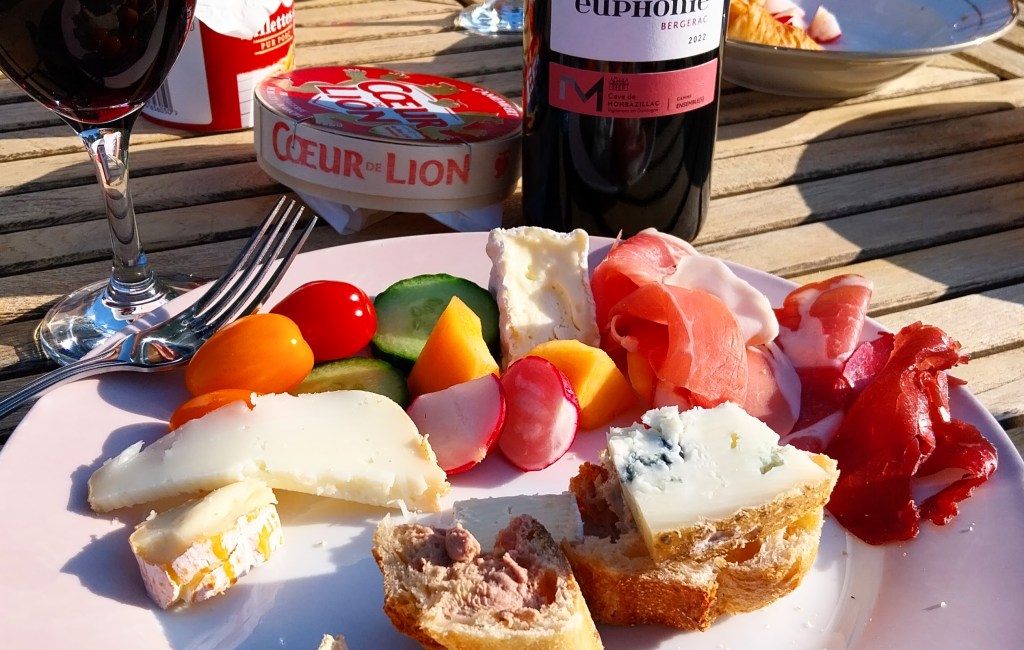
We have certainly dined well during our stay, as should be clear from my last few posts. My favourite meal in France remains a very simple one, however – a summer spread of cheese, paté, hams and salad that we have enjoyed outside in the sun most evenings, as shown in my photos above and below.

We’ve enjoyed baguettes from the local boulangerie, baked fresh and collected every morning, and best eaten the same day. They have a crisp exterior, and soft, buttery textured inner that carries a real taste.

A visit to the fromagerie is always fun, as there are so many French cheeses to try. We’ve usually opted for a cheeseboard comprising a soft, a hard and a blue: in the one below the soft is a Vieux Pané, the hard cheese a Tomme de Montagne, and the blue a Basque Bleue.

Paté de fois gras goes well spread on a hunk of baguette, and local cured hams from the charcuterie have been tastily paired with chunks of ripe, golden melon from that marché in Bergerac.

Enjoyed with a glass of Bergerac Rouge, of course. While watching the sun set.

Time to say au revoir.

I’ve downloaded my listening for the journey back from Bergerac Airport. I’ve chosen a 2023 digital remaster of New Order’s Substance album, which is sounding even greater than ever. Here’s a track to show what I mean: Confusion ’87.

Categories
Blog Desserts

Baba au Rhum

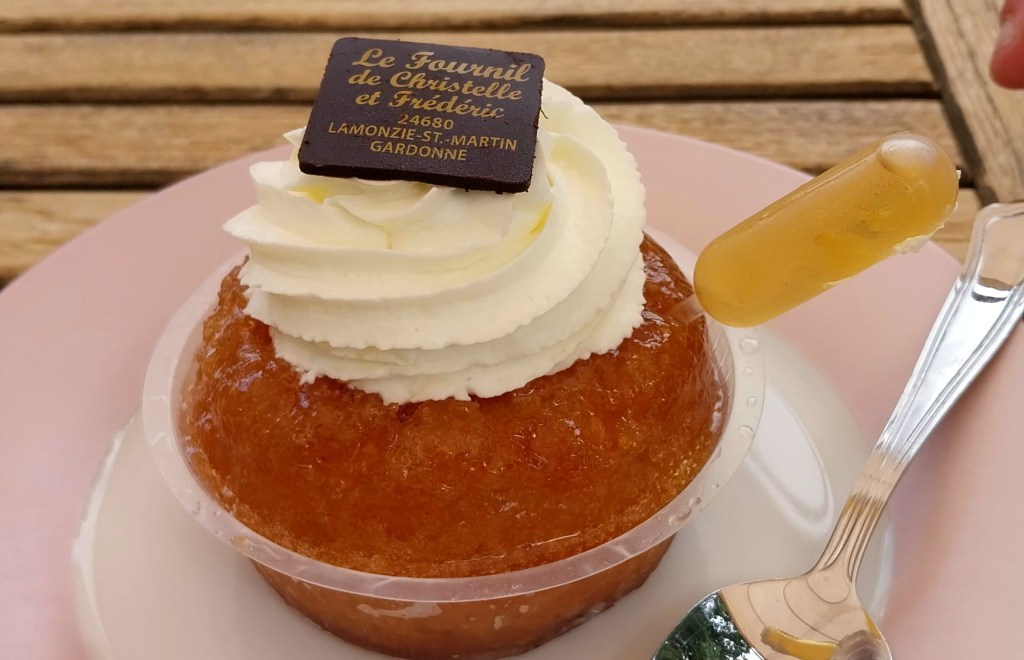
Of all the pastries we have enjoyed on our current holiday in France (and there have been a few 🙂 ), the one consistently rated the highest in our party has been the Baba au Rhum, or Rum Baba.

This eastern European delicacy was reinvented in Paris in the early 19th Century. The story goes that a cake that had become a little dry was enlivened by a little soaking in some rum.

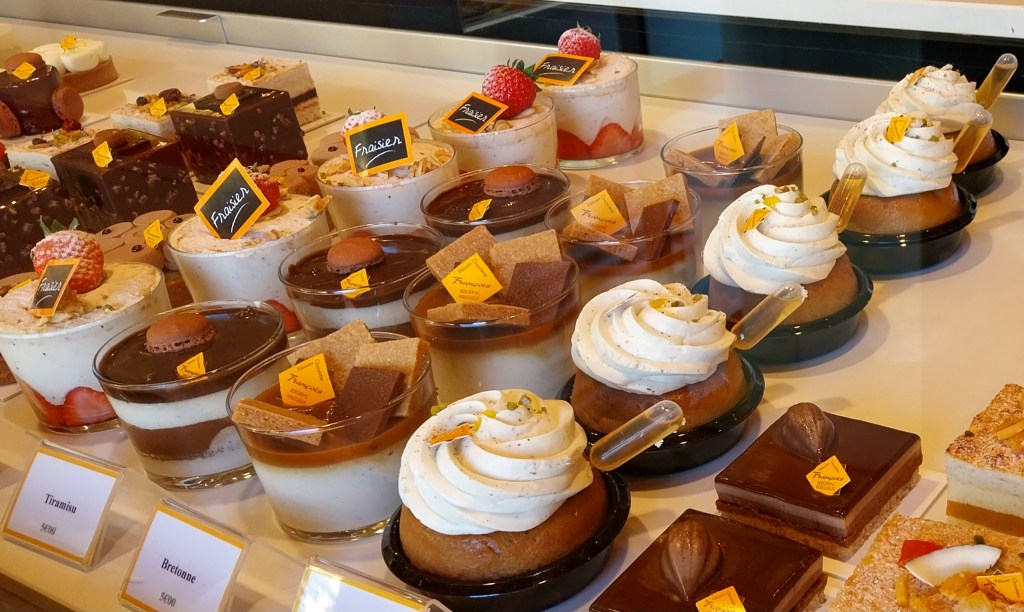
Since then patisseries all over France have never looked back. Fast forward 200 years and this is the scene in our local boulangerie here in the Dordogne. Amidst a range of to-die-for pastries sits a line of Baba au Rhum.

As you can see, the Baba is served with its own pipette already inserted into the cake. The pipette is filled with rum, which is injected into the sponge before eating, by carefully squeezing the pipette with one’s fingers. It makes a dessert that is light, moist and boozy, topped off with a swirl of whipped cream. Mmm!

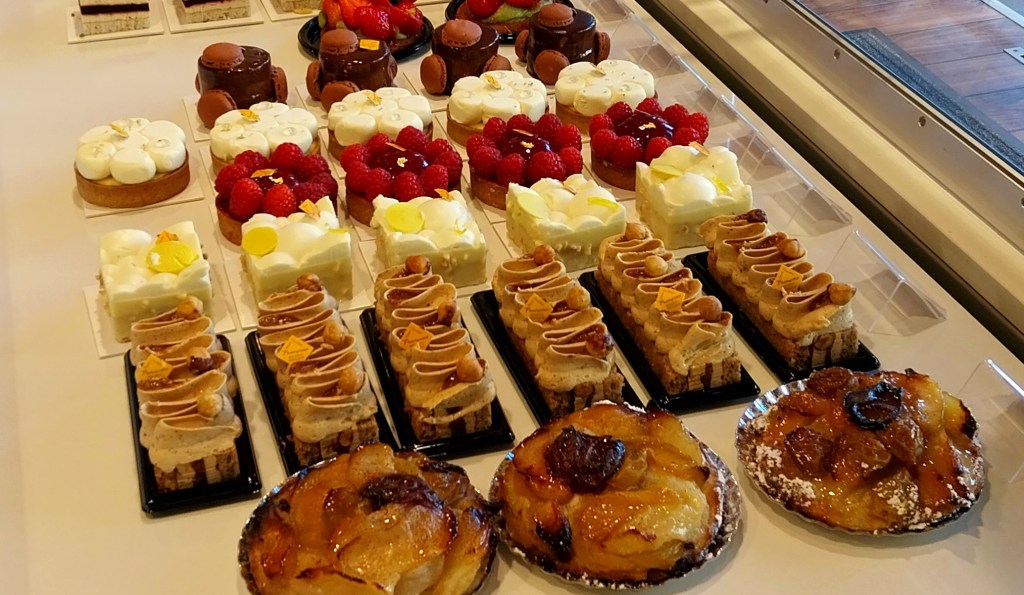
The Rum Baba has had some stiff competition from the patisseries we have frequented this week, see below.

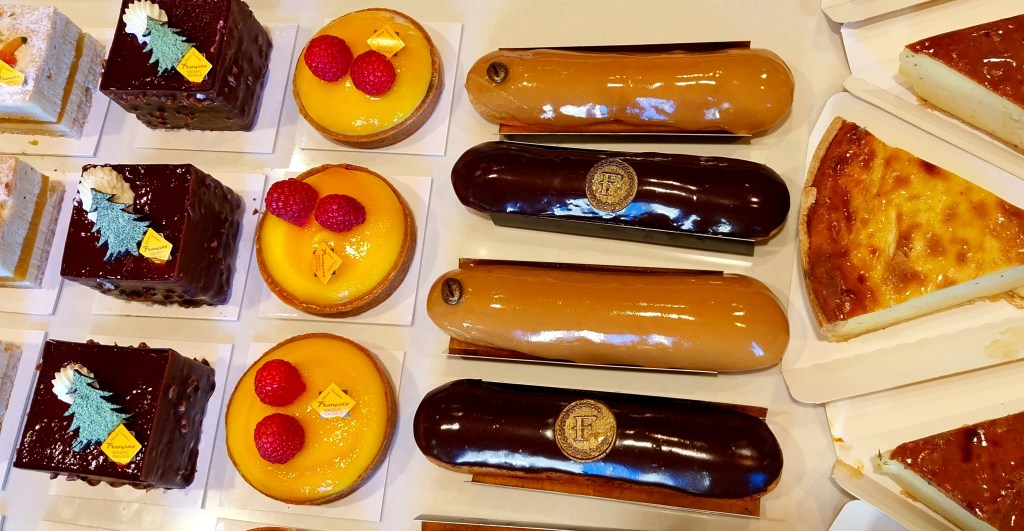
Or maybe check out this selection..

Every one a piece of culinary artwork that it is very difficult to fault. In such company, it is saying a lot that the Baba au Rhum has been rated so highly by our group.

Formidable!

I can’t say whether the cake inspired LCD Soundsystem to record this track, but it’s a song I really like, so here it is: New Body Rhumba.

Categories
Blog

Déjeuner à Mélange

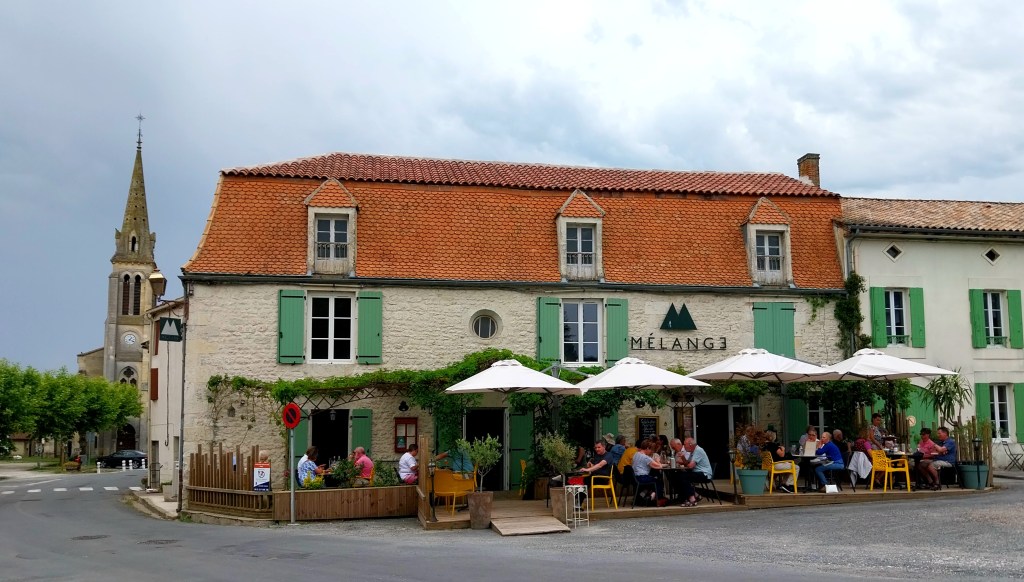
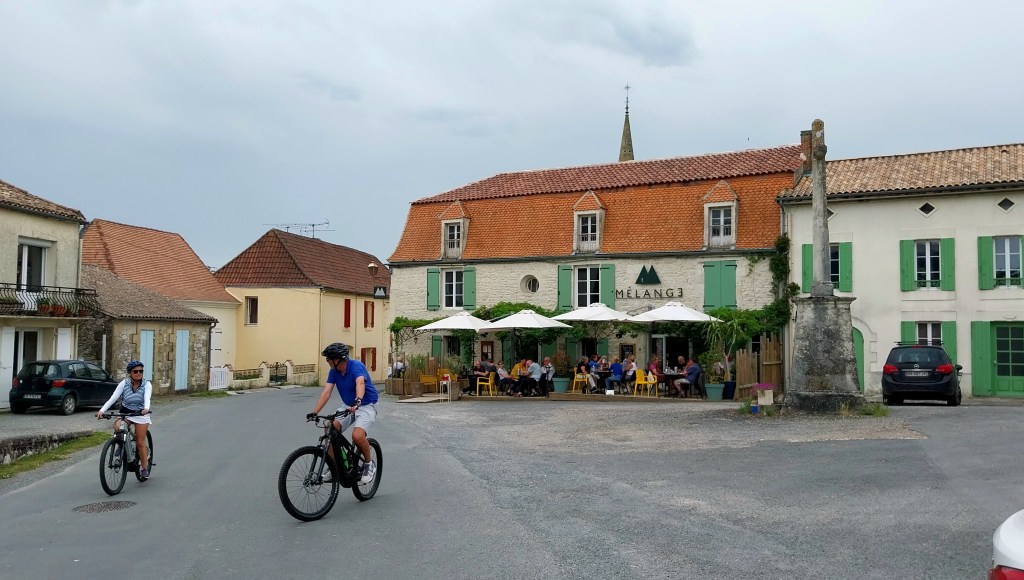
On holiday in France, and keen to experience some top regional cuisine, we book a table for 4 at Melange, a restaurant in our nearest village, Saussignac.

Like many rural villages we have seen in the Dordogne, it is small and sleepy. There is a lovely old church, a war memorial dressed for the D-Day commemorations, and a cobbled square. There is little traffic and few people to be seen out.

That changes, though, when the churchbells chime to say that midi – 12 noon – has struck, and this charming old building opens its doors.

Soon cars were arriving and all the tables on the terrace were filling up. Aren’t I glad that we booked!

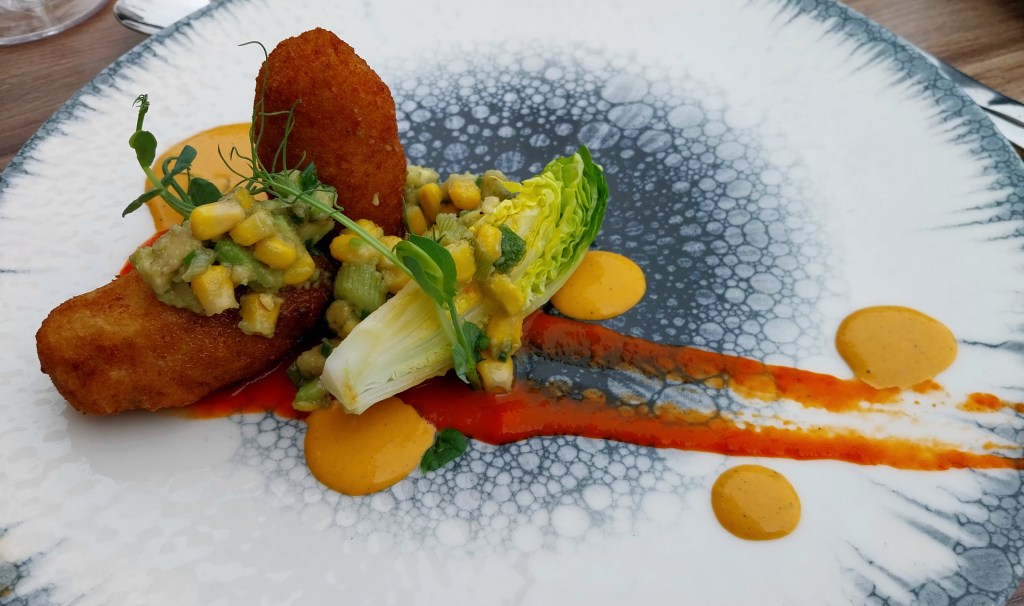
Our 3 course menu du jour was delicious, and beautifully presented. The restaurant’s chef clearly has an artistic streak, judging by the stylish way the dressings and sauces are swept around the plate to get the mouth watering. Well, this country has quite some pedigree when it comes to art: Cezanne, Matisse, and Monet to name a few. Why shouldn’t that extend to culinary creation?

For my Entree, I chose the cod and yuzu croquette, which was served with baby gem lettuce and a sweetcorn and avocado salsa. That is red pepper aioli you can see in the photo below, swept across the dish in broad brush strokes, with carefully positioned blobs of yuzu dressing.

Yuzu is something I hadn’t come across before, and I do not even recall seeing it in any of our shops. Of Asian origin, and now grown in France, it is a citrus fruit that is kind of a cross between a lemon and a mandarin orange. It’s a natural for pairing with the fish in the croquette, therefore.

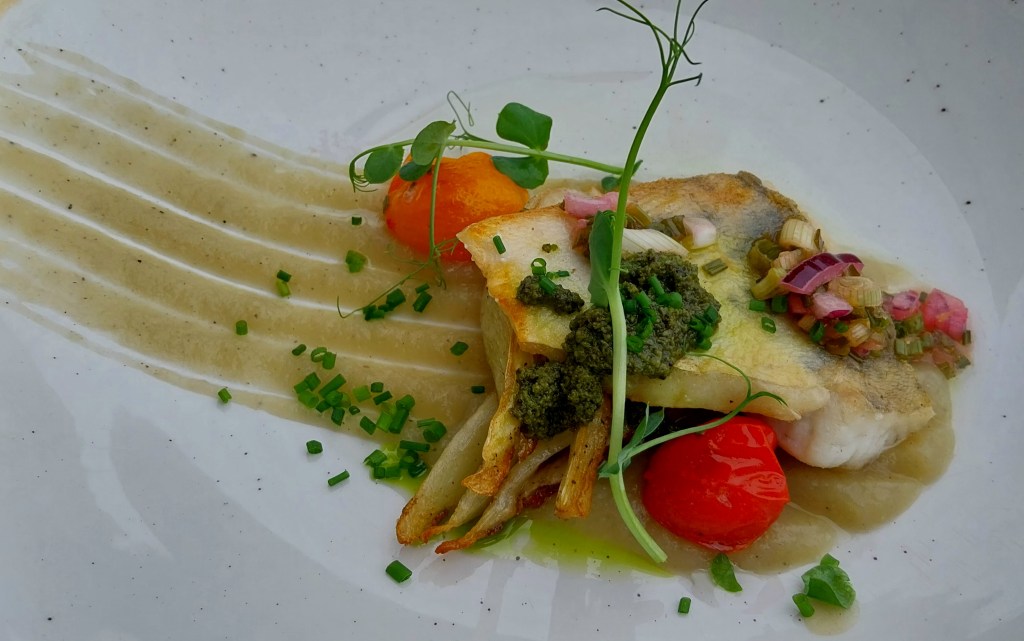
My Plat, or main course, was a fillet of sardine, served with rocket pesto, roasted cherry tomato, and chive and lemon gremolata. The fennel came en deux facons: firstly as a roasted bulb, and secondly as a puree that looks like it has been extravagantly combed across the plate with traditional Gallic flourish – see below.

The gremolata I hadn’t come across before, and I will definitely have a go at making this back in the ADK Kitchen. It is a garnish comprising seasonal European ingredients all minutely chopped: red onion, garlic, chives, citrus zest and herbs, blended with olive oil.

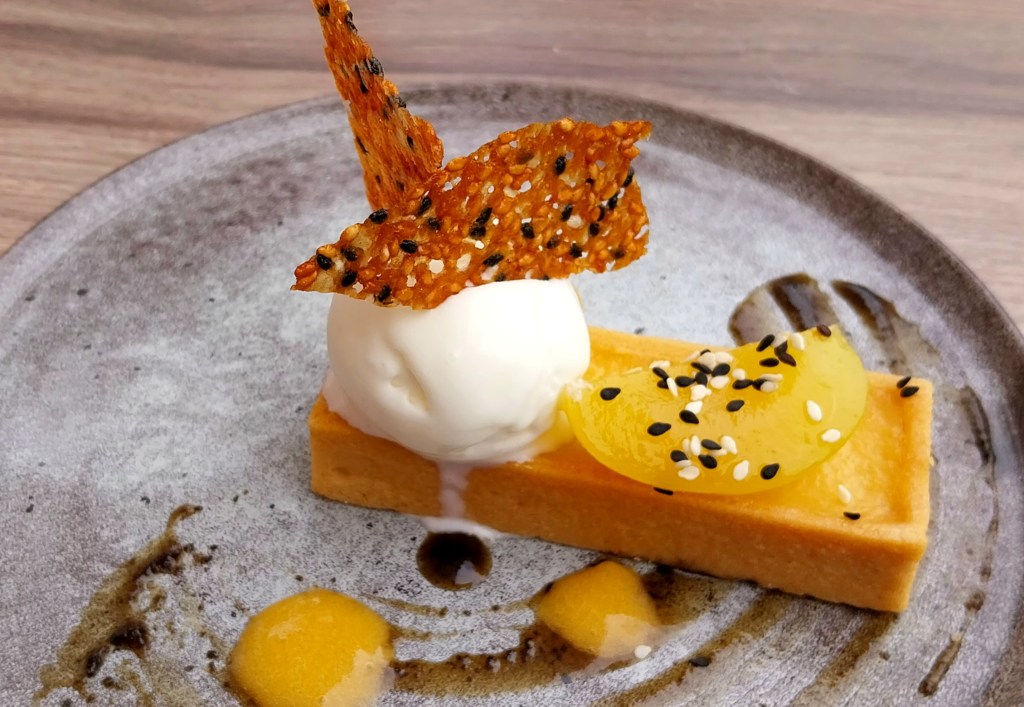
Dessert, shown below, was Tarte a l’abricot – apricot on a biscuit crumb base – with olive caramel wafers and a scoop of yoghurt ice cream.

The apricot had a real zing, and the yoghurt slightly less sweet than more traditional ice cream. The olive caramel wafers are made from pureed black olives and sugar, giving a sweet yet slightly bitter taste that I think goes well in a fruity sweet.

I rounded things off with a cappuccino that was served with a Canelé de Bordeaux, a small caramel pastry that is traditional in this region of France.

A thoroughly enjoyable couple of hours with great food, much inspiration for future cooking, and the company of family and friends. The price was reasonable also – my 3 course menu du jour was €24 (£20 or $25), which I considered fair value.

A glimpse into the unrushed life of a quiet village in the Dordogne that enjoys its food. As Dublin’s B*Witched put it, C’est La Vie !

Categories
Blog Mains

Au Marché

One of the great joys of being a foodie on holiday in France is making a visit to the local market, or ‘marché’. So, while here in the Dordogne Valley, we set out for the local town of Bergerac on market day. Some of the fresh produce we bought inspired our evening meal back at the farmhouse. More of that in a moment.

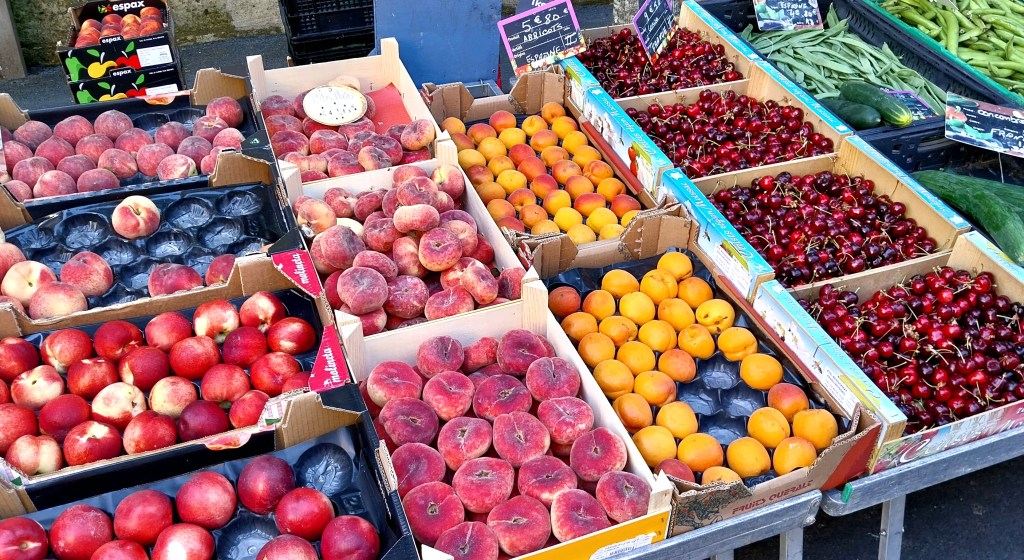
It was a beautiful warm and sunny morning as we arrived. The market was already well under way, this array of soft fruit was glinting in the sun, and business was brisk.

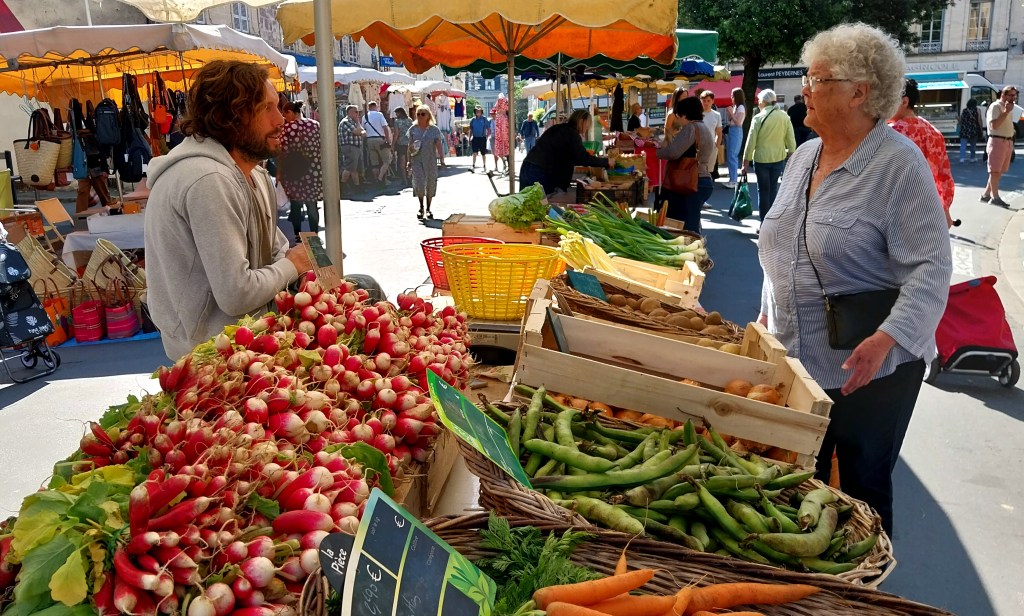
The market isn’t just about stocking up with provisions for the week, however – there’s a real sense of market day being an opportunity for local people and traders to meet and catch up. In between happily chatting with customers, this chap sold us a bag of his healthy crop of radishes. Simply washed, topped and tailed, they made a light, peppery and crunchy snack alongside cold beers.

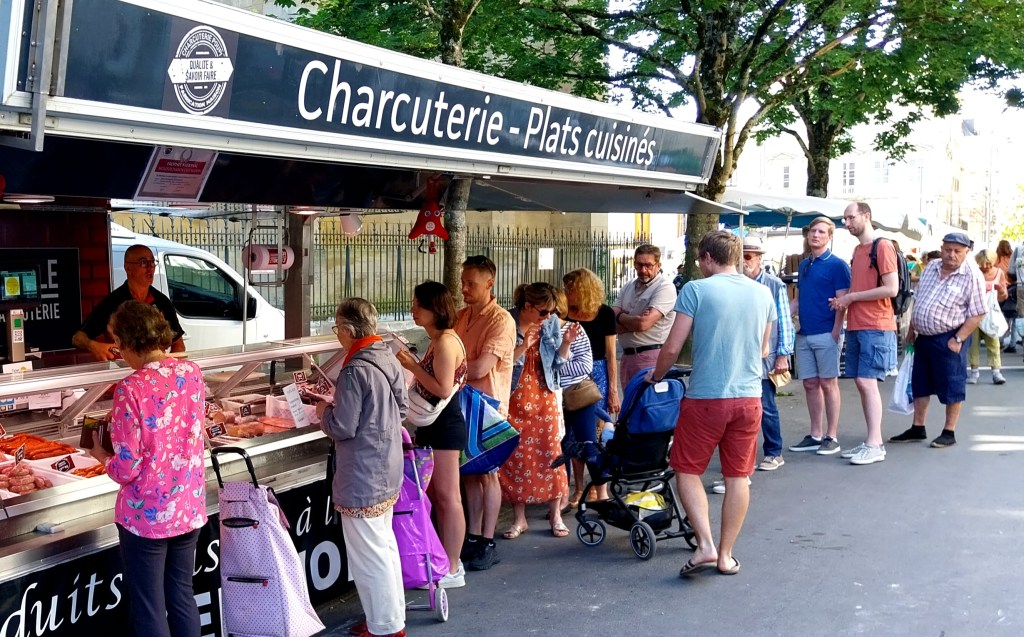
A long queue of discerning French shoppers waiting patiently to buy their food is usually a reliable sign of a good market stall. So it was with this charcuterie stand, where beef carpaccio was the ready prepared Plat du Jour. The charcuterie included local merguez sausages, which are long and thin with the texture of chorizo, and which went well later on our barbecue.

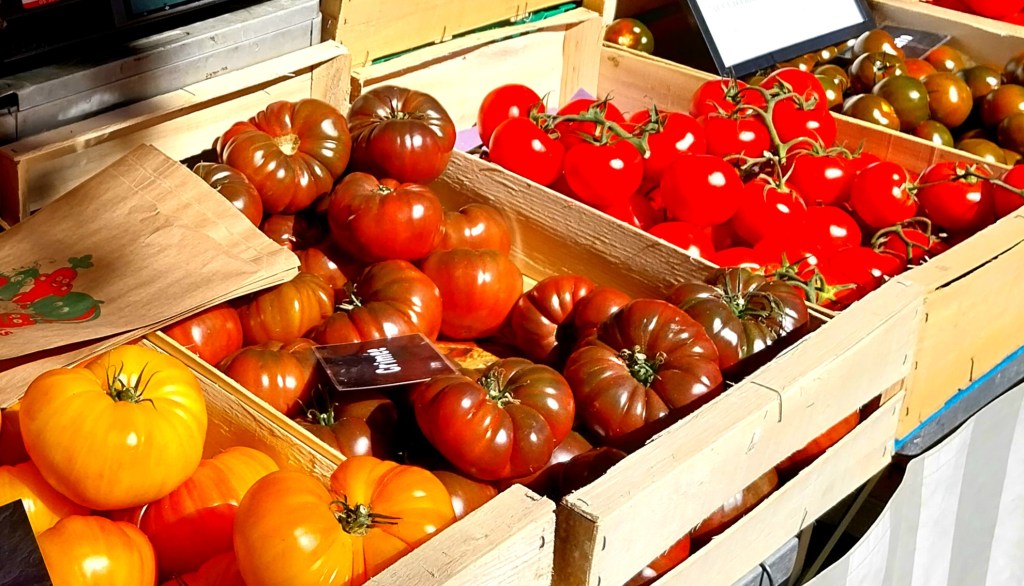
All the fruit and veg was seasonal, fresh and presented attractively. The range of tomatoes was something else, and they all looked luscious in the mid-morning sunshine.

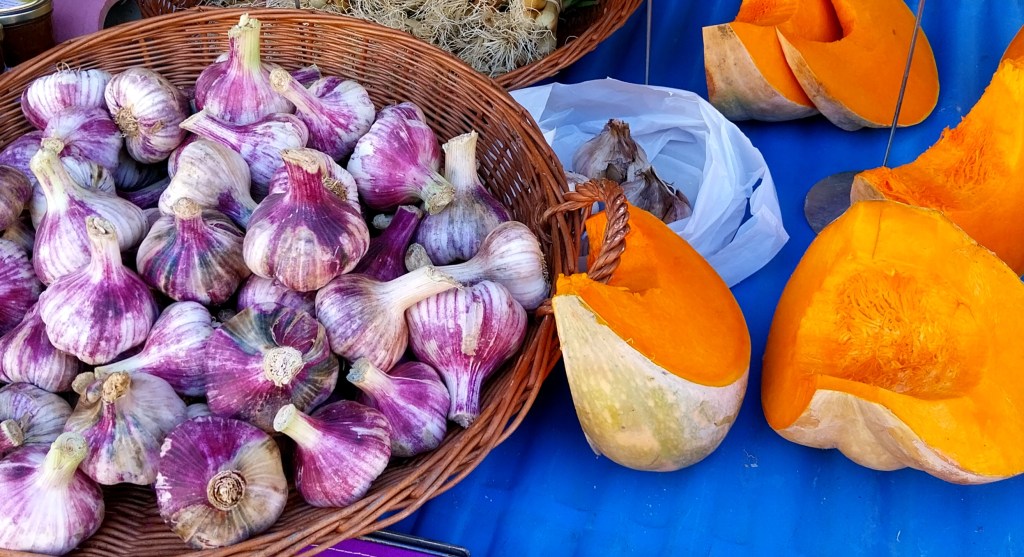
Garlic is a staple in French cooking, and I treated myself to one of these wonderful looking purple bulbs to take home. Presentation-wise, I liked the juxtaposition of vivid colours alongside these wedges of butternut squash.

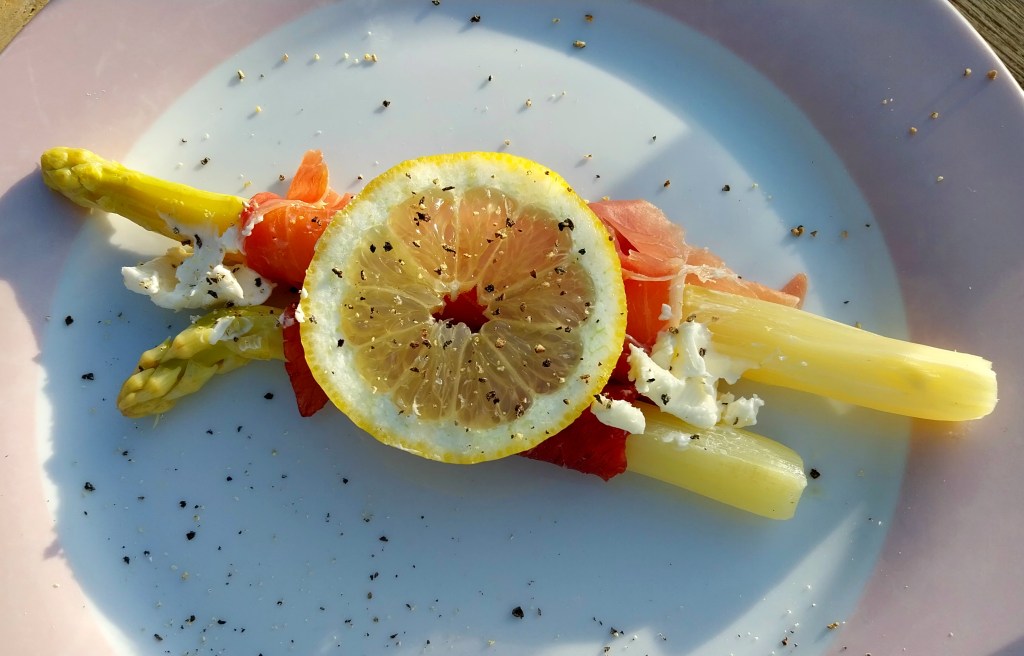
And so to that evening meal. I hadn’t come across white asparagus before, being more used to the green variety we have in the shops in the UK. It is popular in central Europe however, so I decided to try some.

It is essentially the same plant, but is grown underground, which stops it turning green. It has a slightly more intense taste, and requires a little more prep by peeling from the end of the spear tip to the base of the stalk. Like all asparagus, the woody bit at the base needs trimming off also.

I steamed the spears for 20 mins, then wrapped them in local prosciutto, and warmed them on a plate in the oven for 10 mins. They were then served with a knob of melting butter, a squeeze of fresh lemon and a few twists of black pepper.

The dish was enjoyed by our group, with a glass of chilled Bergerac Blanc on our terrace in the evening sun.

Voilà!

Time for some more French-inspired rock. This is The Stranglers with Goodbye Toulouse.

Categories
Blog Mains

G’day Melbourne

This week we’ve been enjoying the food and cafe culture in Melbourne, having flown here from the Sunshine Coast for the next stage of our travel around Australia.

Coffee is a central part of the Melburnian way of life – the many, many independent coffee shops across the city doing a busy trade every morning.

The regular fix for me on this trip has been a creamy hot latte. The main photo above shows the barista at work while I waited for my drink to be made at a cafe in the Glenferrie district.

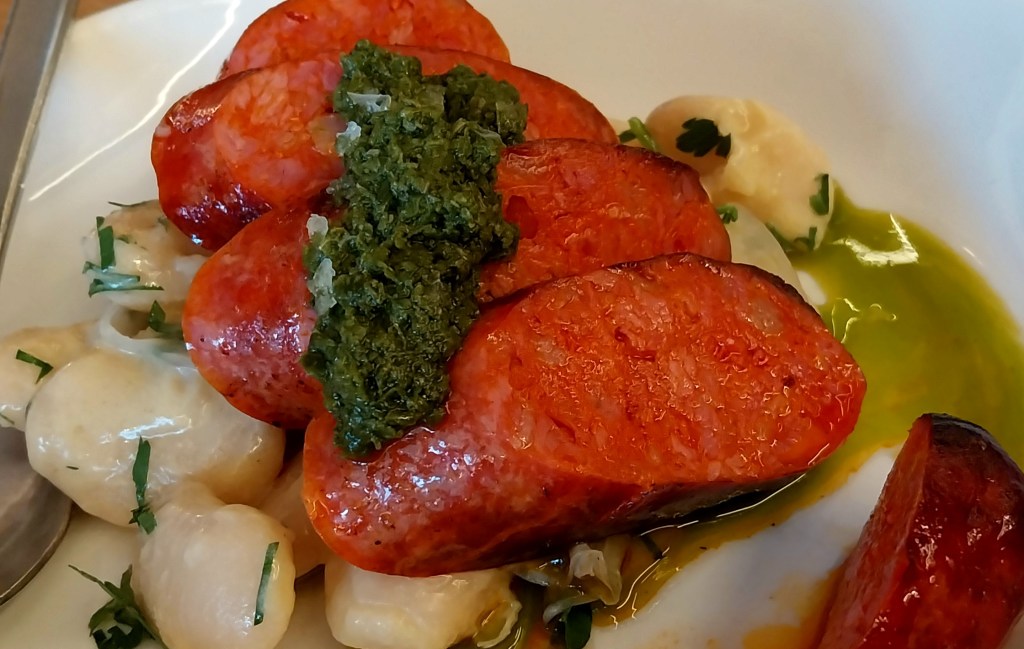
We’ve also been sampling some modern Australian cuisine at a restaurant called Mister Sandrino in Hawthorn. This pairing of locally made chorizo and lima beans, with a fresh parsley pesto-like dressing, tasted great.

On the same menu, we chose the classic Aussie fish, barramundi. It came with a crispy, edible skin, which I liked, and found interesting as I usually just discard the skin on a fillet of fish. Served also with slices of crispy pancetta and a pea puree, it complimented the soft, just-cooked flakiness of the tasty fish.

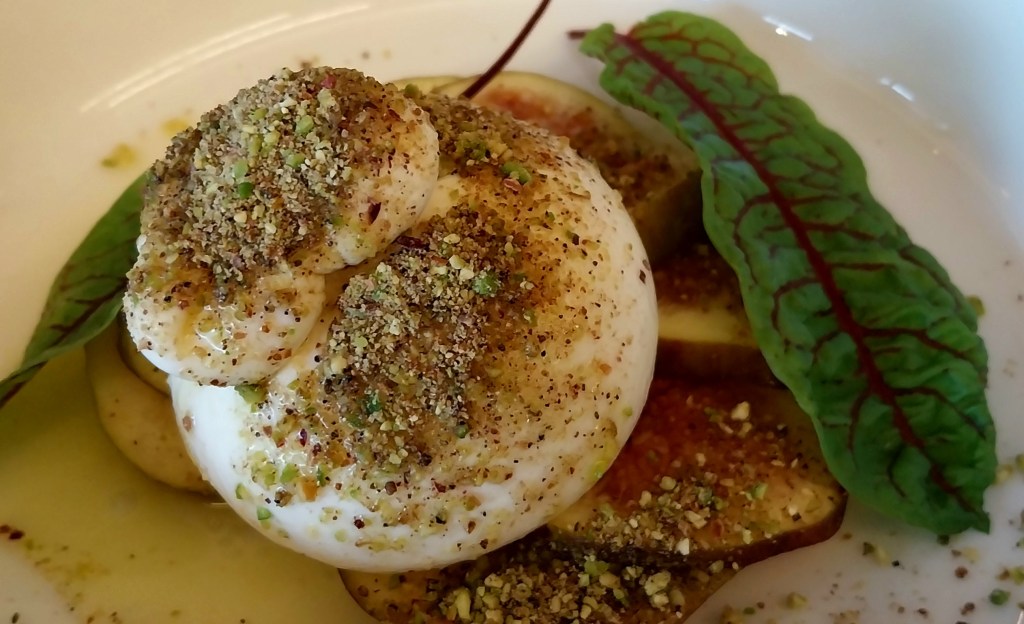
Another imaginative combination I liked was this creamy buffalo mozzarella, with dusting of pistachio crumb, served with figs and salad leaves.

I find it very inspiring to see how innovative chefs from other cultures come up with new ways of cooking and pairing ingredients. You never know – you may see some of these ideas reflected in future creations from the ADK kitchen!

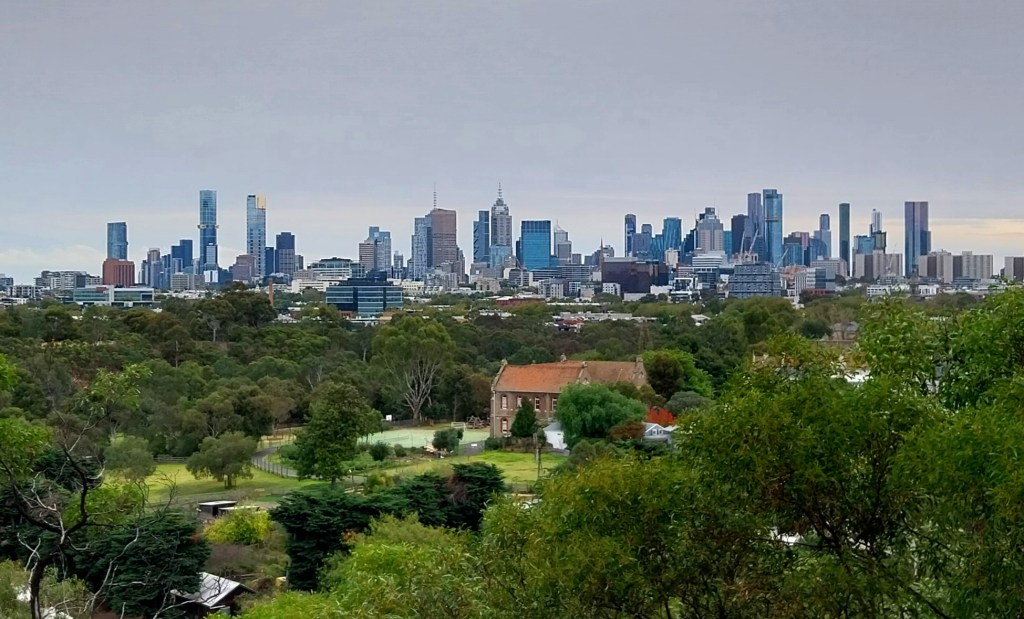
While on a theme of taking a fresh look at things, here’s a photo I took one evening of the Melbourne city skyline, from high up above the banks of the Yarra River.

Time to feature an indie band from Melbourne whose raw sound I’ve come to like. This is Drunk Mums with New Australia.

Categories
Blog Breakfast

Sunshine Breakfast

Our Australian road trip has now reached the area known as the Sunshine Coast, just over an hour’s drive north of Brisbane.

The name is very apt, there being no shortage of beautiful bays with near-deserted golden sandy beaches and, of course, plenty of surf and warm sunshine. Here’s Alexandria Bay viewed from the coastal headland in Noosa National Park.

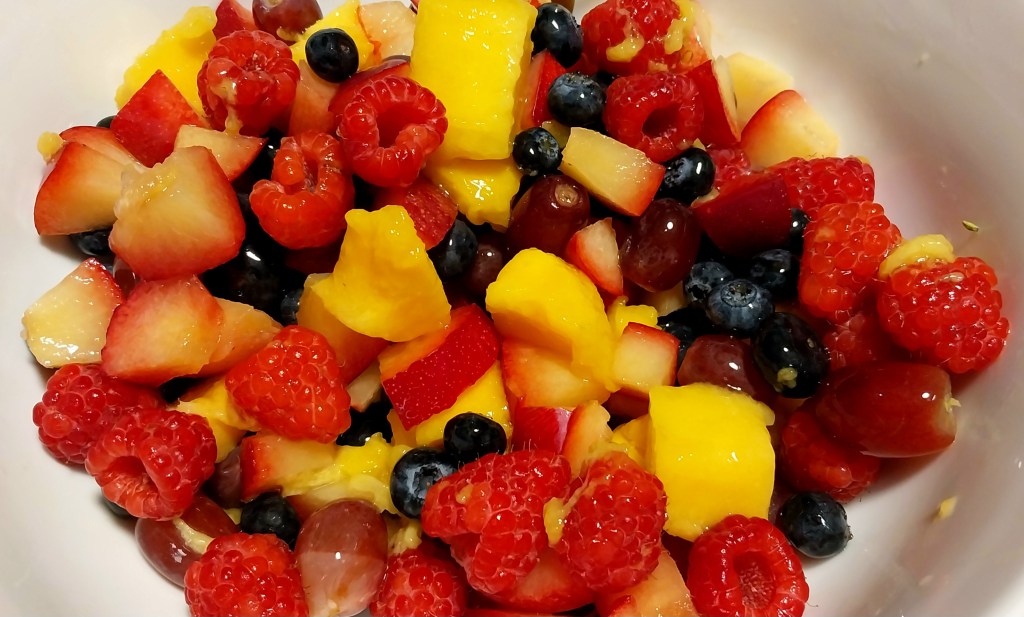
The sunshine does wonders for the abundance of fresh fruit growing here. As you can see from my main photo at the top of the post, I just had to put together a fresh fruit salad, with juicy mango, golden kiwi, red grapes, red plums, blueberries, raspberries, apple and banana – all local Queensland produce.

It has helped make what I call my Sunshine Breakfast, shown here over toasted Australian-grown oats and grains, and with thick, creamy Australian yoghurt. The crowning touch is a drizzle of honey from a jar I bought in the Blue Mountains. It is made from beehives in the eucalyptus forests there.

A bowl full of all-Australian Sunshine Breakfast. What a super way to start any day!

From one all-Australian classic to another, with the latest addition to the ADK playlist: this is Icehouse with Hey Little Girl.