Wherever I can, I try to be an ethical food shopper – conscious of the environmental and social impact of the produce that ends up for sale in our shops and market stalls here in the UK.
This means I have an issue with the black cherries that appear in our supermarkets this time of year. Nothing to do with their taste – they are every bit as delicious as they look. So what’s my problem?
Well, one look at the January frost on the ground in the UK will remind you that it is not exactly the season for luscious cherries to be blossoming on the trees. Just like Paddington Bear, they have travelled here all the way from South America. That is way too many food miles for my liking – the Earth could well do without the energy consumption and carbon generation associated with that amount of transportation, and the refrigeration needed to ensure they arrive here in fresh condition.
However, it’s never that straightforward, and this presents me with lots of dilemmas. Ok, I hear you say, so they’ve been shipped here from half way around the world, but isn’t it preferable that they have been grown naturally in a seasonal, sunny climate? Isn’t that better for the environment than the fruit, tomatoes etc that are grown out of season in a heated glasshouse closer to home, here in the UK or northern Europe?
And how is this different from the bananas, pineapples and other fruit and veg that we import? Or longer life items like tea, coffee and cocoa? If we boycott certain items, aren’t we damaging the trade of countries with less well-developed economies?
Aaagh! See – I told you it was a nightmare.
Over time, I’ve developed a few rules of thumb to navigate my way through this ethical minefield.
Firstly, as far as possible I buy and cook with food produced locally and in season.
Secondly, I’m fine with fruit and veg, and store cupboard foods, that we just can’t grow in our climate, like tea, coffee, bananas etc being brought here. When fairly traded, this creates jobs and helps the producer country develop and maintain a sustainable economy.
But as for foods we can grow here in summer (like cherries), I don’t see why we in the western world have to be so spoiled as to expect them to be shipped to us from wherever, all year round, regardless of the impact this has on the planet. If we really can’t do without cherries in our winter, we can preserve part of our own summer harvest, or put them in the freezer.
But wait – there is yet one further ironic twist that highlights the futility of this episode of global trade. This week in Sainsbury’s, the packs of South American cherries were all yellow stickered with massively reduced prices. They had reached their sell-by date without anyone buying them at normal price. Were my fellow shoppers taking an ethical stand and refusing to buy them?
It was too tragic a thought that all this beautiful fruit, having been carefully cultivated by South American farmers and brought all this way, would now begin decomposing on our shores, as soon as the yellow stickers expired later that day.
So I bought a pack – at a ridiculously reduced price that cannot possibly reflect the true economic cost of the whole enterprise to Sainsbury’s. I reckoned the loss-making exercise will have taught them a harsh commercial lesson, and that importing practices might now be changed.
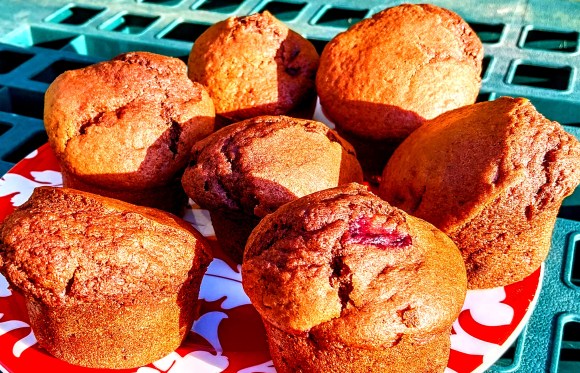
For the record, I lovingly washed, chopped and de-stoned the cherries, mixing them with some cocoa and other long life, store cupboard ingredients.

I baked the choc cherry muffins shown in my main photo above. They were delicious, but I will wait to the summertime to post the recipe, when cherries are properly in season here!
But hey, here’s an idea: what if, for a couple of months this time of year, we get by with our native apples and the soft fruit we’ve grown through the summer, having preserved it or frozen it to see us through the winter. The planet can be spared the pointless exercise of transporting cherries half way around the world, and our lovely friends in South America can be left to enjoy their own fresh produce.
Now what’s wrong with that? Comments welcome!
In the meantime, here’s The Jam with All Around the World.
 A Different Kitchen