Categories
Desserts Recipes

Gooseberry & Redcurrant Compote

They could be described as the forgotten fruits, so rarely do we see gooseberries and redcurrants on the shelves of our local supermarkets and market stalls.

However, this tasty compote cooked up by my wife, Lesley, serves as a timely reminder that both fruits have everything going for them: delicious, nutritious and packed with Vitamin C.

In this guest post, I will let Lesley explain….

When I was little, we had green gooseberry bushes in our garden. I didn’t like picking them as a child, as they had thorns! I also thought they looked like green marbles. However, I loved having them cooked up for tea along with custard. My job was to cut the little shrivelled flower off the fruit with scissors. 

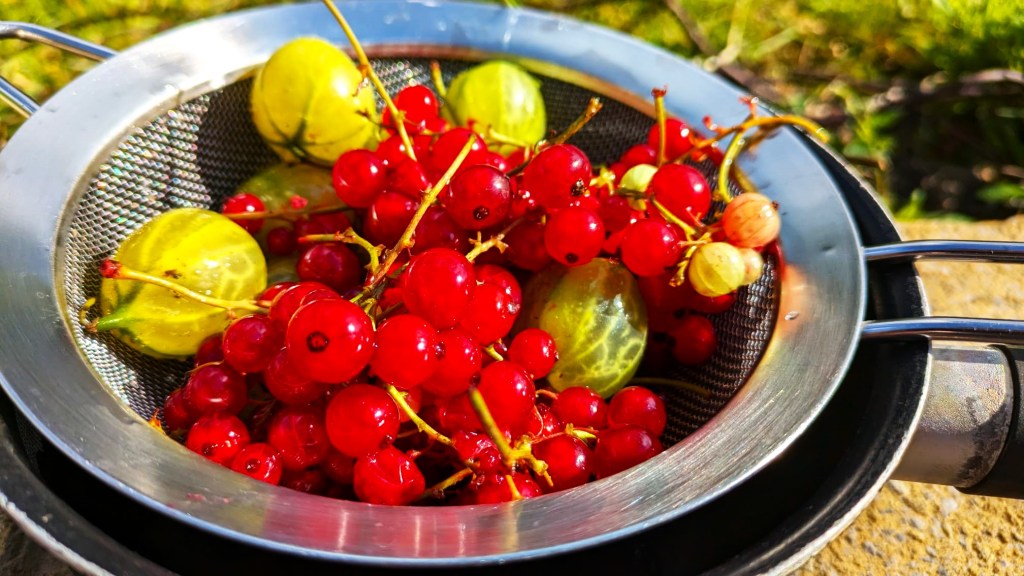
This year, they ripened at the same time as redcurrants at the local community farm I belong to. I brought them home and washed them, as you can see from the main photo at the top of this post.

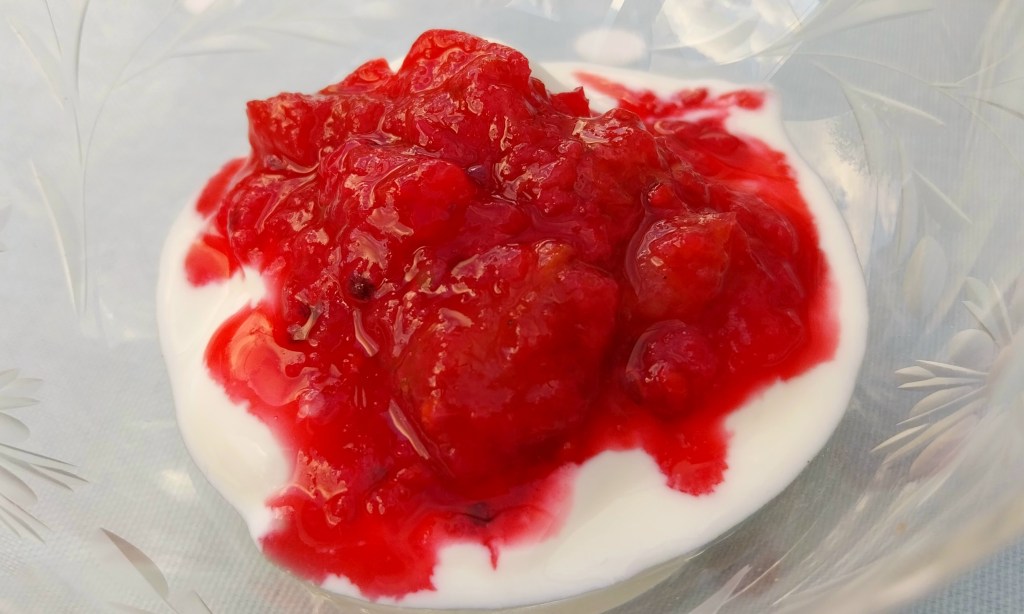
It seemed natural to cook them up together, so I made the compote shown in my photo below. It is a beautiful rich, red colour, so summery and light. I had made elderflower cordial a few weeks ago so used that as a sweetener, meaning I didn’t need to add in any extra sugar. This helps in appreciating the natural, slightly tart taste of the fruit.
Servings

This will give 4 adult servings.

Timings

15 mins to make.

You Will Need:

  • 200g redcurrants
  • 100g gooseberries
  • 2 tablespoons elderflower cordial

Method

  1. Put all the ingredients in a saucepan and heat it up until the fruit is soft, and the  juice reduces to make a jammy compote. This takes about 10 mins. Alternatively, you can cook it in a microwave on full power until the fruit is soft. 
  2. Leave to cool, then transfer to the fridge to chill.

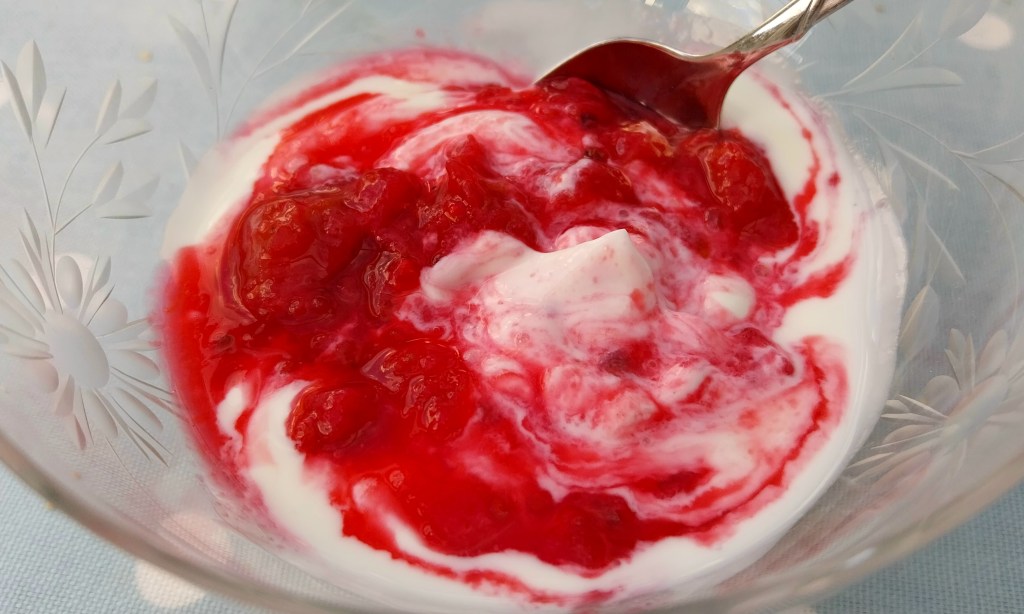
Once chilled, I served the compote with yoghurt. It looks amazing when swirled in with a spoon (see below), but you can also have it with ice cream or custard.
As a guest poster on A Different Kitchen, I get to choose the latest track for Kevin’s Spotify Playlist. I have gone for a light and fun track to go with my summery compote. This is Chic with disco hit, Le Freak.
Categories
Breakfast Recipes

Summer Fruit & Nut Acai Bowl

I’m home from my trip to France, to find that a spell of warm sunny weather may have finally arrived in the UK.

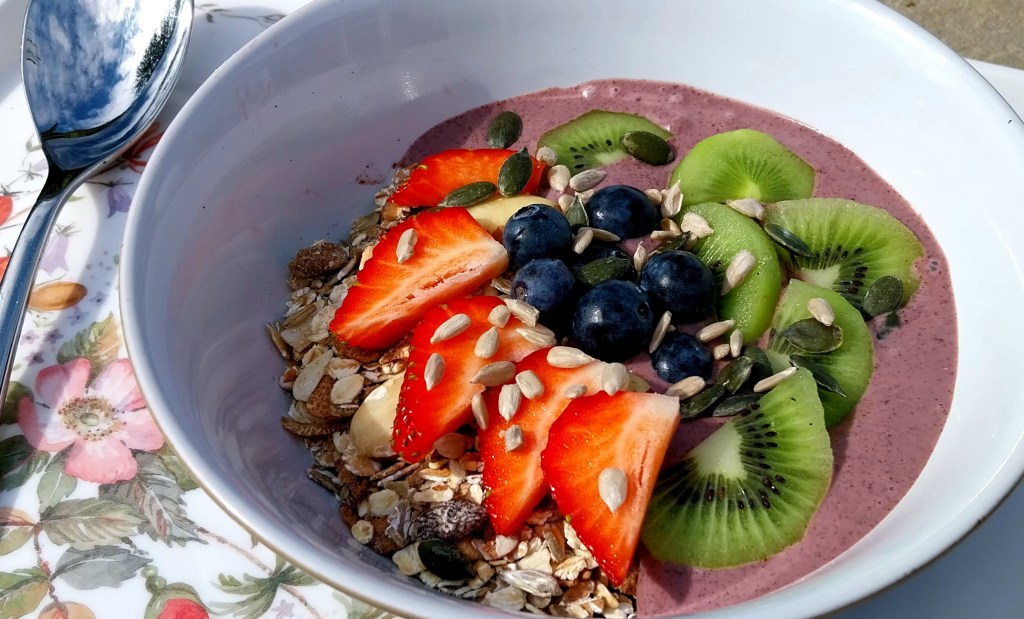
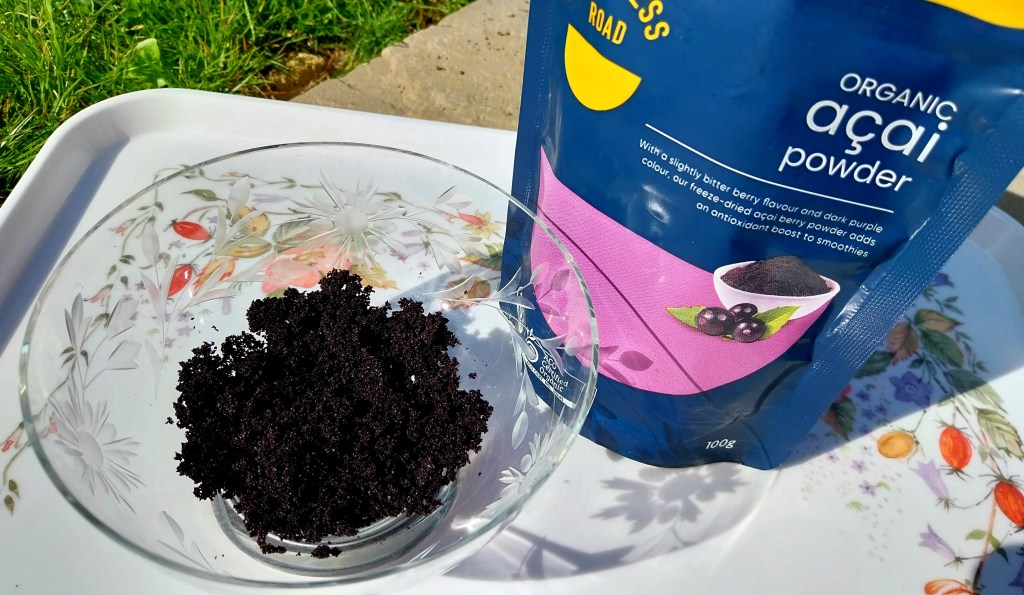
Reminded of the climate we enjoyed on our trip to Australia in the spring, I decided it was time to bring out the Acai powder I brought back in my suitcase, to make an Aussie-style smoothie bowl. Here it is, shown in my photo above, glinting in the British breakfast time summer sun.

We found Acai Bowls to be a popular choice in cafes and takeaway joints wherever we went in Australia. The Acai is usually served with combinations of cereal, fresh fruit and nuts (check out my earlier post on the crazy, yet delicious, peanut butter-infused option I enjoyed in Melbourne).

Acai (pronounced ah – sa – ee) is a dark purple berry grown in Brazil. It is rich in antioxidants, fibre and healthy fats, and believed to support heart health and cognitive function, while being low in sugar and calories. It tastes great, with a flavour reminiscent of dark chocolate, berries and red wine. It is suitable for vegetarians and vegans.

The berries do not travel well, so outside of Brazil they are sold in pulp form or as powder. I bought a pack of powder from Coles Supermarket in Melbourne, where it was available on the shelf, in several varieties. I have seen it in specialist health food shops here in the UK, but it is nowhere near as mainstream as it is Down Under.

For my Acai Bowl, I blended a tablespoon of Acai powder with two bananas and 3 tablespoons of Greek natural yoghurt. After a minute or so in the blitzer, it forms a thick purple cream that can then be poured on to cereal and topped with fresh fruit. This made enough for 2 Acai Bowls.

I poured it on to muesli and added some fresh strawberry that is grown locally. Just like Cristiano Ronaldo, the blueberries and kiwi are from Portugal. The crowning touch is some toasted brazil nuts, with a sprinkling of pumpkin and sunflower seeds.

It is the time of year to relax outside in the sun listening to good music on my ear buds. This week I’ve been revisiting an old playlist featuring The White Stripes, having forgotten how good they sound. Here they are with The Hardest Button to Button.

Categories
Blog Mains

Au Marché

One of the great joys of being a foodie on holiday in France is making a visit to the local market, or ‘marché’. So, while here in the Dordogne Valley, we set out for the local town of Bergerac on market day. Some of the fresh produce we bought inspired our evening meal back at the farmhouse. More of that in a moment.

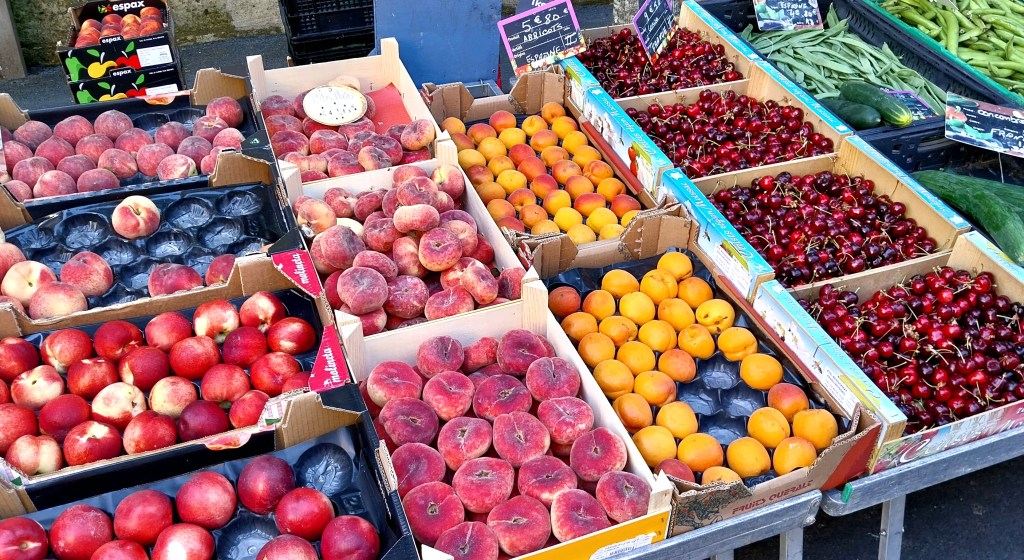
It was a beautiful warm and sunny morning as we arrived. The market was already well under way, this array of soft fruit was glinting in the sun, and business was brisk.

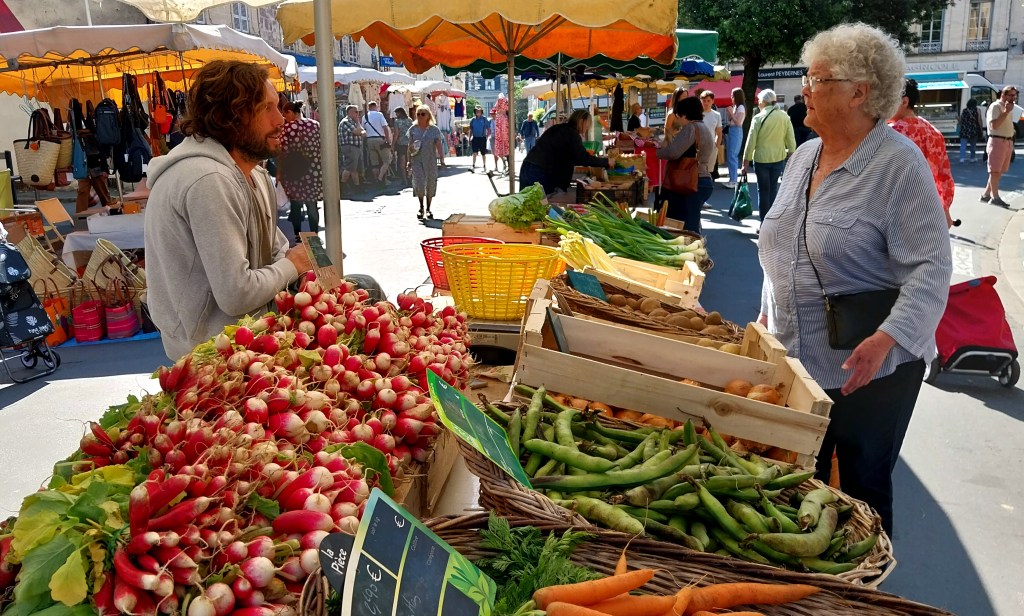
The market isn’t just about stocking up with provisions for the week, however – there’s a real sense of market day being an opportunity for local people and traders to meet and catch up. In between happily chatting with customers, this chap sold us a bag of his healthy crop of radishes. Simply washed, topped and tailed, they made a light, peppery and crunchy snack alongside cold beers.

A long queue of discerning French shoppers waiting patiently to buy their food is usually a reliable sign of a good market stall. So it was with this charcuterie stand, where beef carpaccio was the ready prepared Plat du Jour. The charcuterie included local merguez sausages, which are long and thin with the texture of chorizo, and which went well later on our barbecue.

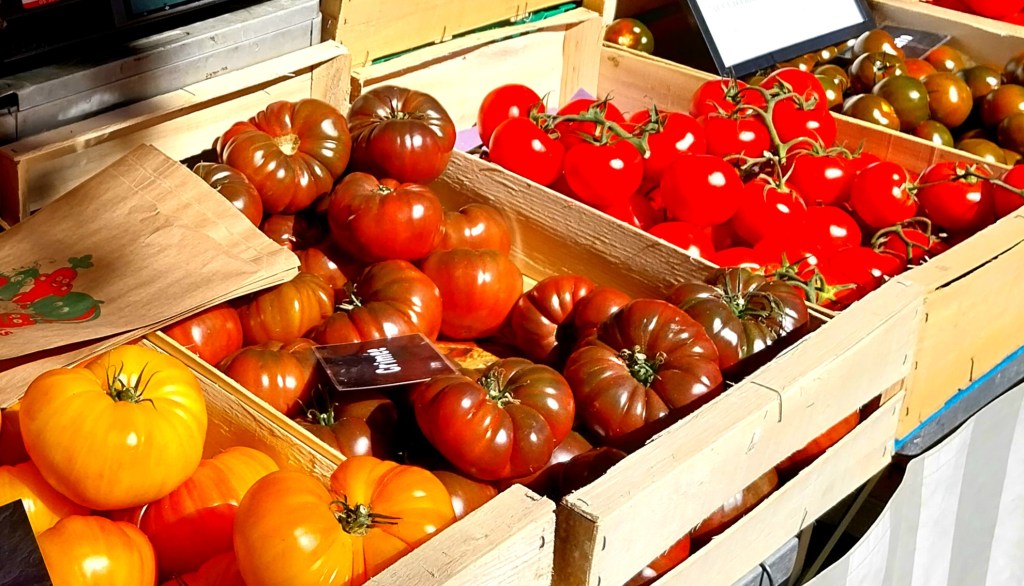
All the fruit and veg was seasonal, fresh and presented attractively. The range of tomatoes was something else, and they all looked luscious in the mid-morning sunshine.

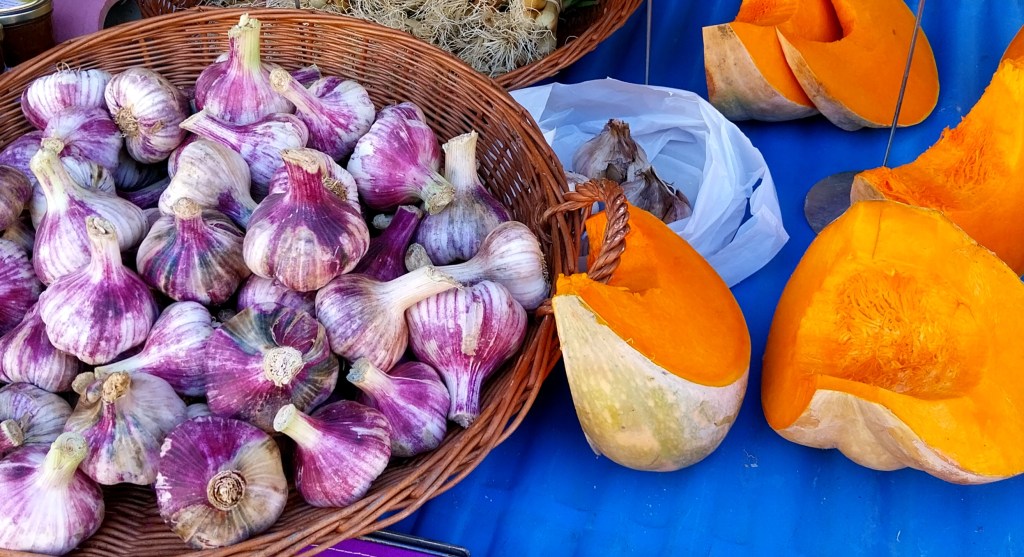
Garlic is a staple in French cooking, and I treated myself to one of these wonderful looking purple bulbs to take home. Presentation-wise, I liked the juxtaposition of vivid colours alongside these wedges of butternut squash.

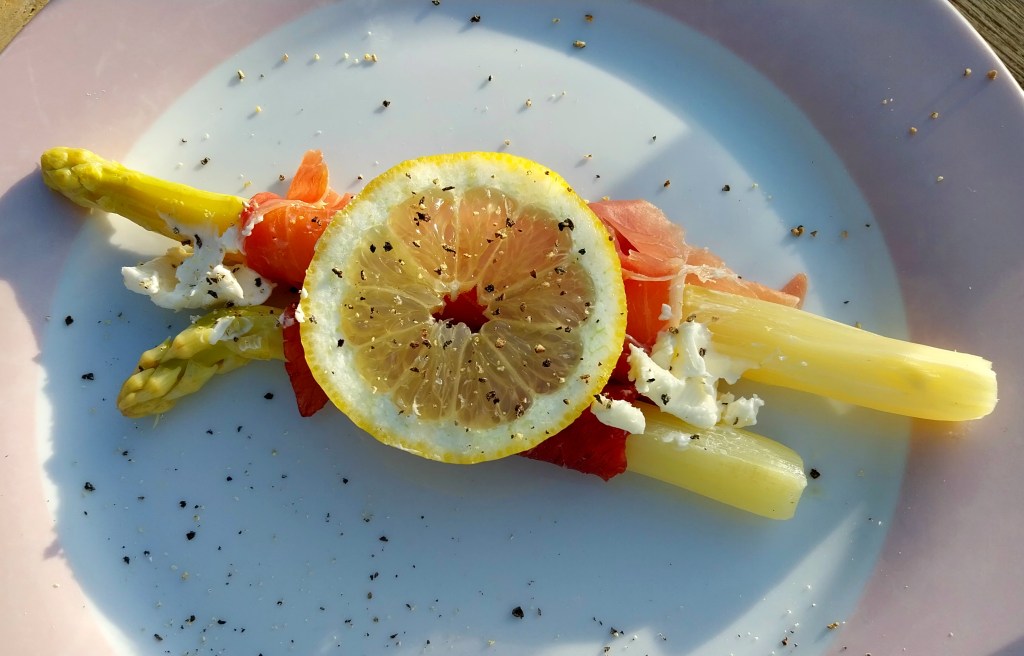
And so to that evening meal. I hadn’t come across white asparagus before, being more used to the green variety we have in the shops in the UK. It is popular in central Europe however, so I decided to try some.

It is essentially the same plant, but is grown underground, which stops it turning green. It has a slightly more intense taste, and requires a little more prep by peeling from the end of the spear tip to the base of the stalk. Like all asparagus, the woody bit at the base needs trimming off also.

I steamed the spears for 20 mins, then wrapped them in local prosciutto, and warmed them on a plate in the oven for 10 mins. They were then served with a knob of melting butter, a squeeze of fresh lemon and a few twists of black pepper.

The dish was enjoyed by our group, with a glass of chilled Bergerac Blanc on our terrace in the evening sun.

Voilà!

Time for some more French-inspired rock. This is The Stranglers with Goodbye Toulouse.

Categories
Bakes Desserts Recipes

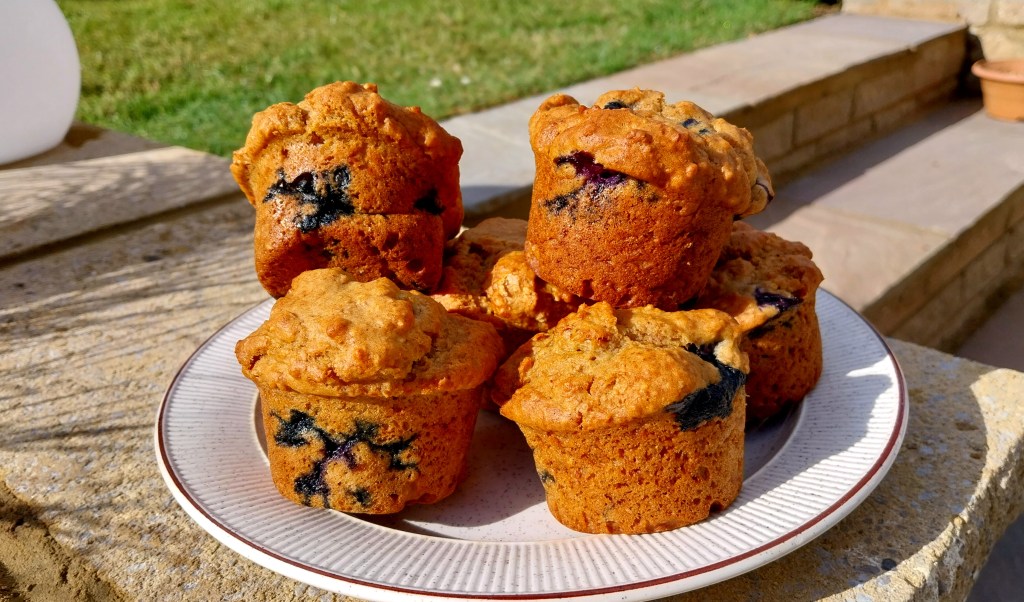
Lemon & Blueberry Ricotta Muffins

Today’s bake recipe features muffins with a healthy dose of Sicilian style.

Ricotta is used widely in Italian cuisine, for everything from pastries to pasta sauces. It is made from whey, the watery by-product of other cheeses, such as mozzarella. High in protein and calcium, it is slightly lower in fat than many other cheeses.

It adds a silkiness to the texture of this muffin mix, working well with the tartness of the lemon zest and the sweetness of the bursting berries.

Buon appetito!

Servings

Enough here for 12 generous muffins.

Timings

10 mins to prepare, 20 mins to bake in the oven at 160C.

You Will Need

  • 200g plain flour
  • 80g wholemeal flour
  • 1 tsp baking powder
  • 1 tsp bicarb of soda
  • 1/2 tsp salt
  • 140g fresh blueberries
  • 1 egg
  • 120ml milk
  • 90ml veg oil
  • 110g light muscovado sugar
  • zest of 1 lemon
  • 250g ricotta cheese

Method

  1. Turn the oven on to 160C. Prepare a muffin tin or mould.
  2. Sieve the flours, baking powder, bicarb and salt into a bowl, and stir to mix.
  3. Add in the blueberries and stir so they are coated in flour.
  4. Crack the egg into a separate bowl, and add the milk with the veg oil. Stir in the sugar, lemon zest and ricotta.
  5. When the oven is up to temp, pour the contents of the second bowl into the first, and stir to combine.
  6. Spoon the mixture into the tray or mould, and bake in the oven at 160C for 20 mins.
  7. Remove and leave to cool on a wire rack, before devouring.

Customise It!

Ricotta is readily available in shops, but if you can’t locate it or wish to switch it up, greek style natural yoghurt or cottage cheese could be used instead. Feel free to chuck some poppy seeds into the mix to add further visual interest, and a little extra crunch.

I’ve used a mixture of plain and wholemeal flour, as I am currently experimenting with using more wholemeal in baking. However, you can use all plain flour if you wish. I’m also trying to use muscovado more in baking, but you can use caster sugar if that’s what you have available.

I have no doubt that Paul Weller and Mick Talbot would approve of a little Italian style, so let’s add this track to the ADK Playlist: The Style Council with Shout to the Top.

Categories
Recipes Sides

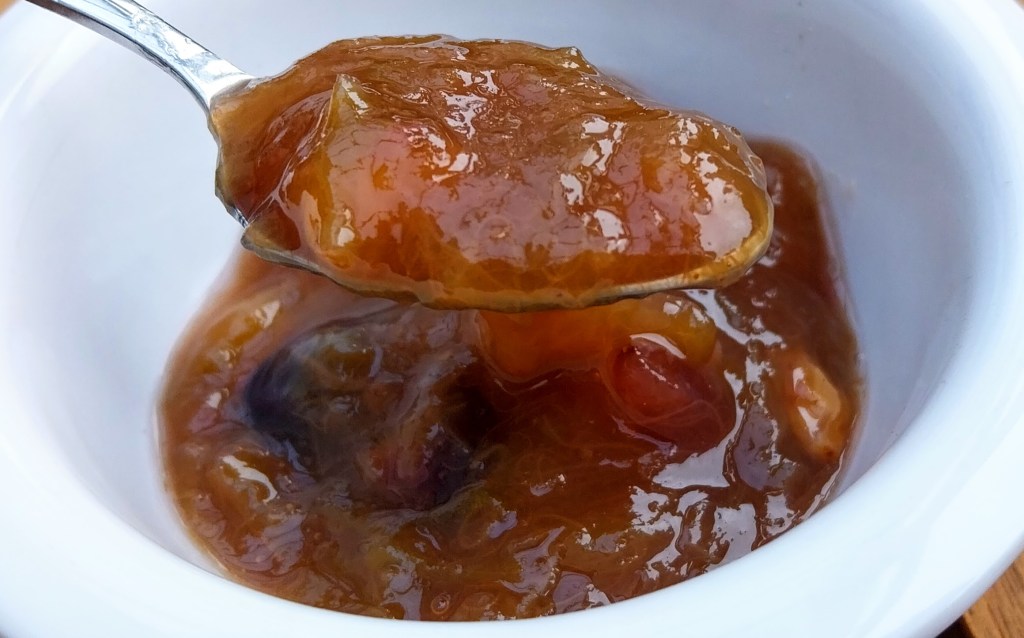
Spicy Rhubarb Relish

Over to my wife, Lesley, for a guest post on a tasty, spicy relish made from a batch of the lovely rhubarb that is in season this early in Spring…..

At the community farm I belong to, April, May and even into early June is called the Hungry Gap for good reason. All our winter crops have been harvested, our spring crops are seedlings, and there are precious few fresh fruits and vegetables.

Step up rhubarb. Field rhubarb is plentiful in April and May and I take my share of approx 500g home each week. As ever, a glut like this can be bottled and so I have invested in a book to help me, published by the Dorset-based River Cottage team, headed up by TV chef, Hugh Fearnley-Whittingstall. 

This is one of the recipes, creating a Spicy Rhubarb Relish. It’s easy to do, making 4 jars worth of relish in one regular-sized saucepan. We have enjoyed a dollop on salads, over hot dog sausages and in sandwiches. It’s sweet and spicy, and next time I will experiment with a wider variety of spices in the muslin spice bag.

Servings

Makes 4 x 340g jars.

Timings

Takes about 40 mins to make.

You Will Need

  • 500g granulated sugar
  • 100ml water
  • 1kg rhubarb (untrimmed weight)
  • 100ml cider vinegar
  • 125g raisins

For the spice bag:

  • a piece of muslin about 20cm square
  • a piece of string about 30cm in length
  • 4cm chunk of root ginger bruised with rolling pin
  • 2 cinnamon sticks snapped up
  • 6 or so cloves

Method

  1. Place the spices in the centre of the muslin. Gather the muslin up to create a parcel with the spices inside, and tie it with the string.
  2. Dissolve the sugar in 100ml of water and bring to the boil, with the muslin bag submerged to infuse the spicy mix into the syrup.  
  3. Turn off the heat and leave for 20 mins or so. Take the bag out and discard.
  4. Trim and chunk the rhubarb, add into the syrup with the vinegar and raisins. Bring back to the boil and let the rhubarb soften. Most of the chunks will break down into a soft spoonable relish. 
  5. Pour into pre-sterilised jars. Leave to cool down and store in the fridge. 

The relish is very versatile. You can enjoy it in a number of ways – alongside cheese, ham or cold meats, or as a dollop spooned into a bowl with lettuce, cucumber, tomato, rice or grains, and other salad ingredients.

As a guest author on A Different Kitchen, I get to select the next track for the ADK Playlist. My choice is one of the many great songs we enjoyed hearing recently at the Northern Soul Orchestrated show in London. This is Frankie Valli & the Four Seasons with The Night.

Categories
Blog Desserts Snacks

Peanut Butter Acai Bowl

Is it a peanut butter Christmas tree? A model of Mount Everest sculpted out of chocolate ice cream, perhaps?

Understandable, if that’s what you’re guessing is in my photo above. You’d be wrong, however – it is in fact an Acai Bowl. I bought this at the Drip Bar in Melbourne. The purply-chocolatey coloured acai is topped with fresh banana, crushed cacao, coconut, ground almonds, granola and a drizzle of peanut butter.

Some of you will be very familiar with acai, and some may never have heard of it. Acai (pronounced ah – sa – ee) is a berry that is produced in Brazil. It is rich in antioxidants, fibre and healthy fats, and believed to support heart health and cognitive function, while being low in sugar and calories. It is also suitable for vegetarians and vegans. It therefore ticks all the boxes to be called a surefire superfood.

What’s more, it tastes really good! At the risk of sounding like some sozzled sommelier, I would describe the taste as having dark chocolate tones, with deep red wine and a hint of blueberries. When you hear that description, it’s hard not to at least give it a try.

In the UK, my experience is that acai is still mainly the preserve of specialist juice bars and health food shops. An internet search reveals that there are slightly more outlets than I was aware of, but it is still nowhere near the mainstream in the way it is here in Australia. Most towns have a cafe or takeaway in the high street selling a variety of acai bowls, with chains established for the purpose, such as Oakberry and Yo-Chi.

As far as I understand, the acai is blended with chopped banana and yoghurt (or coconut milk for a non-dairy version), giving it a rich texture with a beautiful purplish colour. It is eaten ice cold, swirled in a bowl, looking like ice cream or sorbet with toppings added. Fresh fruit is most common, while sprinkling over granola or muesli makes it an option for breakfast.

A danger with acai bowls is that the base is topped up with treats high in sugar or non-healthy fats, that cancel out the health benefits of the acai itself. However, this doesn’t need to be a problem as long as the toppings (such as a good quality peanut butter) are added with thought and moderation.

The berries do not travel well, so outside of Brazil they are sold in pulp form or as powder. I have bought a pack of powder from Coles Supermarket, where it was available on the shelf, in several varieties. I will be taking it home to make some acai bowls of my own. I also have an idea to sprinkle some into the mix when baking, to make blueberry and acai muffins. Watch out for future posts!

Due to its health benefits, great look and taste, I feel it is only a matter of time before more of us are eating acai as part of a normal diet. Do let me know, via the comments below, if you have tasted acai, and what you thought of it. I am interested to hear how readily it can be found and eaten in your part of the world.

Here’s a Melbourne band that was recommended to me by the assistant in a cool vinyl records shop and cafe in the Hawthorn district of the city (a big shout-out to Alley Tunes). This band play experimental electronic music, and go by the name of Big Yawn. Here they are with Ragazzo.

Categories
Blog Breakfast

Sunshine Breakfast

Our Australian road trip has now reached the area known as the Sunshine Coast, just over an hour’s drive north of Brisbane.

The name is very apt, there being no shortage of beautiful bays with near-deserted golden sandy beaches and, of course, plenty of surf and warm sunshine. Here’s Alexandria Bay viewed from the coastal headland in Noosa National Park.

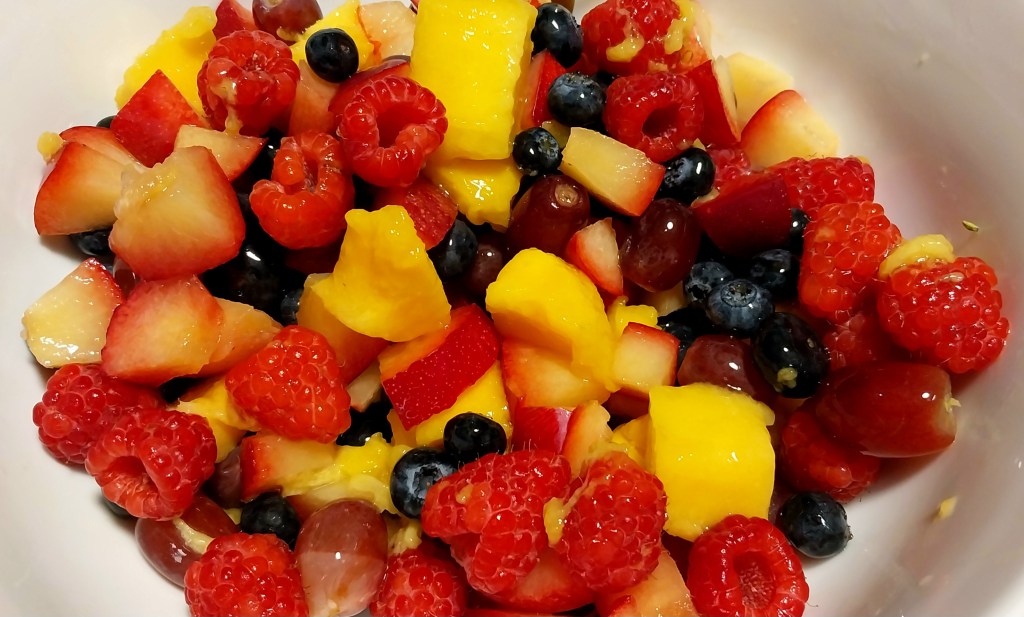
The sunshine does wonders for the abundance of fresh fruit growing here. As you can see from my main photo at the top of the post, I just had to put together a fresh fruit salad, with juicy mango, golden kiwi, red grapes, red plums, blueberries, raspberries, apple and banana – all local Queensland produce.

It has helped make what I call my Sunshine Breakfast, shown here over toasted Australian-grown oats and grains, and with thick, creamy Australian yoghurt. The crowning touch is a drizzle of honey from a jar I bought in the Blue Mountains. It is made from beehives in the eucalyptus forests there.

A bowl full of all-Australian Sunshine Breakfast. What a super way to start any day!

From one all-Australian classic to another, with the latest addition to the ADK playlist: this is Icehouse with Hey Little Girl.

Categories
Blog Mains Snacks

Pacific Coast

Leaving the Blue Mountains, our Australian road trip headed next through the Hunter Valley wine-growing region, to reach the Pacific Coast at Newcastle, just north of Sydney. The plan is to make our way along the Pacific Highway up to the Sunshine Coast in tropical Queensland, just north of Brisbane, over the next week or so.

First stop was at Merewether Ocean Baths, just outside Newcastle. Fed by water from the ocean, it is the size of 8 Olympic swimming pools. We parked the car across the road and enjoyed a refreshing swim. It was the perfect way to break up our journey in the 30C heat. The pool is free to use and open all year round – what an asset for the local community.

The onward journey has been one of discovering one glorious golden sandy bay after another. My main photo at the top of the post shows Nambucca Heads. My photo below is taken at Coffs Harbour.

There are many forms of wildlife that call this coast their home. Flying foxes (large wing-spanned bats) are a regular sight overhead, as dusk settles. At the intriguingly named Look At Me Now headland we spotted some humpback whales out at sea, making their way north. Best of all, though, we came across this lovable family of kangaroos.

Foodwise, we’ve been keeping meals light and cool because of the heat, and making the most of Australian produce. My photo below shows Tasmanian (generally called Tazzie – the Australians abbreviate most things) smoked and hot-spiced salmon, with salads made from veg grown in tropical Queensland.

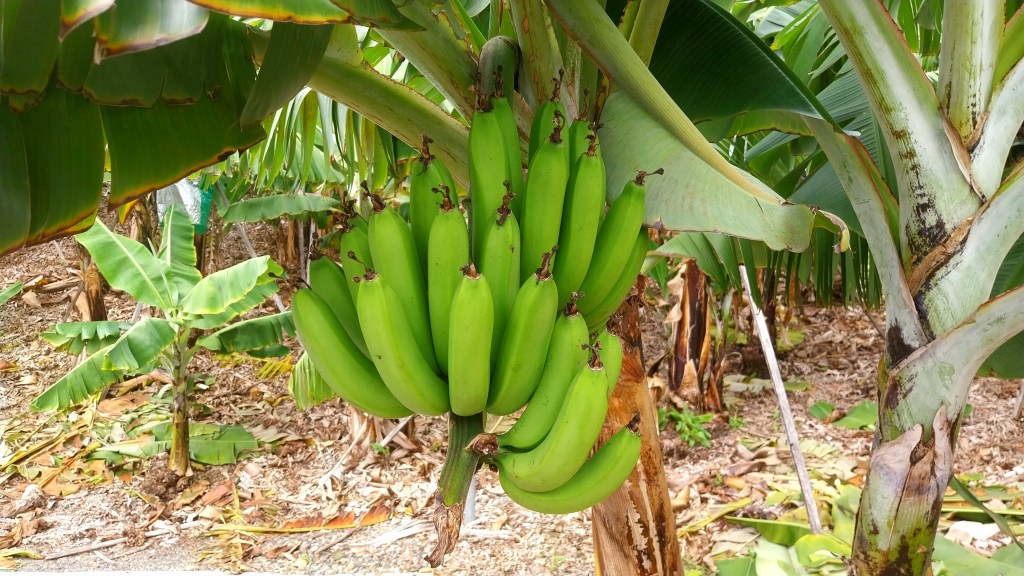
Most fruit and veg seems to grow well here and the choice in food shops and markets is plentiful. As a lifelong banana fan (banana on toast is a particular fave of mine) I loved seeing bananas actually growing on trees, for the first time.

This was on a banana plantation just outside Coffs Harbour. Next door is a family fun park called The Big Banana, where all the rides and attractions are (you guessed it) banana-themed. We stopped to sample their speciality dessert – a fresh banana on a stick, coated in chocolate and dipped in chopped nuts (or sprinkles) and then frozen.

It was delicious and helped us stay cool. The frozen fruity centre tastes like banana ice cream and, along with the dark chocolate and nuts, it is actually a relatively healthy snack. This is another piece of foodie heaven I shall be trying to recreate when I get back home.

Our Pacific Coast journey will continue in my next post. Time now, however, for another Aussie indie band to feature on the ADK Playlist. I very much like the exciting sound of this band. This is These New South Whales with Changes.

Categories
Recipes Snacks

Peanut Butter, Oat & Apricot Bites

Having made my Peanut Butter Boosters recently, I found myself with half a jar of good quality peanut butter left. I wanted to come up with another bite-sized temptation to fill the annoying hunger gap that can open up after exercise, or simply when the next mealtime is still a little way away.

These fit the bill. What’s more, they don’t require any cooking and are very quick to make. There are only 5 ingredients, so you stay in control of exactly what is going into the snack. They are both vegetarian and vegan.

The best part however, is that making them requires the squidge technique i.e. getting your hands into the baking bowl and manipulating the mix with your fingers. Why is that the best bit? Well, when you’ve finished shaping the Bites, your reward is getting to lick your fingers clean. Mmm!

Convinced? Then give this a try…

Servings

Depending on your preferred size, this mix will make around 9 -10 Bites.

Timings

15 mins max to make, after which they are ready to eat. Keep them in the fridge and they’ll last for 2 – 3 days (if they’re not all eaten by then, that is 🙂 ).

You Will Need

  • 120g oats
  • 120g peanut butter
  • 60g maple syrup or runny honey
  • 40g dried apricots, finely chopped
  • a few splashes of milk (dairy or non-dairy)

Method

  1. Combine all the ingredients in a bowl, and squidge together between your fingers till you have a sticky mix.
  2. Pull off a piece of your desired size and roll into a ball between the palms of both hands. Set on a plate, and repeat till all the mixture is used up.
  3. Place in the fridge.
  4. Enjoy licking your fingers!

Customise It!

You could swap in another dried fruit for the apricots if you wish – dates would go well. Chuck in a handful of seeds if you like.

I’ve carried on listening to The 1975 this past week – their music is very uplifting and it reminds me of a great night in Birmingham with my friend – see The 1975. Here’s another track I particularly like, therefore: The Sound.

Categories
Bakes Recipes

Upside Down

This Valentine’s Day, here’s a cake you’ll love.

Pineapple Upside Down Cake is a tantalising dish. All the while it’s baking, it conceals its secret, exotic ingredient. Peeking into the oven is of no avail, as the enigmatic fruit that makes it special is shielded from view, laying at the base of the tin like buried treasure. Then, when the baking is done, it’s fun to invert it and reveal all those juicy pineapple chunks.

This one is made with a fresh pineapple, mixed with a sprinkle of dark muscovado sugar. The muscovado combines with the juice to give the cake a rich sweetness and a treacly, marbled appearance (as with the slice of cake shown in my photo above).

Servings

16 servings.

Timings

15 mins to prepare and 30 mins to bake at 180C.

You Will Need

  • 1 fresh pineapple
  • 165g self-raising flour
  • 165g caster sugar
  • 165g unsalted butter or spread
  • 3 eggs
  • 1 tsp baking powder
  • 1 tbsp dark muscovado sugar

Method

  1. Grease and line a baking tin. Mine is 22cm square. Switch on the oven at 180C.
  2. Peel and core the pineapple, and cut the flesh into roughly 1 – 2cm chunks.
  3. Put the flour, caster sugar, butter/spread, eggs and baking powder into a bowl. Mix with an electric whisk till it is all combined.
  4. Arrange the pineapple chunks over the bottom of the baking tin. Sprinkle over the dark muscovado sugar.
  5. Pour the cake mixture over the top. Place in the oven for 30 mins or until a skewer inserted in the middle comes out clear. Remove from the oven.
  6. Invert the cake from the tin on to a wire rack (so that it is now upside down), and allow to cool before cutting into slices. Serve upside down, with the pineapple showing, on its own or with some greek yoghurt alongside.

Customise It!

Most published recipes for this cake seem to use tinned pineapple. I think it is nice to use the fresh article, seeing as it is so readily available in our shops these days. However, you can substitute the tinned version here, if you’re in a rush and don’t want to peel, core and chop a fresh pineapple.

A classy dessert like this deserves an equally classy track for the ADK playlist. Here’s Diana Ross with (what else?) Upside Down.