Categories
Blog

Around the World in 80(ish) Plates

As 2024 draws to a close, I’ve been looking back at some of the many dishes enjoyed on my travels over the past 12 months. I’ve reached some far-flung destinations over that period, as well as some places closer to home, in a bid to savour some of the best food and drink the cuisines of the world have to offer. It’s a tough job, I know, but hey, someone has to do it 🙂 .

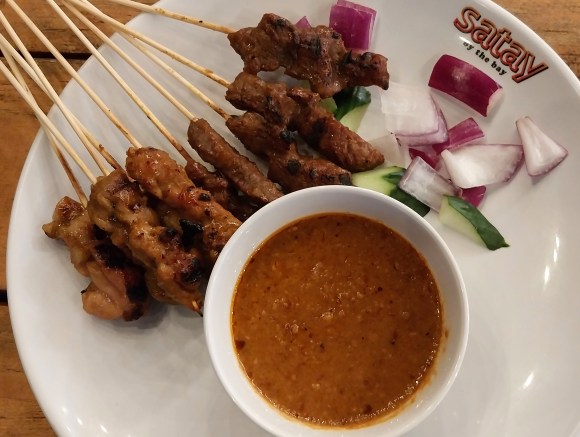
I’ll start with my main photo above, taken in Satay by the Bay in Singapore, where I visited in March. They served up a plate of chicken and beef skewers grilled over hot coals, along with a pot of peanutty satay sauce for dipping. Perfect fast food.
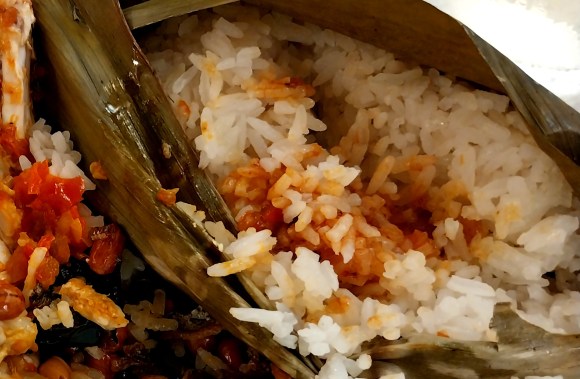
Kampong Gelam is the heartland of Singapore’s Malaysian community. The traditional Malay dish, Nasi Lemak (shown above), was excellent – a pandan leaf parcel is unwrapped to reveal steamed, soft and fluffy jasmine-scented and coconut-flavoured rice.
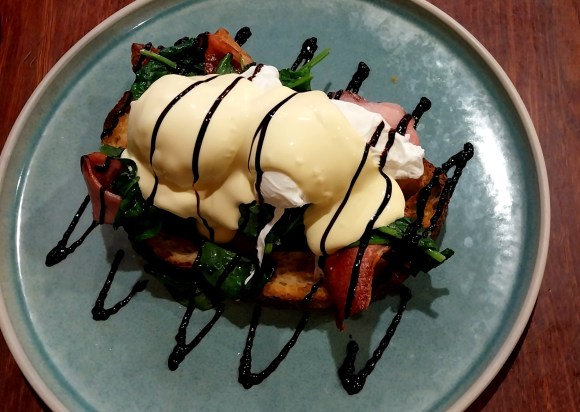
The breakfast shown above was a sight for sore eyes on arrival early one morning off a plane, very hungry, in Sydney, Australia : eggs benedict served with spinach and bacon on sourdough toast, with a balsamic drizzle.
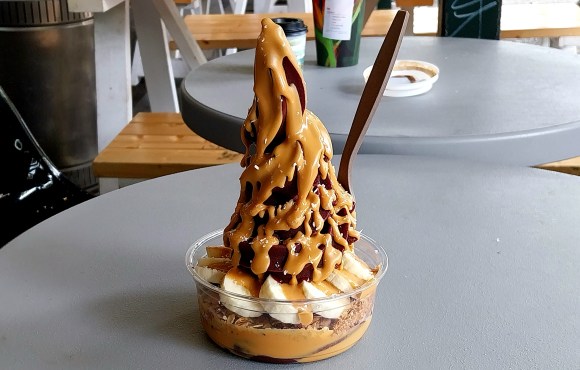
I had wanted to try an Acai bowl for some time, and managed to do so at the Drip Bar in Melbourne, Australia. This purply-chocolate coloured acai berry smoothie is topped with fresh banana, crushed cacao, coconut, ground almonds, granola and a very generous (ahem) drizzle of peanut butter.
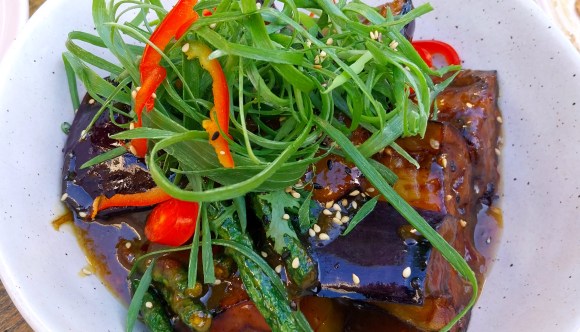
The Sunshine Coast in Queensland, Australia, saw my introduction to Asian Fusion – bringing together the sights and tastes from the culinary traditions of India, Thailand, Korea, Indonesia, China and Japan. Amongst a tasty and adventurous buffet, my fave was this Miso Caramel Eggplant shown above – chunks of roasted aubergine coated in a sticky sauce, topped with spliced snake beans, coriander and sesame.
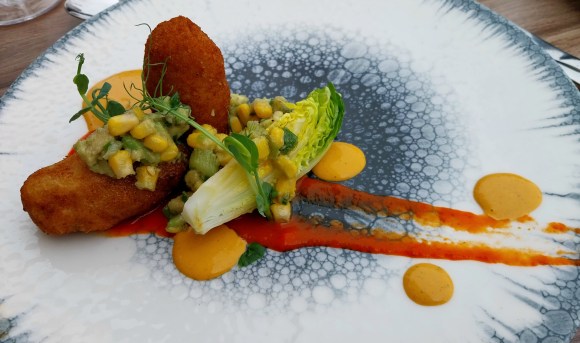
The month of June saw a trip to France, where they do food rather well. One highlight of several is shown above – an Entree of cod and yuzu croquette, served with baby gem lettuce, and a sweetcorn and avocado salsa. I liked the Gallic flair with which the dish was presented, resembling artistic brush strokes of red pepper aioli and lemony yuzu.
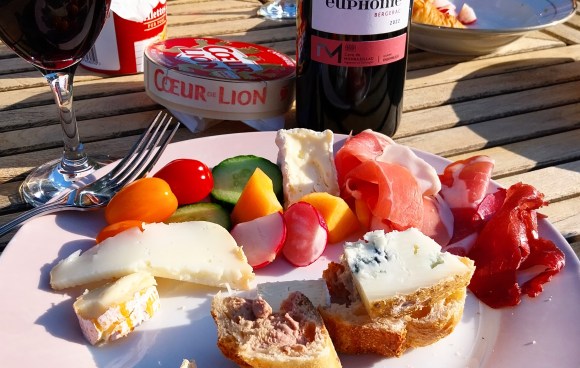
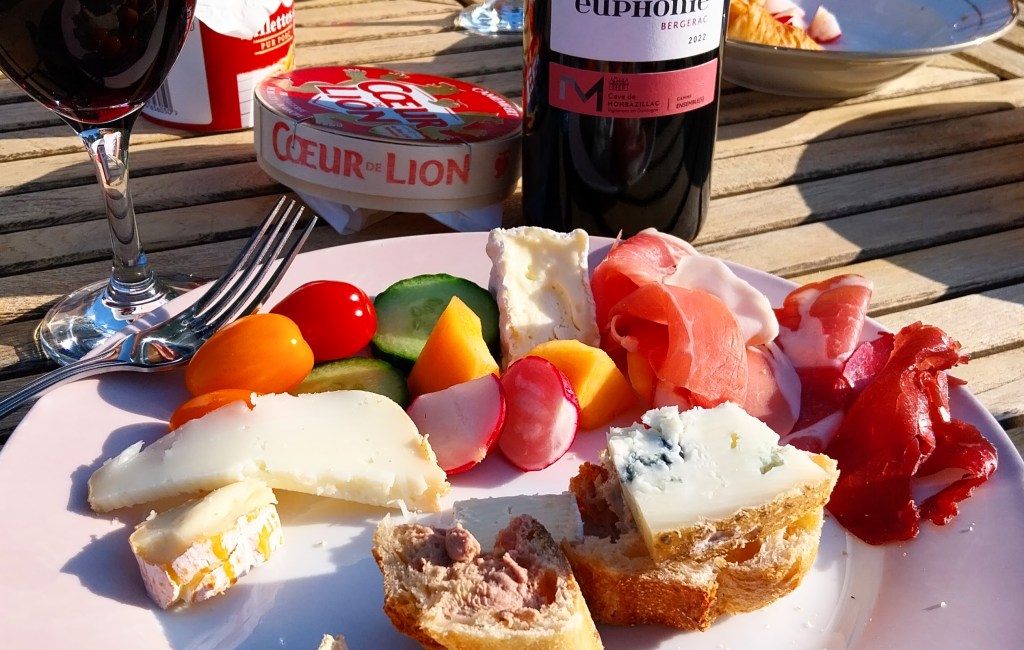
In summertime in France, it is always a simple pleasure to enjoy an evening al fresco buffet with purchases from the local fromagerie and charcuterie (see above) – along with a bottle of the the local vin rouge, of course.
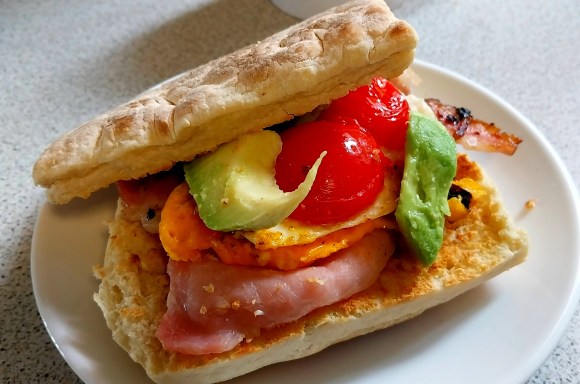
A July trip to Belfast provided the opportunity to visit St. George’s Market to sample the best of traditional Ulster food. A breakfast of toasted soda farl, here filled with egg, bacon, roasted cherry tomatoes and avocado, certainly satisfied the appetite.
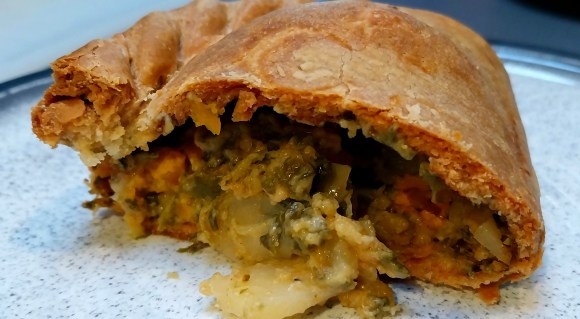
The month of September was spent motorhoming around Cornwall in England’s south-west, sampling numerous pasties like the one shown below. This one is named Veggie Power, and has the traditional filling of steak and potato replaced by mushroom and butternut squash.
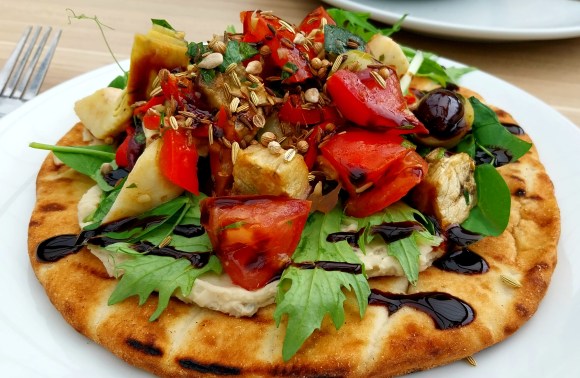
I found my visit to Cornwall’s Eden Project very inspiring, and an opportunity to learn more about sustainable food production. All the tea, coffee and chocolate now making its way into the ADK kitchen is certified Fair Trade. The dishes on the Eden menu are made from local ingredients, such as this griddled flatbread shown above, topped with white bean paste, leaves, marinated roasted vegetables, tomatoes, balsamic drizzle, herbs and toasted seeds.

Revisiting all of these meals has now made me hungry again, so I will leave it there! Thanks to everyone who has followed along, read, liked and/or commented in 2024. My travels, along with the home bakes and recipes, will be continuing into 2025 here, on Instagram and on X.

Happy New Year, everyone.
Categories
Blog Snacks

Au Revoir, Bergerac

The time has come to leave the Dordogne after a lovely holiday, and head back to the UK.

We have certainly dined well during our stay, as should be clear from my last few posts. My favourite meal in France remains a very simple one, however – a summer spread of cheese, paté, hams and salad that we have enjoyed outside in the sun most evenings, as shown in my photos above and below.

We’ve enjoyed baguettes from the local boulangerie, baked fresh and collected every morning, and best eaten the same day. They have a crisp exterior, and soft, buttery textured inner that carries a real taste.

A visit to the fromagerie is always fun, as there are so many French cheeses to try. We’ve usually opted for a cheeseboard comprising a soft, a hard and a blue: in the one below the soft is a Vieux Pané, the hard cheese a Tomme de Montagne, and the blue a Basque Bleue.

Paté de fois gras goes well spread on a hunk of baguette, and local cured hams from the charcuterie have been tastily paired with chunks of ripe, golden melon from that marché in Bergerac.

Enjoyed with a glass of Bergerac Rouge, of course. While watching the sun set.

Time to say au revoir.

I’ve downloaded my listening for the journey back from Bergerac Airport. I’ve chosen a 2023 digital remaster of New Order’s Substance album, which is sounding even greater than ever. Here’s a track to show what I mean: Confusion ’87.

Categories
Blog Desserts

Baba au Rhum

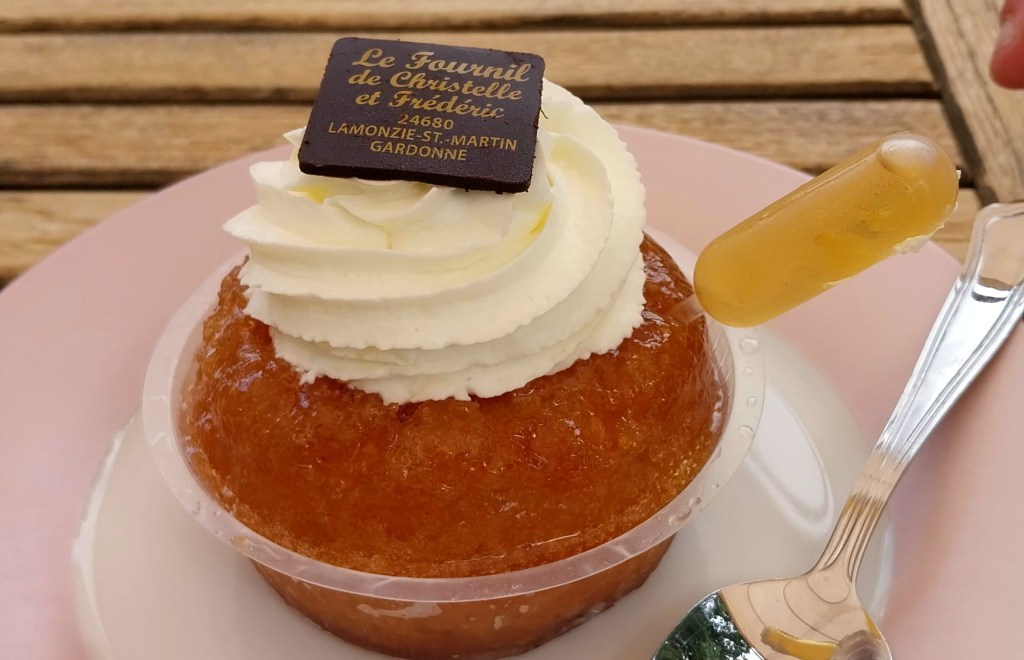
Of all the pastries we have enjoyed on our current holiday in France (and there have been a few 🙂 ), the one consistently rated the highest in our party has been the Baba au Rhum, or Rum Baba.

This eastern European delicacy was reinvented in Paris in the early 19th Century. The story goes that a cake that had become a little dry was enlivened by a little soaking in some rum.

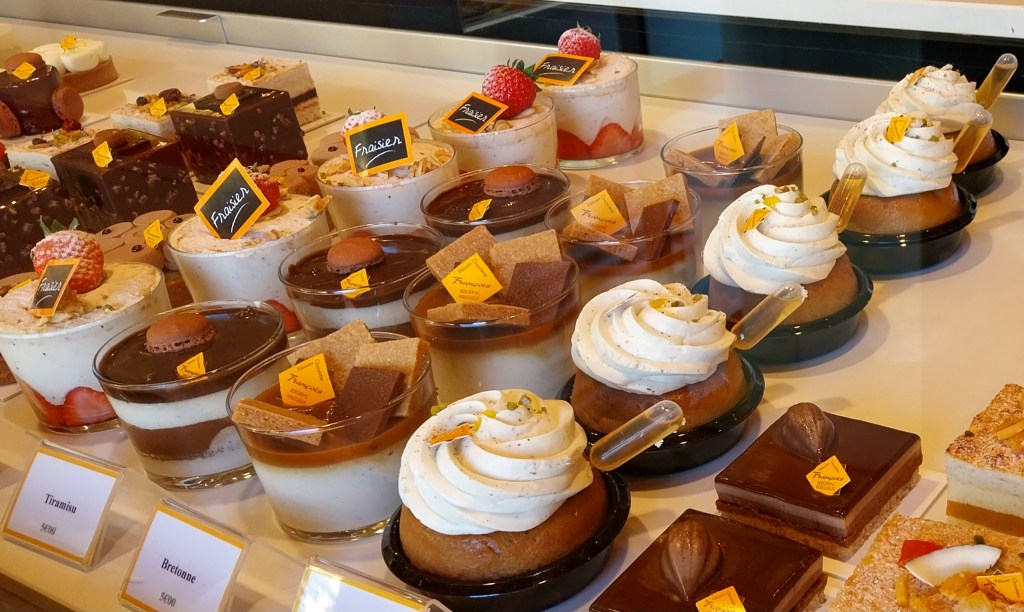
Since then patisseries all over France have never looked back. Fast forward 200 years and this is the scene in our local boulangerie here in the Dordogne. Amidst a range of to-die-for pastries sits a line of Baba au Rhum.

As you can see, the Baba is served with its own pipette already inserted into the cake. The pipette is filled with rum, which is injected into the sponge before eating, by carefully squeezing the pipette with one’s fingers. It makes a dessert that is light, moist and boozy, topped off with a swirl of whipped cream. Mmm!

The Rum Baba has had some stiff competition from the patisseries we have frequented this week, see below.

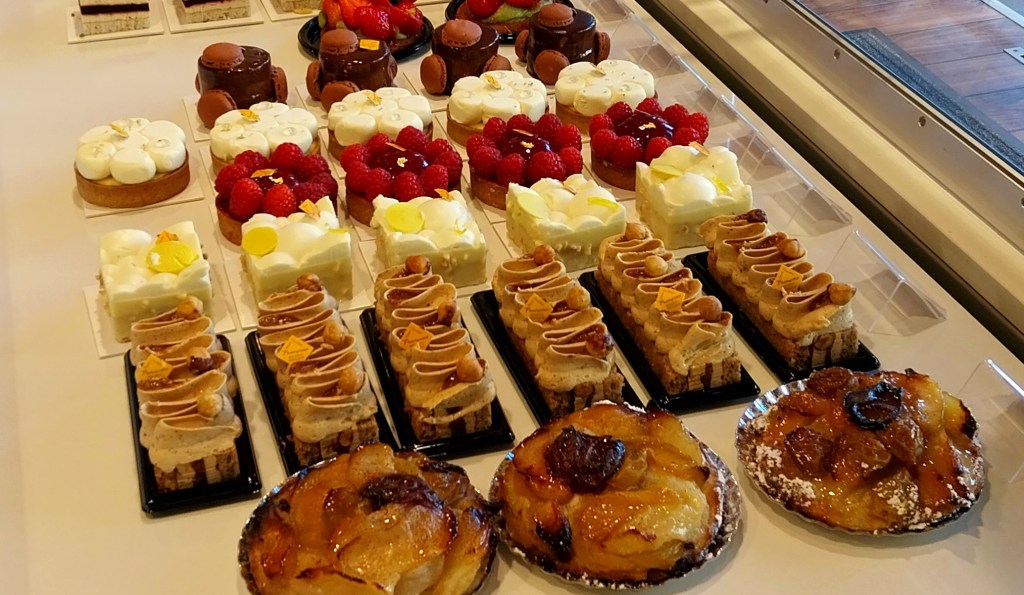
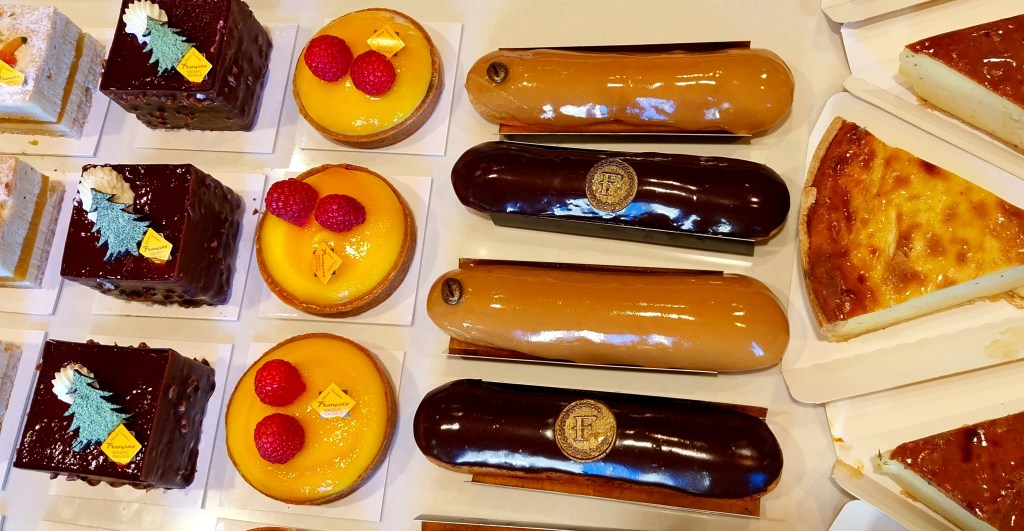
Or maybe check out this selection..

Every one a piece of culinary artwork that it is very difficult to fault. In such company, it is saying a lot that the Baba au Rhum has been rated so highly by our group.

Formidable!

I can’t say whether the cake inspired LCD Soundsystem to record this track, but it’s a song I really like, so here it is: New Body Rhumba.

Categories
Blog

Déjeuner à Mélange

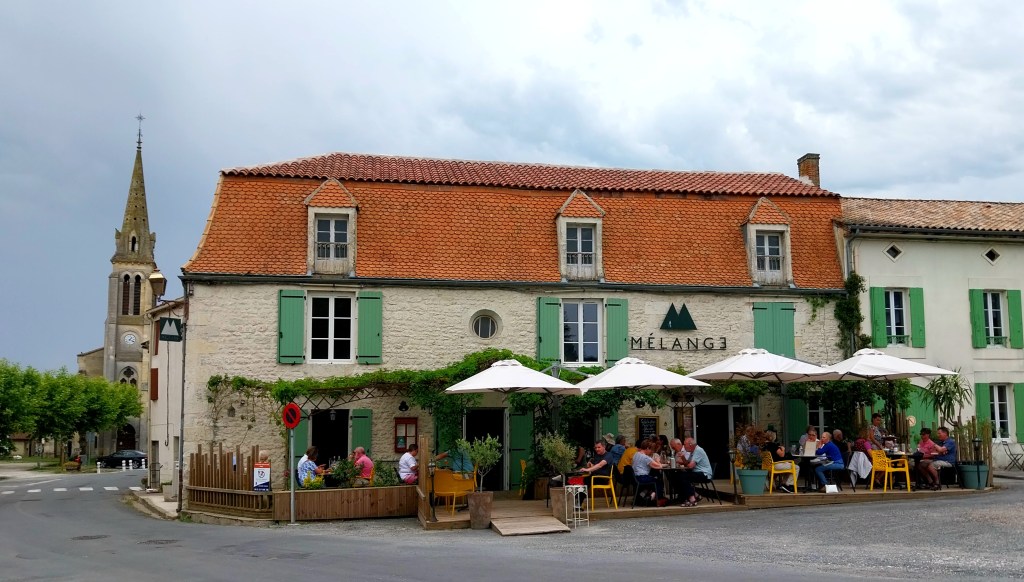
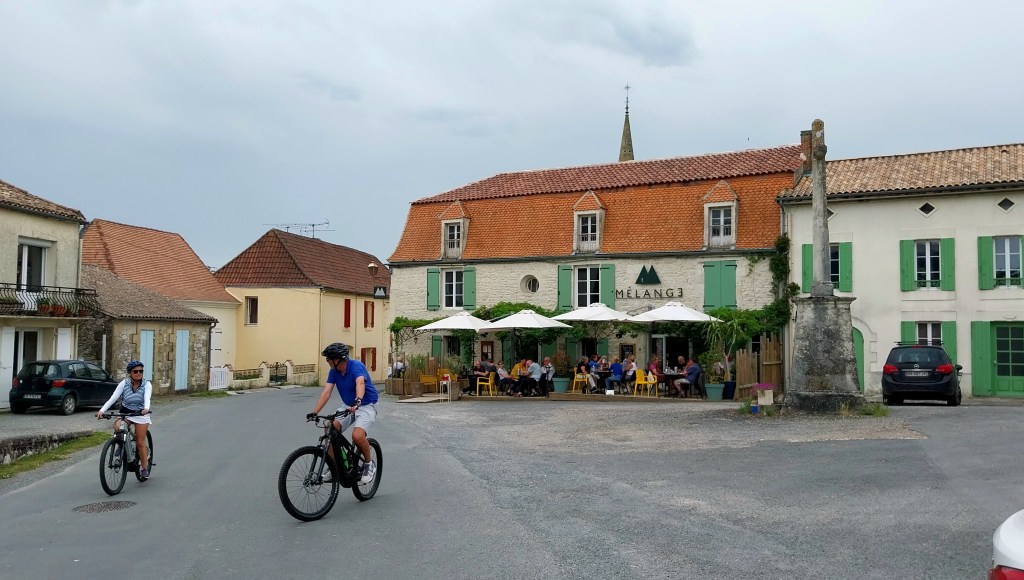
On holiday in France, and keen to experience some top regional cuisine, we book a table for 4 at Melange, a restaurant in our nearest village, Saussignac.

Like many rural villages we have seen in the Dordogne, it is small and sleepy. There is a lovely old church, a war memorial dressed for the D-Day commemorations, and a cobbled square. There is little traffic and few people to be seen out.

That changes, though, when the churchbells chime to say that midi – 12 noon – has struck, and this charming old building opens its doors.

Soon cars were arriving and all the tables on the terrace were filling up. Aren’t I glad that we booked!

Our 3 course menu du jour was delicious, and beautifully presented. The restaurant’s chef clearly has an artistic streak, judging by the stylish way the dressings and sauces are swept around the plate to get the mouth watering. Well, this country has quite some pedigree when it comes to art: Cezanne, Matisse, and Monet to name a few. Why shouldn’t that extend to culinary creation?

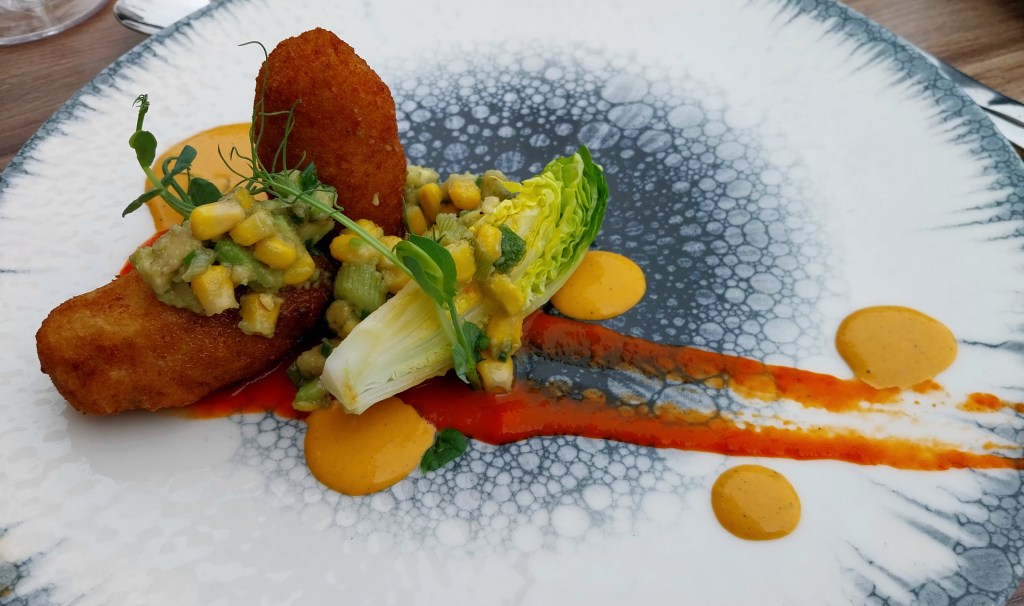
For my Entree, I chose the cod and yuzu croquette, which was served with baby gem lettuce and a sweetcorn and avocado salsa. That is red pepper aioli you can see in the photo below, swept across the dish in broad brush strokes, with carefully positioned blobs of yuzu dressing.

Yuzu is something I hadn’t come across before, and I do not even recall seeing it in any of our shops. Of Asian origin, and now grown in France, it is a citrus fruit that is kind of a cross between a lemon and a mandarin orange. It’s a natural for pairing with the fish in the croquette, therefore.

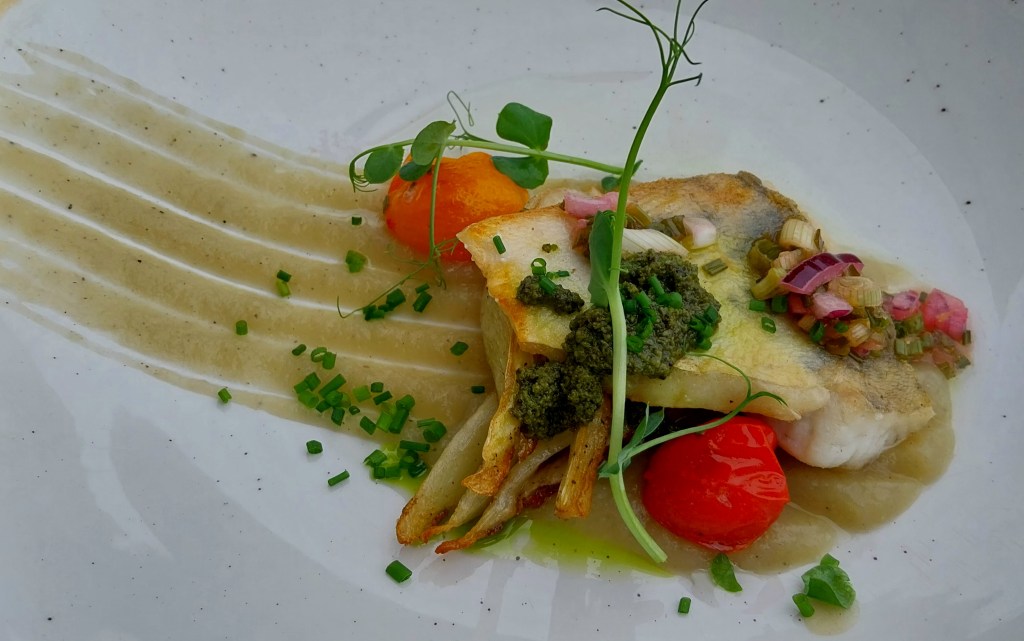
My Plat, or main course, was a fillet of sardine, served with rocket pesto, roasted cherry tomato, and chive and lemon gremolata. The fennel came en deux facons: firstly as a roasted bulb, and secondly as a puree that looks like it has been extravagantly combed across the plate with traditional Gallic flourish – see below.

The gremolata I hadn’t come across before, and I will definitely have a go at making this back in the ADK Kitchen. It is a garnish comprising seasonal European ingredients all minutely chopped: red onion, garlic, chives, citrus zest and herbs, blended with olive oil.

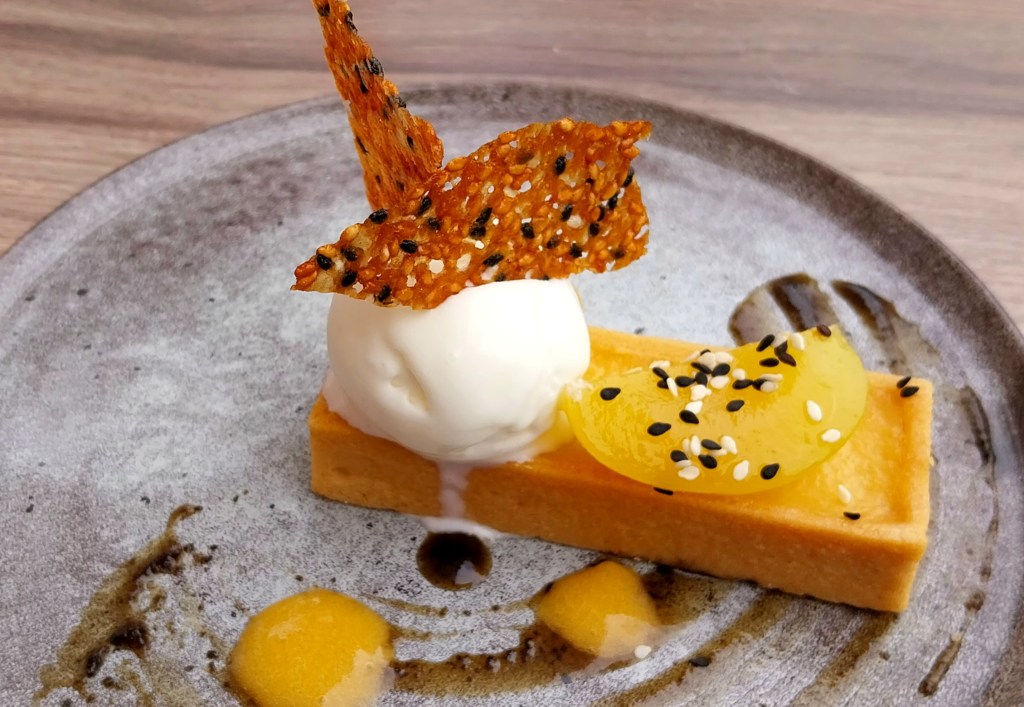
Dessert, shown below, was Tarte a l’abricot – apricot on a biscuit crumb base – with olive caramel wafers and a scoop of yoghurt ice cream.

The apricot had a real zing, and the yoghurt slightly less sweet than more traditional ice cream. The olive caramel wafers are made from pureed black olives and sugar, giving a sweet yet slightly bitter taste that I think goes well in a fruity sweet.

I rounded things off with a cappuccino that was served with a Canelé de Bordeaux, a small caramel pastry that is traditional in this region of France.

A thoroughly enjoyable couple of hours with great food, much inspiration for future cooking, and the company of family and friends. The price was reasonable also – my 3 course menu du jour was €24 (£20 or $25), which I considered fair value.

A glimpse into the unrushed life of a quiet village in the Dordogne that enjoys its food. As Dublin’s B*Witched put it, C’est La Vie !

Categories
Blog Mains

Au Marché

One of the great joys of being a foodie on holiday in France is making a visit to the local market, or ‘marché’. So, while here in the Dordogne Valley, we set out for the local town of Bergerac on market day. Some of the fresh produce we bought inspired our evening meal back at the farmhouse. More of that in a moment.

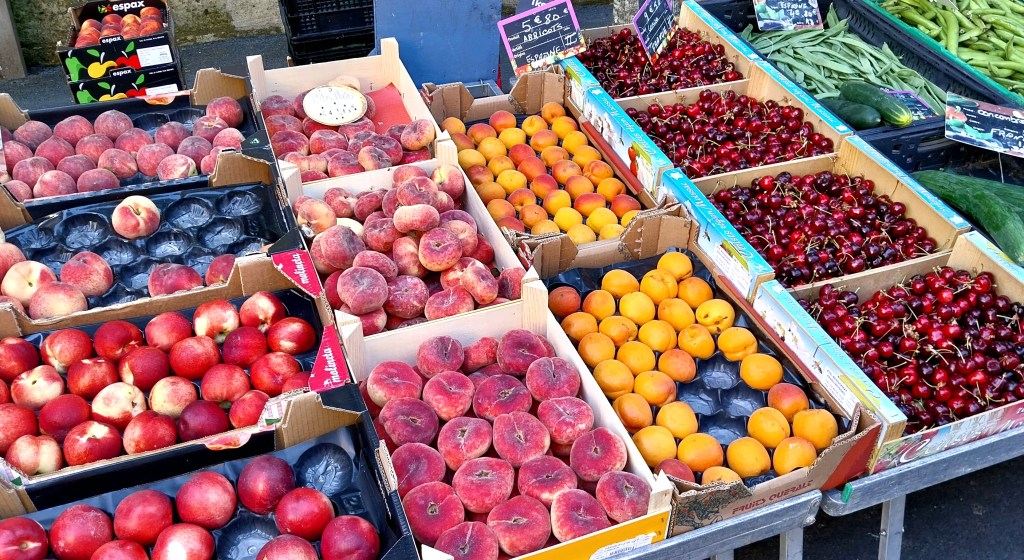
It was a beautiful warm and sunny morning as we arrived. The market was already well under way, this array of soft fruit was glinting in the sun, and business was brisk.

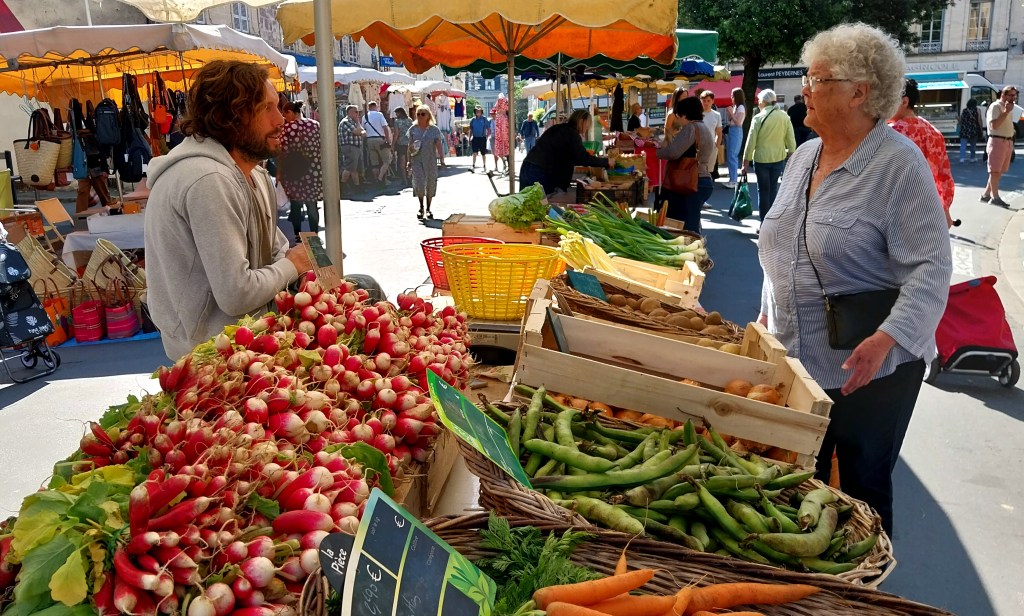
The market isn’t just about stocking up with provisions for the week, however – there’s a real sense of market day being an opportunity for local people and traders to meet and catch up. In between happily chatting with customers, this chap sold us a bag of his healthy crop of radishes. Simply washed, topped and tailed, they made a light, peppery and crunchy snack alongside cold beers.

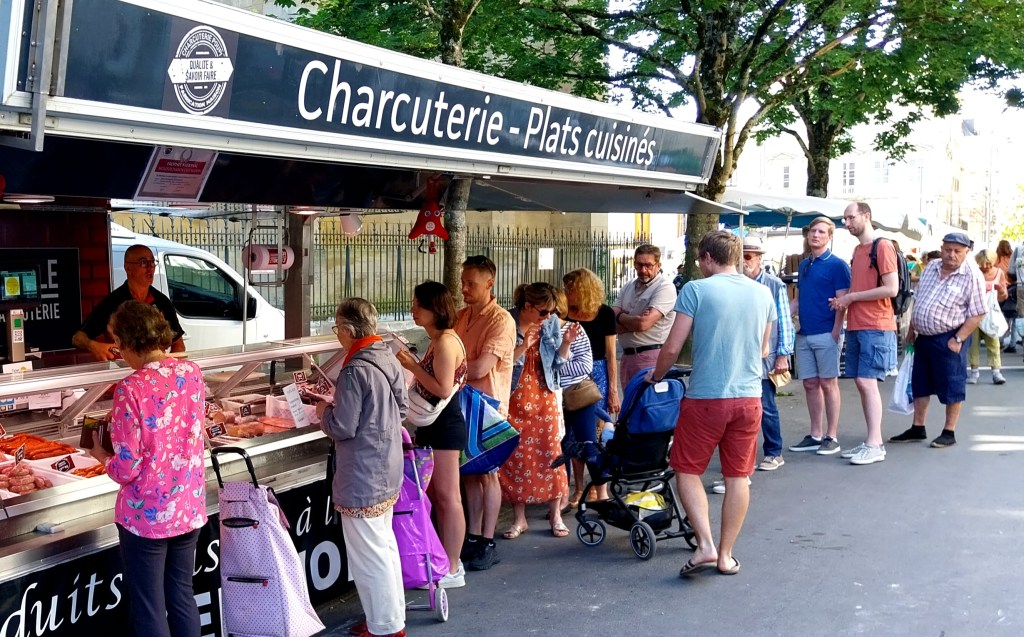
A long queue of discerning French shoppers waiting patiently to buy their food is usually a reliable sign of a good market stall. So it was with this charcuterie stand, where beef carpaccio was the ready prepared Plat du Jour. The charcuterie included local merguez sausages, which are long and thin with the texture of chorizo, and which went well later on our barbecue.

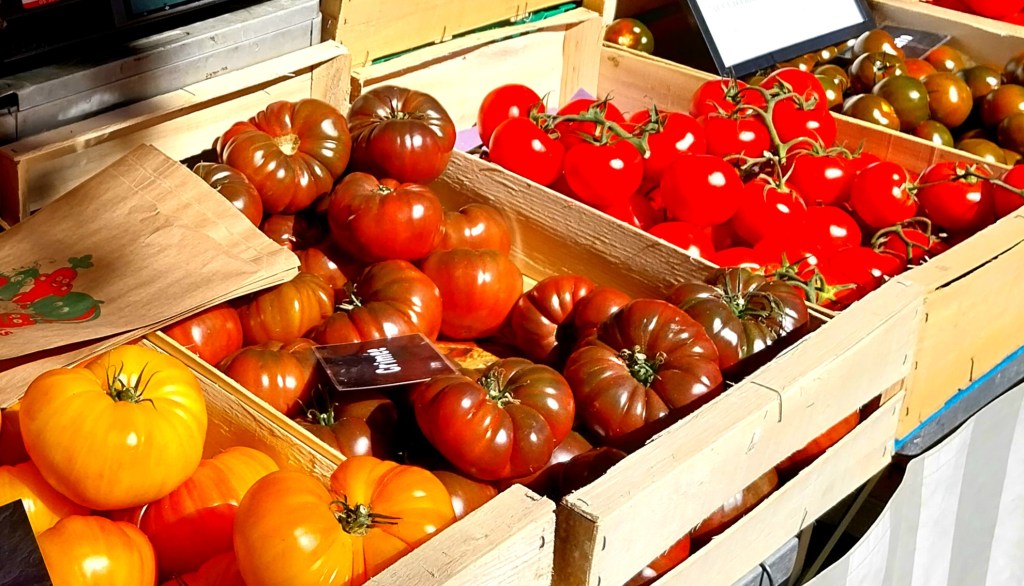
All the fruit and veg was seasonal, fresh and presented attractively. The range of tomatoes was something else, and they all looked luscious in the mid-morning sunshine.

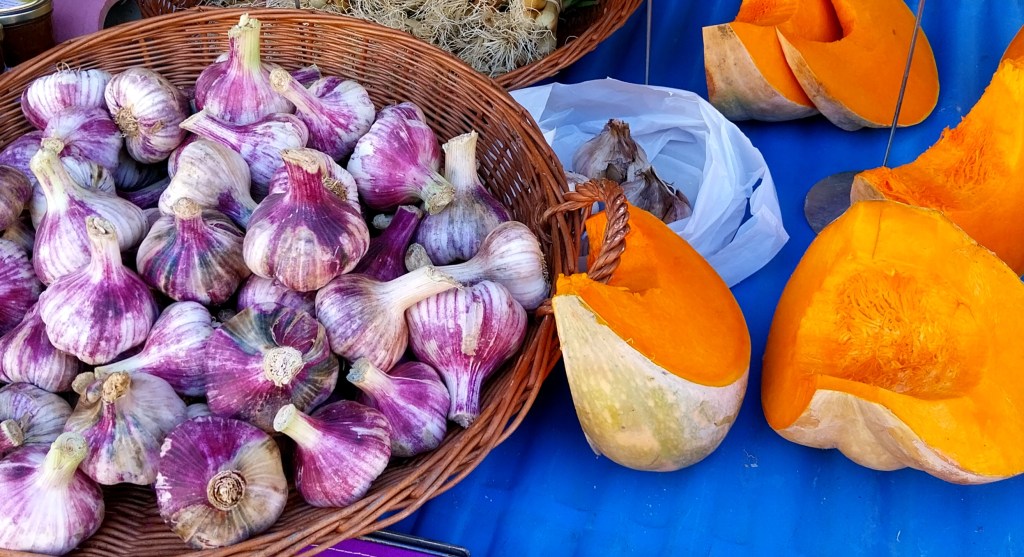
Garlic is a staple in French cooking, and I treated myself to one of these wonderful looking purple bulbs to take home. Presentation-wise, I liked the juxtaposition of vivid colours alongside these wedges of butternut squash.

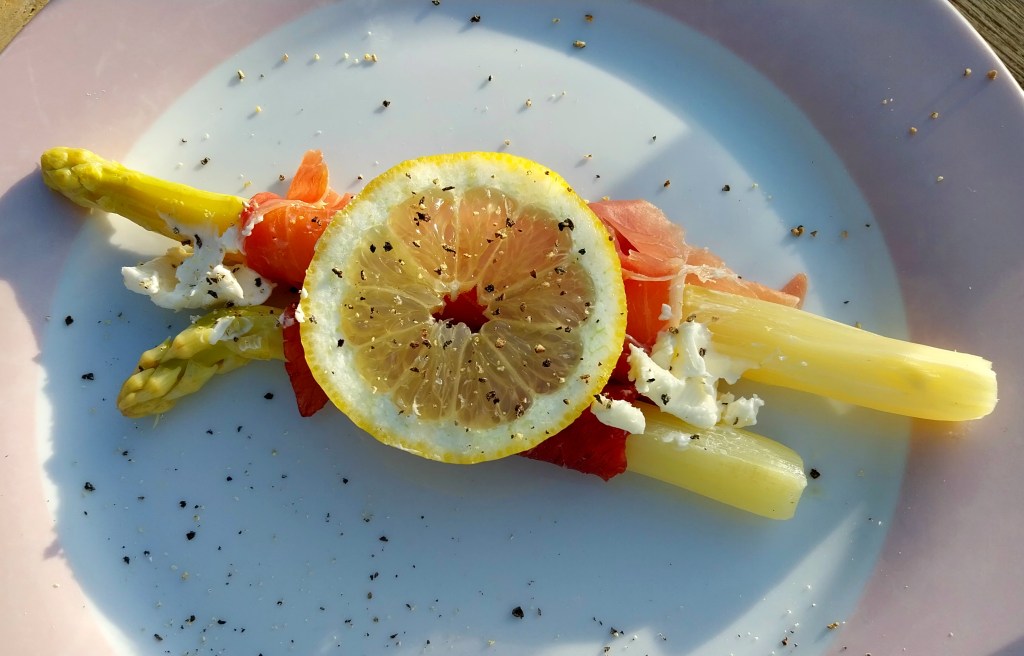
And so to that evening meal. I hadn’t come across white asparagus before, being more used to the green variety we have in the shops in the UK. It is popular in central Europe however, so I decided to try some.

It is essentially the same plant, but is grown underground, which stops it turning green. It has a slightly more intense taste, and requires a little more prep by peeling from the end of the spear tip to the base of the stalk. Like all asparagus, the woody bit at the base needs trimming off also.

I steamed the spears for 20 mins, then wrapped them in local prosciutto, and warmed them on a plate in the oven for 10 mins. They were then served with a knob of melting butter, a squeeze of fresh lemon and a few twists of black pepper.

The dish was enjoyed by our group, with a glass of chilled Bergerac Blanc on our terrace in the evening sun.

Voilà!

Time for some more French-inspired rock. This is The Stranglers with Goodbye Toulouse.

Categories
Blog Drink

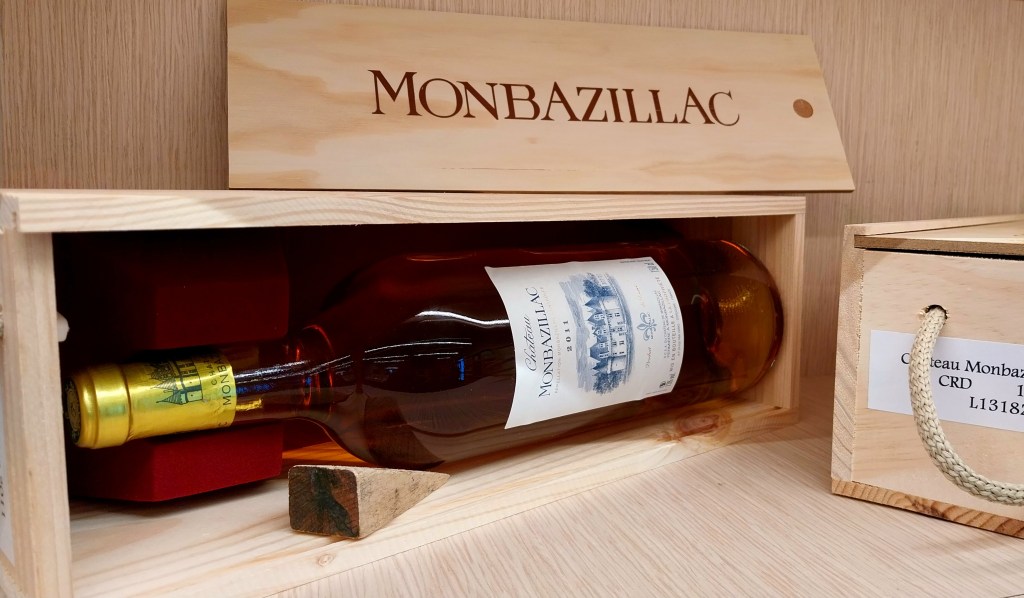
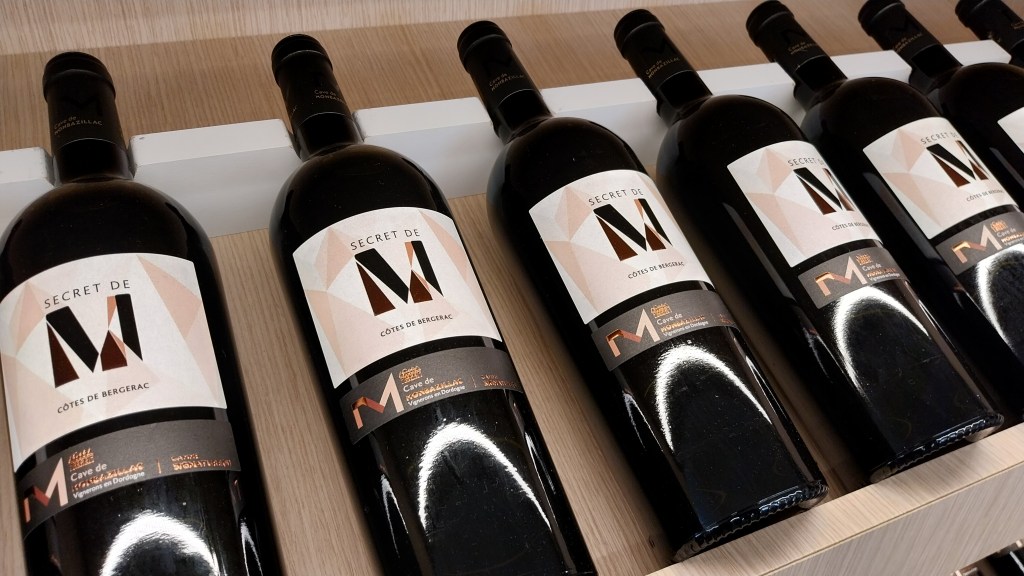
Chateau de Monbazillac

Vive la France!

This week I am off on my travels again. We are holidaying with our very good friends in the Dordogne Valley in south-west France. Expect to be hearing over the next few posts, therefore, about some of the lovely food and drink that this region has to offer.

The base for our stay is a delightful, restored stone farmhouse in the countryside, just west of Bergerac. Built in the 19th century, it retains all its character and, I am pleased to say, now has some 21st century luxuries (like wifi, ensuites and a dishwasher) incorporated.

Discovering that we are situated along the Route des Vins, we set out to find our bearings on a tour that takes in one vineyard after another. The climate and soil conditions here are near-perfect for growing grape vines, making the Dordogne Valley one of France’s prolific wine-producing regions.

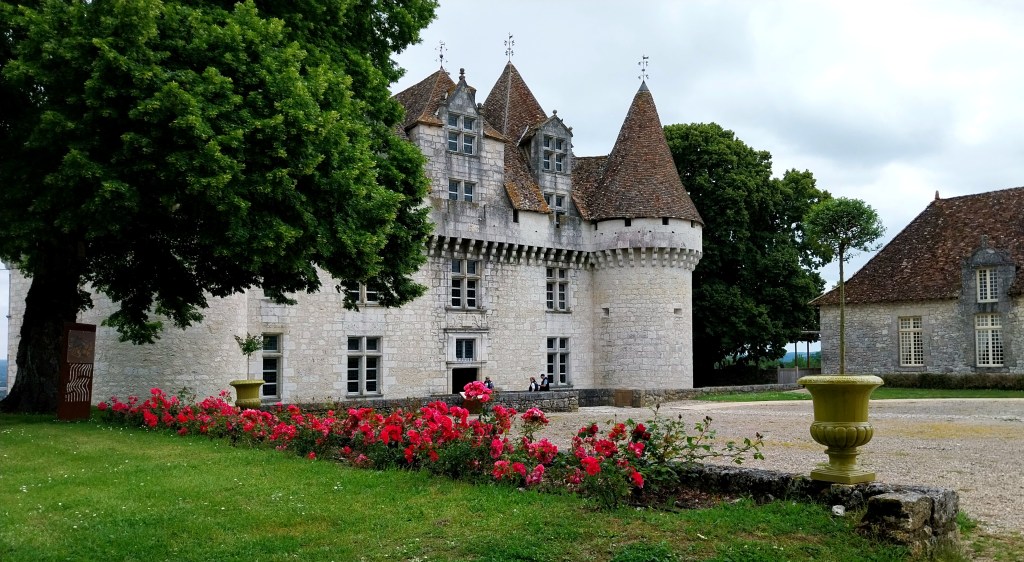
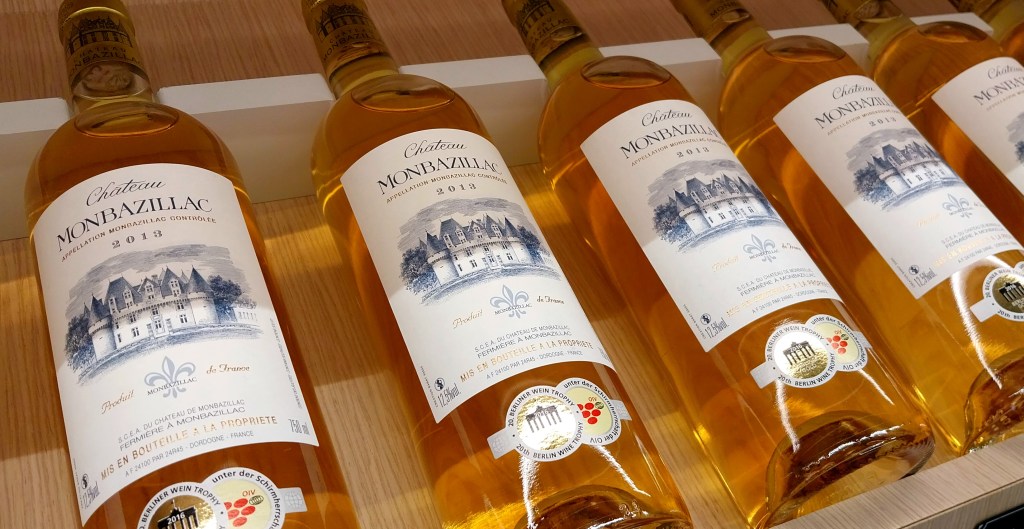
To learn a little more, we stop at one of the major vineyards along the route for a tour and some wine tasting. Chateau de Monbazillac is a microcosm of modern French history – a splendid, ornate chateau and estate that flourished in the 16th Century, before being brought down to earth by the revolting local peasants in the revolution of 1789. After some period of flux, it eventually found its feet again, being taken over by a wine producers’ co-operative that now markets its wine collectively under the Monbazillac name.

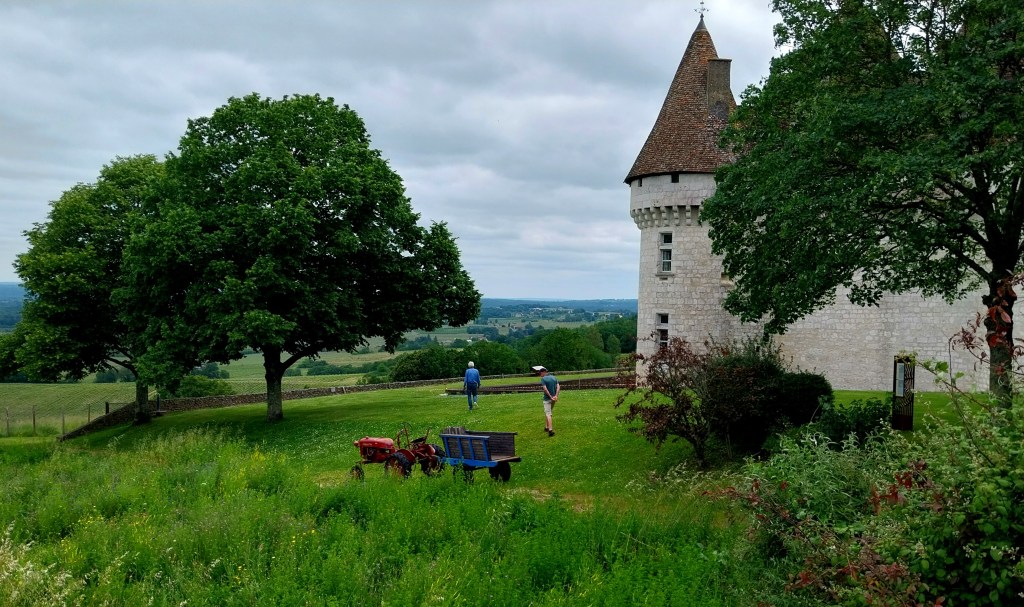
The Chateau is beautifully restored and maintained, with exhibitions on modern wine production, and glorious views out across the Dordogne Valley towards the town of Bergerac, taking in row after row of vines.

The choice of wines for our tasting took in a Bergerac blanc, a rosé, a fresh and fruity red and a deep red with the scent of oak barrels and a hint of saline on the throat. After some deliberation, our group opted to buy a bottle each of the two reds.

I can assure you these are being fully savoured on our terrace in the evening with a few platters of cheese, ham, pate and locally baked bread (I will go into further details in coming posts about that cheeseboard 🙂 )

After a relatively wet spring here, the weather is warming up, and we are looking forward to a relaxing few days of good food and wine with sunshine. Check back this weekend for a further report.

In the meantime, I shall leave you with a track that has a distinct French connection via the bassist, Jean Jacques Burnel. Here are The Stranglers with La Folie.

À bientôt!

Categories
Mains Recipes

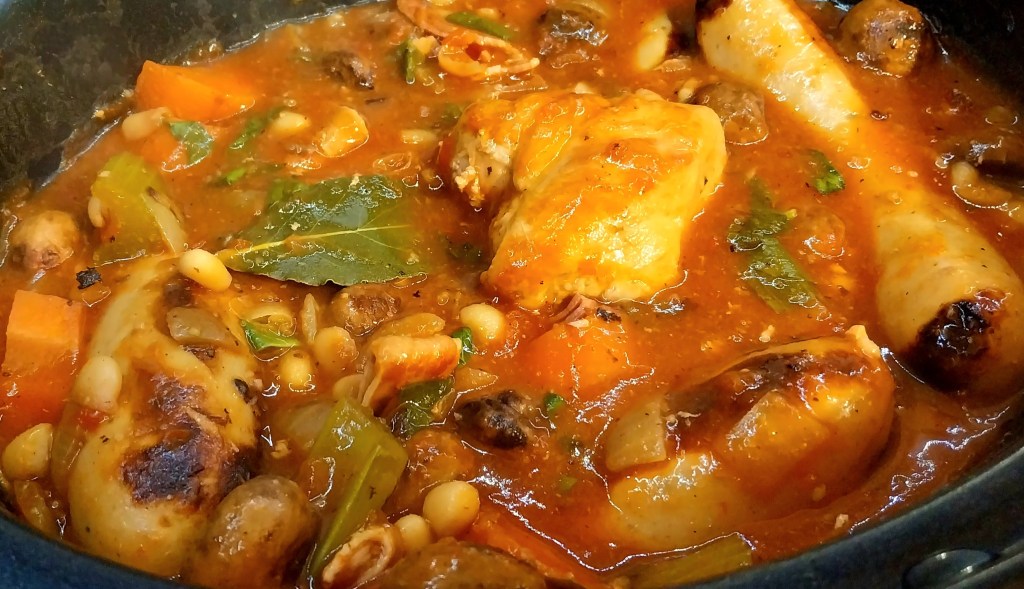
Cassoulet

This week, positive scenes in the news have inspired me to come up with a dish that brings together some British and European ingredients. It looks like we may now be getting back to being on (at least) speaking terms with our lovely neighbours across the Channel in Brussels.

My take on Cassoulet, the classic French stew, combines British seasonal winter veg, German Bratwurst, and French white wine. It’s a fine taste of cross-border goodwill and co-operation – Rishi and Ursula would love it!

There are many different cassoulet recipes, and most contain garlic, poultry (usually chicken or duck), sausages, a ham or bacon, a pulse (e.g. cannellini or haricot beans), stock and white wine. Outside of these, there is scope to use your imagination, what is in season or (erm, a consideration in some parts of Britain at the moment) what is actually in stock in the shops.

Servings

There should be enough here for 6 generous servings.

Timings

About 20 -25 mins to prepare. It then simmers away on its own for 2 – 3 hours.

You Will Need

  • 4 chicken breasts
  • 6 Bratwurst (or any other good pork sausages)
  • 12 rashers streaky bacon
  • 1 onion
  • 2 celery sticks
  • 1 carrot
  • 100g button mushrooms
  • 400g can of chopped tomatoes
  • 400g can of cannellini beans
  • 300ml chicken stock
  • 200ml white wine
  • torn basil leaves
  • 1 bayleaf
  • 2 tbsp cornflour
  • 2 tbsp cold water

Method

  1. Prepare a large casserole dish or slow cooker to cook the cassoulet in.
  2. Cut each chicken breast in half, then shallow fry each in a frying pan or wok until browned. Transfer to the cassoulet dish.
  3. Chop the bacon and fry with the sausages till browned. Add to the cassoulet dish.
  4. Chop the onion, celery, carrot and mushrooms and add to the frying pan. Let the veg soften for a few minutes, then transfer to the cassoulet dish.
  5. In the warm frying pan, tip in the tomatoes, stock, wine and beans. Give them a stir and, when warm and combined (you guessed it) transfer to the cassoulet dish.
  6. Tear in the basil leaves and add a few twists of salt and black pepper. Dunk the bayleaf in the middle.
  7. Let it stew for 2 – 3 hours. I used an electric slow cooker, which sits simmering away in the corner of the kitchen. If you use a casserole dish, put it in the oven at 180C.
  8. When the cassoulet is cooked, combine the cornflour and water in a ramekin until fully dissolved. Pour into the cassoulet and stir to combine. You should see the sauce start to thicken straight away. It is then ready to serve.

Customise It!

As suggested above, provided you have the core elements that every cassoulet should have, you can feel free to play around. Slices of garlic sausage from the deli can take the place of the bacon, for example, and you can vary up the veg if you wish.

I served this with boiled waxy potatoes and steamed shredded cabbage – both of which are good at soaking up the sauce. Boiled rice is another good call.

Turning to the next track for the ADK Playlist, all this talk about European relations brings me to Kraftwerk. I saw them play a few years ago, in the Royal Albert Hall in London. There aren’t many bands who can go off stage half way through for a nice cup of tea, leaving four robots to play their instruments in their absence. The machines performed We Are the Robots, without any dip in quality.

This is one of my favourite tracks of theirs, taking us on an atmospheric journey from Paris, through Vienna to Berlin, on the Trans-Europe Express.