Categories
Bakes Recipes

Lemon Drizzle Slices

After 2 flights, 26 hours in the air, 4 movies and at least 7 in-flight meals or snacks, I am now back home in the UK from my Australian trip.

I’ve also swapped a daily high temperature of around 30C in the Australian summer, for one of around 8C in the UK winter. If that sounds low in comparison, it is positively tropical given what friends and family have told me about the freezing weather here over December and January. Touch wood, we seem to have missed the worst of a very cold UK winter.

It’s good to be back in the ADK kitchen researching new dishes and listening to some new bands over the speakers on Spotify. There’s lots of exciting recipes and stuff to come over my next few posts, so stay tuned.

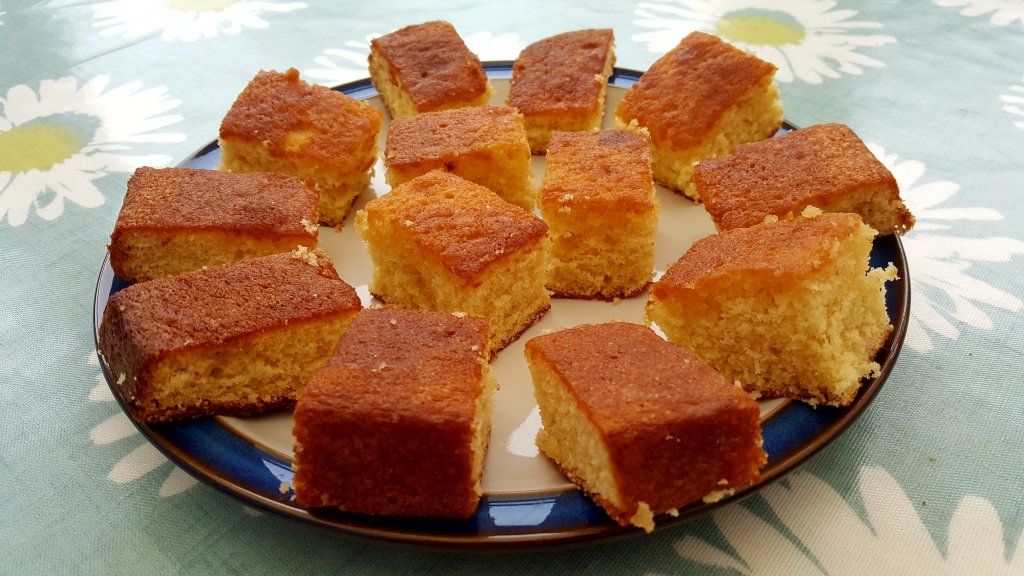
The first creation since my return is the Lemon Drizzle Slices shown above. I made these as a thankyou for our lovely neighbours who have been keeping an eye on our house while we have been away. Sweet and tangy, the cakes went down particularly well along with a glass of prosecco, sat in a warm living room sharing a few holiday snaps cast to the TV screen. Fancy having a go?

Servings

This will make 16 slices.

Timings

10 minutes to prepare, 15 – 20 mins in the oven. 5 mins to drizzle the lemon and another 5 mins to add the icing.

You Will Need

  • 70g softened butter
  • 120g caster sugar
  • 2 large eggs
  • 140g self-raising flour
  • 1 tsp baking powder
  • zest of a lemon
  • 1 tbsp lemon curd
  • 2 tbsp semi-skimmed milk
  • 30g granulated sugar
  • juice of a lemon
  • 70g icing sugar
  • 1 – 2 tbsp water

Method

  1. Grease a traybake pan 20cm x 20cm and line with baking paper.
  2. Heat the oven to 180C.
  3. Cream the softened butter and caster sugar with a mixer. Add in the eggs and whisk again.
  4. Sieve the flour and baking powder into the mixture. Add in the zest, lemon curd and milk. Stir to combine so there are no dry ingredients showing.
  5. Tip the mixture into the tin and place in the oven once it’s up to temperature. Bake for 15 – 20 mins, until the cake has risen and is golden. Pierce the middle with a skewer and, if there is no wet mixture on the skewer, it is done.
  6. Leave the cake in the tin, and pierce it all over in about 15 – 20 places to make tiny little holes. Mix the lemon juice and granulated sugar, then gently pour it over the cake, so that it seeps down into the holes. Take it slow as, if you pour too fast, it will flow off to the sides.
  7. Leave the soaked cake to cool completely, then remove it from the tin.
  8. Mix the icing sugar and water together, then spread over the cake. Leave it aside to set (I find placing it in the fridge helps the setting process).
  9. Once the icing is set, cut into slices and serve.

Customise it!

This recipe is already customised, to be fair, so there’s not too much more to suggest. It’s based on one by Paul Hollywood (thanks Paul), to which I have made a few tweaks – the main one being to use only one third the amount of icing that he does. I can only assume he likes his icing laid on nice and thick!

If you don’t want to make the icing, that’s ok – the cake is also fine to serve without it (see my photo below).
I’ve been discovering some great new music since my return, so will be featuring this on the ADK Playlist over the next few posts. Here’s the first: The WAEVE is the new venture by Graham Coxon (out of Blur) and Rose Elinor Dougall. They’ve just released their first album, and I love the bass guitar line on this track, called Kill Me Again. Stick with it – it kicks in after the first verse.
Categories
Bakes Blog Snacks

Viva Vegemite!

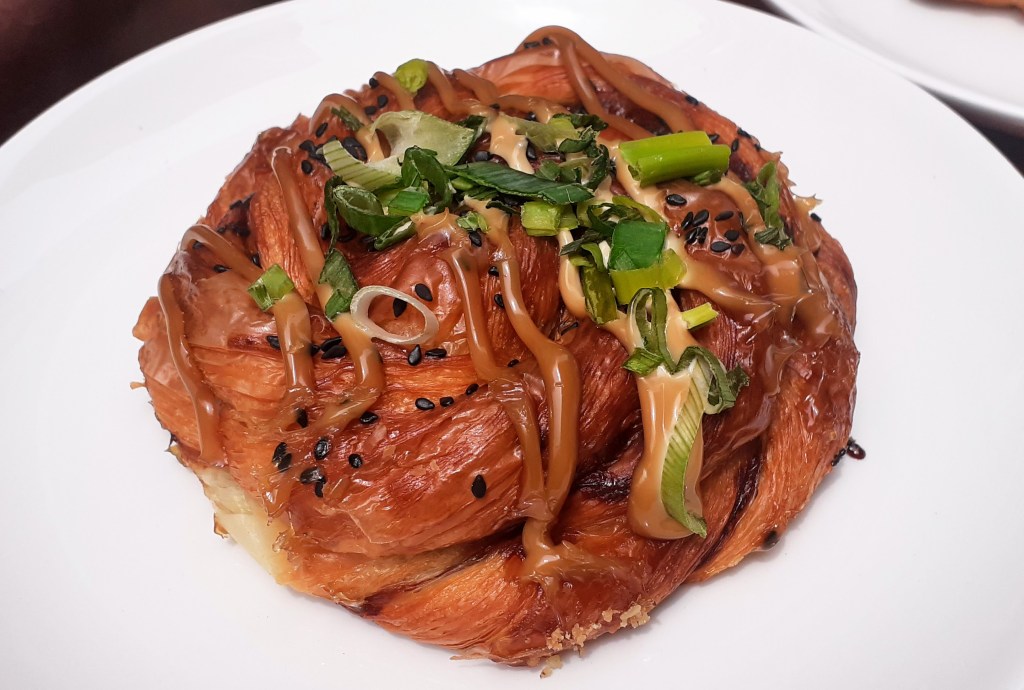
My Lonely Planet guide book to Australia advised that one of the foods I must try when I was here was Vegemite. I have followed that advice and very much enjoyed this institution of an Aussie delicacy, in many forms. The most memorable is the Vegemite Knot pastry, shown above, more of which I shall explain in a moment.

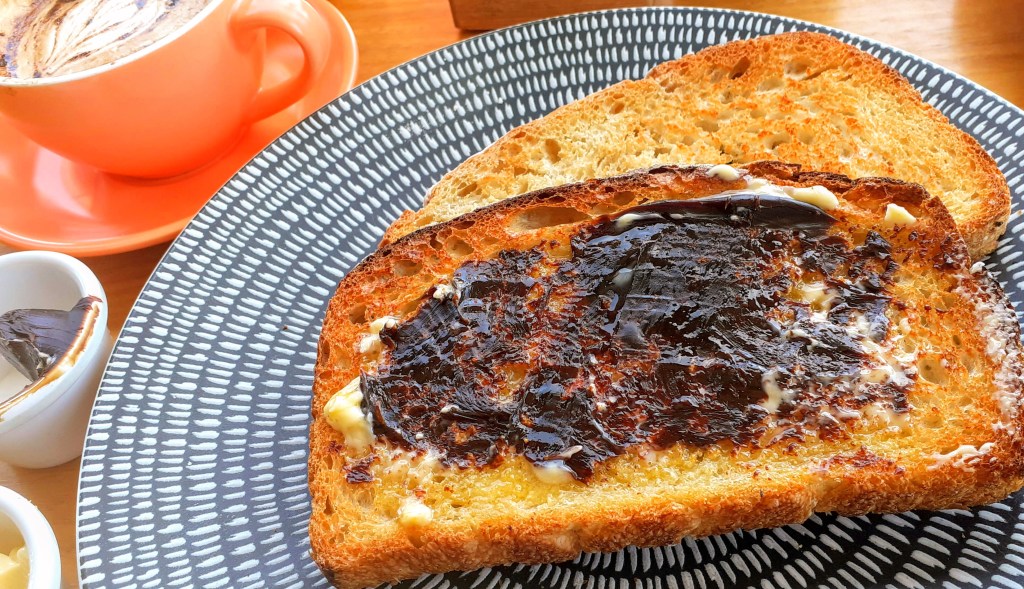
My first encounter with the stuff was in a road side cafe on Phillip Island in Victoria. Having stopped for a coffee (a long black with milk on the side – they do not do americanos here), I noticed that the snacks menu included two thick slices of sourdough toast, with butter and Vegemite. Sounded too good to turn down, so in a few moments the plate shown below arrived.

I soon learned that serving on thick buttered toast is a really good way to enjoy it. The dark, rich spread combines with the butter to make a salty, malty, creaminess that sinks into the warm toast, and complements the crispy crust. The taste is similar to the Marmite that we have in the UK, but much more buttery and creamy, and easier to spread.

Shortly after this, I invested in my own jar at Coles, one of Australia’s major supermarket chains, and the above has become a regular form of breakfast!

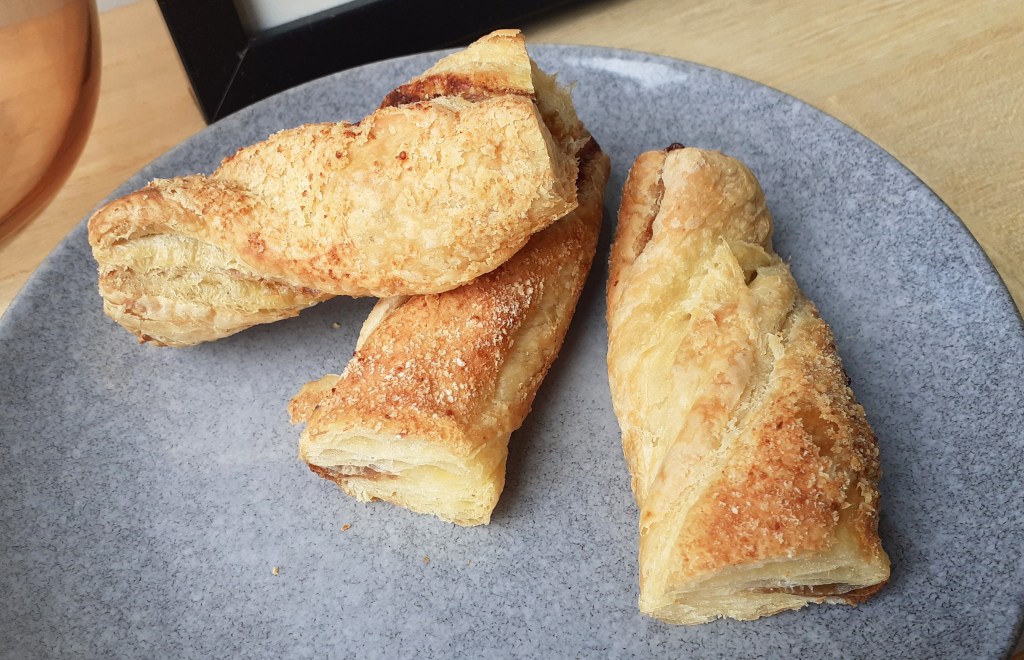
Vegemite is made from yeast extract and is a good source of B vitamins. The culinary ingenuity of Australians has led to it being incorporated into more and more foods and dishes, including marinades, stocks, soups and stir fry sauces. Savoury bakes are also fair game, see my photo below – cheese and vegemite twists, anyone?

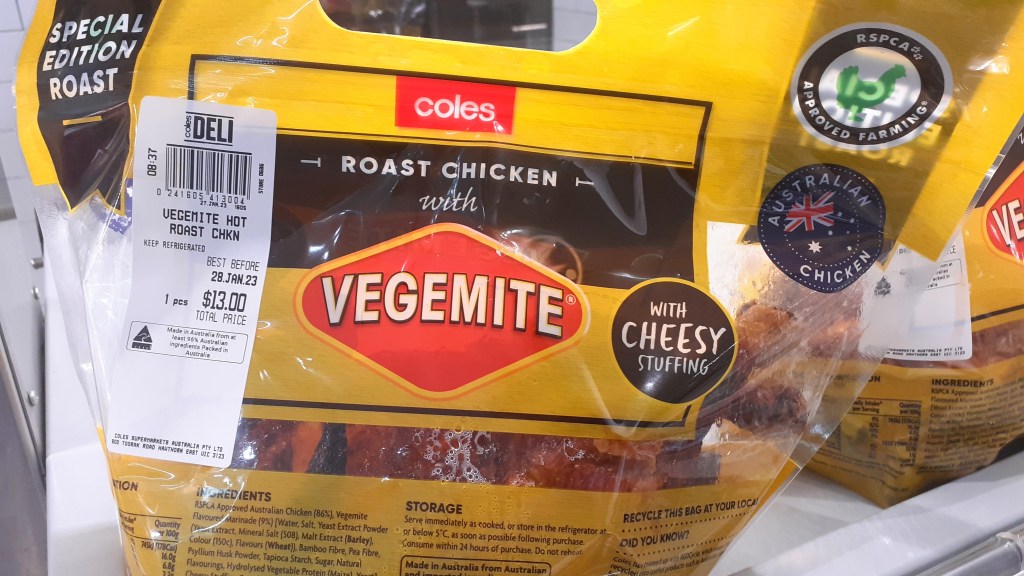
Or possibly even a flavouring for roast chicken? This was on sale, hot, in Coles:

And so to the photo that started this post – the Vegemite Knot. I found this in Rollers Bakehouse, a great cafe in Manly, by Sydney’s north beaches. Someone has made the inspired decision to combine Vegemite in a creamy, almost caramel-type sauce and drizzled it on choux pastry, topped with chopped scallions (spring onions) and what I think are chia seeds. It tasted unique and wonderful, managing to be both sweet and savoury at the same time.

Suitably inspired, I will be taking a jar of Vegemite home with me and plan to experiment with its use in baking. My current thoughts are to adapt my tried and tested recipe for National Trust scones, to include cheese, Vegemite and possibly some local water cress. Watch this space for a future post!

Choice of music for the ADK Playlist has to be the only track I know that famously references the Vegemite sandwich. Here’s Melbourne’s own Men at Work with Down Under.

Categories
Blog Mains

Little Vietnam

Victoria Street, in Melbourne’s inner city east, is known locally as Little Vietnam. It has earned this name through the number of Vietnamese restaurants and food stores that stretch out along both sides – a reflection of the sizable Vietnamese community that has settled in the city over recent generations.

I haven’t eaten Vietnamese before, so took the opportunity to try it out. A little research identified Van Mai as a good place to visit, and I’m pleased to say I would recommend it.

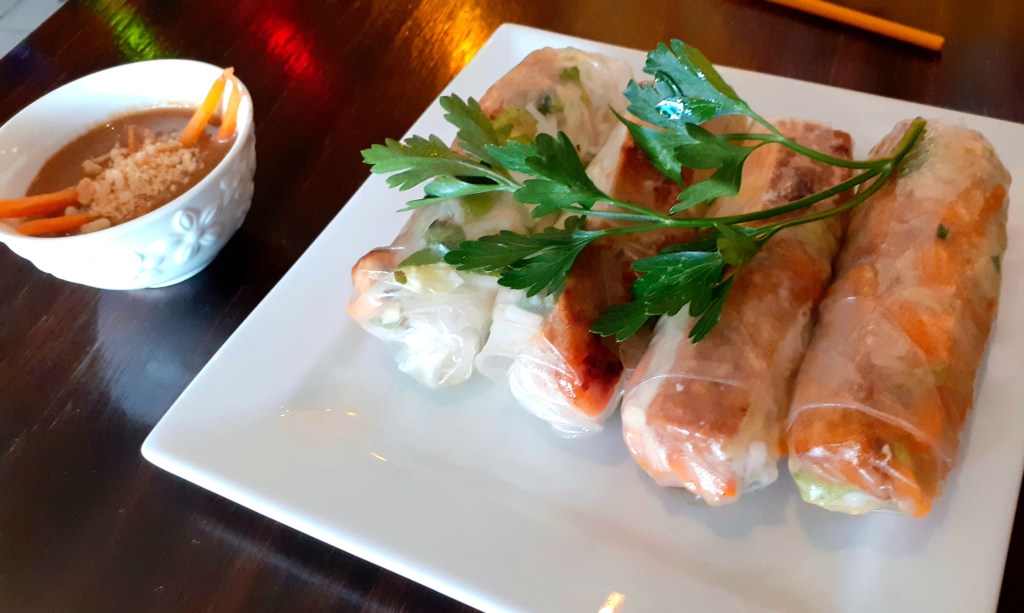
As a starter, we shared a plate of Rice Paper Rolls. I had seen these in some Vietnamese street food stalls in the city, and fancied trying them. Visually, they resemble sausages (see photo below), the contents wrapped in edible, transparent rice paper. Unlike sausages, however, they are eaten cold. The fillings included shredded carrot, beansprouts and crispy chicken, with fresh coriander. They were served with a dipping sauce that had a satay flavour.

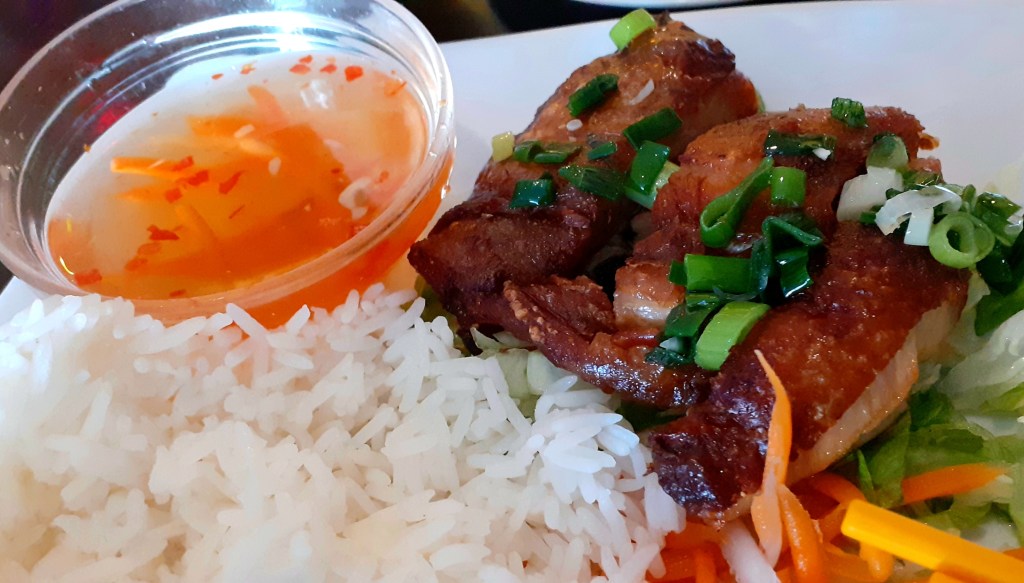
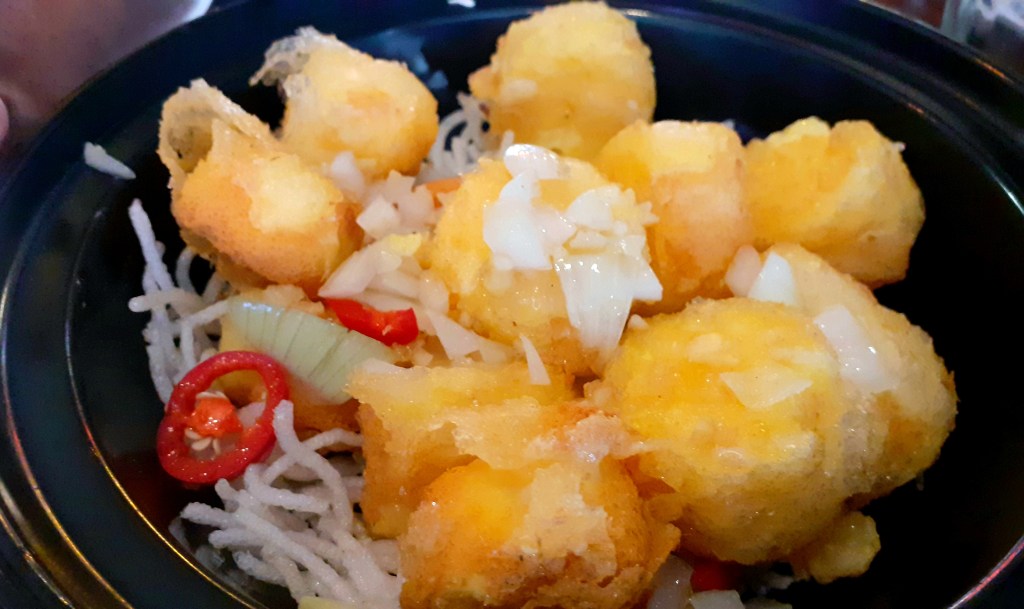
For mains we chose three dishes. My main photo at the top of the post shows Crispy Chicken with Steamed Rice, served with vegetables and a chilli and ginger dipping sauce. We also tried the Salt and Pepper Tofu, deep fried and presented on a bed of crispy vermicelli (see below).

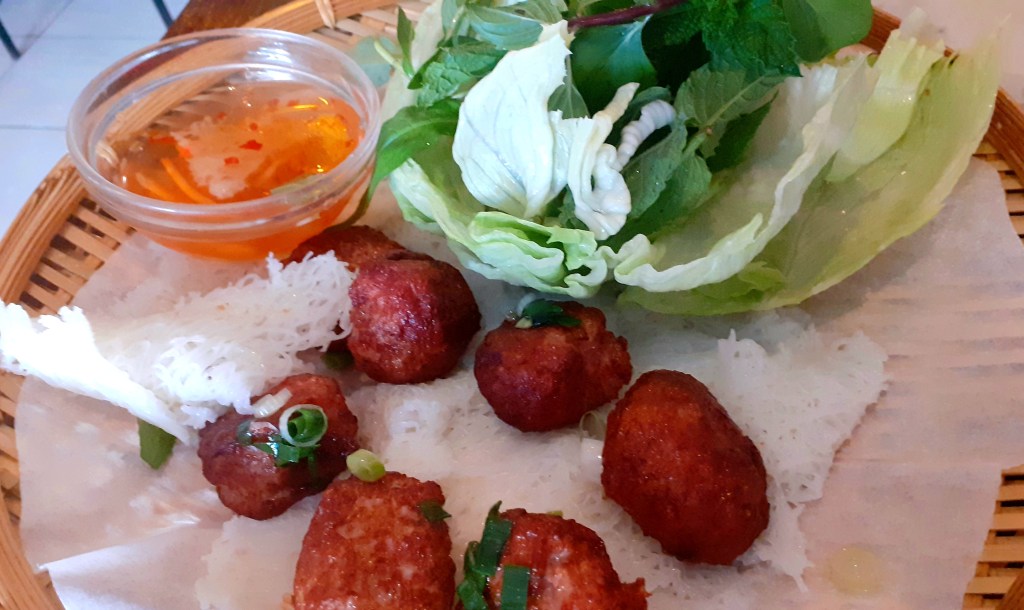
Our third dish was Steamed Fine Rice Vermicelli with BBQ Pork Balls. This was served with fried onions and shallots, fresh mint and crushed peanuts (see below).

This dish was eaten by handrolling the food in large crispy lettuce leaves, and dipping the parcel in a bowl of fish sauce.

I liked the food very much, particularly the pairing of hot and spicy with fresh, uncooked ingredients like lettuce, hand-torn mint and coriander. I also had fun eating with my fingers, though my hands were very sticky by the end of the meal.

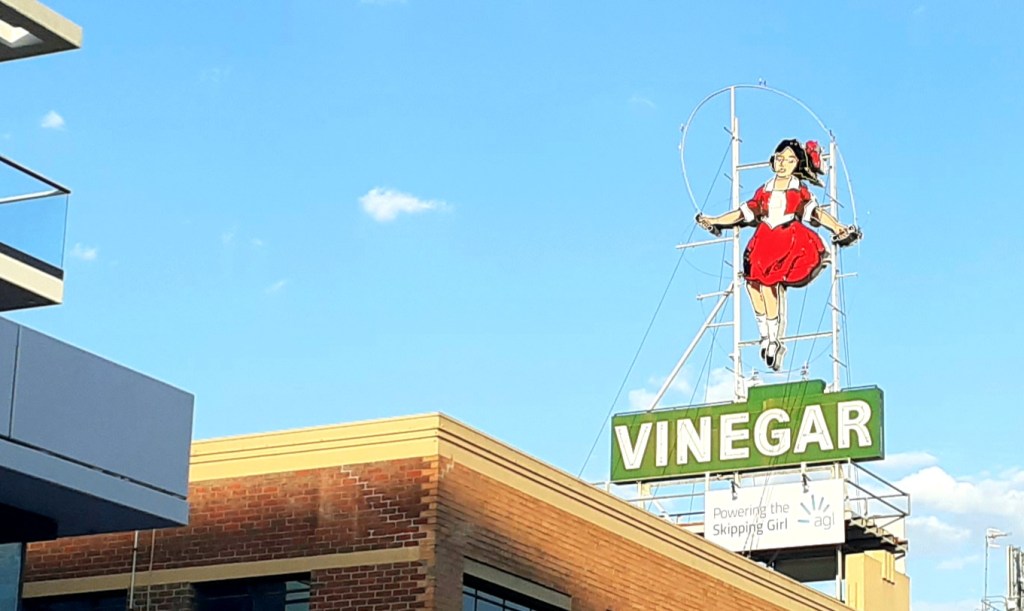
Another joy of visiting Victoria Street is the sight of the Skipping Girl – a much-loved Melbourne icon dating back to the 1930s. It was the city’s first neon sign, advertising the Skipping Girl Vinegar brand. Walk down the street after your meal to see her as dusk is falling – she will be illuminated and, magically, skipping.

For the next track on the ADK Spotify Playlist we take inspiration from the Skipping Girl. This is Malcolm McLaren with Double Dutch.

Categories
Bakes Recipes

The Perfect Lamington

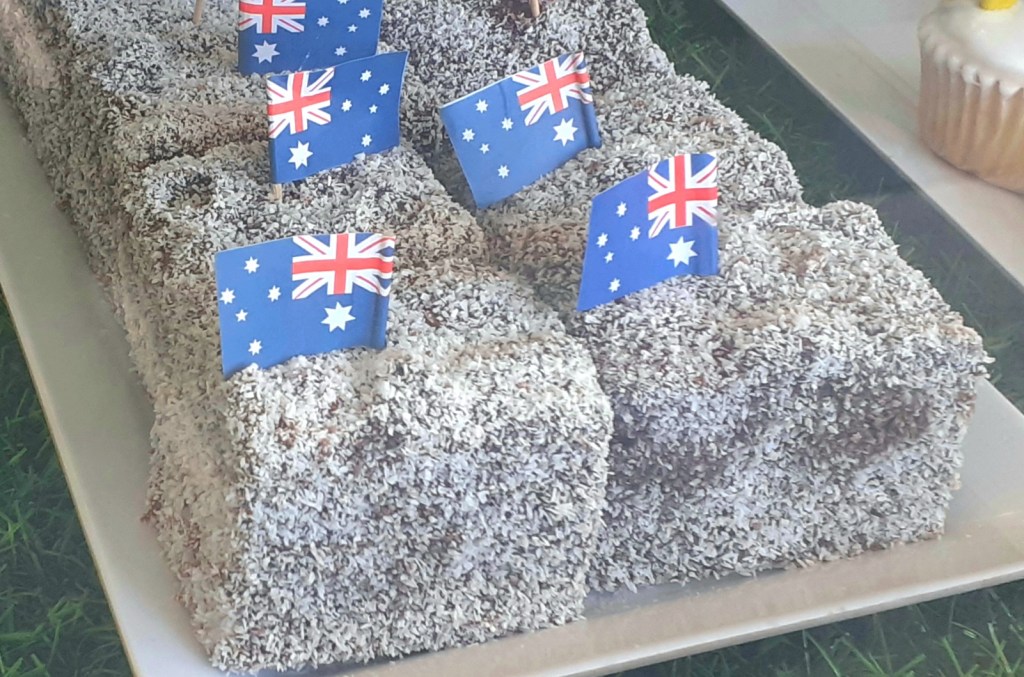
During my travels here in Australia, I have become quite partial to the Lamington. Typically enjoyed with a coffee, it seems to be something of a national treasure, and is on sale in bakeries and cafes everywhere we go.

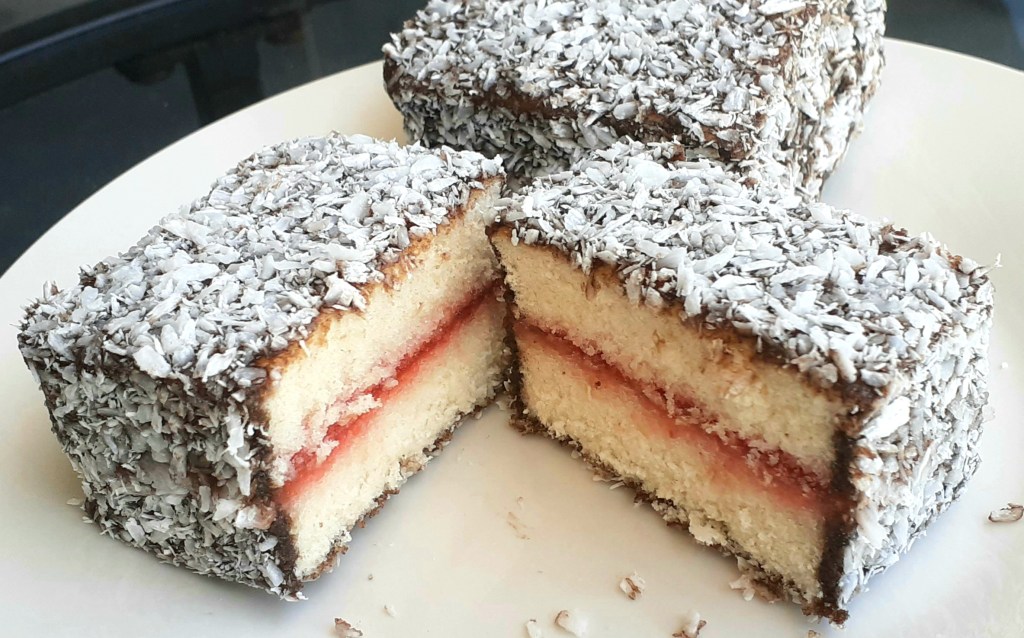
Essentially it is a square-shaped sponge cake, coated in chocolate icing with a generous sprinkling of desiccated coconut. A simple, and unbeatable combination!

The story goes that it was invented in Queensland, Australia in around 1900 by the chef to the State Governor, Lord Lamington. I understand that New Zealanders have also laid claim to it’s creation, but the Aussies seem to be having none of that!

There are some variations. The ones in my main photo introduce another ingredient – a layer of raspberry jam in the middle – which works really well. There is even a bakery in Sydney that has developed glamingtons, with flavours including strawberry, salted caramel and peanut butter. The original choc and coconut combo remains the most popular, however.

Australia Day (the national holiday) is coming up on 26 January, and one of the ways that people will be celebrating is by baking and eating Lamingtons. These ones, adorned with national flags, I spotted in a bakery today in Brighton, a resort just down the coast from Melbourne.

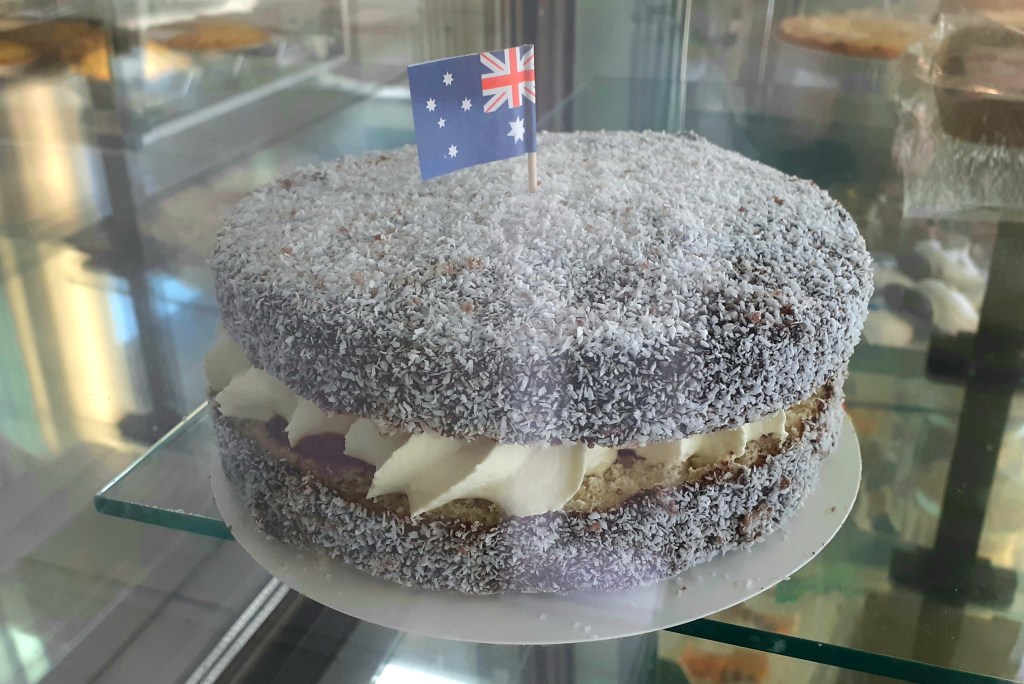
Here is another variation for Australia Day – a Lamington style Victoria sponge filled with fresh cream.

Can’t be bad!

Fancy joining in?

Servings

This will make around 16 cakes.

Timings

20 mins to prep, 20 mins in the oven. Once cooled, 10 mins to coat in the icing.

You Will Need:

  • metal baking tray, 24cm square (or equivalent)
  • 125g sugar
  • 50g butter, softened, plus 1 tbsp for the icing
  • 2 eggs
  • 120g self-raising flour
  • 85g desiccated coconut
  • 2 tbsp cocoa
  • 150g icing sugar
  • 3 tbsp boiling water
  • 1 tbsp butter
  • some smooth raspberry jam (optional)

Method

  1. Heat the oven to 180C.
  2. Grease and line the metal baking tray with baking paper.
  3. Cream the sugar and softened butter together in a mixer. Whisk in the eggs and combine, then add in the self-raising flour.
  4. Pour the batter into the baking tray and spread out evenly with a knife or spatula. Bake for 20 mins.
  5. Cool on a baking tray, then cut into squares.
  6. If you wish to add a layer of jam, do so at this stage – slice each square and spread it in, making a jam sandwich.
  7. For the chocolate coating, mix the cocoa, icing sugar, boiling water and tbsp butter. Give it a good stir so it forms a nice, thick sauce.
  8. Put the desiccated coconut in a separate bowl, alongside.
  9. One at a time, place each sponge square on a fork and dunk it in the choc sauce. Use a spoon to coat the top and sides, then set it in the coconut, gently turning it over so that all sides are coated.
  10. Leave on a wire rack and allow 10 – 15 mins to set, before serving.

Customise it!

As indicated above, bakers across Australia have come up with a number of very creative variations. If, like me, this is the first time you’ve made Lamingtons, I would stick to the basic recipe. With all the dunking in choc sauce and coconut, this has the potential to become quite messy. My advice is to learn to walk before you run!

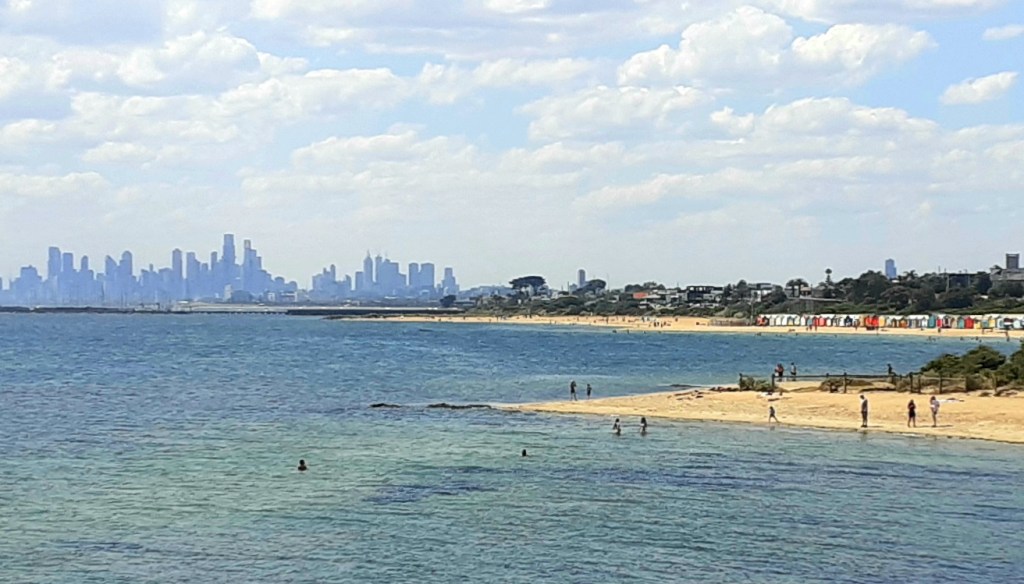
I mentioned earlier that we had visited Brighton today. For my final photo, I will share with you this shot from Brighton Beach, looking back towards the Melbourne city skyline. I liked the contrast between the small town seaside resort, with a line of little coloured beach huts on the right, and the mighty CBD behind. It was another hot one today, reaching 30C, and we joined the many people cooling off in the sea.

Time to add another Australian band to the ADK Playlist. I discovered The Presets, an electronic duo from Sydney, on a visit to Melbourne’s Australian Centre for the Moving Image. This track is called My People.

Categories
Blog Desserts

Peach Melbourne

Peaches are in season in Australia right now, and plentiful in the shops. It’s no surprise therefore that, just as Wimbledon has strawberries and cream, the Australian Open has Peach Melbourne.

The Australian Open, the first tennis major tournament of 2023, is under way at the moment, and is a pretty big deal here in Melbourne. I’ve spent a couple of days at it this week and, aside from watching the tennis, have enjoyed its Peach Melbourne signature treat.

It is of course a play on Peach Melba, the dish created in the Victorian era by a French chef, in honour of the Australian soprano, Nellie Melba. Melba was a stage name that she took from her home town of Melbourne.

The three key ingredients are ice cream, fresh peaches, and raspberries. At the Australian Open, it is served (sorry, couldn’t resist that one) as a tub of whirled vanilla ice cream, covered with a drizzle of pureed fresh peaches, and topped with pieces of dried raspberries (see my main photo).

It is lovely to taste – especially the fresh peach sauce – and a welcome respite from the heat. The temperature hit 37C one day this week, and play on the outdoor courts had to be suspended. I would not be surprised if the tennis players all headed to the Peach Melbourne outlet to cool down.

Regular followers will know that I featured on ADK some ice cream creations made with my own ice cream maker, a few months back during the UK summer. I haven’t made this peach dish before but will definitely be giving it a go when I get home. Watch out for a future post.

As for the tennis, I have really enjoyed seeing the game played up close by world class players. The first day we bought a ground pass, which gives access to all of Melbourne Park, except for the 4 show court arenas. You can wander around and see who is playing, then stand or sit at a match and watch it for as long as you wish, before moving on to another. You can go fetch a coffee (or Peach Melbourne) whenever you choose, or take a deckchair on a central green watching the action on a big screen.

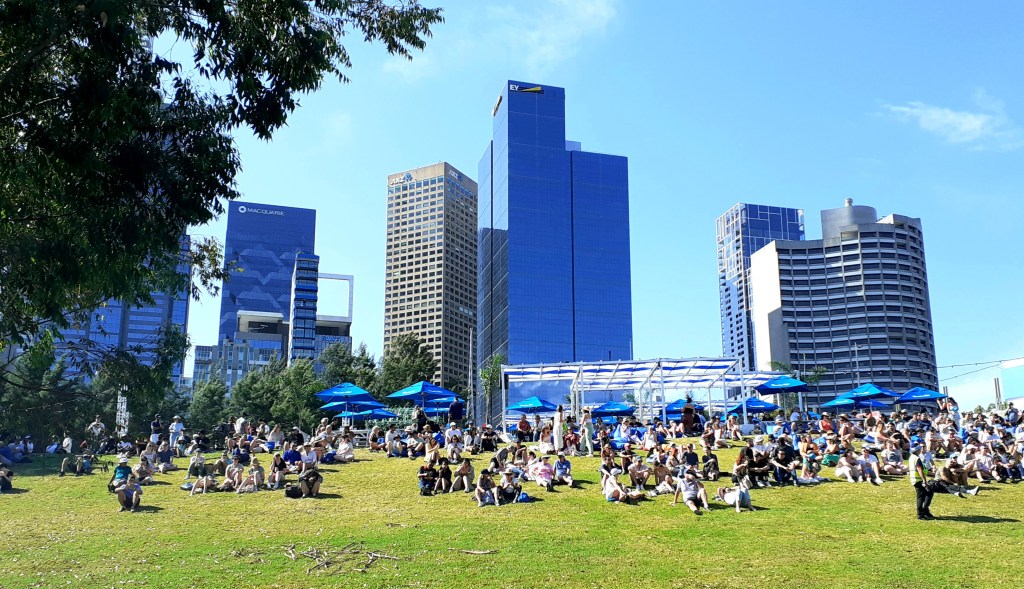
The atmosphere is relaxed and informal off court, if fiercely competitive on. The setting is spectacular, with the skyline of Melbourne’s Central Business District (CBD) rising above the courts.

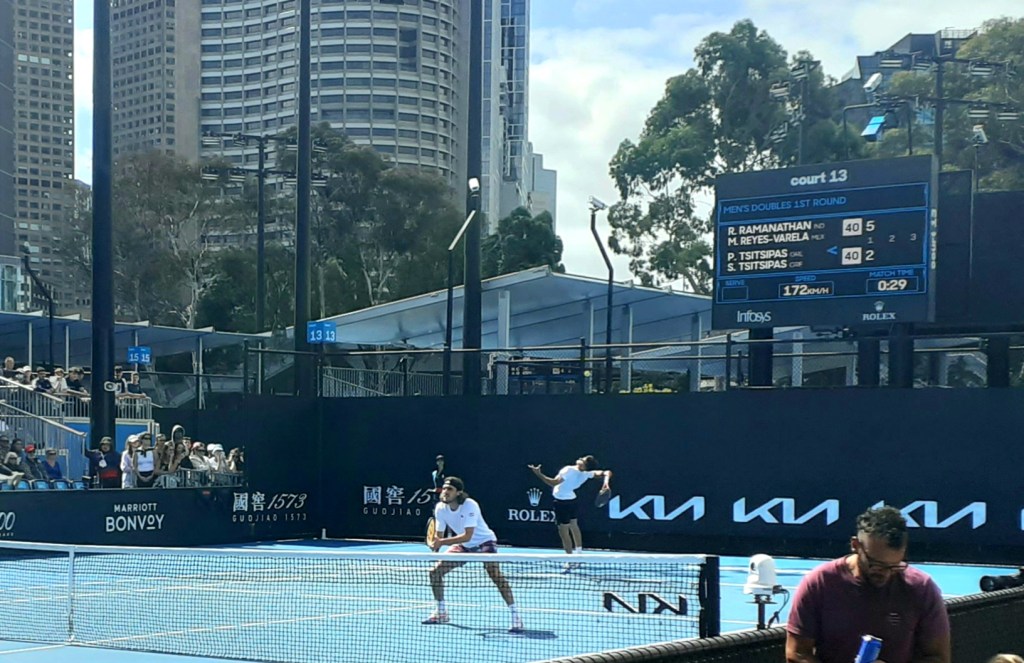
I liked being able to watch a match from a spectator gallery to the side of the court. The customary view on TV is from a raised camera position at the end of the court, but sitting to the side brings home much more effectively the speed and power with which the game is played at this level.

It’s also fun spotting any famous players taking their turn on the outside courts. The biggest name we saw there was the number 3 seed, Stefanos Tsitsipas, see below.

I knew he was a top men’s singles player, but hadn’t realised he also played doubles with his brother. There is a large Greek community in Melbourne, so the boys were receiving enthusiastic support from the fans.

It’s also possible to watch the tennis for free on a big screen, by joining these Melburnians below, at the nearby AO Hilltop – a fan fest site with decent drinks and food.

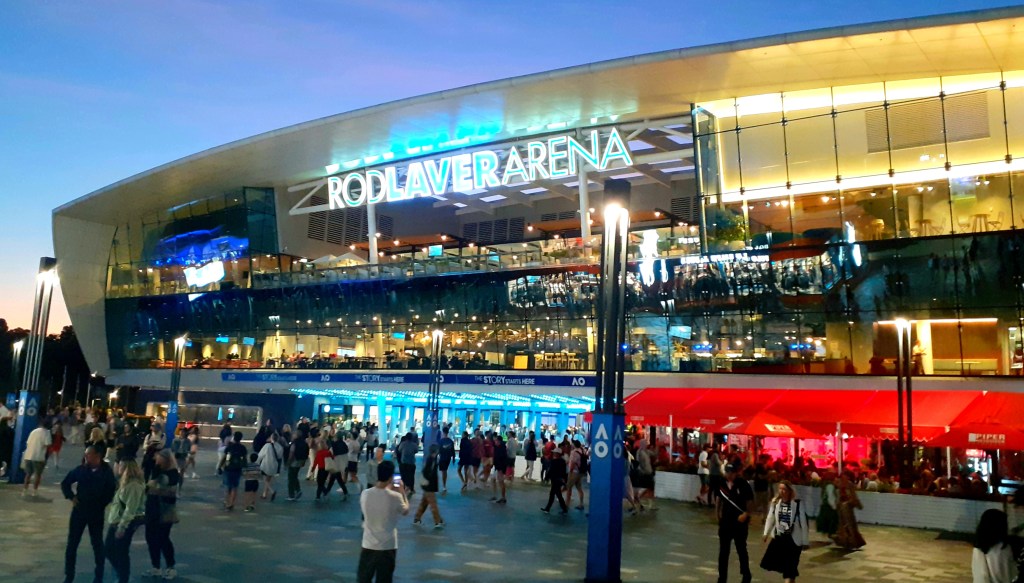
On our second day, we had evening tickets for the biggest of the show courts, the Rod Laver Arena – a lovely birthday present from my son. It was very exciting making our way to the famous 15,000 seat arena, below.

In a tense game, we saw the USA’s Seb Korda inflict a shock defeat on the number 7 seed, Daniil Medvedev.

Our session ended just after midnight – not quite as late as Andy Murray endured this week, finishing at 4am the next morning! With this in mind, our latest addition to the ADK Playlist is in honour of the gallant, battling Scot who overcame the odds to progress to the next round. This is Faron Young with It’s Four in the Morning.

Categories
Blog

A Night at the Opera

I don’t have a bucket list. However, if I did, one item on it would be an evening at Sydney Opera House, enjoying a delicious meal and some excellent musical theatre. What’s more, after this weekend, I would now be ticking it off!

Having been in Sydney for a few days, we had already seen the Opera House from a few different perspectives. It is prominently situated on a natural peninsula extending out into Sydney’s vast Harbour, which means it is visible from most of the bays, coves, trails and look-out points tucked away around the water’s edge.

My main photo, above, is taken from one of the many public transport ferries that pass it by, on the way back to the Harbour’s main ferry interchange at nearby Circular Quay.

For the photo below, I climbed up to the dizzy heights of the pedestrian walkway crossing the (equally iconic) Sydney Harbour Bridge.

This next one is taken on the terrace of the Opera House itself, on a walk out towards the nearby green spaces of the Domain and Botanical Gardens.

The world-famous building was opened in 1973, and has just begun its 50th year celebrations. The show we were watching was Amadeus, a play with music about the life of Mozart, told from the perspective of a jealous rival composer, Salieri, played by well-known Brit actor, Michael Sheen.

The show was great, my favourite aspect being the orchestral sound – looking up at those ceilings in the shapes of huge sails, it is immediately apparent that nothing has been spared on the quality of the internal acoustics.

I also really liked the fact that the building was designed to be spacious and social. We enjoyed a pre-show meal on the huge terrace alongside the building, in the sun, in full view of the Harbour Bridge and the passing seafaring traffic. A massive visiting cruise ship was departing just as we ate, providing further spectacle.

Interval drinks were served on a balcony high up at the front of the building, with peerless views from east to west across Sydney Harbour, as the sun set and the lights were coming on.

And what, as a food blogger, did I make of the restaurant meal? I’m pleased to say it impressed as well! Our party of four shared a range of platters of what the chef calls Pan-Asian Fusion. Our selection included vegetarian spring rolls with plum sauce, a bamboo basket of steamed dumplings with black vinegar and chilli oil, beef sando (a type of Japanese steak sandwich), karaage fried chicken, katsu curry and a dish of mixed sushi. Considering the location, the bill was very reasonable as well.

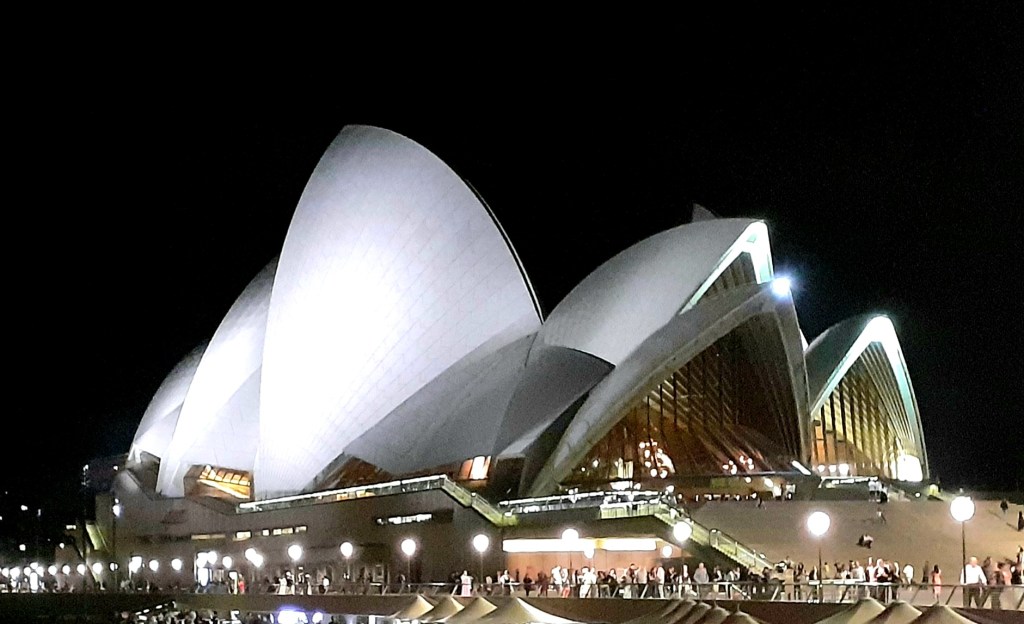
My final shot of this iconic venue I took as we walked home after the show, having had a thoroughly enjoyable evening.

Enjoying a little night music, in a play about the life of Mozart? This just has to be the next track for the ADK Playlist: the instantly recognisable (and, be warned, hummable) Serenade in G Major from Mozart’s Eine Kleine Nachtmusik.

Categories
Blog Drinks

Prickly Moses

As a foodblogger travelling around Australia, I have made it my mission to seek out and sample a range of local craft beers along the way. I know – an onerous responsibility, but you’re welcome. Don’t mention it.

In recent years, craft beer has really taken off in the UK, and one of the pleasures of travelling around the British regions is tasting the different brews being produced by local independents. It appears that the craft beer market is, at the very least, equally as buoyant in Australia.

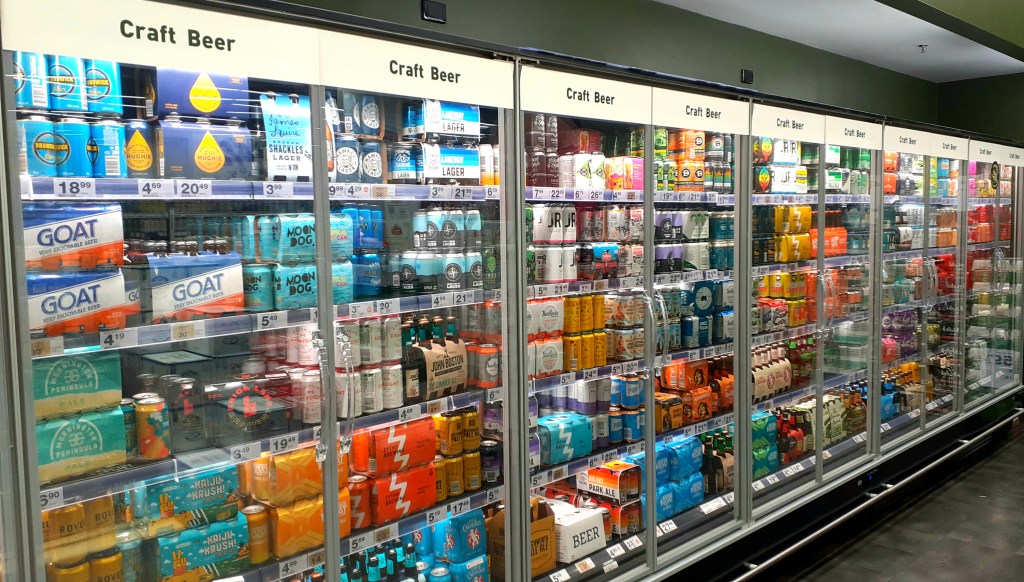
On my first (post-jet lag) day in Melbourne, I stumbled upon Dan Murphy’s bottleshop (as they call it here) in Prahan, and went in to ask if they stocked any local craft beers. I was escorted to one entire wall of the store, lined with refrigerators all stocking local craft brews – see my photo below.

From then on it has been a similar story everywhere. Each town and region has its own incredible range.

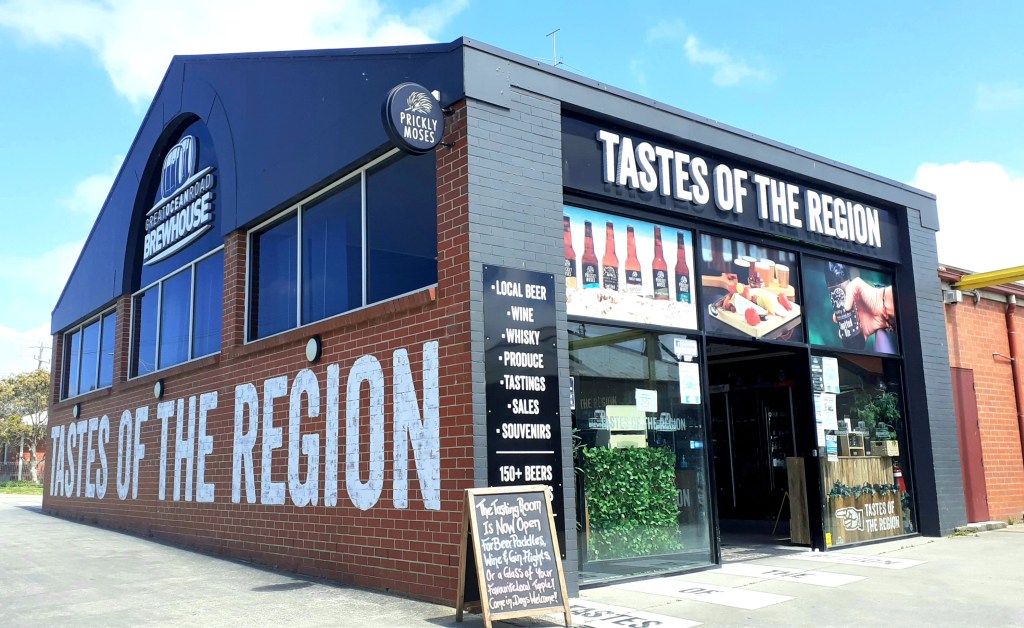
A good example is the Great Ocean Road Brewhouse – a vast warehouse devoted to regional craft beer. It is in Apollo Bay, a golden-beached seaside resort on the Victoria state coast. Here’s a photo below.

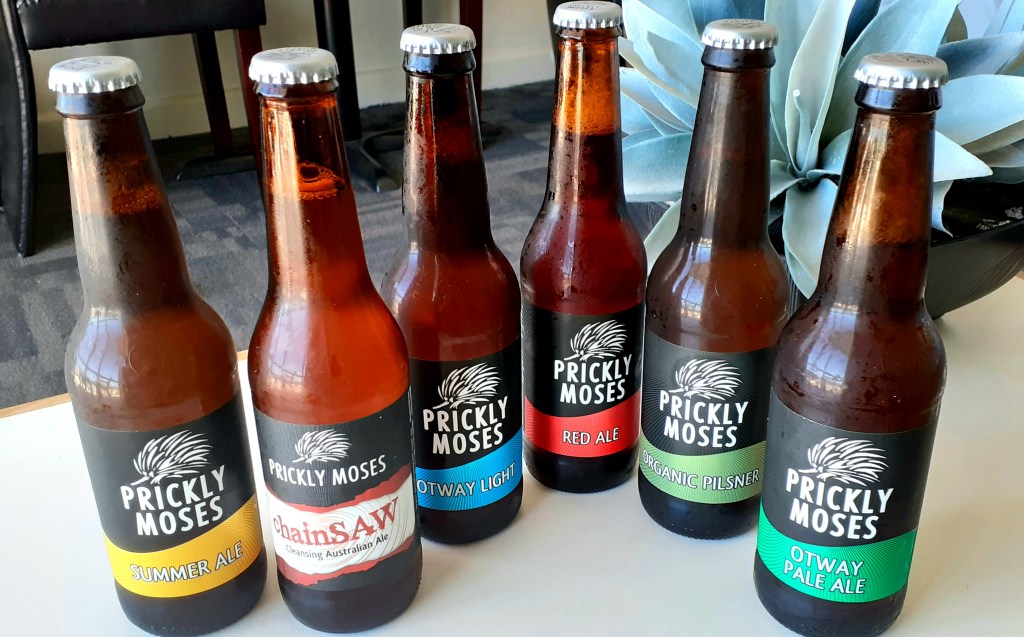
Some friends had invited us for drinks and pasta at their beach house, and I wanted to find some good local beers to take along. The choice was bewildering, but with the aid of some recommendations from the staff, I settled on the Prickly Moses beers shown in my main photo, at the top of this post.

Prickly Moses is a generic name that covers a number of hardy, cactus-like shrubs that grow in Australia’s hot climate. The name has been adopted by a craft brewery in Barongarook , Victoria. In keeping with the prickly theme, their logo is an Echidna, a mammal native to Australia akin to a kind of cute hedgehog (and which, incidentally, we have already seen at least a couple of times in the wild).

As the photo shows, my selection included a good variety, from golden summer ale, red ale, IPA, organic pilsner and low alcohol. Every one tasted crisp and fresh, and went down well with the punters on the sun deck, overlooking the bay. These are probably my favourites tasted so far, based on consistency of quality across a variety of beer types.

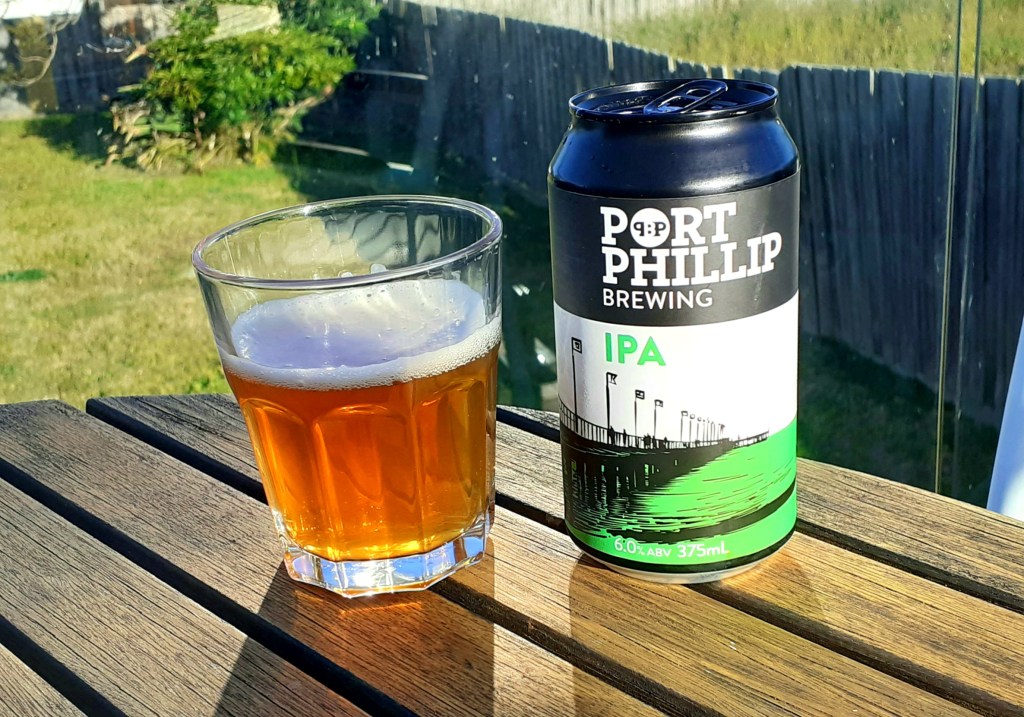
A close second is this IPA from Port Phillip on Melbourne’s Mornington Peninsula, which had just the right combo of colour, depth, strength and hoppy taste (see below).

This one probably tasted special as it became a regular accompaniment to barbecuing in the garden, in the evening sun!

It would be impossible to review every beer from the 740-odd craft breweries in Australia, but I hope this will at least give you, um, a taste.

The next track for the ADK Playlist, from an Australian band, was suggested to me at the drinks and pasta party. These are The Veronicas, originally from Brisbane, with Untouched.

Categories
Blog Snacks

The Twelve Apostles

While touring Australia’s Great Ocean Road, I’ve been enjoying the Twelve Apostles Gourmet Food Trail. More about the food in a moment, but firstly let’s explore the rather special wonders of nature from which the Trail derives its name.

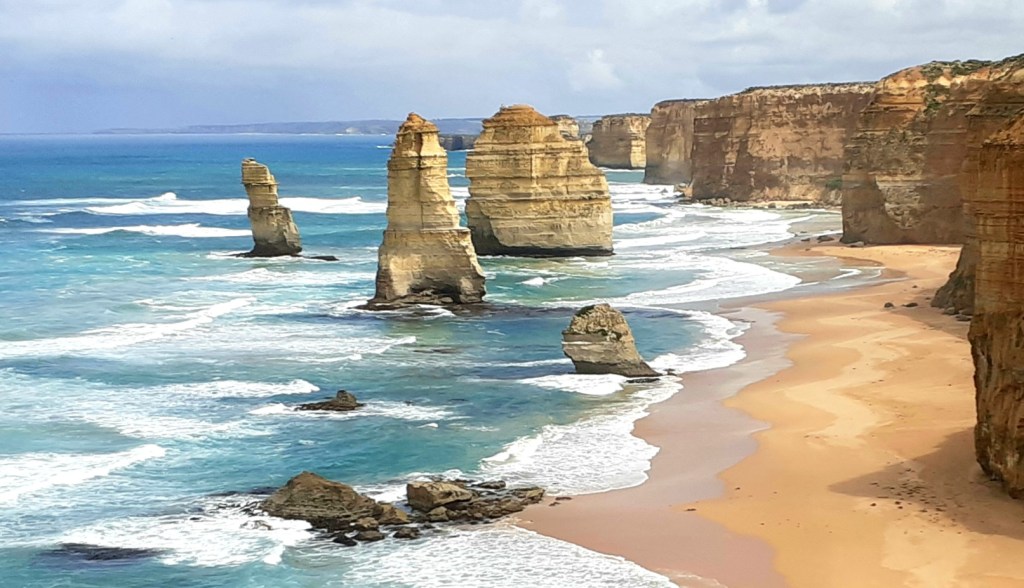
The Twelve Apostles (see my main photo) are a series of spectacular rock formations standing off Victoria’s southern coast, amidst the crashing surf and spray. They have been carved from the limestone cliffs over thousands of years, by the ferocious wind and waves blowing up across the Southern Ocean from Antarctica. Today they are one of Australia’s most-visited tourist attractions.

Parking up and walking out the short distance to see them reminded me of past visits to other famous rock formations, like Stonehenge in England and Northern Ireland’s Giant’s Causeway. As with those, this visit doesn’t disappoint.

We experienced first hand just how dramatically changeable the conditions can be. My main photo shows how beautifully clear the skies were on our visit, but within 1 – 2 hours a thick sea mist and rain had descended. This isn’t called the Shipwreck Coast for nothing, with many hundreds of sailing ships having met their fate along this stretch of water.

There is a gorge named after one of them, the Loch Ard, which left England in 1878 on its three month journey to the new world. On sighting land, passengers and crew held an End of Voyage party, only to find the next day that conditions had dramatically worsened, the ship being washed up on the rocks with many lives lost. A reminder, if one were needed, not to celebrate any kind of journey in life until you have actually crossed the finish line.

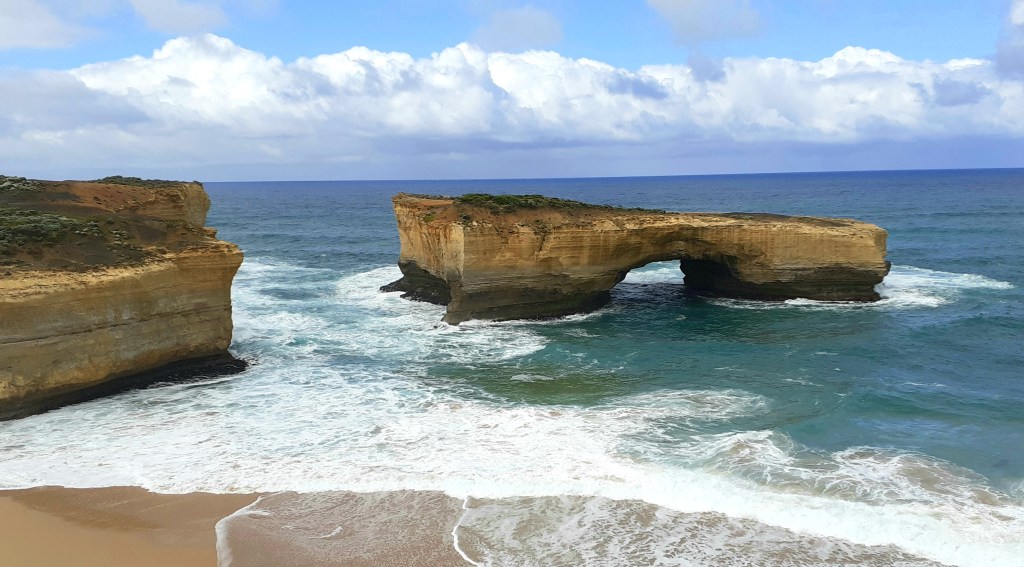
My photo below shows the rock formation known as London Bridge. Originally a long, arched promontory extending out across the water, it was given its name due to its supposed resemblance to the British landmark spanning the River Thames in England’s capital.

However, in a rare case of geology mimicking a traditional folk song, London Bridge has, literally, fallen down. In the 1990s the stormy waves brought the middle section crashing into the surf, leaving two bemused tourists stranded on what was then Australia’s newest off shore island.

These days, a network of clifftop boardwalks and viewing platforms protect the fragile landscape, and make the outstanding views safe and accessible to all, whatever your level of mobility.

And so to the Food Trail. A group of around a dozen local independent food producers have banded together to offer a tour of local sites where you can taste and buy artisan foods. These entrepreneurs include a distillery, craft brewery, ice creamery, berry picking farm and vineyard. You can find out more about the Trail, and download a map, here.

Regular followers will know that A Different Kitchen likes to help promote independent producers, and I focused on two sites along the Trail that particularly took my fancy.

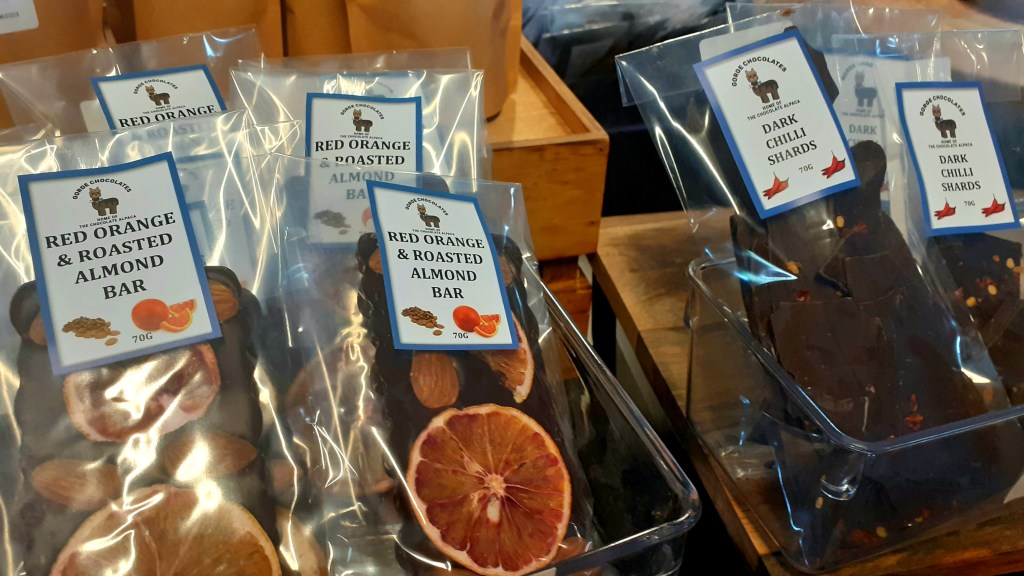
GORGE Chocolates are made and sold on site. My photo below shows an example of the selection available.

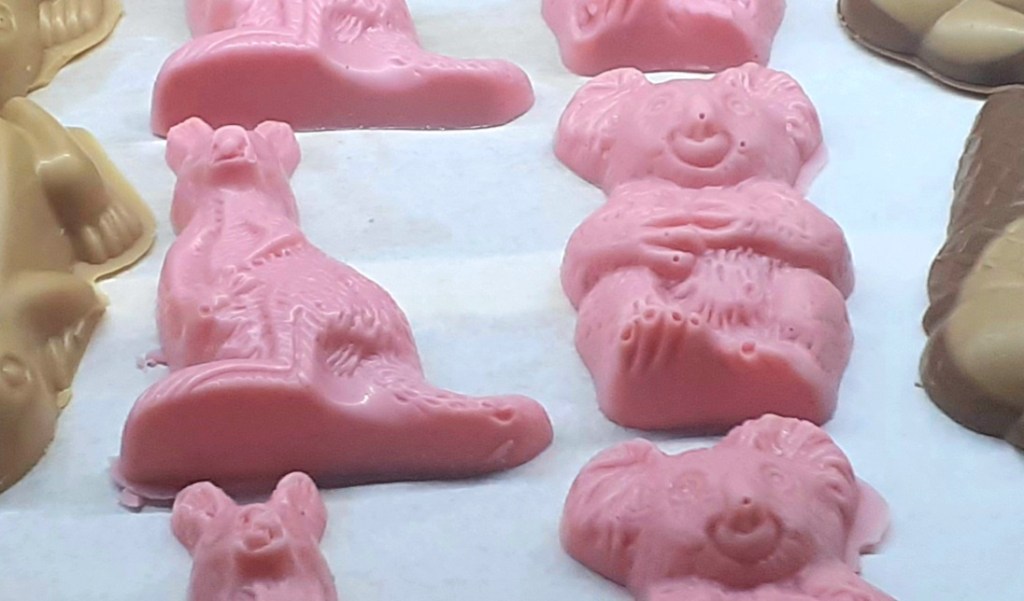
For a souvenir purchase, I chose dark chocolate shards with chilli (which pack a punch!), and a bar of salted milk chocolate. I also couldn’t resist these charming strawberry chocolate figures in the shape of a kangaroo and a koala bear.

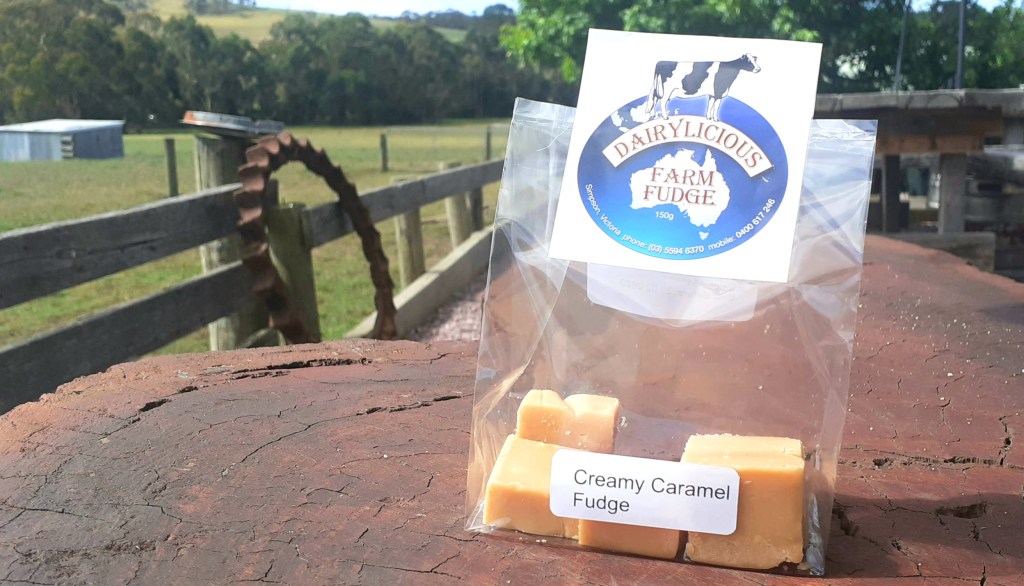
Our second visit was to Dairylicious Farm Fudge, which also makes all its produce on site. They offer a tasting board with 6 or 7 different types of fudge to try. I settled on a bag of classic creamy caramel fudge, shown in the photo below.

If the bag looks a little light, it is because we had already started it while sat on the Dairylicious verandah, before my camera was ready!

Spectacular views and delicious local food. What more could I ask for – maybe the next track for the ADK Spotify Playlist! Here is Morcheeba with The Sea.

Categories
Drinks

Happy New Year!

Cheers! Wishing everyone a happy and prosperous new year, from my travels down under in Australia.

I spent a rather nice day between Christmas and New Year with a group of family and frends, wine tasting in the Yarra Valley. This is a major wine production region in the hills north-east of Melbourne. I mentioned this in my previous post and thought I would add a little more.

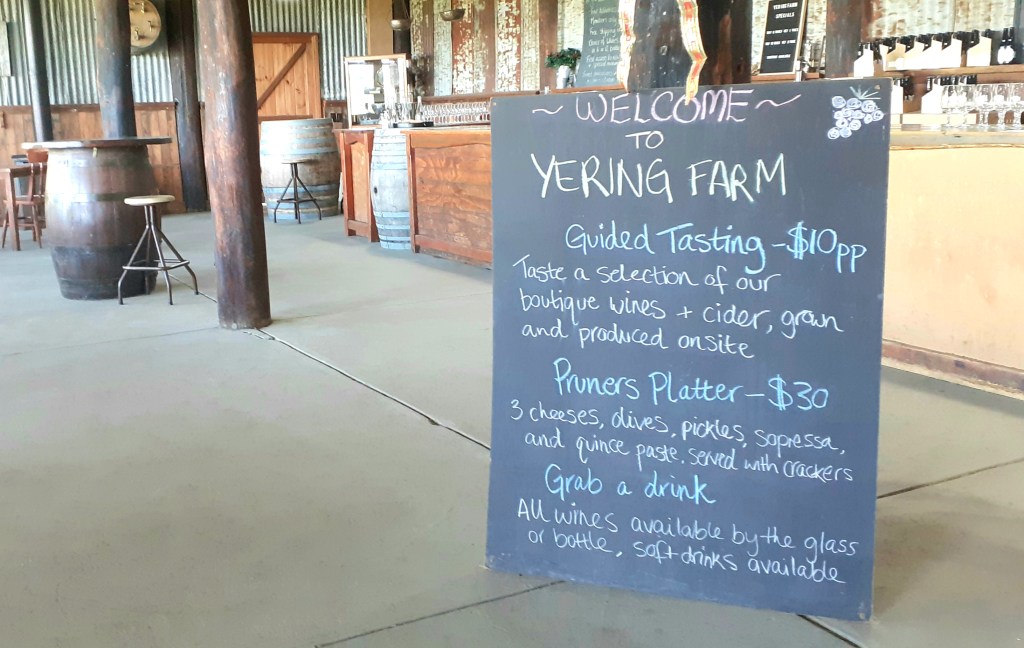
Our choice of vineyard (there are many) was Yering Farm Wines, who offer what they call guided wine tasting. Some readers may be familiar with this concept, but it was a new experience for me. The idea is that you sample 6 or 7 of their different wines, while a knowledgable member of the vineyard staff talks you through the particular qualities of each.

There is a tasting fee of 10 AUD. However, if you then buy a bottle (or two) of your favourite wine, the tasting fee is deducted from the price.

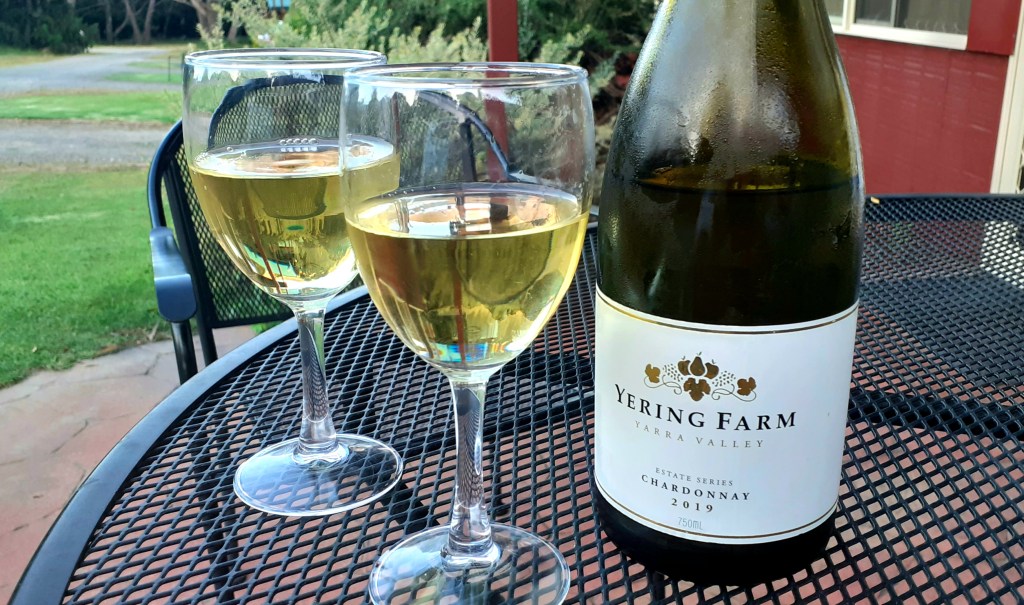
My favorite was their 2019 Chardonnay (see my main photo). The tasting notes read: Aromas of warm, toasty oak with hints of banana and peach, on the palate peach, citrus and subtle toasty oak with hints of vanilla. Silky, mid-palate balanced with gentle acidity.

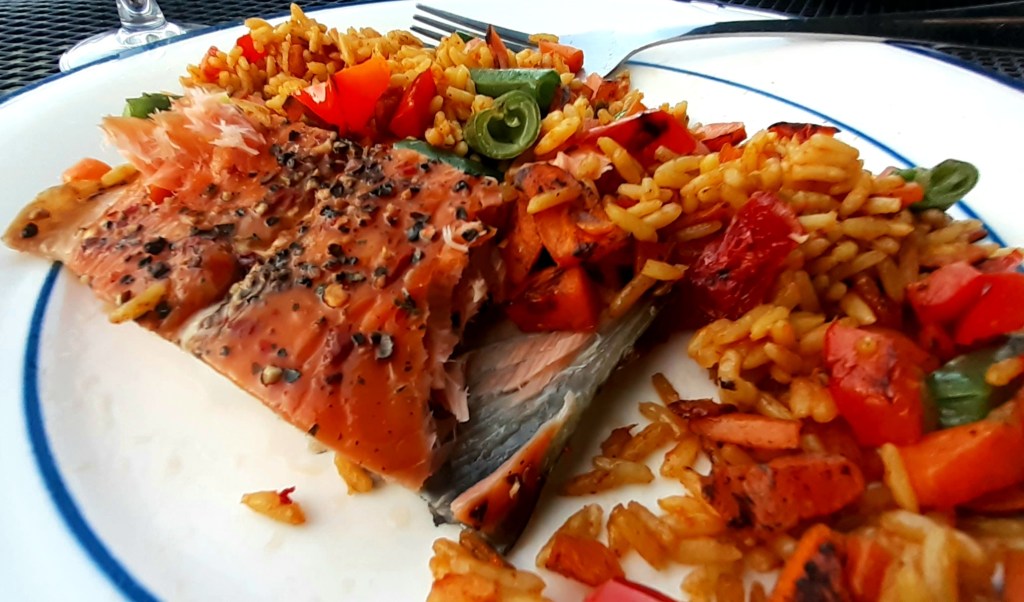
To be honest, I’m not sure that I detected all of those particular nuances in the taste, but it was certainly a very pleasant glass of wine! I paired it with a meal of Tasmanian salmon (smoked, infused with chilli and ginger) with roasted veg and savoury rice, eaten al fresco (see below).

First track to be added to the ADK Playlist in 2023 is from an Australian artist I discovered for the first time recently, when he played live on local TV here. This is Morgan Evans with Over For You.


Categories
Snacks

My Australian Cheeseboard

It wouldn’t be Christmas without a decent cheeseboard. Travelling down under this year, I made a point that our choices would all be Australian-made.

Cheese here is heavily influenced by Europe. You will find versions of the most popular cheese from France, Italy and England that have been home-made in Australia. Alongside these are many small and independent producers experimenting with new styles and presentation.

You can see my selection for our Christmas Day meal in the photo above. Here are the ones that made my final cut, including further information and links to the producers, should you wish to find out more:

  • Endeavour Blue is from King Island Dairy, which is based on a small island in the Bass Strait between Tasmania and the Australian mainland. The island’s microclimate produces lush pasture, hence rich creamy milk and cheese. This blue is reminiscent of a good gorgonzola.
  • Gumleaf Smoked Cheddar from Bodalla Farm on the New South Wales coast, south of Sydney. Smoked in leaves of a gum tree, it is part of their Bush Tucker Cheese range. Thankfully, it doesn’t taste too strongly of eucalyptus, just good smoked cheddar!
  • Fresh Chevre Goat’s Cheese, dusted with ash, from Meredith Dairy in western Victoria. Ash helps balance acidity and develop a rind, while adding visual interest to your platter.
  • Brie from Udder Delights, an independent producer from Lobethal in the Adelaide Hills, South Australia.
  • Camembert, also from Udder Delights.

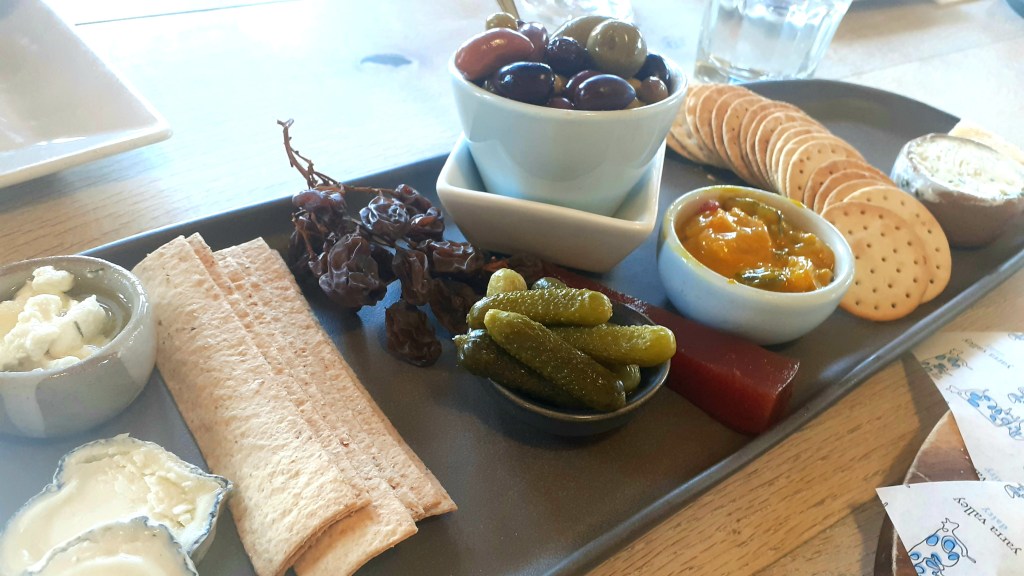
I also enjoyed a trip with family and friends to the Yarra Valley Dairy. Their range of goats cheeses are served as part of a sharing platter along with other delights like olives, cured meats, cornichons, home-made relishes and terrine, see my photo below.

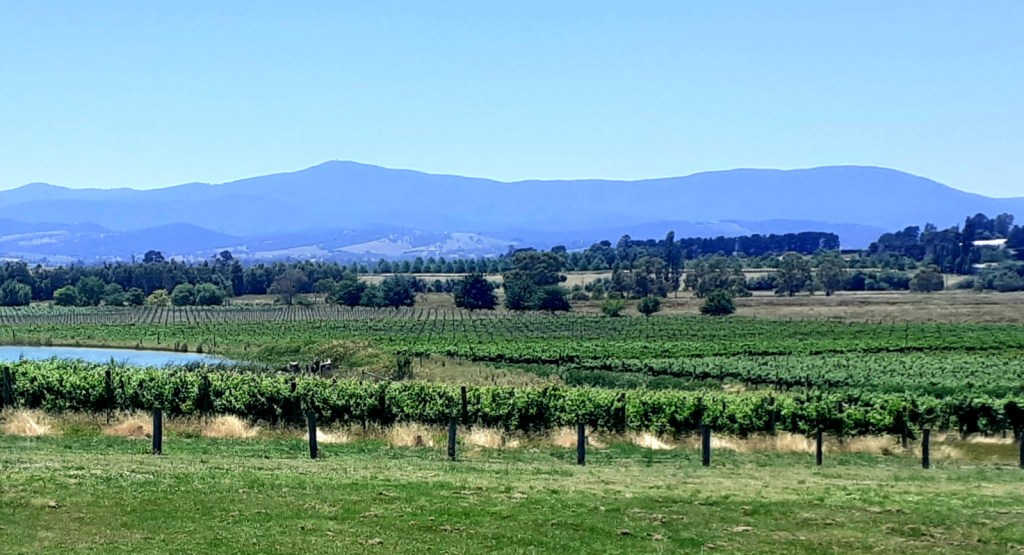
The Yarra Valley is a major wine and cheese producing region of Victoria, in the hills north-east of Melbourne. Here is a photo I took of the vineyard and hills beyond, while stopped for some Cellar Door wine tasting at Yering Farm Wines.

A gourmet experience of rich and creamy cheese, fine wines, in a beautiful rural setting with sunny weather (it reached 37C!). All in all, a Beautiful Day. Time to add U2 to the ADK Spotify Playlist.