Categories
Blog Mains

Return to Eden

Cornwall’s Eden Project really is a modern day wonder. Not only is it a great day out – it really makes you think.

Walking around this vast green and floral park on a sunny September day, it is difficult to believe that, until just a few years ago, this was an abandoned mining quarry, grey and ugly, ravaged by decades of underground metal extraction.

The transformation began in the 1990s, with an ambitious vision to turn it into a vast green oasis, showcasing plant life from all around the world, over a 30 acre site. I visited it soon after it opened in 2001, and found it very impressive.

On my current travels around Cornwall I was keen to return, to see how it was progressing. I’m pleased to report it is thriving and continues to be a very popular destination for visitors to Cornwall.

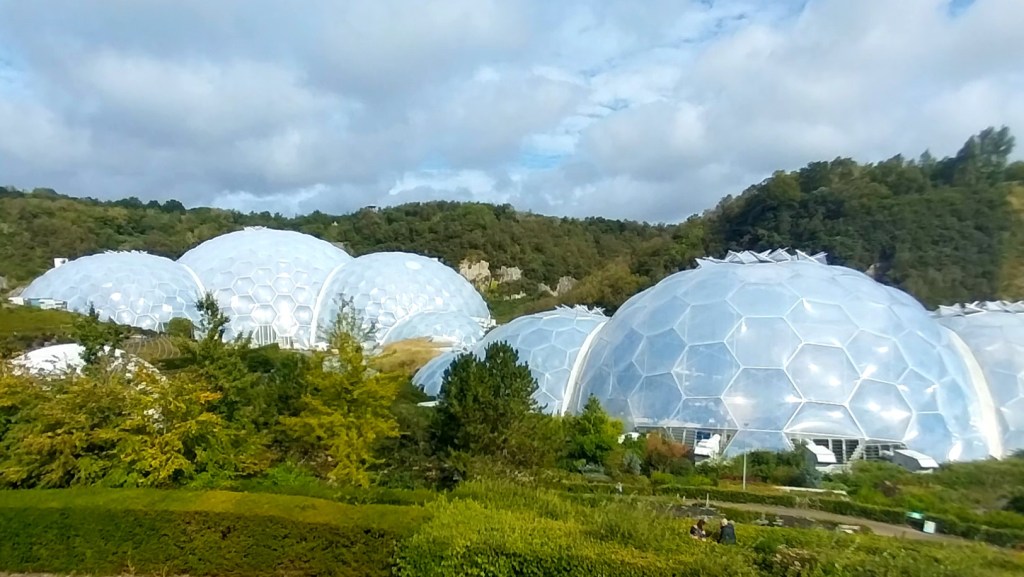
The central attraction is the Biomes – the huge, golf ball-shaped structures nestled in the centre of the valley. The first maintains a warm temperate, Mediterranean climate all year round. The second contains a fully grown rainforest, no less. Both are big enough to lose oneself in, and host mature, fully grown trees.

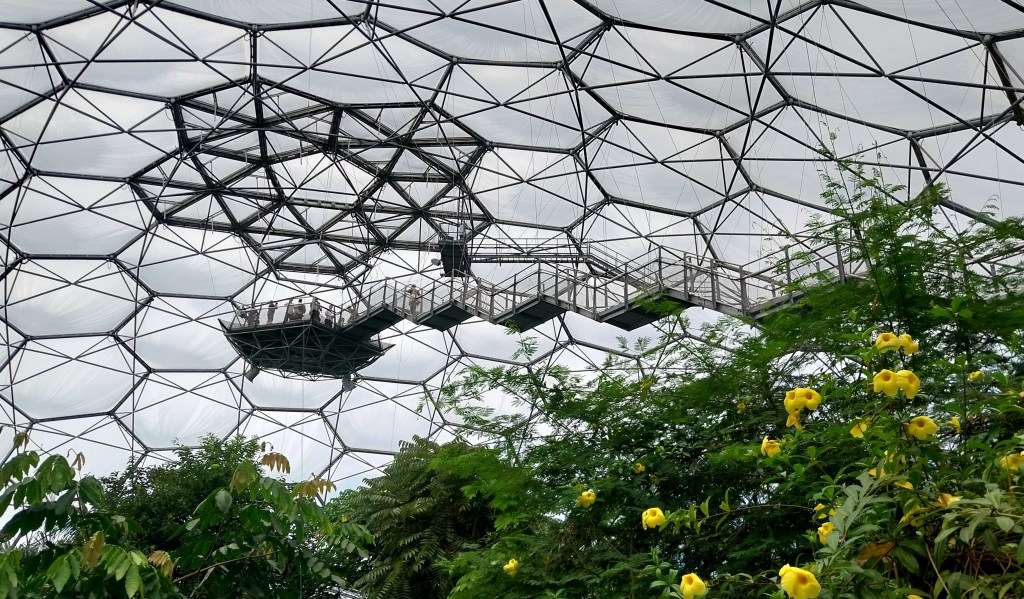
I enjoyed climbing the steps to the Lookout high up in the Rainforest Biome. It was very humid up there, and the steps did swing around a bit, but the views were great looking down over the whole of the rainforest.
These are more than just large scale greenhouses. The Eden Project is on a mission to highlight the modern day challenges to the natural world through climate change and human behaviour. They do a great job of taking complex subjects and explaining them in terms that are easy to understand.

Amongst the cacao and coffee trees in the Rainforest Biome, I learned how deforestation simultaneously reduces carbon safely stored in trees and underground, and increases the carbon in our atmosphere, thereby contributing to global warming. Deforestation is largely driven by economic pressures on producers, and countries like Costa Rica come in for praise for their efforts to combat these through sustainable reforestation. I learned that we can all do our bit to support them by choosing to buy Fair Trade coffee and chocolate, which I will now try to do.

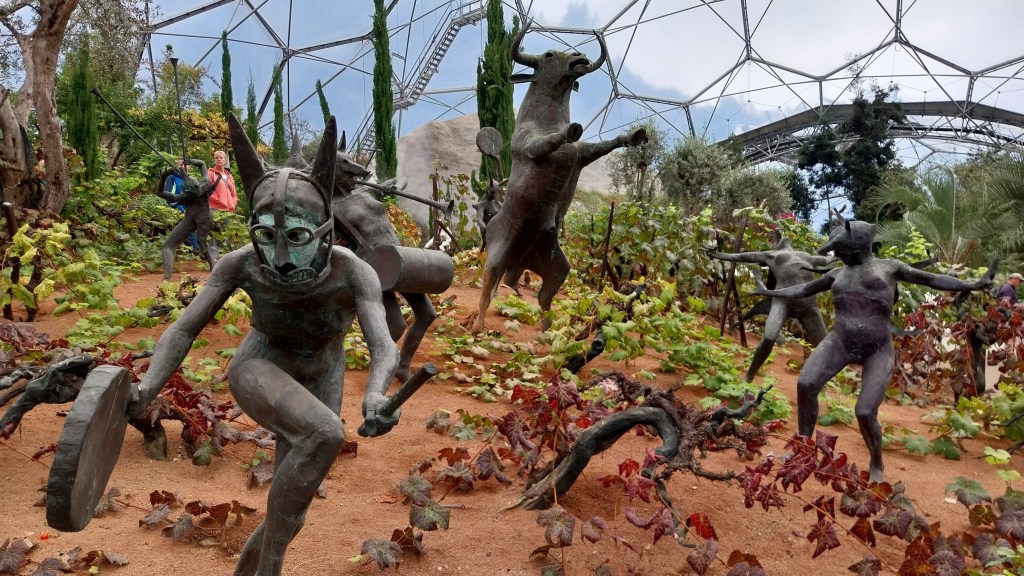
I like the art that is scattered around the landscape, such as the Rites of Dionysus, Greek god of wine, in the Mediterranean Biome.
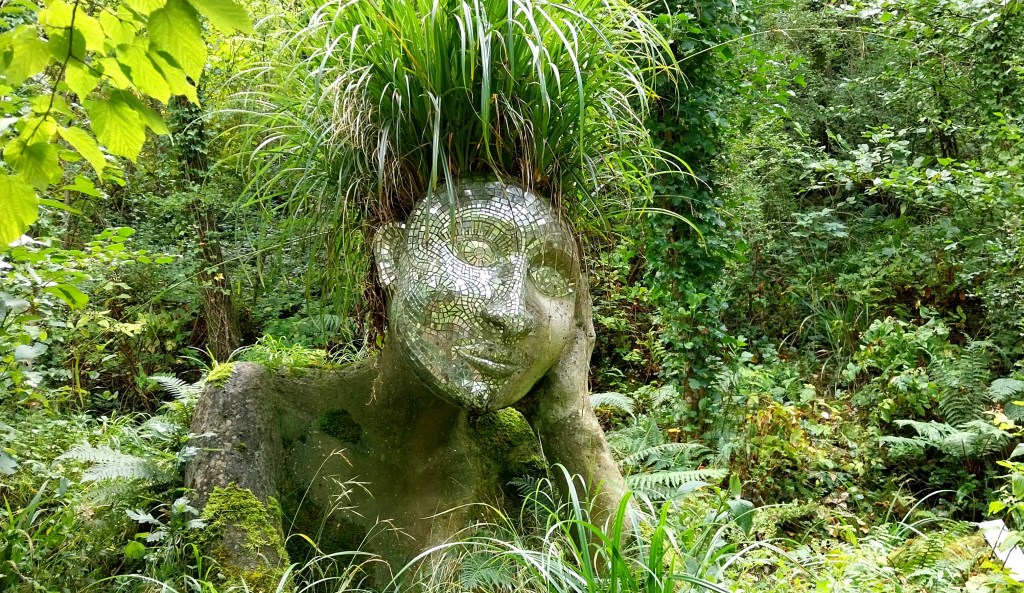
We came across this mirrored tree goddess high up in the outdoor gardens, just inside what used to be the rim of the quarry, now known as the Wild Edge.
The art carries a loose theme that cultural diversity is important, and that resource management is better led by local communities than big corporations.

We had lunch in the Biome Kitchen. All the ingredients used are seasonal and locally grown. Suppliers are all Cornwall-based businesses, like soft drinks from Jolly’s, and ice cream from Roskilly’s. Even the catering promotes a sustainable local economy.

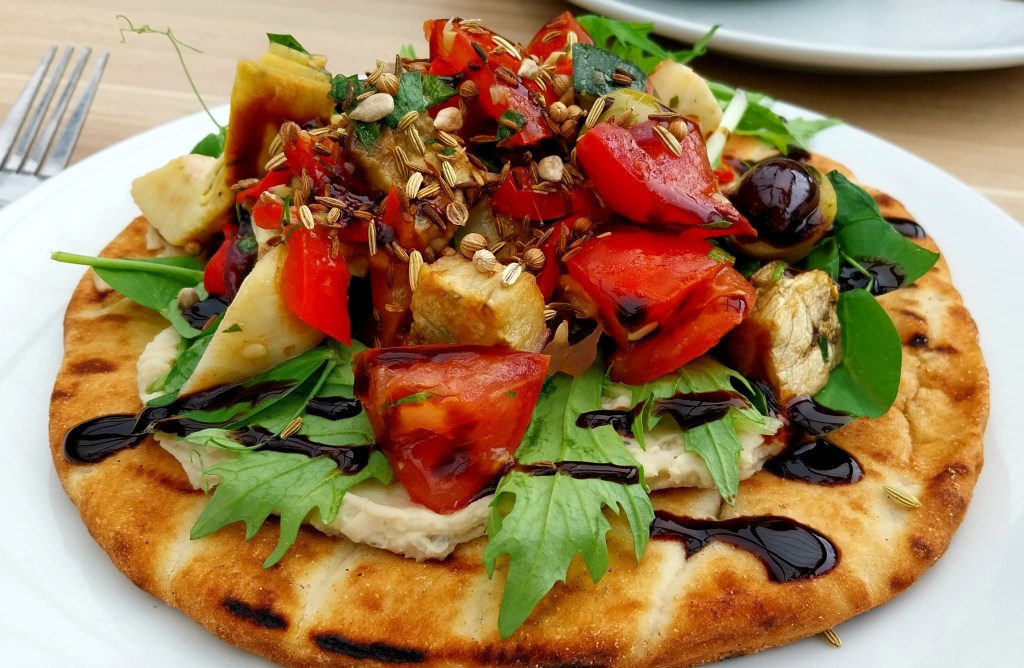
My choice for lunch was this griddled flatbread, topped with white bean pate, leaves, marinated roasted vegetables, tomatoes, balsamic drizzle, herbs and toasted seeds.
The overall message from the Eden Project is one of hope. If a team of people can successfully transform a disused quarry into a beautiful, green paragon of sustainability, then most things are possible. We learn that every one of us can do our bit – small changes made locally can contribute to wider scale positive change. It is never too late.

Time to add Coldplay to the ADK Playlist, with Paradise.

Categories
Bakes Blog

Winter Cherry Muffins?

Wherever I can, I try to be an ethical food shopper – conscious of the environmental and social impact of the produce that ends up for sale in our shops and market stalls here in the UK.

This means I have an issue with the black cherries that appear in our supermarkets this time of year. Nothing to do with their taste – they are every bit as delicious as they look. So what’s my problem?

Well, one look at the January frost on the ground in the UK will remind you that it is not exactly the season for luscious cherries to be blossoming on the trees. Just like Paddington Bear, they have travelled here all the way from South America. That is way too many food miles for my liking – the Earth could well do without the energy consumption and carbon generation associated with that amount of transportation, and the refrigeration needed to ensure they arrive here in fresh condition.

However, it’s never that straightforward, and this presents me with lots of dilemmas. Ok, I hear you say, so they’ve been shipped here from half way around the world, but isn’t it preferable that they have been grown naturally in a seasonal, sunny climate? Isn’t that better for the environment than the fruit, tomatoes etc that are grown out of season in a heated glasshouse closer to home, here in the UK or northern Europe?

And how is this different from the bananas, pineapples and other fruit and veg that we import? Or longer life items like tea, coffee and cocoa? If we boycott certain items, aren’t we damaging the trade of countries with less well-developed economies?

Aaagh! See – I told you it was a nightmare.

Over time, I’ve developed a few rules of thumb to navigate my way through this ethical minefield.

Firstly, as far as possible I buy and cook with food produced locally and in season.

Secondly, I’m fine with fruit and veg, and store cupboard foods, that we just can’t grow in our climate, like tea, coffee, bananas etc being brought here. When fairly traded, this creates jobs and helps the producer country develop and maintain a sustainable economy.

But as for foods we can grow here in summer (like cherries), I don’t see why we in the western world have to be so spoiled as to expect them to be shipped to us from wherever, all year round, regardless of the impact this has on the planet. If we really can’t do without cherries in our winter, we can preserve part of our own summer harvest, or put them in the freezer.

But wait – there is yet one further ironic twist that highlights the futility of this episode of global trade. This week in Sainsbury’s, the packs of South American cherries were all yellow stickered with massively reduced prices. They had reached their sell-by date without anyone buying them at normal price. Were my fellow shoppers taking an ethical stand and refusing to buy them?

It was too tragic a thought that all this beautiful fruit, having been carefully cultivated by South American farmers and brought all this way, would now begin decomposing on our shores, as soon as the yellow stickers expired later that day.

So I bought a pack – at a ridiculously reduced price that cannot possibly reflect the true economic cost of the whole enterprise to Sainsbury’s. I reckoned the loss-making exercise will have taught them a harsh commercial lesson, and that importing practices might now be changed.

For the record, I lovingly washed, chopped and de-stoned the cherries, mixing them with some cocoa and other long life, store cupboard ingredients.

I baked the choc cherry muffins shown in my main photo above. They were delicious, but I will wait to the summertime to post the recipe, when cherries are properly in season here!

But hey, here’s an idea: what if, for a couple of months this time of year, we get by with our native apples and the soft fruit we’ve grown through the summer, having preserved it or frozen it to see us through the winter. The planet can be spared the pointless exercise of transporting cherries half way around the world, and our lovely friends in South America can be left to enjoy their own fresh produce.

Now what’s wrong with that? Comments welcome!

In the meantime, here’s The Jam with All Around the World.