Categories
Blog Breakfast

Breakfast in Belfast

This week I am visiting Northern Ireland for a family wedding. I’ll be making the most of the opportunity to taste some traditional delights of the local foodie scene, including the Ulster Fry, Potato Farls, Egg and Bacon Sodas and, of course, the legendary Belfast Bap!

Arriving in Belfast in the very early morning, off the overnight ferry from Liverpool, we headed to St. George’s Market on May Street, for breakfast.
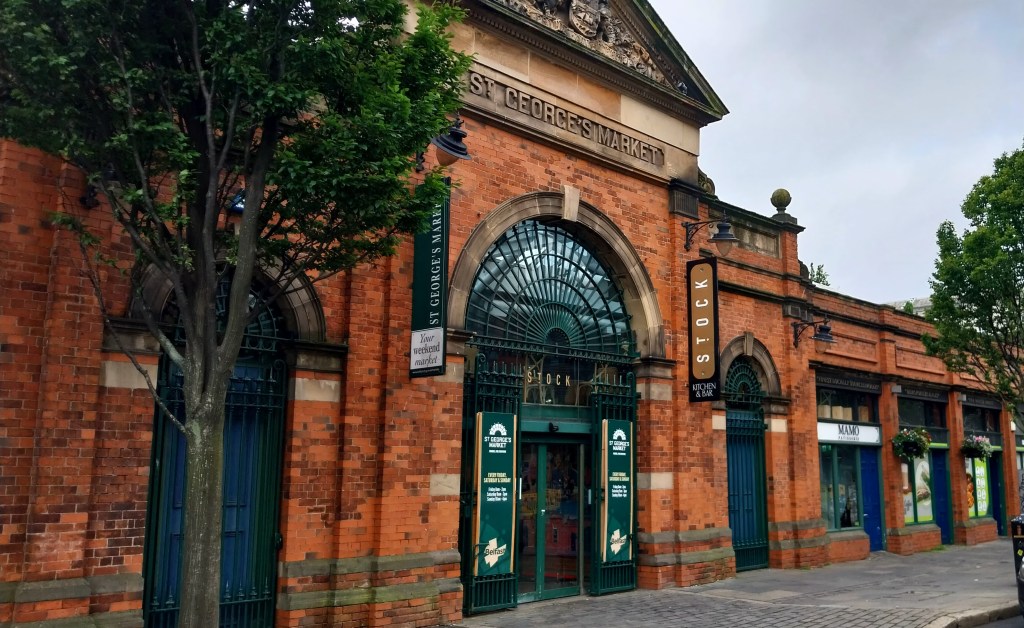
St. George’s has been here in the city centre since the Victorian era. It is now the oldest survivor of the Markets District that grew up as the city began to thrive as a commercial port. Originally built for the sale of butter, eggs, poultry and fruit, it expanded over the years to include clothing, hardware and antiques.

In the 1980s it was threatened with closure, the costs of maintaining a Victorian building, the impact of the Troubles, and ever more stringent hygiene regulations, bringing severe challenges. However, a campaign by the City Council, traders and the public resulted in a Heritage Lottery Fund grant for the refurbishment of the building, making it fit for the 21st century.

That proved to be a truly inspired decision: with ever more people visiting Belfast in the years following the Good Friday Agreement, St.George’s swings into operation every weekend, its offering now including a high quality range of local, traditional food and drink.

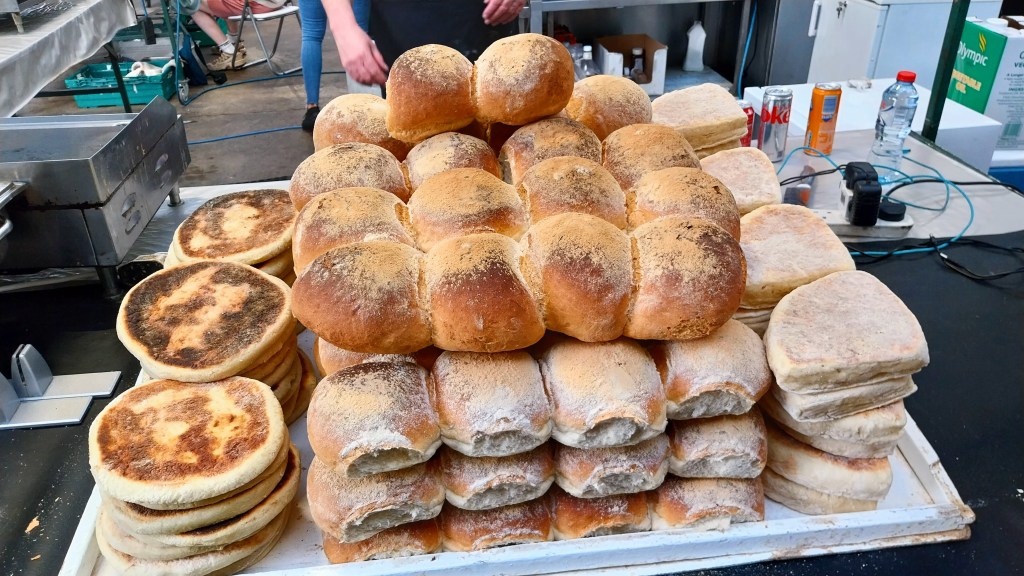
It had been a long sailing from Liverpool, and seeing these tempting piles of freshly baked Potato Breads, Baps and Soda Farls heightened my appetite!
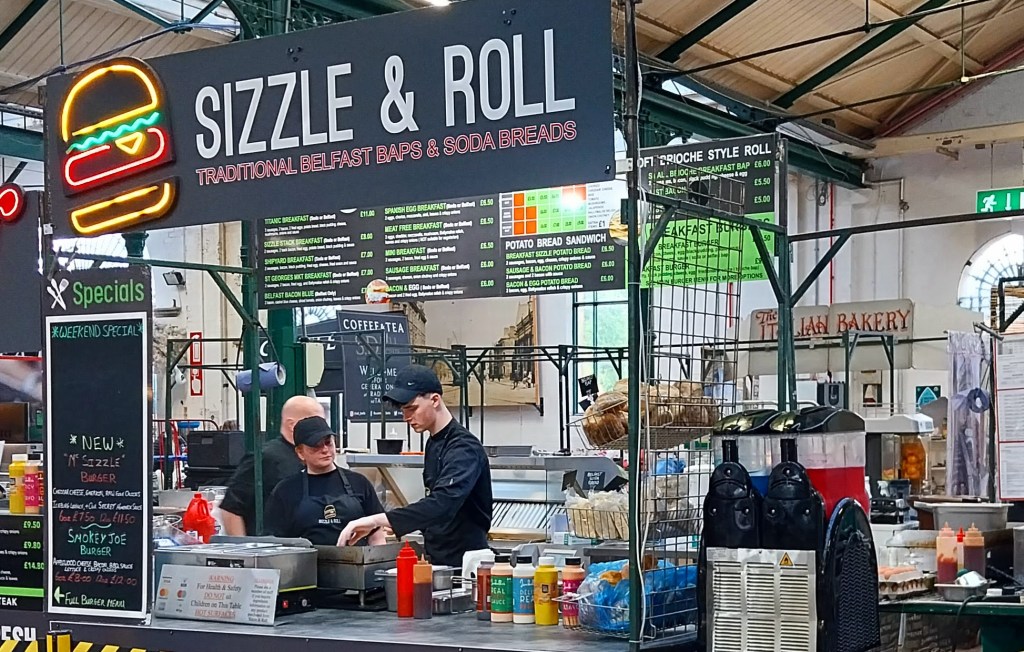
After a walk around the stalls, we settled on Sizzle and Roll, as shown in my main photo at the top of the post.
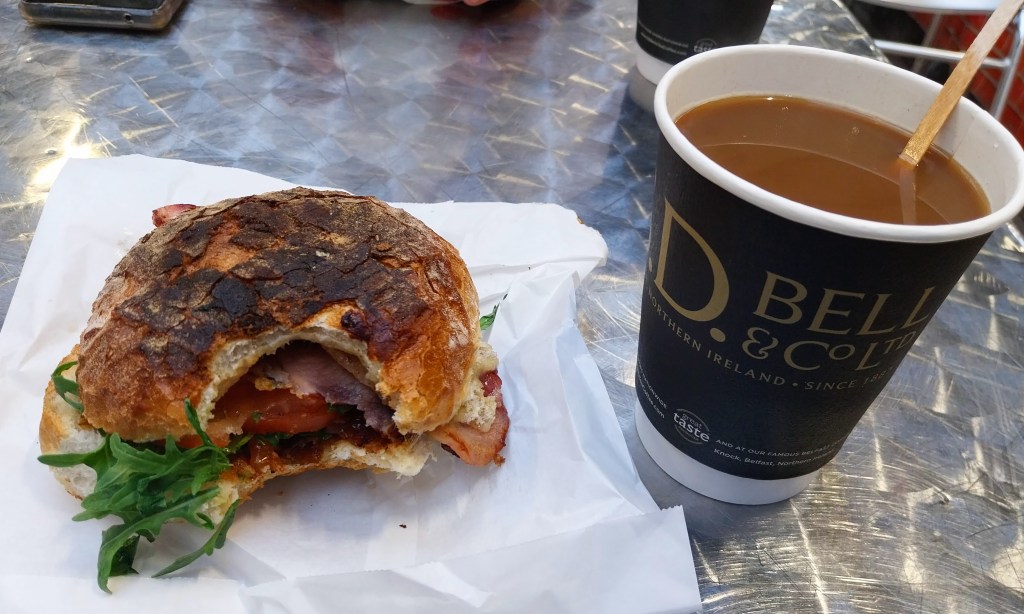
I opted for a Belfast Bap, shown above. It is a large, soft floury bread roll, my choice of filling being rashers of bacon, tomato, Cashel Blue cheese, rocket leaves, crispy onions and onion relish. My wife chose a mini Ulster Fry of bacon, egg and sausage served inside a toasted Soda Farl – the name for an individual portion of soda bread. Everything was cooked hot and fresh as we waited.

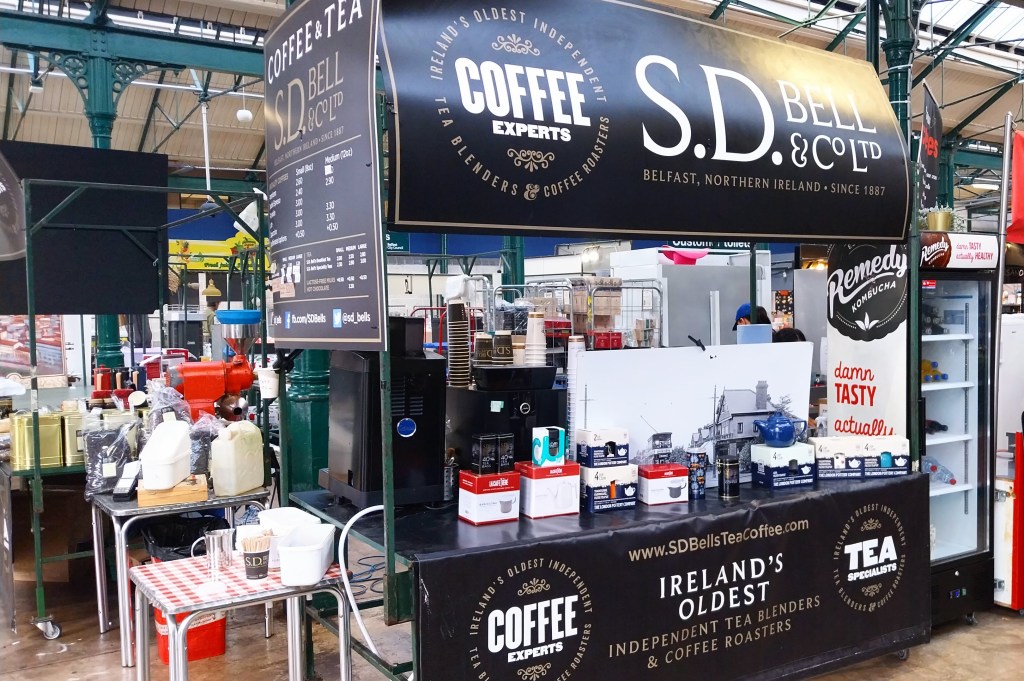
We bought our coffees from the S.D. Bell’s stall, which is one of Ireland’s oldest independent coffee roasters and tea merchants.
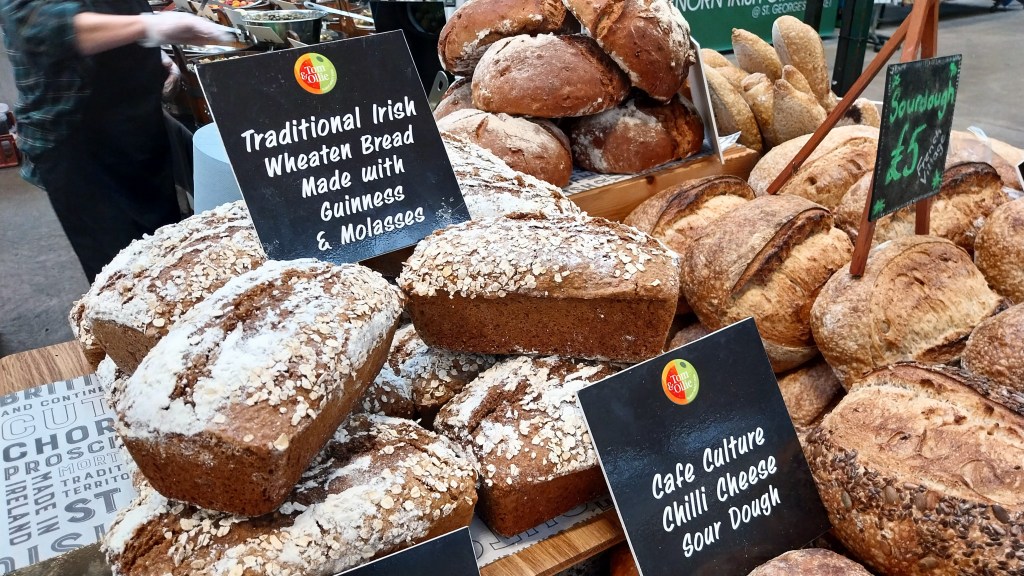
There is some excellent food for sale on the other market stalls – this home bakery had some interesting, freshly baked loaves of bread on offer.
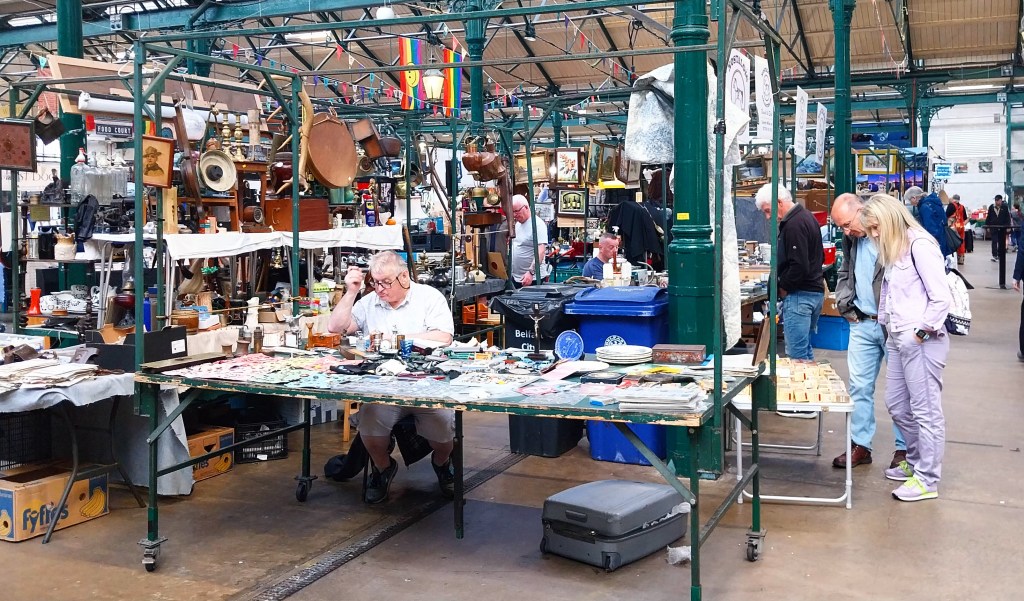
St George’s is a great place to pass the time just wandering, checking out the diverse range of stalls, with everything from wet fish to original art, an amazing selection of local cheeses from all over Ireland, souvenirs and antique collectibles.
A hot tasty breakfast and a wonderful way to start our visit. Let’s hope the coming week brings more days like this! That reminds me of a song I’ll now add to the ADK Playlist by local boy, Van Morrison – here with Days Like This.
Categories
Bakes Desserts

Hot Cross Bun Pudding

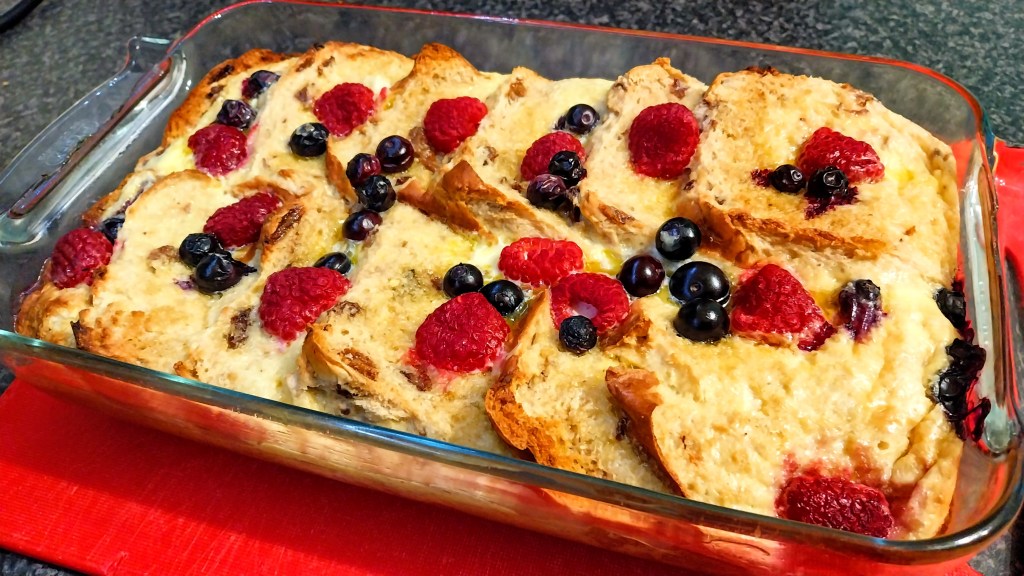
The idea for this week’s dish has been sent in to me by keen follower of A Different Kitchen, Pamela (thank you, Pamela). It is a kind of bread and butter pudding made with hot cross buns and fruit. The original recipe that it is based on came from Waitrose, and included rhubarb, which Pamela says prompted her husband to comment that this is one of the nicest puddings you have ever made.

High praise indeed!

In my version, I’ve changed it up a bit to include raspberries and blueberries as another option.

Hot cross buns are plentiful in the shops this time of year, and this is a good way of using up ones that may still be at the back of your cupboard, a day or two old. Their dried fruit, spices and glaze go well in a custard-style pudding.

You may also be able to pick them up in the shops at the moment at reduced price. This happened to me completely by chance – I didn’t get round to shopping for this till a few days after Easter Sunday, by which time Sainsbury’s were selling off yellow stickered packs of six for the princely sum of 15p (which equates to 20 US cents) each. As they say in a cost of living crisis, every little helps!

Timings

10 mins to combine, then 30 mins to chill. Another 30 mins to bake at 180C.

Servings

At least four generous portions.

You Will Need

  • 4 hot cross buns, which can be a day or two old
  • Butter or spread for the buns
  • 50 g caster sugar
  • 3 medium eggs
  • 300ml single cream
  • 100ml milk
  • 1 tsp vanilla extract
  • 15 – 20 raspberries and 15 – 20 blueberries

Method

  1. Slice each bun horizontally into 3, and spread each slice on one side with butter or your choice of spread.
  2. Arrange them in a baking dish so that they overlap at 45 degree angles. This will mean the submerged parts of the buns soak in the custard, while the peaks crisp up and caramelise.
  3. Stud the berries in between the bun slices, to get good coverage all over.
  4. Combine the sugar, eggs, cream, milk and vanilla extract in a bowl with a mixer. Pour all over the buns, and place in the fridge to chill for 30 mins.
  5. Heat an oven to 180C, and put in the dish for around 30 mins. Keep an eye on it for the last 10 mins or so to make sure the tops are crisped, but not burnt.
  6. Serve warm. It is also great cold.

Customise It!

As suggested, you can vary up the fruit to include whatever you like or have to hand. As we know from Pamela, rhubarb will work very well – stew about 400g in 80g sugar with a little orange juice, and spread amongst the buns.

Do you have an idea for a dish that can be featured on A Different Kitchen? And if so, would you like to choose the next track for the Playlist? Drop me a note in the comments below, if so.

This week’s track for the Playlist is one that I know Pamela will appreciate. Here’s Rod with You Wear it Well.

Categories
Recipes Sides

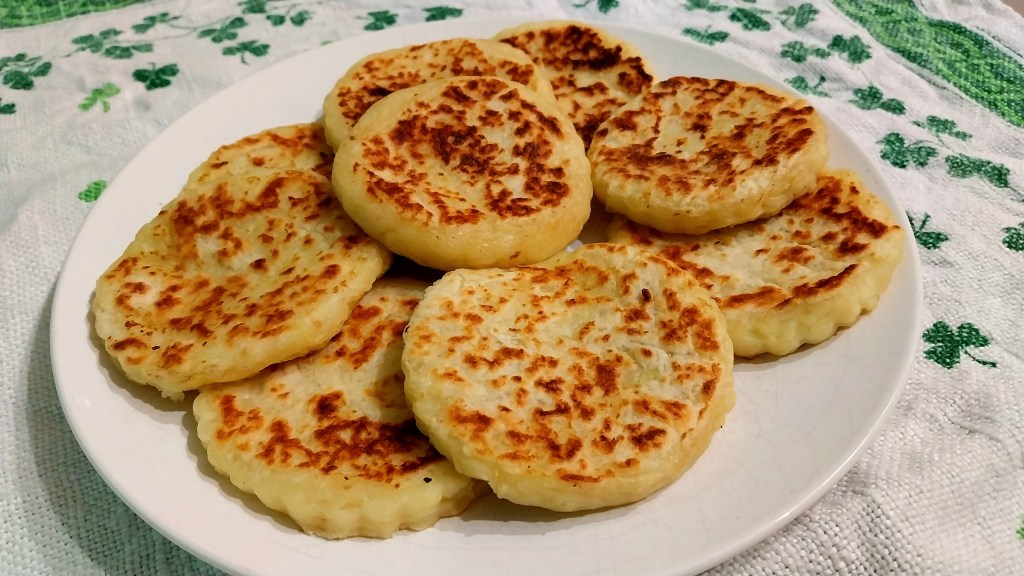
Irish Potato Bread

Today is St. Patrick’s Day, so what better time to share an old family recipe for potato bread!

For many years, boiled, mashed potatoes have been a staple accompaniment to meals in Northern Ireland. The traditional way of preparing potato bread is by throwing a few extra spuds in the boiling water when you’re cooking. You then have some left over to make into potato bread, following this recipe.

Servings

This will make 8 rounds of potato bread.

Timings

15 mins to boil the potatoes, 5 mins to turn into mash, then 10 mins to cool. Another 15 mins to make the bread.

You Will Need

  • 250g potatoes (weight is after peeling)
  • 30g butter
  • half tsp salt
  • 70g plain flour
  • butter and granulated sugar to serve (optional)

Method

  1. Peel and cut the potatoes into chunky pieces. Pour over boiling water from the kettle, and simmer for 15 mins.
  2. Drain, then add the butter and salt. Mash to a creamy consistency, then set aside to cool in the saucepan.
  3. Sieve in the plain flour, and mix together with your hands, while still in the saucepan, to form a dough.
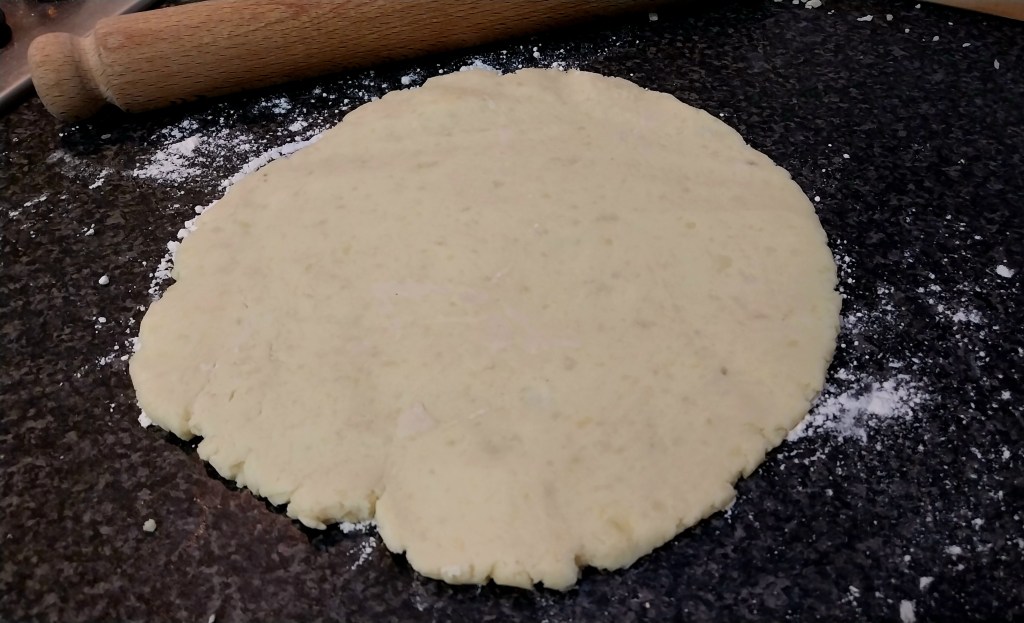
  4. Transfer to a lightly floured surface and roll out to a thickness of half to 1cm (see photos below).
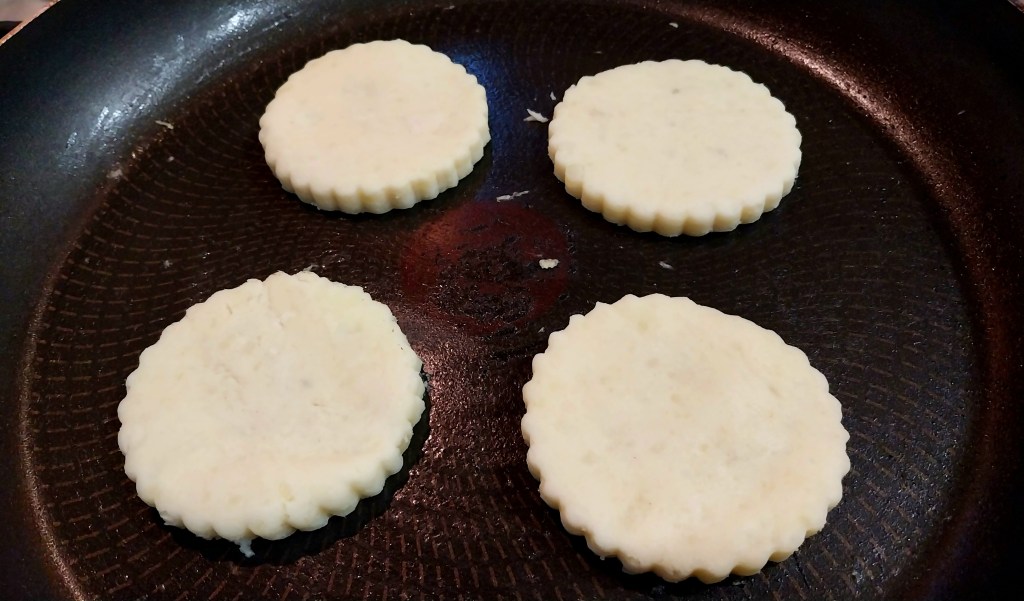
  5. Use a cookie cutter (mine is 78mm diameter) to cut rounds from the dough. You should get about 4 rounds initially, then another 4 by combining and re-rolling the remaining dough.
  6. Lightly grease a heavy-bottomed frying pan with butter. Warm it on the hob, then put in the rounds, 4 at a time.
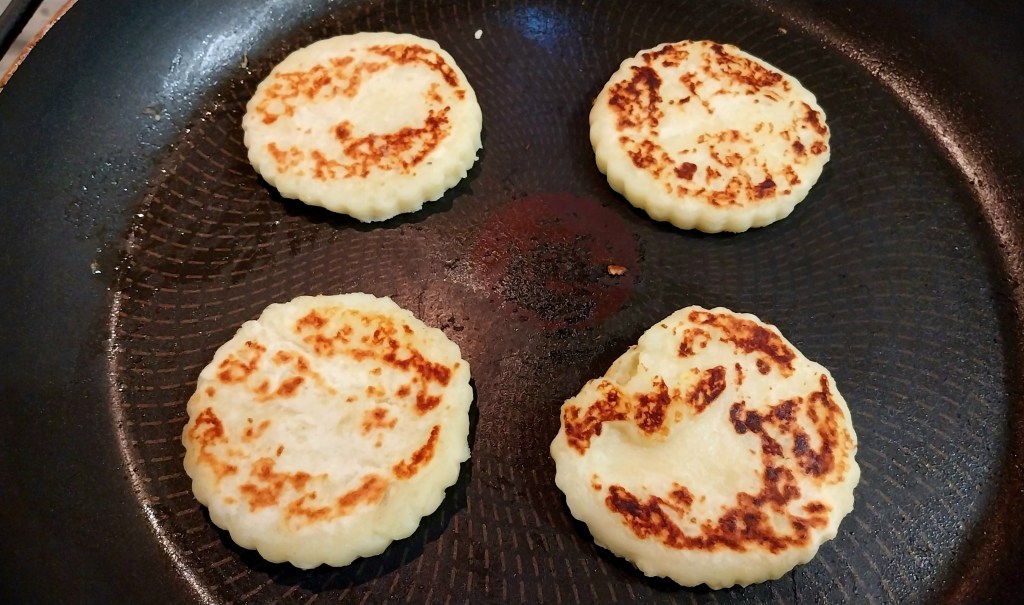
  7. Fry lightly on each side for about 5 mins, till dappled and golden brown (see my photos). Remove to a warm plate.

The potato bread can then be served as a savoury, along with bacon, eggs, sausages, or grilled tomatoes as part of a fry.

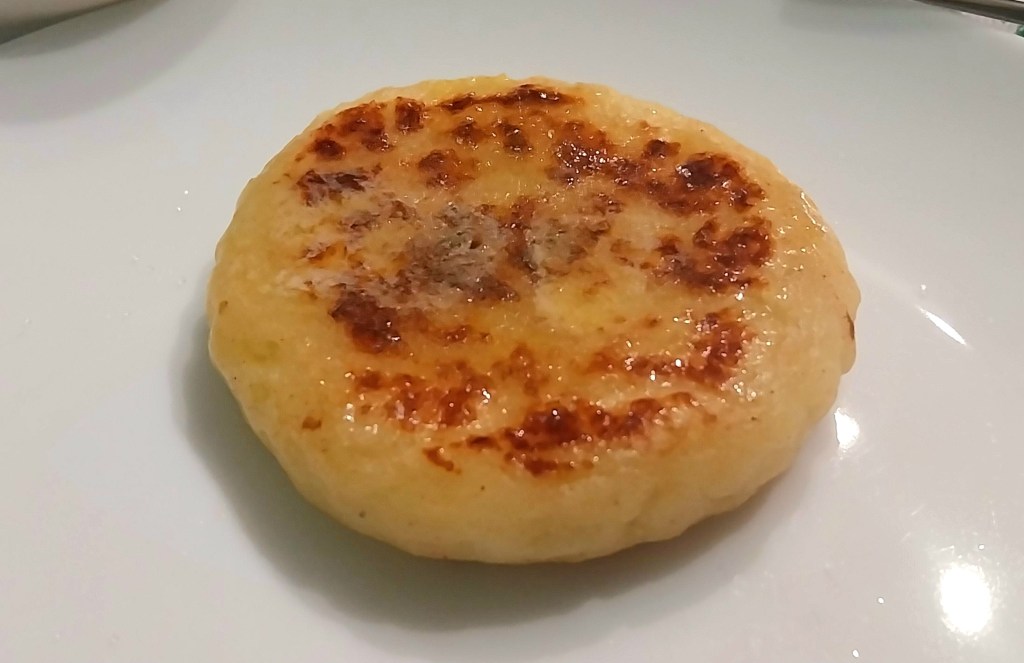
My favourite, however, is to serve it sweetened. Melt a sliver of butter on it while warm, and sprinkle with a spoonful of granulated sugar – see below. Serve with a pot of strong tea. Delicious!

I actually have a separate St. Patrick’s Day Playlist on Spotify, curated over a number of years, so there are many tracks I could choose from for today’s musical accompaniment. Let’s settle on this one from Dundalk’s famous musical family, The Corrs – So Young.

Happy St. Patrick’s Day!

Categories
Bakes Blog

Bread Maker Pizza

Bread making machines have had something of a topsy turvy existence. Invented in the ’80s, they became widespread in homes in the ’90s and ’00s, as the smell and taste of freshly baked bread, at little more than the push of a button, became the next domestic ‘must have’ appliance.

Then, they rather fell out of favour. With growing awareness of the need to manage one’s carb intake, I know a few people who placed theirs in car boot sales, or simply gave them away.

There was then something of a resurgence in the pandemic. A combination of boredom in isolation, wish to avoid busy shops and some food shortages prompted people to dig their bread maker out from under the stairs, and bring it back into use.

While the pandemic is now well in decline, today’s cost of living crisis is once again reviving interest in home baking.

My experience is that it is very easy to slip into a rut with bread making – we find one of the pre-programmes that works for us reliably, and make the same loaf over and over again. It’s useful to remind ourselves that they are actually quite versatile and sophisticated machines. Mine is a Panasonic 2500, and the programmes enable dough preparation for ciabatta, focaccia and various fruited and seeded breads.

My photos show how I’ve used it recently to make a pizza base. I have had some mixed results in the past when making yeast dough by hand, as there are a number of variables, and things can easily go wrong. However, I find the bread maker version much more reliable.

Following the instructions in my manual, I tipped some fast action dried yeast powder, strong white bread flour, olive oil, salt and water into the tin. The machine then mixed, swirled and kneaded it all automatically for 45 minutes as per the set programme.

I left it covered in a warm place till ready to use. The soft and pliable dough came away easily from the tin, didn’t stick to my fingers, and was easy to stretch out with my hands on a floured surface.

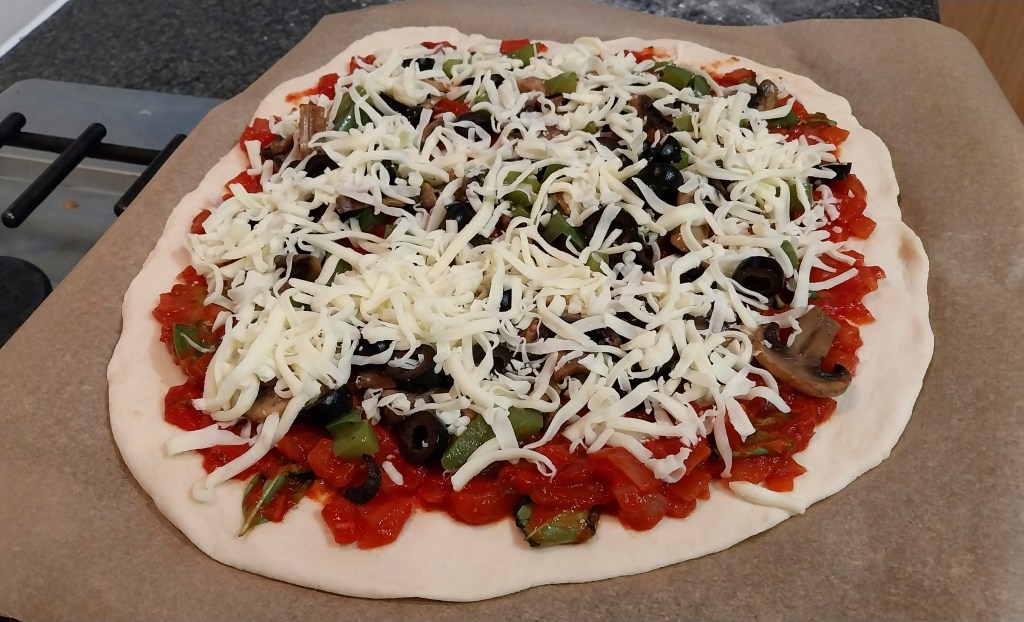
I added some tomato and onion sauce I’d made, with fresh torn basil leaves, then topped it with soft fried chopped mushrooms, peppers, black olives and grated mozzarella cheese. Here it is ready to go in the oven at 180C.

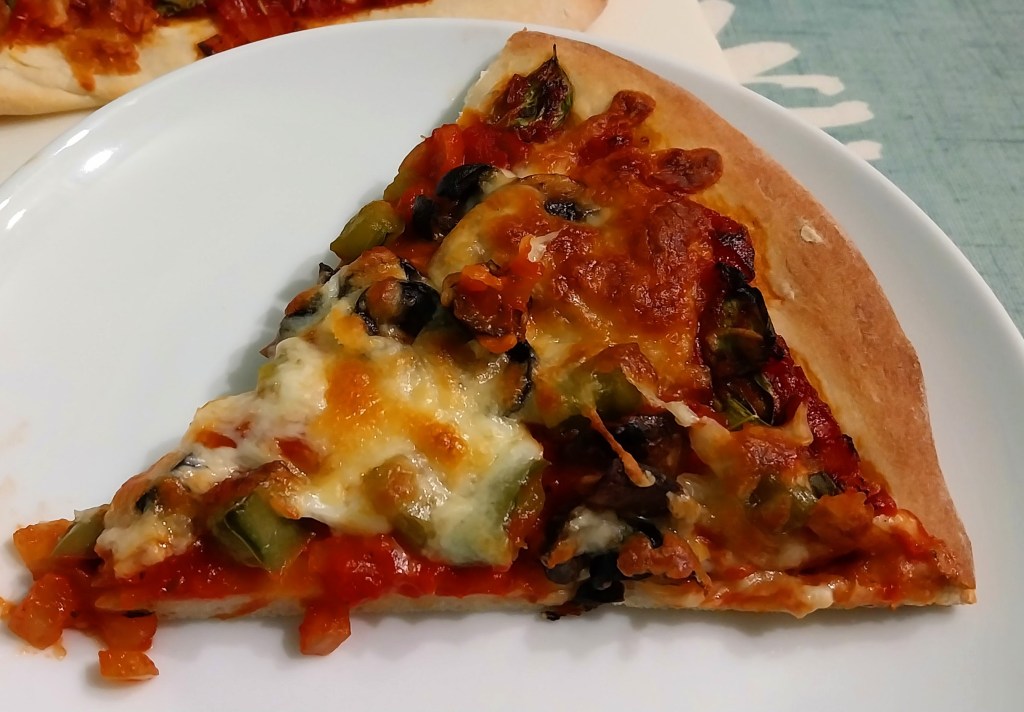
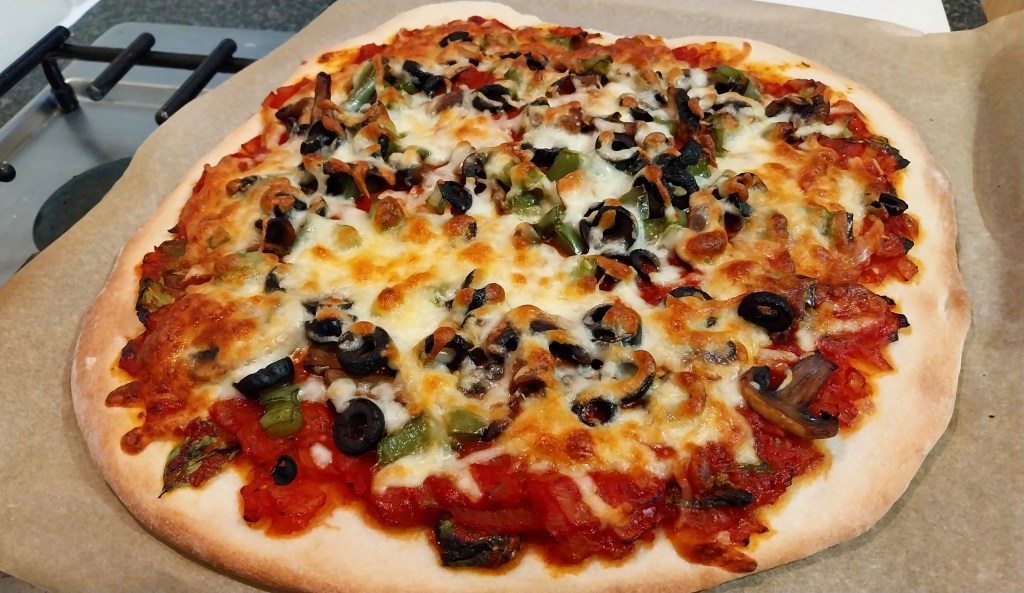
12 minutes later, it looks like this and tasted delicious! The base had baked evenly from the edges all the way to the centre. It is also a fraction of the cost of a Domino’s. You can vary the ingredients if you wish, to incorporate your favourite toppings.

So if you have a bread maker somewhere gathering dust, why not look it out and try some new styles of bread? Never mind if you’ve lost the instruction manual, they are usually still available online. With fresh ingredients, and some fast action dried yeast you should, like this classy track from Gabrielle, be ready to Rise again.

Categories
Bakes Blog Snacks

Selkirk Bannock

Until recently, I had never heard of the Selkirk Bannock. That’s all changed since a friend of the family brought us one back as a gift from a holiday in the Scottish Borders. Delicious it is, too!

According to legend, Queen Victoria visited Sir Walter Scott’s granddaughter at Abbotsford in 1867, and was served a Selkirk Bannock made by local baker Robbie Douglas. As a result the Bannock became famous and fashionable throughout Scotland, and is still made today to Robbie’s original recipe.

A rich but lightly textured fruit loaf packed with sultanas, my first impression was the malty, slightly sticky soft crust giving off a scent of scotch whisky. According to the ingredients list, however, there is no whisky included in the mix.

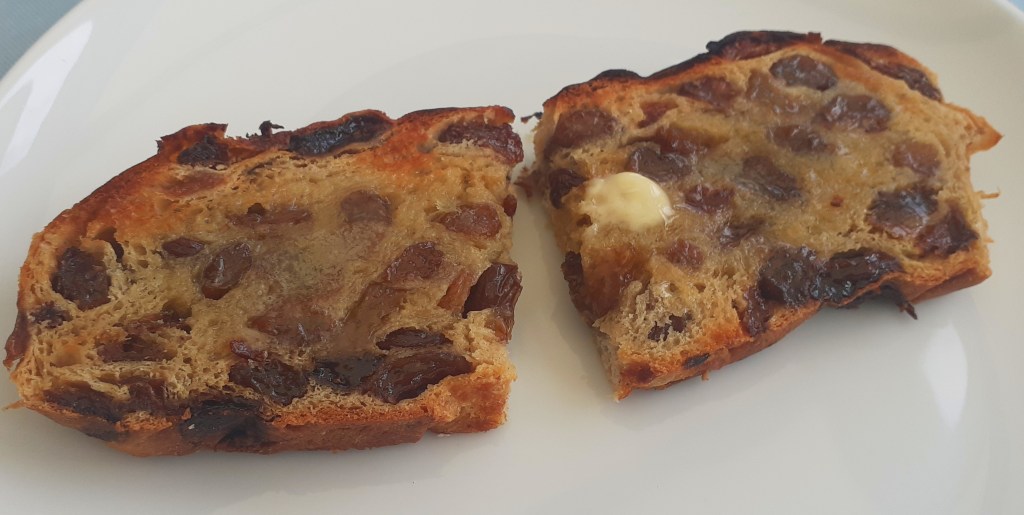
It is eaten simply – sliced and spread with butter. Toast it and let the butter melt (see my photo), and it is even more delicious.

It fully deserves its place in Scotland’s great culinary tradition.

Accordingly, for musical inspiration, I’ve chosen a modern day anthem from Scottish duo Craig and Charlie Reid, better known as the Proclaimers. I was amused to read recently that an interviewer once asked Craig and Charlie how they first met (eh, they are identical twins).

I know how challenging it can be to meet my daily target of 10,000 steps. Maybe, however, with a good few slices of Selkirk Bannock with butter in me for sustenance, I too could manage 500 miles?