Categories
Recipes Sides

Semmelknödel

‘Tis the season of roast dinner feasts approaching, so why not liven up your dinner plates this winter with some traditional Austrian bread dumplings?

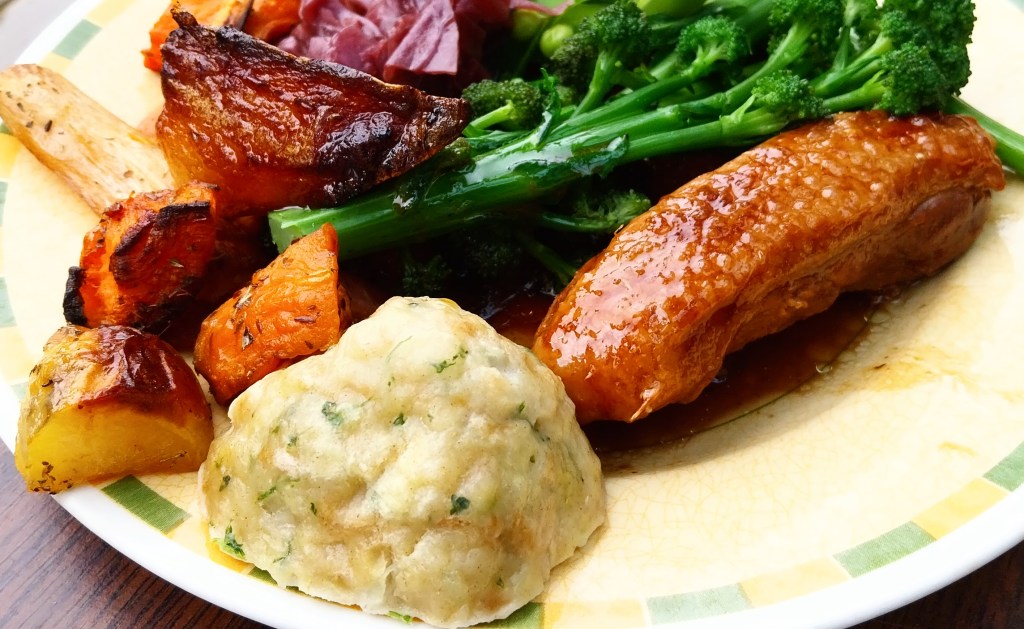
We were treated to a delicious lunch recently, prepared by our good friend Eva, an excellent cook specialising in Austrian cuisine. Home-made dumplings, or Semmelknödel, were served as an accompaniment to a tender roast duck breast, with roast vegetables, braised red cabbage and greens. You can see my filled plate in the main photo at the top of the post.

I especially enjoyed the dumplings – they have a light, succulent consistency with delicate herb flavouring, and absorb the gravy juices from the meat. I’m pleased to say that Eva has agreed to share this old family recipe. Many thanks, Eva and Happy Christmas!

Servings

Makes 18 dumplings.

Timings

15 mins to prepare the mixture, then 1 hour for it to soak. Then about another 30 mins to shape and boil the dumplings.

You Will Need:

  • 500g of dried white bread, which has to be cut into small 1-1.5cm cubes
  • 4 large onions
  • 2 eggs
  • 500-750ml of milk
  • Flour
  • 120-150g of fresh chopped parsley

Method

  1. Put all the bread cube pieces into a very large bowl.
  2. Chop the onions and fry until slightly browned, then add to the bread cubes.
  3. Add the milk, eggs and parsley, mix well together and let it stand for 1 hour so all the milk gets absorbed by the bread. Then cover with self-raising flour (you shouldn’t see any bread through the flour).
  4. Work the flour into the mixture, it should feel firm and not too soggy. You can adjust with either more milk or flour if needed.
  5. Start forming small dumplings (the mixture should make roughly 18 dumplings). Roll each individual one in flour (this will stop them from sticking to your hands or plate) and boil them in salted water, using a large enough pot to give them space for surfacing, after about 20 minutes of boiling.
  6. You can either eat them straight away or freeze the rest (after having been cooked) for another day! They keep very well in the freezer!

Dumplings are served with any type of roast as an alternative to rice or potatoes. They go particularly well with Gulasch.

Eva has chosen the latest track for adding to the ADK playlist, nominating this happy festive song: José Feliciano with Feliz Navidad.
Categories
Blog Breakfast

Brainfood

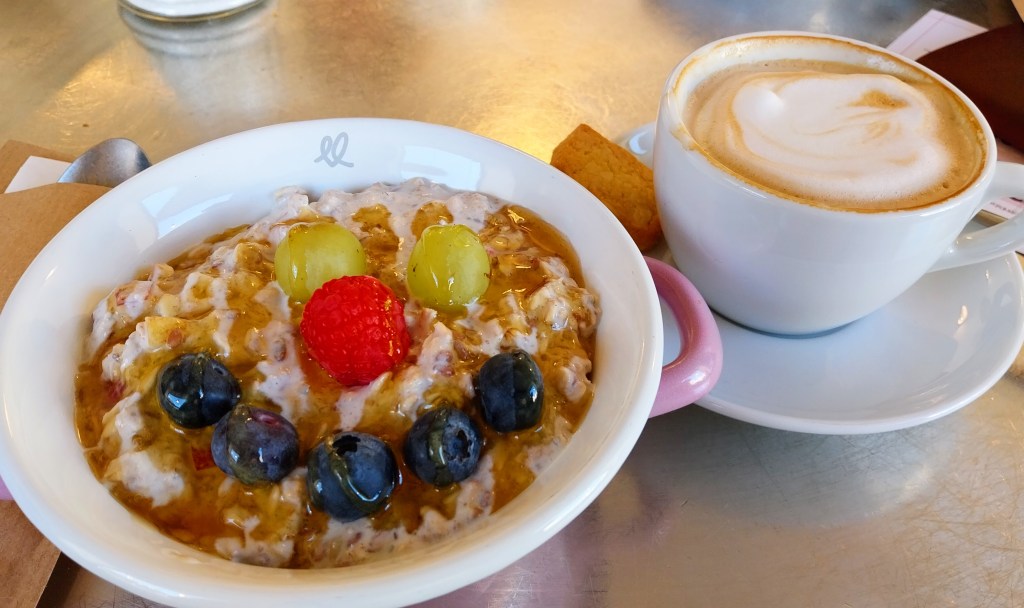
If there’s anything guaranteed to give your sense of wellness a morning boost, it’s a breakfast of genuine Bircher Muesli, served with a fresh fruit topping in the form of a smiley face 🙂

I’m due to catch a plane back to London shortly, after a thoroughly enjoyable stay in Ljubljana, Slovenia, and then Graz, Austria. I’ve enjoyed some great, tasty fare while here and, before leaving, wanted to find an authentic dish based around fruit and veg.

I’m pleased to say I found it on our final morning, with a party of 4 of us meeting for breakfast in a branch of Graz’s Martin Auer delis. Billed on the menu as Brainfood, it featured oatmeal, wheat, rye flakes and linseed that had been soaked overnight in natural yoghurt. Pieces of freshly chopped apple and nuts were then stirred through. Grapes, blueberries and a raspberry had been added to make the smiley face, and honey drizzled over.

The invention of Bircher Muesli is attributed to Swiss medic Maximilian Bircher-Brenner around 1900, when he put together a mix of oats, grains, seeds and fruit for his patients. These ingredients have various health benefits – oats contribute to lowering cholesterol, for example. The name of Brainfood is likely to stem from the dish being slow to digest, meaning one stays feeling fuller for longer. Hunger is therefore less of a distraction from accomplishing one’s daily tasks and challenges.

I certainly enjoyed it, alongside the cappuccino shown in my photo. I’ll be expecting now to easily conquer the killer sudoku I’ve saved to do on the flight home!

This is me signing off from Austria. It’s been a great trip, catching up with family and friends and sampling some authentic food and drink. My next post will be from back in the UK.

Hey, with my newly heightened intellectual faculties, I’ve just worked out that the word Brainstorm is only a couple of letters away from being Brianstorm. Regular readers will know that I need little excuse to feature the Arctic Monkeys on ADK. So here they are.

Auf Wiedersehen!

Categories
Blog Mains

Gösser und Gulasche!

While here in Graz, we have moved indoors from the freezing, yet festive Christmas Markets (see Walk Out To Winter) for our next tasting of traditional Austrian food and drink. We are now at the Gösser Bräu, a long established beer hall and restaurant over towards the River Mur in the west of the city centre.

Originally the site of the Gösser brewery, it has been serving traditional Austrian fare since 1902, along with some terrific beers. The place has a warm, modern and stylish interior, but still carries the look and feel of a classic European, high-ceilinged beer hall, with the chink and clatter of glasses and echo of lively chatter from the bench tables, mainly occupied by large groups of friends.

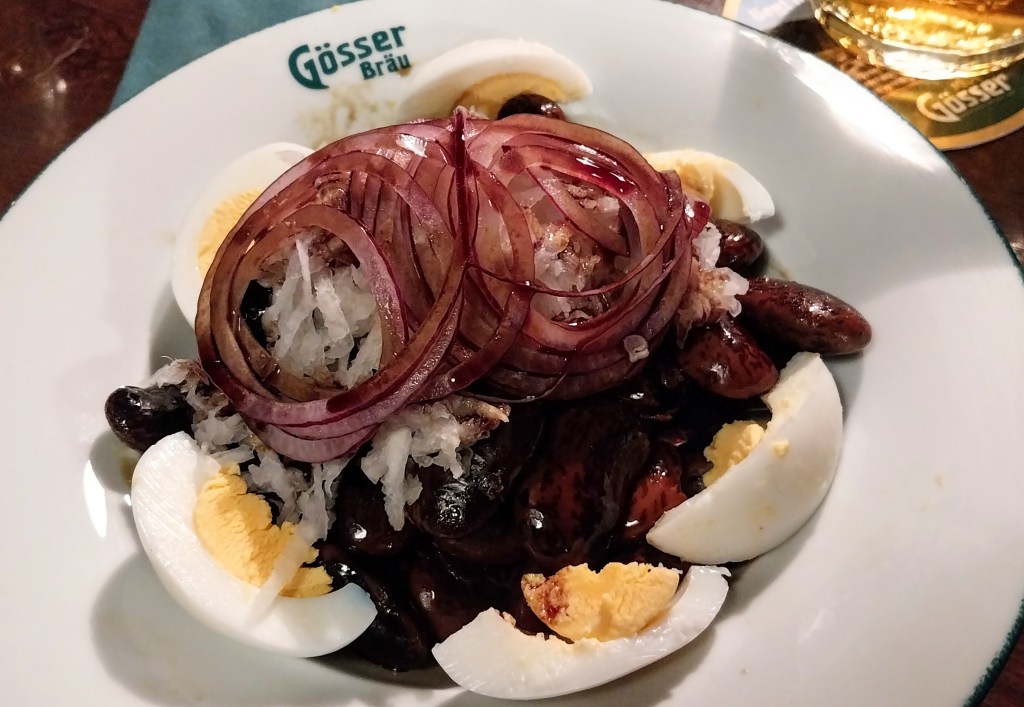
There were 6 hungry people in our party, all in search of some warming, filling and tasty rustic fare. My starter was a dish I have had before in Austria and really wanted to have again on this trip. It is Styrian Bean Salad, a regional speciality from this part of Austria. It consists of dark pulses the size of butter beans, tossed in green, nutty-tasting pumpkin seed oil. The salad is topped off with grated white radish, raw red onion rings and segments of hard boiled egg.

It was as delicious as I remembered it.

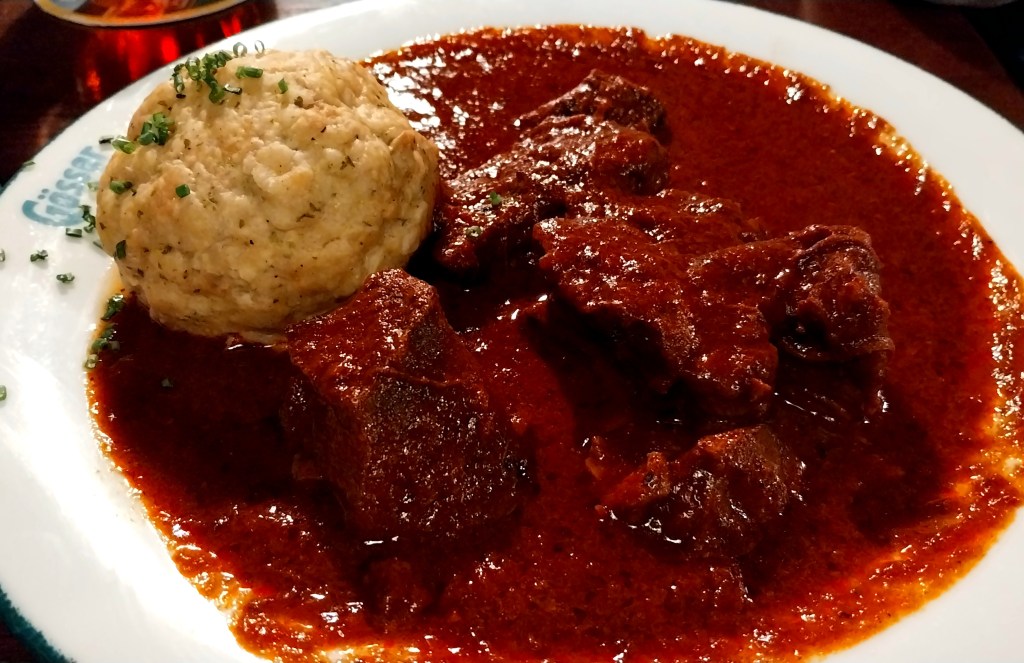
For mains, the Gulasche (or Goulash), was a popular choice with our group. It is shown in my main photo at the top of the post – a hearty dish comprising chunks of tender, slow cooked beef in a rich gravy, served with a Semmelknödel, a bread dumpling. I have only ever eaten dumpling on a very few occasions, and here it was skilfully prepared and cooked, with a mild herb flavouring. It held its shape when sliced and did a grand job soaking up the tasty gravy.

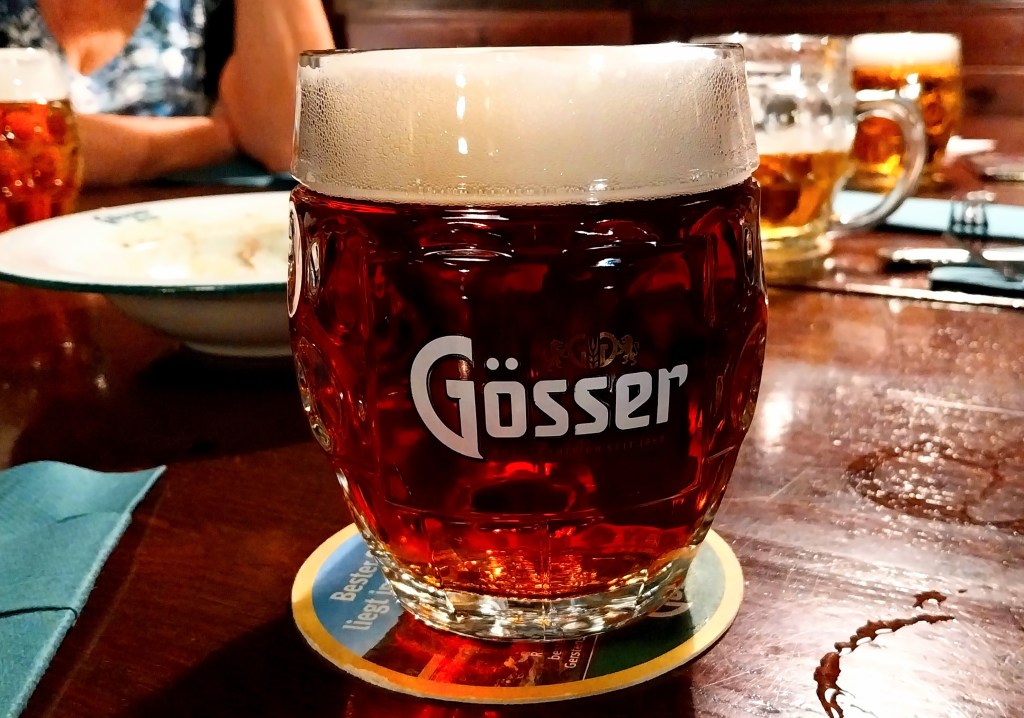
The beers are excellent. I chose the Bock beer that is brewed specially for Christmas and holiday occasions, having had a reliable recommendation on this (thank you, Kelvin!). It is a little stronger than their usual beer and packs a memorable, caramelish taste. I was enjoying it so much that, er, most of it had gone by the time I remembered to take a photo for the blog (whoops).

I noticed they were also serving a darker beer, so tried some of that. I liked the colour, which was somewhere between brown and ruby, and the thick foamy head. Predictably, the taste was maltier than the Bock.

Both made a really enjoyable accompaniment to the Goulash. It says a lot that everyone was sufficiently full to render a perusal of the dessert menu unnecessary.

My final challenge, before leaving Austria for home, is to find some traditional local fare that is oriented around fruit and veg. Tune in to my next post to see how that search goes.

In the meantime, with all this snow around in Austria, I can’t think of a better time to add a track to the ADK Playlist by these Scottish and Northern Irish alt-rockers. I saw them live at the time the album A Hundred Million Suns was released, and this is one of the many tracks I enjoyed. Here’s Snow Patrol with Engines.

Categories
Blog Snacks

Walk Out To Winter

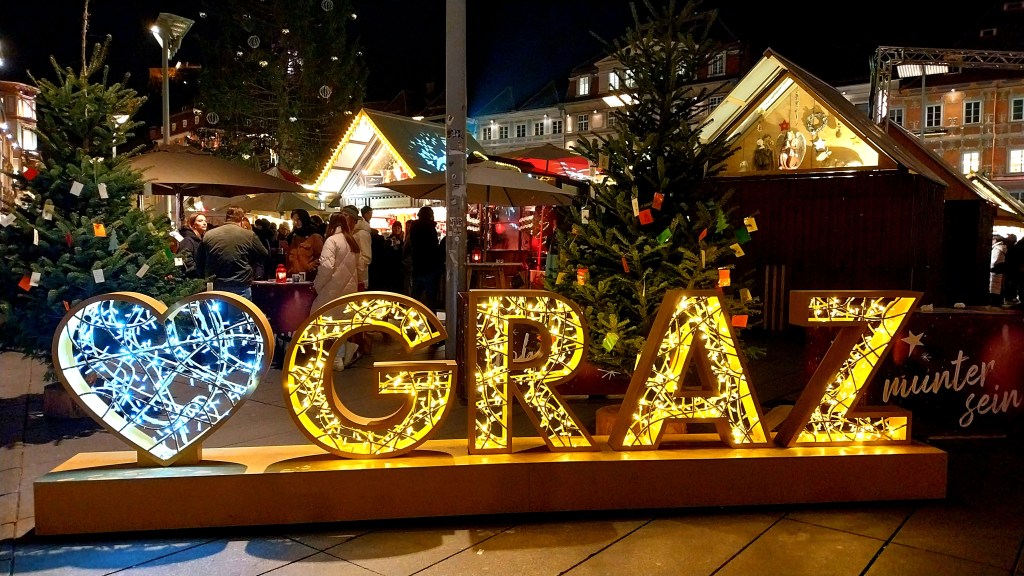
After a fab few days in Slovenia, we have now arrived in a very chilly Austria, to meet up with a group of friends and family experiencing the Christmas Markets in the city of Graz.

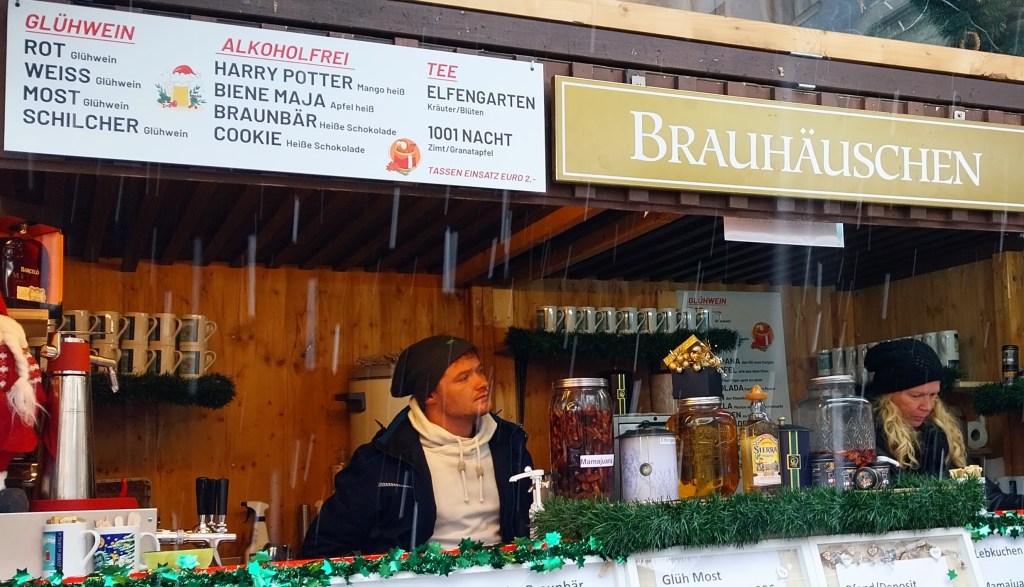
With the start of Advent, wooden chalet stalls have popped up all over the city’s main public squares, selling a range of hot drinks to help insulate visitors against the effects of the freezing cold. A typical range is shown in my photo below.

I tended to stick with the Rot Gluhwein – a ceramic mug of hot red wine flavoured with cinnamon, nutmeg and cloves – though there were also white and rose varieties available. The non-alcoholic offering included herbal and fruit teas, and the tantalisingly named Harry Potter – a hot mango punch.

I also enjoyed a hot chocolate, which was precisely that. I may have been expecting a mug of creamy cocoa, but what arrived had the volume and texture, no less, of a large, melted bar of dark chocolate in a cup. Needless to say, I had no trouble polishing that off.

The food options were simple, tasty and filling. Staples like Bratwurst (they really do love their sausages in this part of the world), or Kasekrainer (sausages with an inner lining of melted cheese), sizzled on the hot griddle in the chilly evening air – usually served up with a generous portion of Pommes (fries).

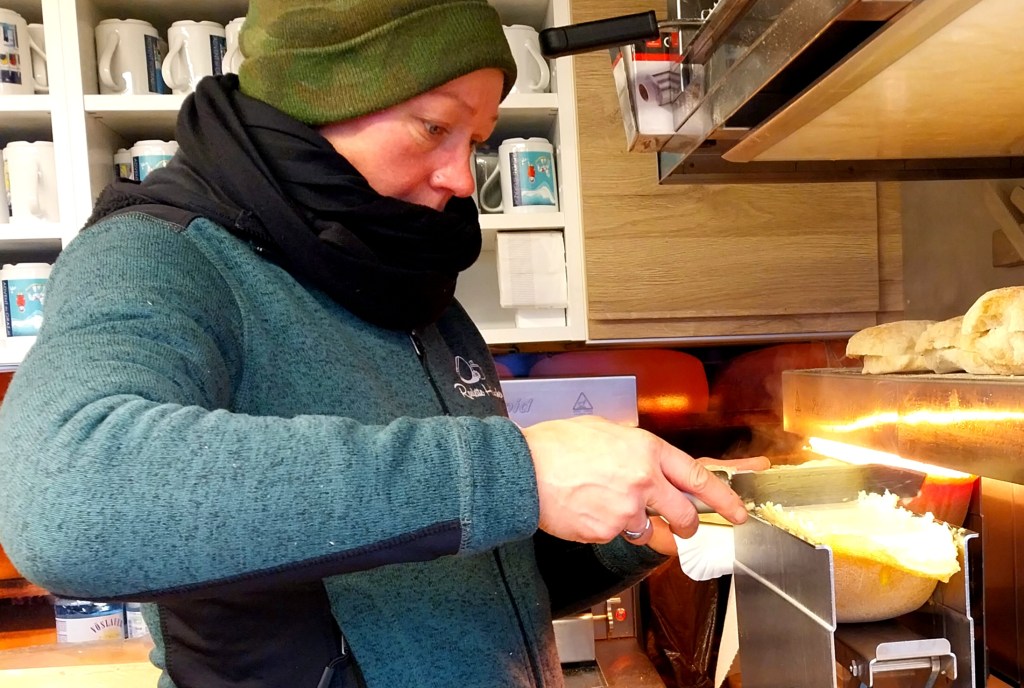
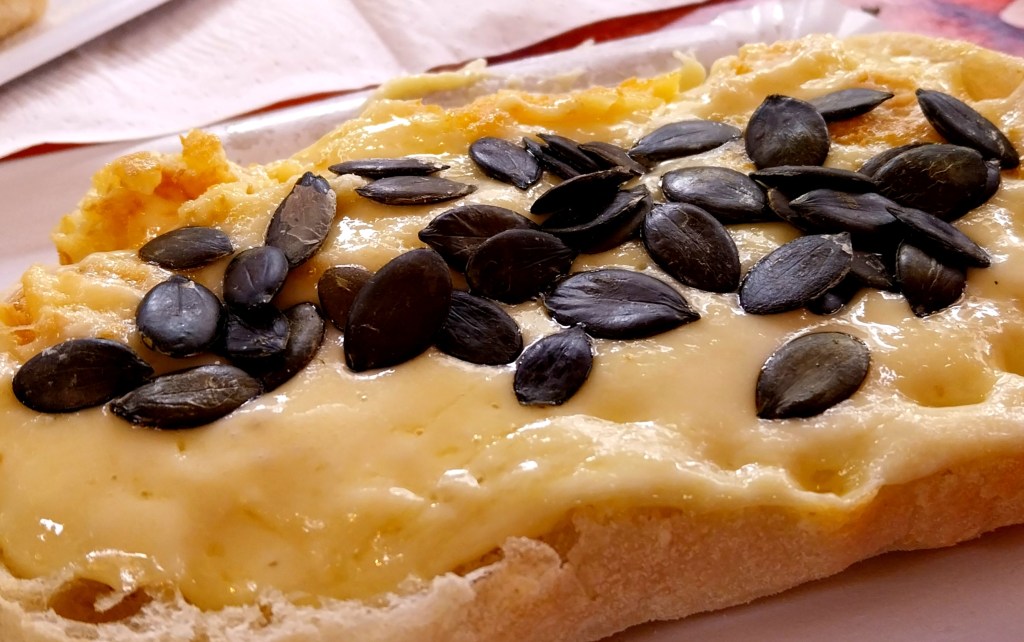
My favourite though was at the Racletthauschen. A log of Swiss Raclette cheese is placed under a flame until the top layer melts. The server then scrapes it off (see below) and spreads it on a slice of lightly toasted Ciabatta bread.

The choice of toppings included herbs, bacon lardons or prosciutto. I chose Kurbiskerne – roasted pumpkin seeds – adding a nutty crunch to the salty, melted cheese.

A delicious snack, washed down (of course) with another mug of Gluhwein.

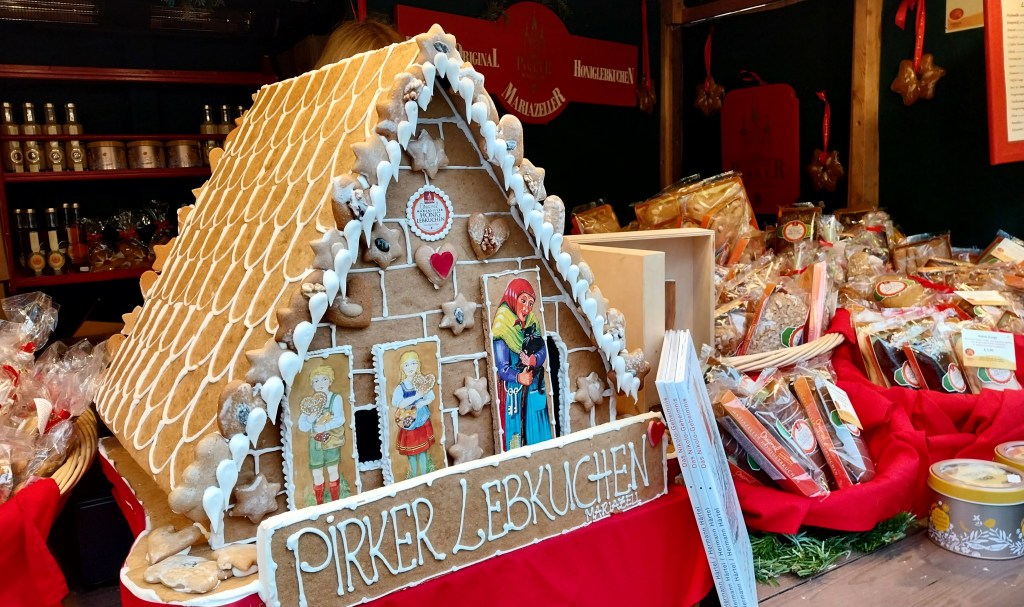
The Markets are delightful to stroll around, enjoying the sights, sounds and scents of the seasonal displays, such as the gingerbread, below…

The choice of colourful ceramic decorations for the Christmas tree is bewildering…

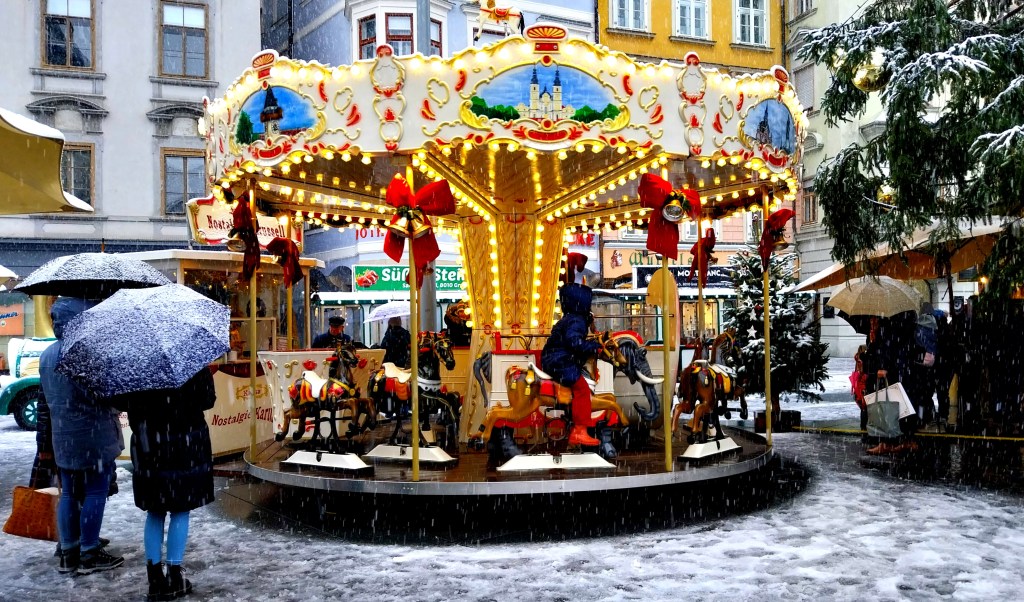
The Austrians make it an event for the whole family, as this old, classic European fairground attraction shows. The traditional waltz music emanating from the barrel organ made for a perfect soundtrack.

I have really enjoyed my visit to the Graz Christmas Markets. Although we have had ice and snow, and the temperature has remained around freezing point, in some strange way I did not actually feel the cold – a combination of warm clothes, ample Gluhwein, simple and satisfying hot food, the festive cheer of the surroundings, and the bonhomie of family and friends.

The Raclette experience has inspired me particularly – it never occurred to me before to sprinkle roasted pumpkin seeds on melted cheese for a tasty snack, but this is something I shall try to recreate at home in the ADK kitchen, whenever I have pangs of hunger. Maybe, to get the full authentic Austrian effect, I will even turn all the heating off, don my hat, scarf and gloves, and raise a tea cup of mulled wine in salute to the citizens of Graz. Prost!

Here are Aztec Camera with Walk Out To Winter.

Categories
Mains Recipes

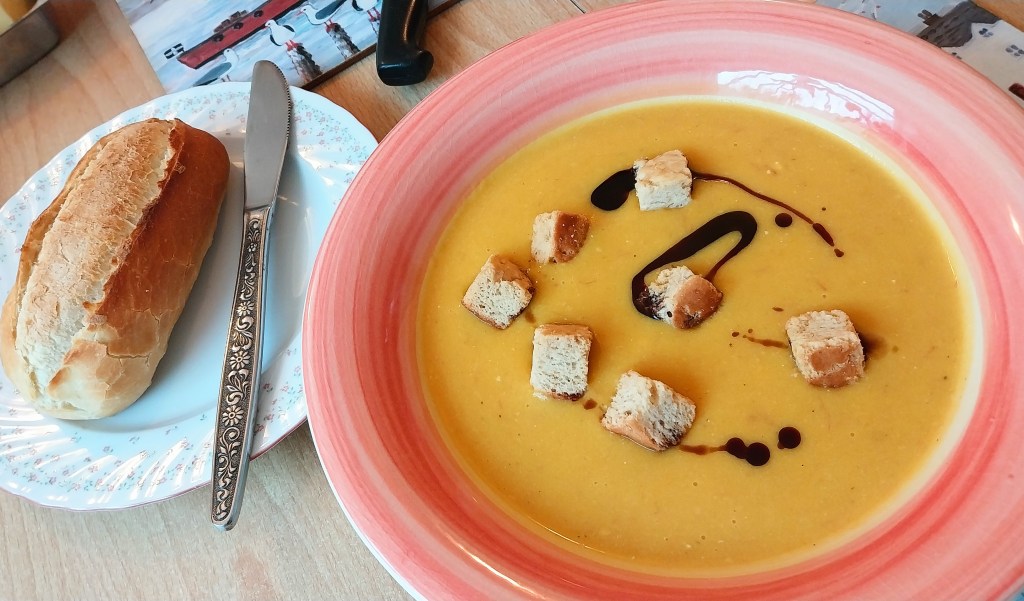
Creamy Pumpkin Soup

This week, on a visit to my good friends Kelvin and Eva, I was treated to a bowl of Eva’s delicious, Austrian-inspired pumpkin soup. I am please to say she has agreed to share the recipe in this guest post. Over to Eva. Enjoy!

………………………………………..

Homemade soups are one of my favourite comfort foods for a cold autumn day. As I am a member of a community farm near where I live, it’s that time of year when you get an abundance of different pumpkins and squashes. So here is a recipe that my mum used to make for us, served with a special pumpkin seed oil, that comes all the way from Austria, also referred to as the “black gold of Austria”.

You Will Need

  • 2 -3 tbsp olive oil
  • 2 onions, finely chopped
  • 2 or 3 cloves of garlic, finely chopped
  • 1 teaspoon of paprika
  • 1kg pumpkin or squash (try kabocha), peeled, deseeded and chopped into chunks
  • 1 sweet potato chopped into chunks
  • 150g of lean smoked diced bacon
  • 700ml vegetable stock
  • 150ml double cream or sour cream or crème fraiche
  • * Pumpkin seed oil, optional

Method

  1. Heat the olive oil in a large saucepan, then gently cook the bacon till crisp. Add the chopped onions and garlic and cook for 5 mins, until soft but not coloured.
  2. Add 1kg pumpkin or squash with the sweet potato chunks to the pan, then carry on cooking for 8-10 mins, stirring occasionally until it starts to soften and turn golden.
  3. Add the paprika, give it a quick stir and immediately pour the vegetable stock into the pan and season with salt and pepper. Bring to the boil, then simmer for 10 mins until the squash and potato are very soft.
  4. Pour 150ml double cream into the pan, bring back to the boil, then purée with a hand blender.
  5. Reheat the soup if needed, taste for seasoning, then serve scattered with croutons and a drizzle of pumpkin seed oil, if you want. A perfect accompaniment for a more complete meal is a freshly baked baguette!

*Styrian pumpkin seed oil is a geographic protected product by the EU. Nutty and rich, pumpkin seed oil is full of good fatty acids, minerals and vitamins and on top of it all it is cholesterol free. It partners perfectly with green salads, cheese, scrambled egg and pasta dishes. Did you know it takes 2.5-3kgs of pumpkin seeds to press 1 litre of pumpkin seed oil?

As the author of a guest post on A Different Kitchen, I get to choose the next track for Kevin’s ADK Playlist. This track reminds me of childhood dinners around the kitchen table in Austria with my family: Billy Joel with Piano Man.

Categories
Bakes Desserts Recipes

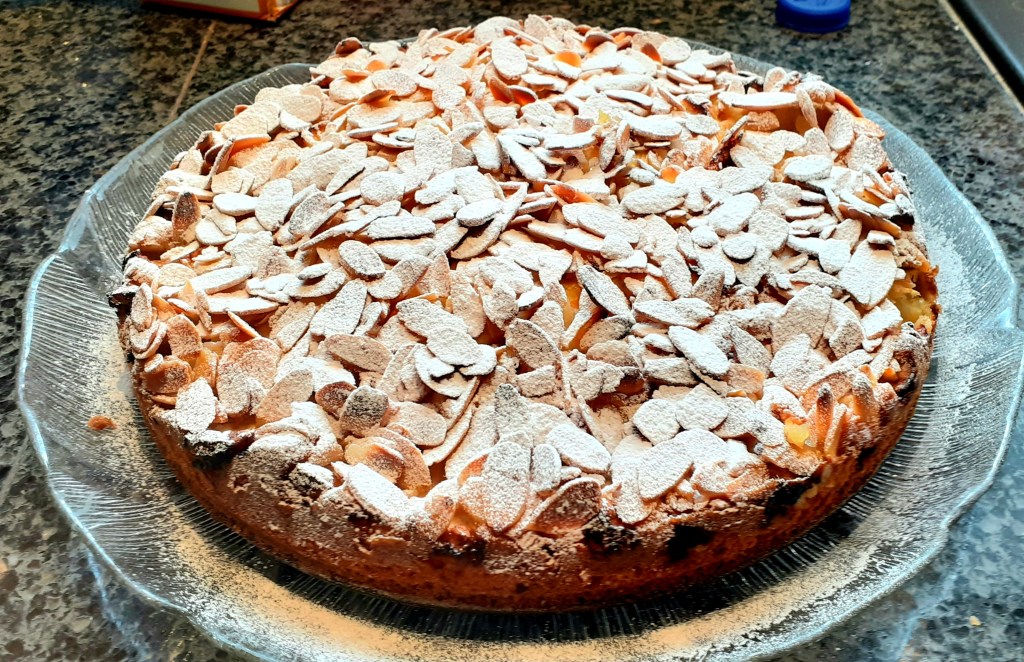
Austrian Apple Cake

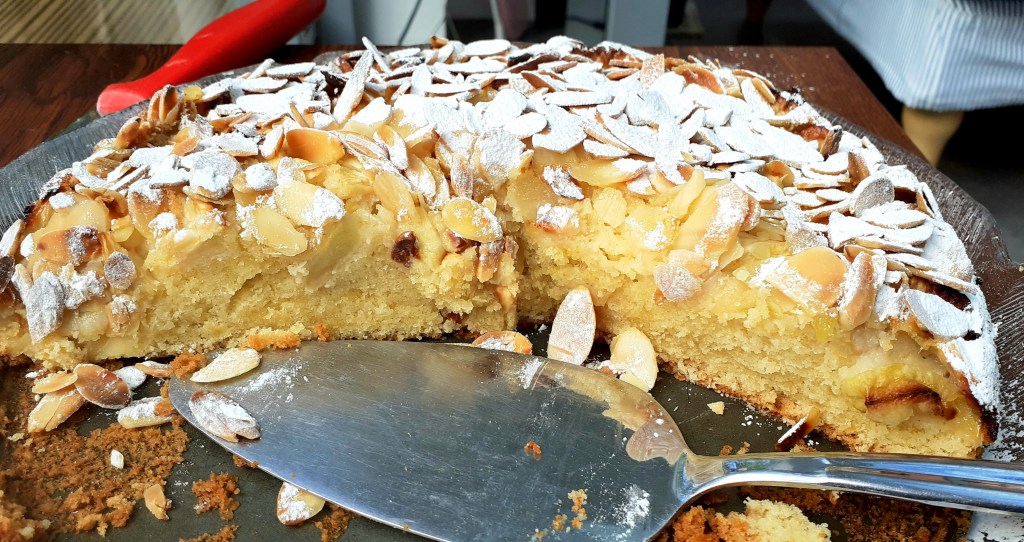
It’s a great pleasure to introduce our latest guest post this week on A Different Kitchen. My good friend, and accomplished cook, Eva, shares with us an old family recipe from her native Austria. Eva treated me to a generous slice of this recently (see my photos) and it was delicious!

Hi, this is an old family recipe of mine from Austria, where I grew up. It’s special to me as it reminds me of my childhood. Mum used to make this cake for when we had friends round for coffee. It’s a recipe that was passed down from one of her aunts to my Mum. Also, this is a typical Austrian “fruit cake” where you use the fruits according to the season, especially plums, apricots, pears or cherries.

Ingredients

160g unsalted butter

160g sugar

160g self raising flour

3 eggs

Zest of half a lemon

2-3 spoons of dark rum

3 cooking or dessert apples

Flaked almonds

Icing sugar for dusting

Method

Beat butter, sugar and egg yolks in a bowl until fluffy and pale in colour. Add the lemon zest and rum, then add the flour. Whisk the egg whites till fairly stiff and fold into the mixture. Put the cake mixture into a baking tin. I used a spring form cake tin of 23cm diameter. Then peel the apples and cut into thin slices and arrange them on top of the cake. Sprinkle with flaked almonds and bake in the oven at 180C (fan oven) for about 45 minutes.

Finish with a dusting of icing sugar before serving!

My choice of musical track for adding to Kevin’s ADK Playlist is the “Hallelujah Chorus” from the Messiah by Georg Friedrich Händel. I sung this piece many years ago when I first joined a choir in this country and thoroughly enjoyed it then. Many years later and with a different choir I sung it again at Winchester Cathedral, which was so special and one of my best moments in life. I find the Messiah totally exhilarating and uplifting which makes it one of my favourite pieces.