Categories
Bakes Recipes

The Perfect Lamington

During my travels here in Australia, I have become quite partial to the Lamington. Typically enjoyed with a coffee, it seems to be something of a national treasure, and is on sale in bakeries and cafes everywhere we go.

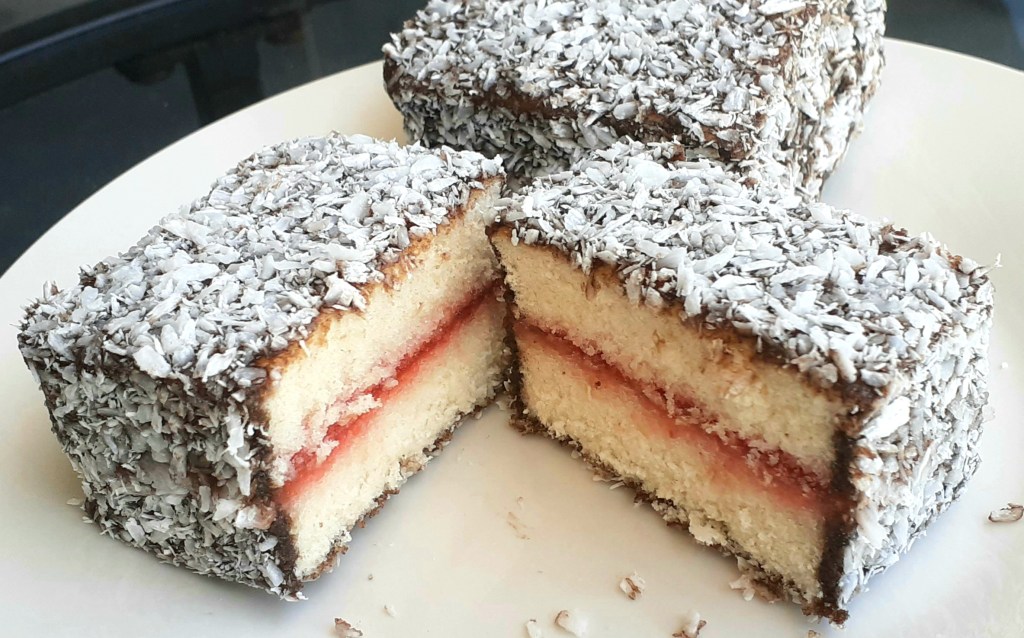
Essentially it is a square-shaped sponge cake, coated in chocolate icing with a generous sprinkling of desiccated coconut. A simple, and unbeatable combination!

The story goes that it was invented in Queensland, Australia in around 1900 by the chef to the State Governor, Lord Lamington. I understand that New Zealanders have also laid claim to it’s creation, but the Aussies seem to be having none of that!

There are some variations. The ones in my main photo introduce another ingredient – a layer of raspberry jam in the middle – which works really well. There is even a bakery in Sydney that has developed glamingtons, with flavours including strawberry, salted caramel and peanut butter. The original choc and coconut combo remains the most popular, however.

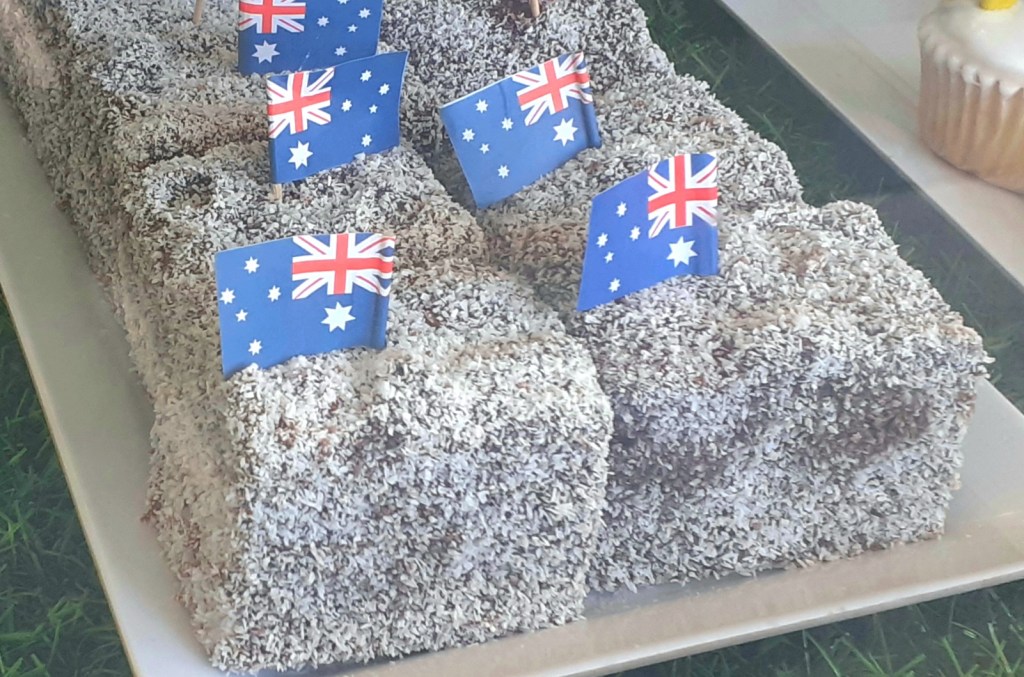
Australia Day (the national holiday) is coming up on 26 January, and one of the ways that people will be celebrating is by baking and eating Lamingtons. These ones, adorned with national flags, I spotted in a bakery today in Brighton, a resort just down the coast from Melbourne.
Here is another variation for Australia Day – a Lamington style Victoria sponge filled with fresh cream.
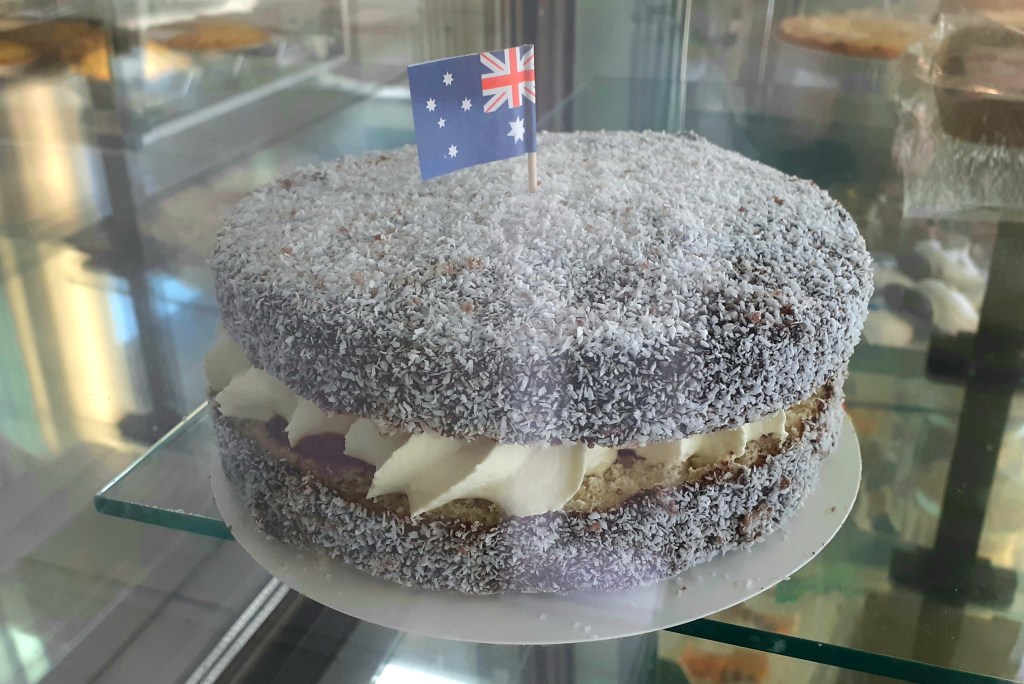
Can’t be bad!

Fancy joining in?

Servings

This will make around 16 cakes.

Timings

20 mins to prep, 20 mins in the oven. Once cooled, 10 mins to coat in the icing.

You Will Need:

  • metal baking tray, 24cm square (or equivalent)
  • 125g sugar
  • 50g butter, softened, plus 1 tbsp for the icing
  • 2 eggs
  • 120g self-raising flour
  • 85g desiccated coconut
  • 2 tbsp cocoa
  • 150g icing sugar
  • 3 tbsp boiling water
  • 1 tbsp butter
  • some smooth raspberry jam (optional)

Method

  1. Heat the oven to 180C.
  2. Grease and line the metal baking tray with baking paper.
  3. Cream the sugar and softened butter together in a mixer. Whisk in the eggs and combine, then add in the self-raising flour.
  4. Pour the batter into the baking tray and spread out evenly with a knife or spatula. Bake for 20 mins.
  5. Cool on a baking tray, then cut into squares.
  6. If you wish to add a layer of jam, do so at this stage – slice each square and spread it in, making a jam sandwich.
  7. For the chocolate coating, mix the cocoa, icing sugar, boiling water and tbsp butter. Give it a good stir so it forms a nice, thick sauce.
  8. Put the desiccated coconut in a separate bowl, alongside.
  9. One at a time, place each sponge square on a fork and dunk it in the choc sauce. Use a spoon to coat the top and sides, then set it in the coconut, gently turning it over so that all sides are coated.
  10. Leave on a wire rack and allow 10 – 15 mins to set, before serving.

Customise it!

As indicated above, bakers across Australia have come up with a number of very creative variations. If, like me, this is the first time you’ve made Lamingtons, I would stick to the basic recipe. With all the dunking in choc sauce and coconut, this has the potential to become quite messy. My advice is to learn to walk before you run!

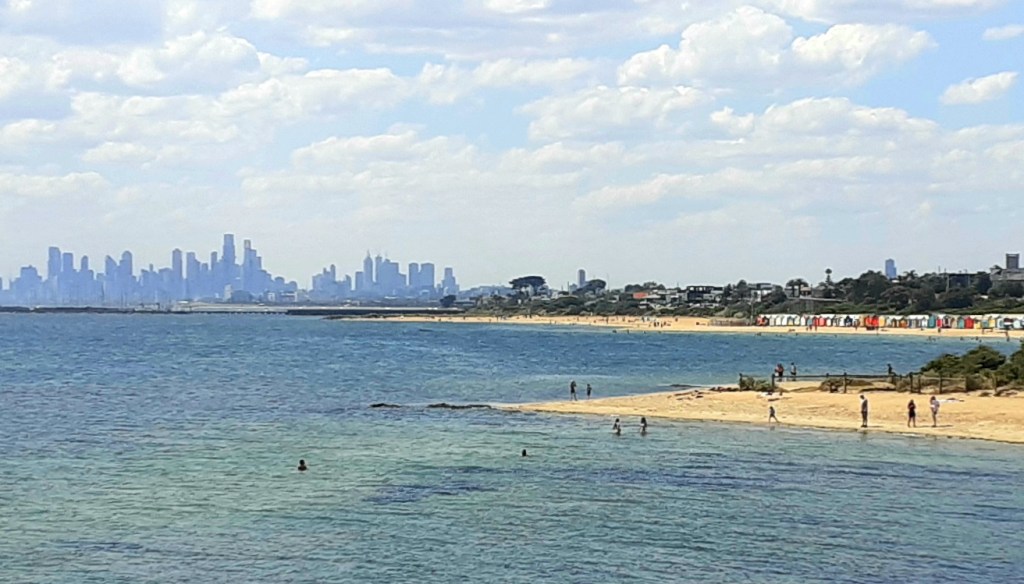
I mentioned earlier that we had visited Brighton today. For my final photo, I will share with you this shot from Brighton Beach, looking back towards the Melbourne city skyline. I liked the contrast between the small town seaside resort, with a line of little coloured beach huts on the right, and the mighty CBD behind. It was another hot one today, reaching 30C, and we joined the many people cooling off in the sea.
Time to add another Australian band to the ADK Playlist. I discovered The Presets, an electronic duo from Sydney, on a visit to Melbourne’s Australian Centre for the Moving Image. This track is called My People.

Categories
Blog Desserts

Peach Melbourne

Peaches are in season in Australia right now, and plentiful in the shops. It’s no surprise therefore that, just as Wimbledon has strawberries and cream, the Australian Open has Peach Melbourne.

The Australian Open, the first tennis major tournament of 2023, is under way at the moment, and is a pretty big deal here in Melbourne. I’ve spent a couple of days at it this week and, aside from watching the tennis, have enjoyed its Peach Melbourne signature treat.

It is of course a play on Peach Melba, the dish created in the Victorian era by a French chef, in honour of the Australian soprano, Nellie Melba. Melba was a stage name that she took from her home town of Melbourne.

The three key ingredients are ice cream, fresh peaches, and raspberries. At the Australian Open, it is served (sorry, couldn’t resist that one) as a tub of whirled vanilla ice cream, covered with a drizzle of pureed fresh peaches, and topped with pieces of dried raspberries (see my main photo).

It is lovely to taste – especially the fresh peach sauce – and a welcome respite from the heat. The temperature hit 37C one day this week, and play on the outdoor courts had to be suspended. I would not be surprised if the tennis players all headed to the Peach Melbourne outlet to cool down.

Regular followers will know that I featured on ADK some ice cream creations made with my own ice cream maker, a few months back during the UK summer. I haven’t made this peach dish before but will definitely be giving it a go when I get home. Watch out for a future post.

As for the tennis, I have really enjoyed seeing the game played up close by world class players. The first day we bought a ground pass, which gives access to all of Melbourne Park, except for the 4 show court arenas. You can wander around and see who is playing, then stand or sit at a match and watch it for as long as you wish, before moving on to another. You can go fetch a coffee (or Peach Melbourne) whenever you choose, or take a deckchair on a central green watching the action on a big screen.

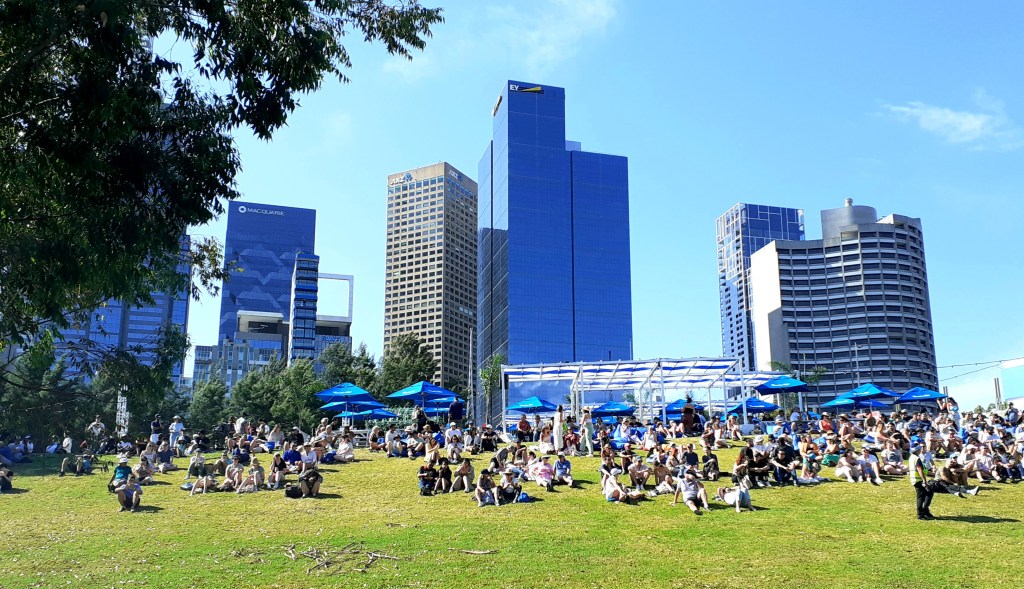
The atmosphere is relaxed and informal off court, if fiercely competitive on. The setting is spectacular, with the skyline of Melbourne’s Central Business District (CBD) rising above the courts.

I liked being able to watch a match from a spectator gallery to the side of the court. The customary view on TV is from a raised camera position at the end of the court, but sitting to the side brings home much more effectively the speed and power with which the game is played at this level.

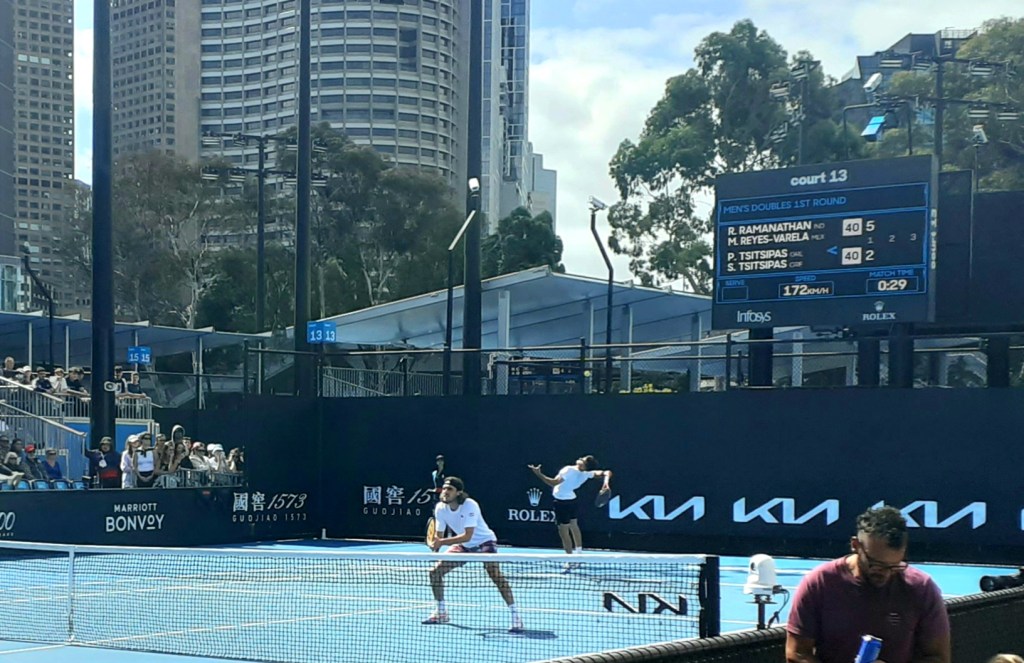
It’s also fun spotting any famous players taking their turn on the outside courts. The biggest name we saw there was the number 3 seed, Stefanos Tsitsipas, see below.

I knew he was a top men’s singles player, but hadn’t realised he also played doubles with his brother. There is a large Greek community in Melbourne, so the boys were receiving enthusiastic support from the fans.

It’s also possible to watch the tennis for free on a big screen, by joining these Melburnians below, at the nearby AO Hilltop – a fan fest site with decent drinks and food.

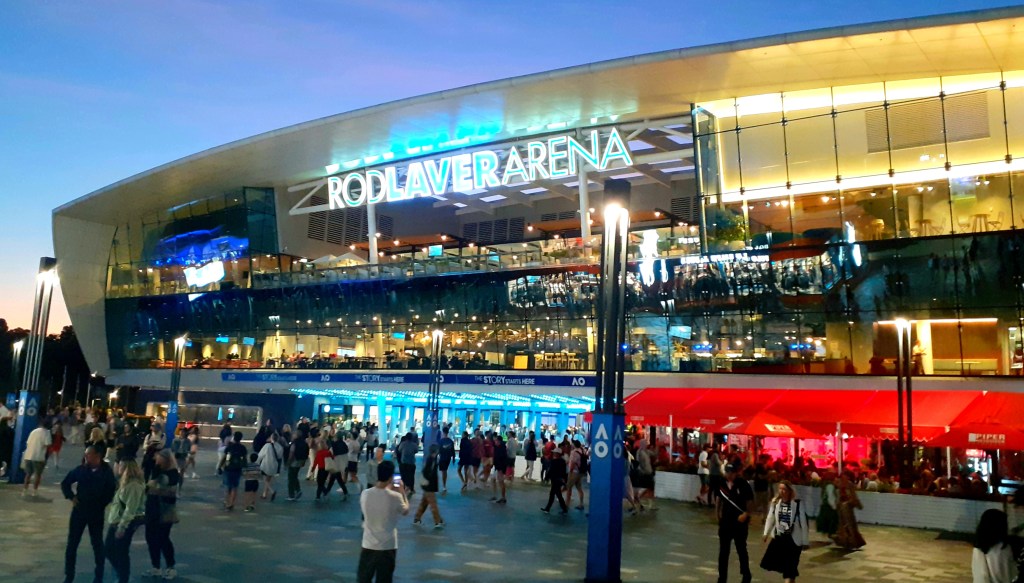
On our second day, we had evening tickets for the biggest of the show courts, the Rod Laver Arena – a lovely birthday present from my son. It was very exciting making our way to the famous 15,000 seat arena, below.

In a tense game, we saw the USA’s Seb Korda inflict a shock defeat on the number 7 seed, Daniil Medvedev.

Our session ended just after midnight – not quite as late as Andy Murray endured this week, finishing at 4am the next morning! With this in mind, our latest addition to the ADK Playlist is in honour of the gallant, battling Scot who overcame the odds to progress to the next round. This is Faron Young with It’s Four in the Morning.

Categories
Blog Snacks

The Twelve Apostles

While touring Australia’s Great Ocean Road, I’ve been enjoying the Twelve Apostles Gourmet Food Trail. More about the food in a moment, but firstly let’s explore the rather special wonders of nature from which the Trail derives its name.

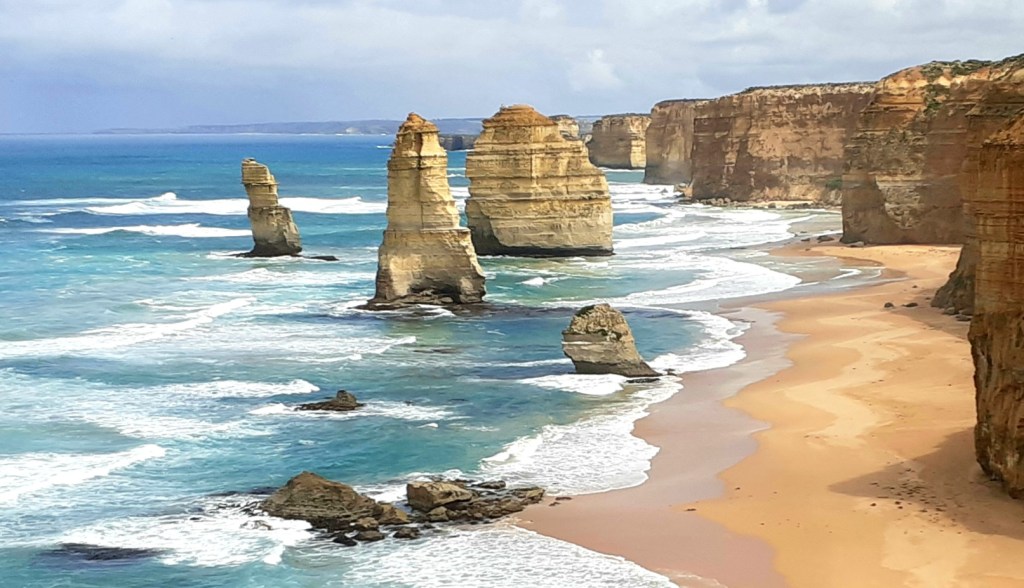
The Twelve Apostles (see my main photo) are a series of spectacular rock formations standing off Victoria’s southern coast, amidst the crashing surf and spray. They have been carved from the limestone cliffs over thousands of years, by the ferocious wind and waves blowing up across the Southern Ocean from Antarctica. Today they are one of Australia’s most-visited tourist attractions.

Parking up and walking out the short distance to see them reminded me of past visits to other famous rock formations, like Stonehenge in England and Northern Ireland’s Giant’s Causeway. As with those, this visit doesn’t disappoint.

We experienced first hand just how dramatically changeable the conditions can be. My main photo shows how beautifully clear the skies were on our visit, but within 1 – 2 hours a thick sea mist and rain had descended. This isn’t called the Shipwreck Coast for nothing, with many hundreds of sailing ships having met their fate along this stretch of water.

There is a gorge named after one of them, the Loch Ard, which left England in 1878 on its three month journey to the new world. On sighting land, passengers and crew held an End of Voyage party, only to find the next day that conditions had dramatically worsened, the ship being washed up on the rocks with many lives lost. A reminder, if one were needed, not to celebrate any kind of journey in life until you have actually crossed the finish line.

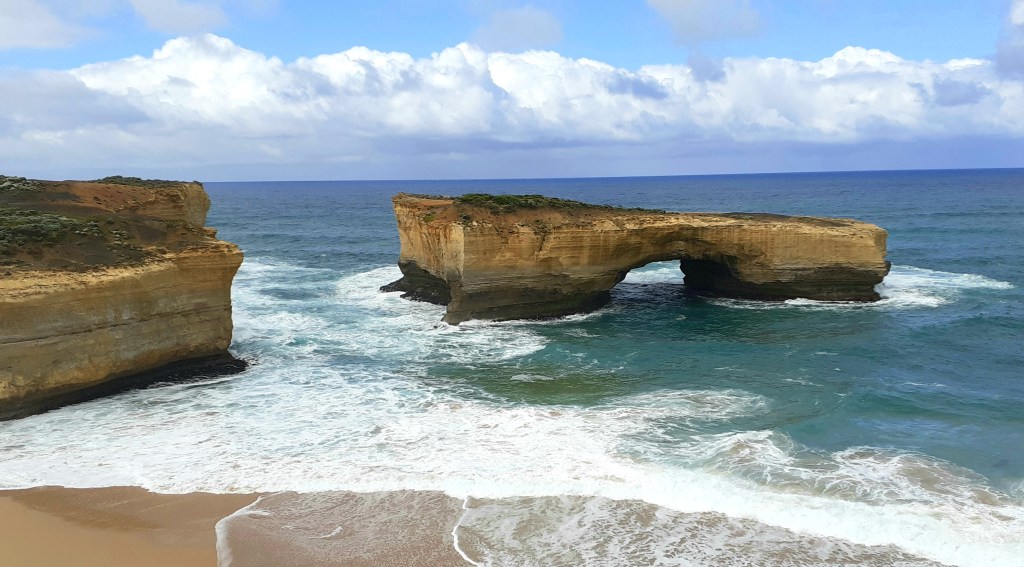
My photo below shows the rock formation known as London Bridge. Originally a long, arched promontory extending out across the water, it was given its name due to its supposed resemblance to the British landmark spanning the River Thames in England’s capital.

However, in a rare case of geology mimicking a traditional folk song, London Bridge has, literally, fallen down. In the 1990s the stormy waves brought the middle section crashing into the surf, leaving two bemused tourists stranded on what was then Australia’s newest off shore island.

These days, a network of clifftop boardwalks and viewing platforms protect the fragile landscape, and make the outstanding views safe and accessible to all, whatever your level of mobility.

And so to the Food Trail. A group of around a dozen local independent food producers have banded together to offer a tour of local sites where you can taste and buy artisan foods. These entrepreneurs include a distillery, craft brewery, ice creamery, berry picking farm and vineyard. You can find out more about the Trail, and download a map, here.

Regular followers will know that A Different Kitchen likes to help promote independent producers, and I focused on two sites along the Trail that particularly took my fancy.

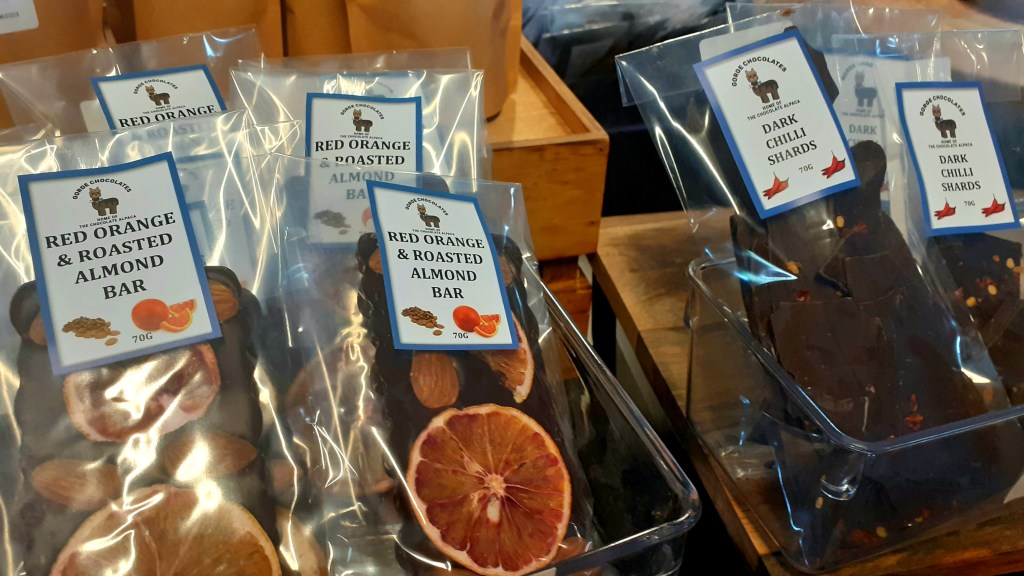
GORGE Chocolates are made and sold on site. My photo below shows an example of the selection available.

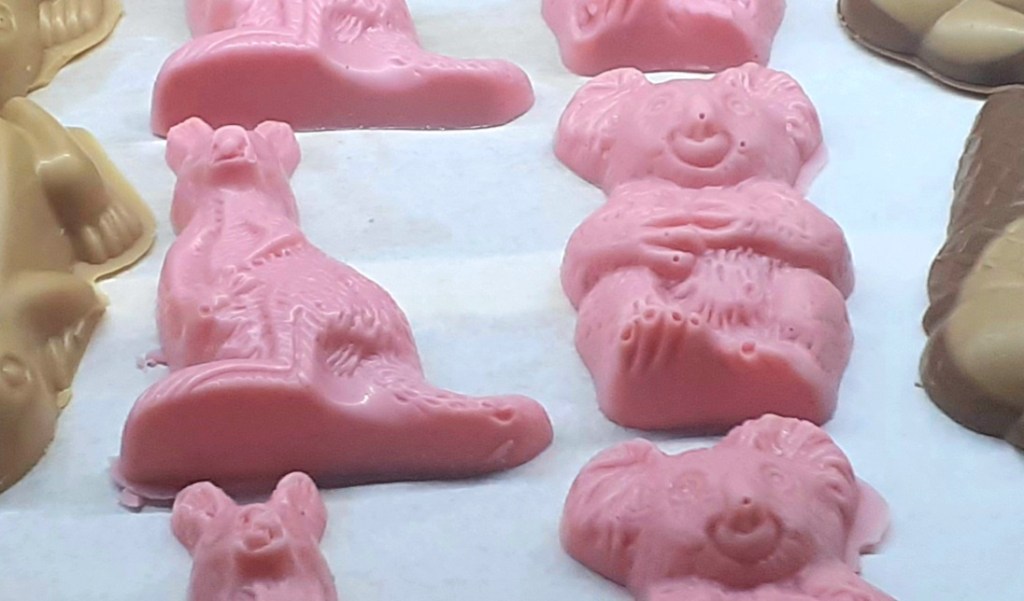
For a souvenir purchase, I chose dark chocolate shards with chilli (which pack a punch!), and a bar of salted milk chocolate. I also couldn’t resist these charming strawberry chocolate figures in the shape of a kangaroo and a koala bear.

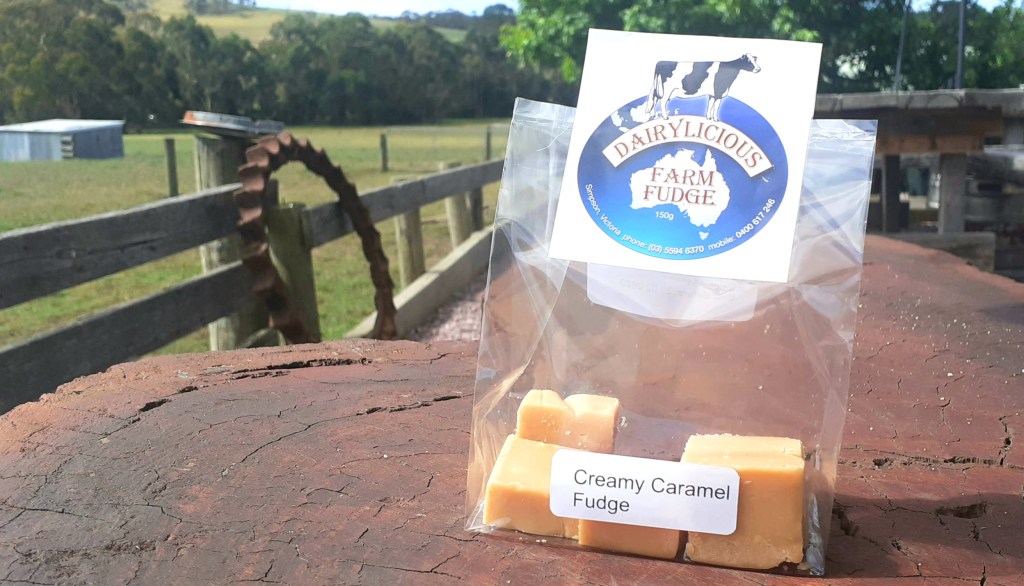
Our second visit was to Dairylicious Farm Fudge, which also makes all its produce on site. They offer a tasting board with 6 or 7 different types of fudge to try. I settled on a bag of classic creamy caramel fudge, shown in the photo below.

If the bag looks a little light, it is because we had already started it while sat on the Dairylicious verandah, before my camera was ready!

Spectacular views and delicious local food. What more could I ask for – maybe the next track for the ADK Spotify Playlist! Here is Morcheeba with The Sea.

Categories
Snacks

My Australian Cheeseboard

It wouldn’t be Christmas without a decent cheeseboard. Travelling down under this year, I made a point that our choices would all be Australian-made.

Cheese here is heavily influenced by Europe. You will find versions of the most popular cheese from France, Italy and England that have been home-made in Australia. Alongside these are many small and independent producers experimenting with new styles and presentation.

You can see my selection for our Christmas Day meal in the photo above. Here are the ones that made my final cut, including further information and links to the producers, should you wish to find out more:

  • Endeavour Blue is from King Island Dairy, which is based on a small island in the Bass Strait between Tasmania and the Australian mainland. The island’s microclimate produces lush pasture, hence rich creamy milk and cheese. This blue is reminiscent of a good gorgonzola.
  • Gumleaf Smoked Cheddar from Bodalla Farm on the New South Wales coast, south of Sydney. Smoked in leaves of a gum tree, it is part of their Bush Tucker Cheese range. Thankfully, it doesn’t taste too strongly of eucalyptus, just good smoked cheddar!
  • Fresh Chevre Goat’s Cheese, dusted with ash, from Meredith Dairy in western Victoria. Ash helps balance acidity and develop a rind, while adding visual interest to your platter.
  • Brie from Udder Delights, an independent producer from Lobethal in the Adelaide Hills, South Australia.
  • Camembert, also from Udder Delights.

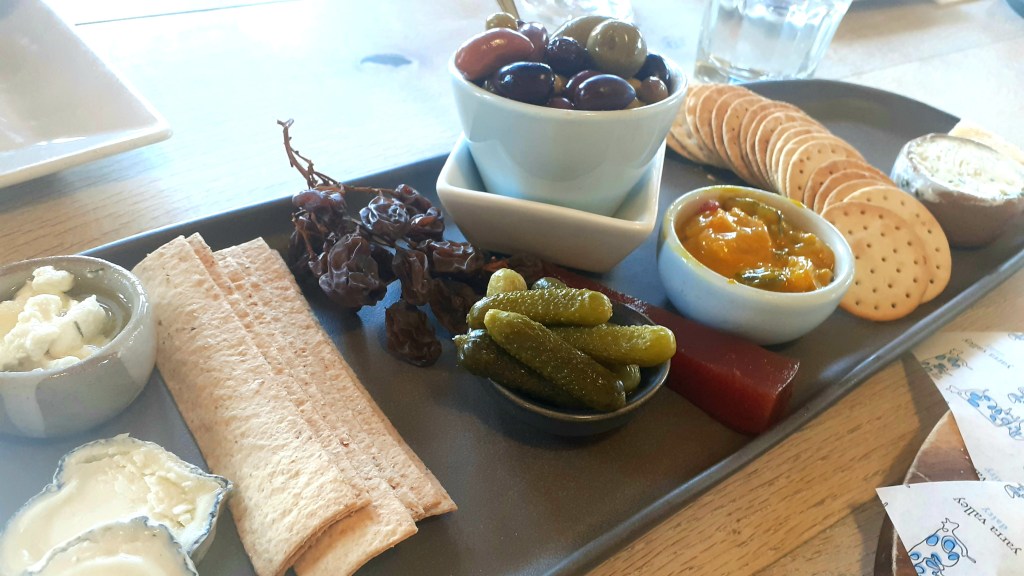
I also enjoyed a trip with family and friends to the Yarra Valley Dairy. Their range of goats cheeses are served as part of a sharing platter along with other delights like olives, cured meats, cornichons, home-made relishes and terrine, see my photo below.

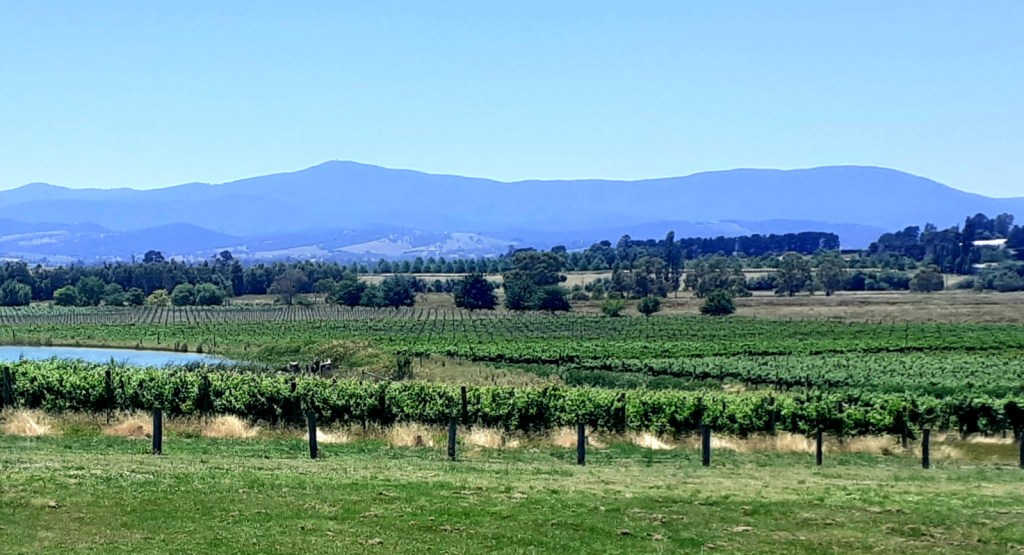
The Yarra Valley is a major wine and cheese producing region of Victoria, in the hills north-east of Melbourne. Here is a photo I took of the vineyard and hills beyond, while stopped for some Cellar Door wine tasting at Yering Farm Wines.

A gourmet experience of rich and creamy cheese, fine wines, in a beautiful rural setting with sunny weather (it reached 37C!). All in all, a Beautiful Day. Time to add U2 to the ADK Spotify Playlist.

Categories
Sides

Chargrilled Sweet Veg with Feta & Balsamic

Christmas in Australia feels very different from the UK, coming in the middle of the summer. With temperature in the mid-20s C, the only ice you’ll need to deal with is the type that clinks in your martini glass as you relax on the sun deck. It’s more a case of barefoot on warm sand, than Jack Frost nipping at your toes. One definite advantage is having the barbecue as a cooking option while entertaining over the holiday period.

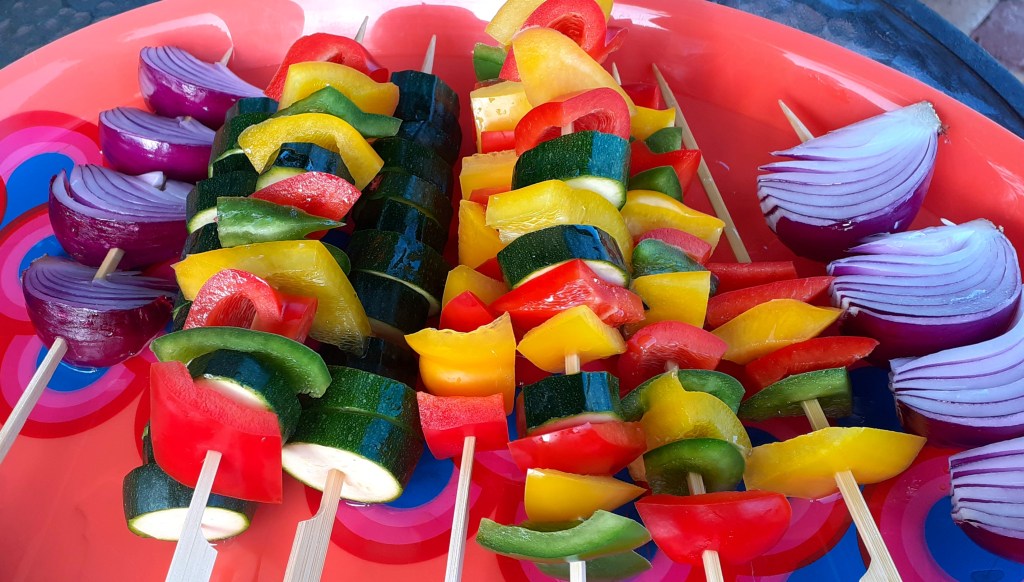
This dish is intended to be served as a vegetable side to a seasonal main, like turkey, fish or ham, and alongside roast potatoes. My photo below shows my prepped and skewered veg from the first time I made this. Since then, as you will see from the ingredients list below, I have added a few further types of veg.

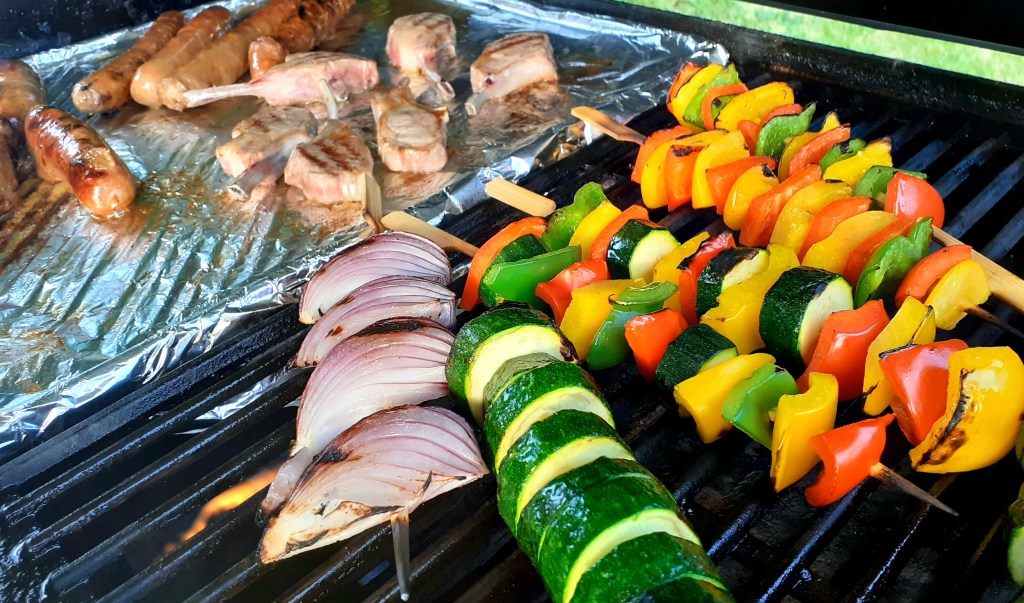
My next photo shows the skewers cooking, alongside some meaty mains. The veg will soften and caramelise on the grill, the edges gently charring over the flame.

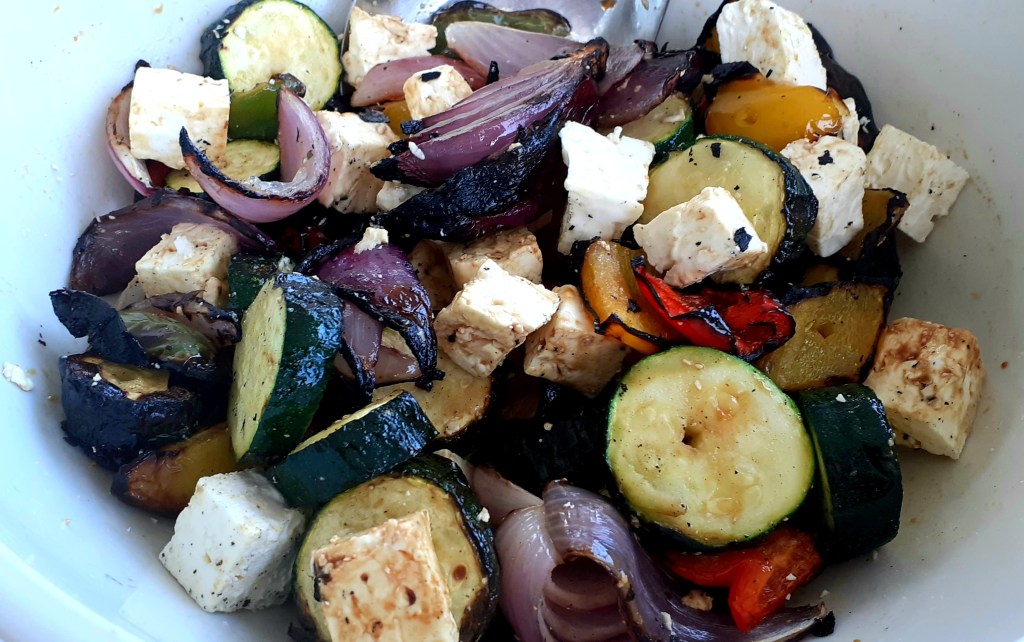
Once chargrilled, the sharpness of the feta cheese will complement the sweetness of the veg, with the balsamic vinegar giving just the right amount of sourness in the dressing. See my main photo above for the end result.

Servings

Alongside a seasonal roasted main like turkey, fish or ham, and roasted potatoes, this will serve as an extra side veg dish for up to 8 people.

Timings

15 mins prep, 20 mins grilling time.

You Will Need

  • 1 red, 1 green and 1 yellow pepper
  • 1 aubergine
  • 2 red onions
  • 2 courgettes
  • 1 butternut squash
  • oil to drizzle
  • 400g feta cheese
  • a good sprinkle of balsamic vinegar
  • 9 – 10 barbecue skewers
  • a bottle of craft beer to drink while bbq-ing (of course!)

Method

  1. Soak the skewers in cold water for about 10 mins. This will help stop them burning while cooking.
  2. While the skewers are soaking, cut the peppers and aubergine into pieces roughly 1-2cm square.
  3. Cut the courgettes into discs around 0.5 – 1 cm thick.
  4. Cut each of the red onions into 8 segments, so that each segment is still joined to the root end. This will help the onion layers hold together while cooking on the skewer.
  5. Peel the squash and discard the seeds and pith. Cut into cubes with sides roughly 1 – 2cm in size.
  6. Thread all the veg pieces on to wooden skewers and drizzle the oil over.
  7. Cut the feta into 1cm sided cubes, and set aside till the veg has cooked.
  8. Fire up the barbecue and, when it’s nice and hot, lay the skewers on the grill. Turn every so often until the veg has softened and the edges are nicely charred – likely to be around 20 mins.
  9. Remove from the grill. Scrape all the veg off into a warmed bowl, using a fork.
  10. Add the feta cubes and the balsamic, and give it a good stir so the ingredients are mixed well. See my main photo above for the end result.
  11. Serve alongside the rest of your meal.

Customise it!

Don’t have access to a barbecue? Or is it just a UK summer and too cold outside? Understood – I’ve been there lots of times! Not to worry – roast the veg in the oven at 180c for 30 mins, then mix with the feta and balsamic.

Talking of the weather, this post seems an appropriate time to add this Aussie classic to the ADK Playlist: Crowded House with Weather With You.

Whatever you’re cooking and wherever you are, have a great Christmas!

Categories
Blog Desserts

Wish Upon a Cupcake

Have you ever had an issue arise while staying in an Airbnb? I’m pleased to say this one, on our current stay in Australia, had a very happy ending.

Our suspicions were raised about ten minutes after switching on the oven, and finding that it simply wasn’t heating up. Were we doing something wrong? Was there a magical button on the control panel that we were stupidly failing to press? Everything else about the apartment had been perfect, so surely the issue lay with us?

A note to the host followed, seeking help and advice. This led to a visit by her to check it out, only to conclude that, yes, the oven was indeed broken. A technical repair visit would be required and, it being nearly Christmas, the visit could not be arranged before next week, after we have moved on to our next place.

Another first world problem! For a few days we would not be able to warm a pizza, or heat up a quiche. What would we do? Aghhh!

Thankfully, the host made a very prompt and kind gesture by way of apology. She informed us that, as a measure of goodwill, a substantial gift voucher was waiting for us behind the counter at local cake deli, Wish Upon a Cupcake.

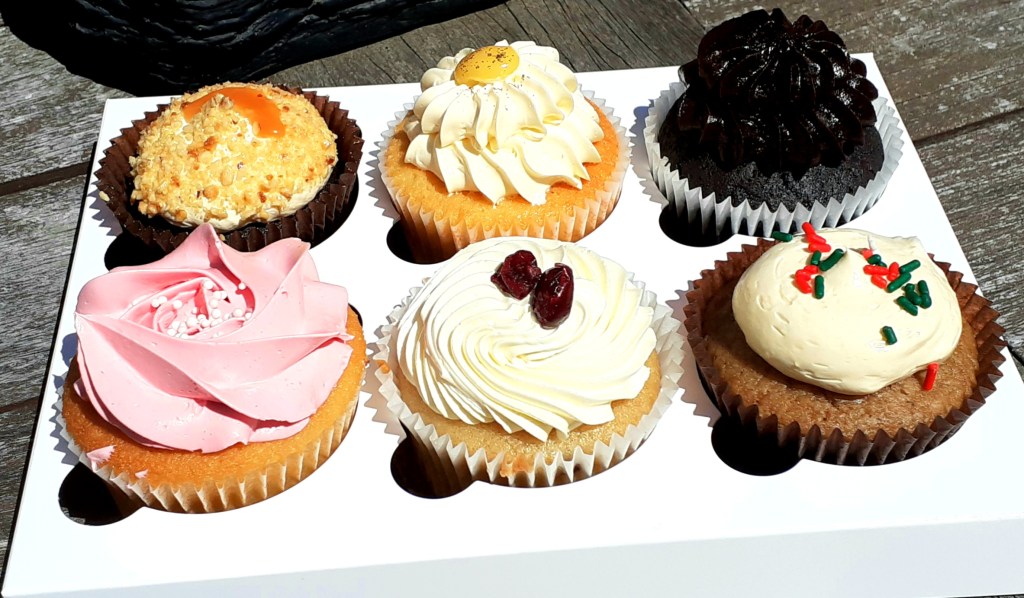
We paid a visit there the next day and were impressed. My photos show some of the cakes available in the shop. They are all baked on the premises here in Watsonia, a suburb of Melbourne.

Here is the selection we chose with our gift voucher. We were very satisfied.

You see, despite the best of intentions, things just sometimes go wrong, and it really isn’t worth getting worked up about it. Most things can be resolved through prompt, effective service. Nearly everything can be made better with cake.

Even the little buddha in the apartment’s back garden seemed to approve.

So there you are – for Christmas time, a story to warm the heart. Even if it didn’t warm our kitchen.

This coming week, they’re forecasting temperatures rising to around 29C as we move out by the beach on Mornington Peninsula, where we’ll be joined by a wider group of family and friends in the lead-up to our Australian Christmas. Time for a feelgood song! Here’s Walking on Sunshine by Katrina & The Waves.

Categories
Mains Recipes

Parmesan Kohlrabi Steaks

Kohlrabi is a great vegetable to cook with. It has a texture that’s been described as a cross between a turnip and a water chestnut, which sounds about right.

Quite often you will see it in recipes that treat it like the poor relation – consigned to the margins of a meal, as a side dish, or have it grated into a salad along with other ingredients.

I felt it deserved its place in the spotlight, so this dish sees it firmly centre stage (or should that be centre plate?) as the star attraction. The crisp, juicy and crunchy texture it retains when cooked makes it suitable as a main, especially for anyone on a vegetarian, vegan or plant-based diet. I hope you will find it lives up to its billing!

It is actually quite simple to make. Cut a large disc-shaped slice of the kohlrabi that is about 1 – 2cm in thickness from the widest point (the equator, if you know what I mean). Trim off the peel, then cut it into about 6 pieces. Go for irregular shapes – you want each steak to be individual and the whole dish not to look uniform. Also, work in a number of angles and corners – these will crisp and caramelise as they roast.

Briefly place the steaks in a shallow pan with a little oil. Fry each steak on both sides for about 2 – 3 mins, then transfer to a roasting dish and place in the oven, heated to 180C. Let them roast for 30 mins, flipping them over half-way through.

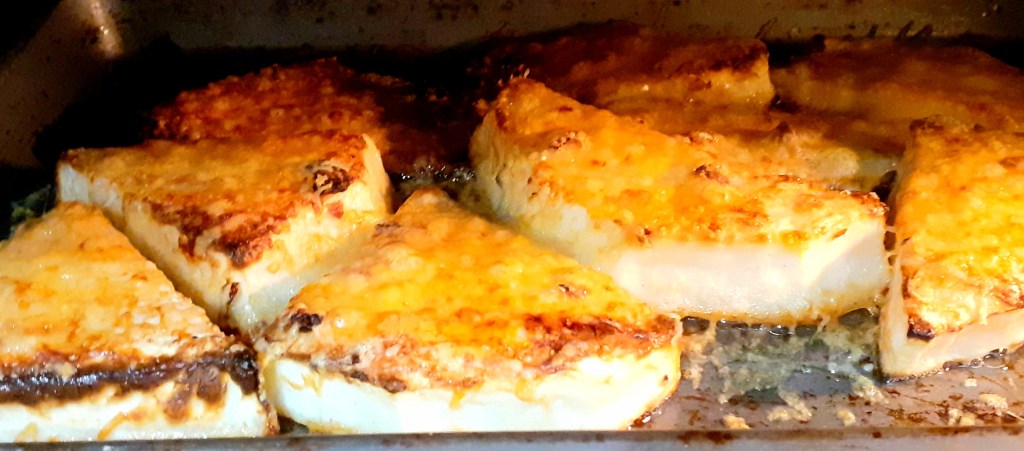
Remove the dish from the oven and grate 40g of parmesan cheese (or vegan alternative if desired) over the steaks. Place back in the oven for a further 10 mins and let the cheese melt. The steaks will be browning up nicely as the photo below shows (I couldn’t resist a sneak peek in the oven to see how they were doing).

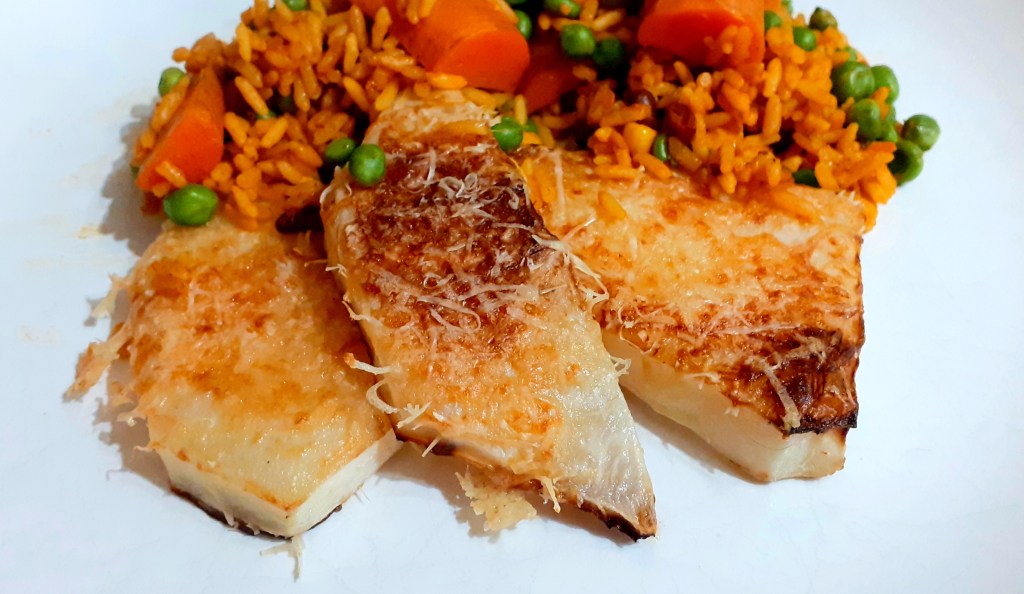
When complete, remove and serve with your choice of accompaniment. In my main photo you can see that I served this with savoury rice and steamed carrots. I served 3 steaks in one serving, making this a meal for 2.

If you like, you can make more servings, or have it again on another occasion, as you will only have used a fraction of that beautiful kohlrabi.

This is an exciting weekend for me, as I am setting off on my travels, spending the next couple of months in Australia, with some time in the Middle-East en route. I’ll be blogging here and tweeting (@differentkitch) along the way, so do please follow me on my journey. I welcome any comments and suggestions on places to visit and eat, food and drink I should try. This lovely track about global travel – Ramblin’ Man from Lemon Jelly – seems particularly appropriate today!

Categories
Mains Recipes

Sweet Potato, Kale and Chorizo Hash

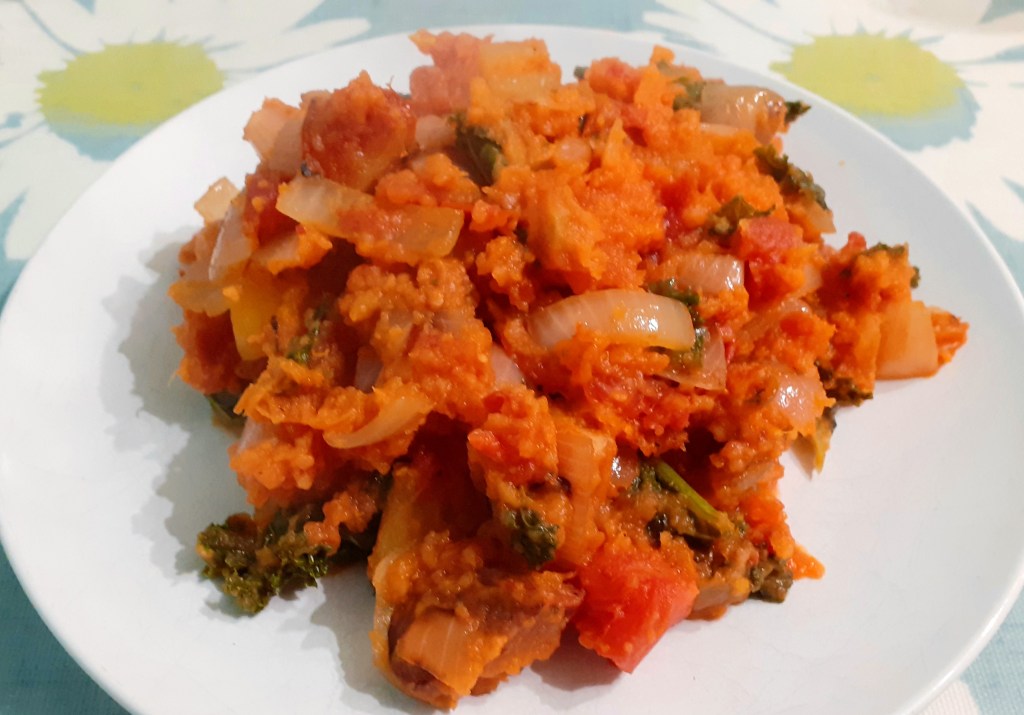
This is a great midweek meal when the nights are closing in, and a dish that I find irresistible! I love the smell and crackle of the chorizo as it sizzles in the pan, and the vivid, contrasting colours. The bright orange of the sweet potato, and freshly picked green kale from the garden, combine to make this autumn on a plate.

Servings

This is a meal for two.

Timings

15 – 20 mins to prepare.

You Will Need

  • 400g sweet potatoes, peeled and chopped into chunks
  • 20g butter
  • about 80g fresh kale (for me this was 8 or 9 leaves)
  • 1 onion
  • 1 red pepper
  • 100g chorizo
  • 400g can of chopped tomatoes

Method

  1. Put the sweet potato chunks in a saucepan and bring to the boil. Reduce to a simmer for 15 mins.
  2. Chop the kale leaves into strips and place in a steamer over the saucepan. They will soften in the steam from the sweet potatoes as they cook.
  3. Separately, in a frying pan, add the onion and red pepper, chopped, along with slices of the chorizo. There is no need to add any oil or spices, as the chorizo will provide all the oil and flavouring you need.
  4. After 5 mins, add the chopped tomatoes to the frying pan and stir in.
  5. When the sweet potato has cooked, drain it and mash with the butter. Add it to the frying pan, along with the steamed kale.
  6. Give it all a good stir in the frying pan and turn up the heat. Turn the mixture over a few times with a broad spatula – you should try to get some parts of the hash crisped and browned. Serve when it has reached a level of charred-ness that suits your tastes!

Customise It!

Stick to the core of sweet potato, kale and chorizo, but beyond this add in other veg you like. Garden peas or sweetcorn would be fine, for example.

You can use any good chorizo sausage. The one I used is a British-made variety from the Cotswold Curer (see photo). I picked this up at Warwick Food Market when I was in the West Midlands for the Commonwealth Games, back in the summer.

Whatever chorizo you use, remember this is a hash – switch up the heat, get that spatula in there and make sections of it nice and crisp by flipping over and over.

Just like my favourite track from Hot Chip – the latest addition to the ADK Spotify Playlist:

Categories
Bakes Desserts Recipes

Coffee and Walnut Cake

It’s a great pleasure to introduce our latest guest post this week on A Different Kitchen. My good friend, and master baker, Kelvin, shares with us his recipe for Coffee and Walnut Cake. He has treated me to a slice of this and I can confirm it is delicious, with a creamy coffee coating and a walnut crunch.

Hi, this is a cake that I have made a few times now. It has always been very popular with my family, and I have developed it to take account of their feedback. In particular, I have added more coffee cream filling to coat the top and sides of the cake (not just the middle), and more walnuts. This latest version was well-received at my wife’s birthday party recently. My little 3 year-old grand-daughter liked it a lot, having a second slice and asking for me to make her next birthday cake. A satisfied customer indeed!

Timings

15 mins to prepare, and around 40 mins to bake.

Servings

I used a 24cm diameter size baking tin, enough for around 16 generous slices.

You Will Need

For the Cake

  • 225g softened butter
  • 225g caster sugar
  • 4 eggs
  • 275g self-raising flour
  • 1 teaspoon (tsp) baking powder
  • 4 tablespoons (tbs) milk
  • 2 tsp vanilla essence
  • 80g walnuts (chopped)
  • 1 tbs instant coffee granules with 1 tbs boiled water

For the Filling

  • 150g softened butter
  • 400g icing sugar (sifted through a mesh sieve)
  • 4tsp milk
  • 2tsp instant coffee granules with 2tsp boiled water
  • 50g walnuts halved for decorating the top of the cake.

Method

For the Cake

  1. Grease cake tin with a thin layer of butter and pre-heat a fan oven to 160C.
  2. Beat the eggs well in a cake bowl until fluffy. Add butter, sugar, finely chopped walnuts, flour, baking powder, milk and vanilla essence. Dissolve the coffee granules in the boiled water, and add to the bowl once cooled. Mix well.
  3. Spread mixture evenly into the cake tin.
  4. Bake until ready in oven for 30/40 mins. Check to make sure it is no longer moist inside.

For the Filling

  1. Beat softened butter and gently add filtered icing sugar (and when all icing sugar added) add milk. Dissolve the coffee granules in 2tsp water, and add when cooled. Beat together until smooth.
  2. After the cake has cooled, cut it into half. Inside one half thinly spread filling. Place other half on top and cover with the remainder of the filling and around the sides (as shown in the photo).  
  3. Finish by decorating halved walnuts over icing on top of cake.
  4. Keep in the fridge to harden the icing.
  5. Take out of the fridge 30 mins before serving.
  6. Slices can be frozen to retain freshness.

My choice of musical track for adding to Kevin’s ADK Playlist is The Sounds of Silence by Simon and Garfunkel. I particularly like this version, recorded live. The wonderful harmonies, the lyrics and the simple accompaniment on acoustic guitar combine to make this a favourite song of mine.

Categories
Mains Recipes

Root Veg Curry

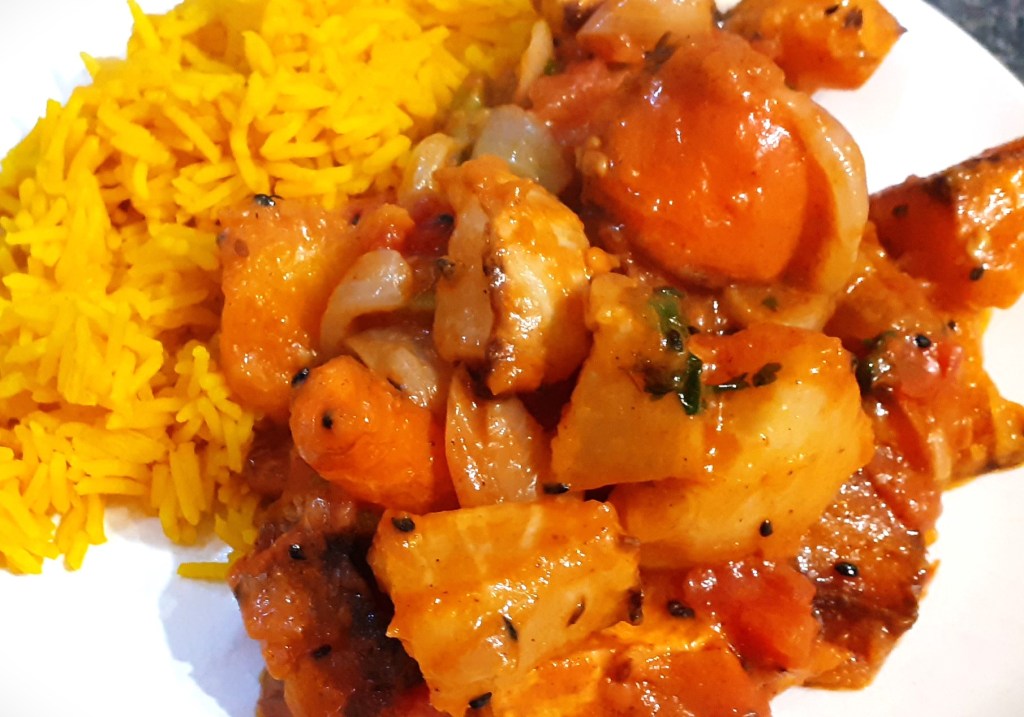
Continuing the recent theme of cooking with autumn vegetables, this dish brings together a variety of seasonal root veg in a subtle yet spicy curry that is suitable for both vegetarians and vegans. My meal, shown in the photo, used celeriac, mooli (or white radish), kohl rabi, carrot and parsnip, though other veg are available!

Servings

This will make enough to serve four.

Timings

10 mins to peel and chop the root veg, and 30 mins to roast. The rest of the prep can be done while the veg is roasting. Allow 10 mins more to combine and finalise.

You Will Need

  • a baking tray full of root vegetables, peeled and chopped into chunks. I used celeriac, mooli (white radish), kohl rabi, carrot and parsnip
  • oil to drizzle
  • 1 medium onion
  • 1 garlic clove, crushed
  • 1 fresh chilli, or 1 tsp chilli powder
  • 1 tsp cumin seeds
  • 1 tsp garam masala
  • 1 tsp nigella seeds
  • 500g passata
  • bunch of fresh coriander
  • 400ml can of coconut milk
  • rice to serve

Method

  1. Drizzle oil over the tray of chunked root veg and roast in the oven at 180C for 30 mins.
  2. While the veg is roasting, heat some oil in a saucepan and toss in the garlic and spices until sizzling. Then add in the onion.
  3. After a few minutes, add in the passata, Hold the bunch of coriander over the pan and, with scissors, cut in a generous amount.
  4. Let the passata and coriander cook for a few minutes.
  5. Add in the coconut milk and stir to combine. Cook for a further 5 – 10 mins. It will reduce slightly to give a thick, spicy sauce.
  6. When the root veg is roasted, scrape it into the saucepan and stir in.
  7. Serve with boiled rice.

Customise it!

Lots of scope to vary the veg. Butternut and other squash will work well in the roasting tray, also some chestnut mushrooms or peppers. Adjust the strength of the chilli and spices to suit your taste.

For musical choice, I have gone for a favourite track of mine, which also serves as an homage to the good people at our local community farm who harvest these lovely root vegetables from the soil – Can You Dig It by The Mock Turtles.