This is a meal which I always enjoy when I visit Central Europe, because they do it very well. So, while here in Ljubljana, classy capital of Slovenia, I just had to look for it on the menus of the local restaurants and bars.
We chose a local restaurant named after a Slovenian poet, Valentin Vodnik, immortalised in a statue at the Central Market nearby. The place specialises in Slovenian cuisine, and featured just the type of dish I was looking for on its menu.
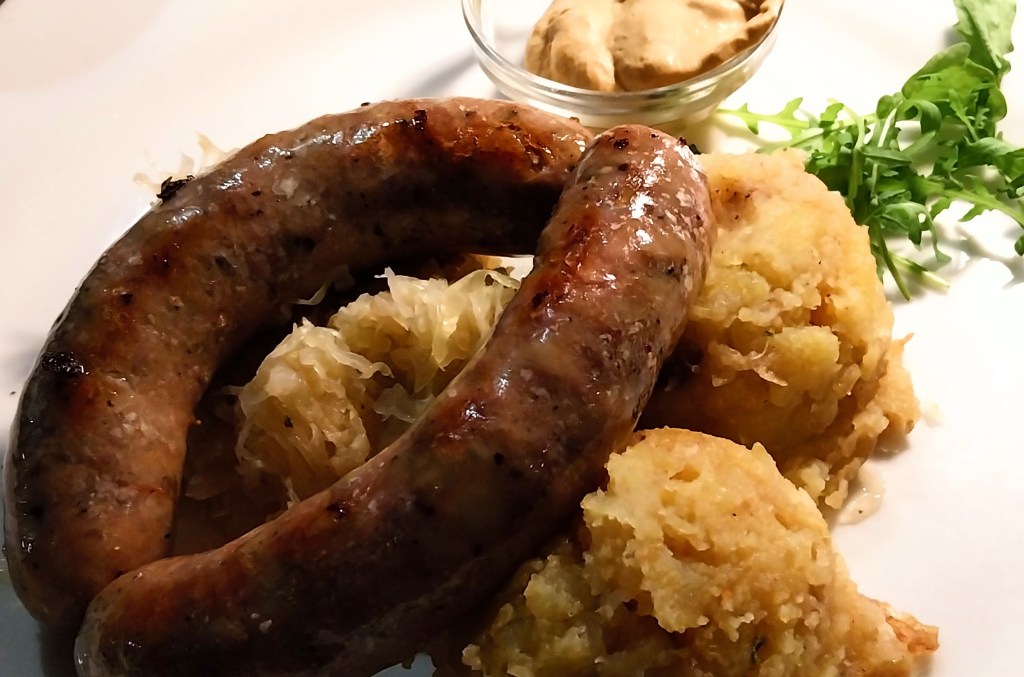
My meal is shown in the photo above. Two meaty, very traditional sausages served with sauerkraut. Sauerkraut is fermented, soured cabbage, and this serving was finely shredded and gently salted. In texture, it is not unlike the thin, fried onions that you might serve with a hot dog, but with a milder taste.
The sweet, to complement the sour, comes in the form of sweetened mustard, which I’ve found is a traditional accompaniment to sausage, or bratwurst, in Germany, Austria, Switzerland and, now, Slovenia.
The plate is completed with potatoes that, miraculously, somehow manage to be both roasted, yet served scooped and mashed (see my photo – don’t ask me how).
There is really only one choice of drink to accompany this meal, and that is a large glass of draft beer from local Slovenian brewer, Union. The glasses bear their name and their logo of the dragon, which is the city emblem of Ljubljana.
A wonder of a meal featuring local Slovenian cuisine, that I thoroughly enjoyed.
All this talk of sauerkraut has reminded me of a great track by this band. I will leave you with Portishead, and Sour Times.
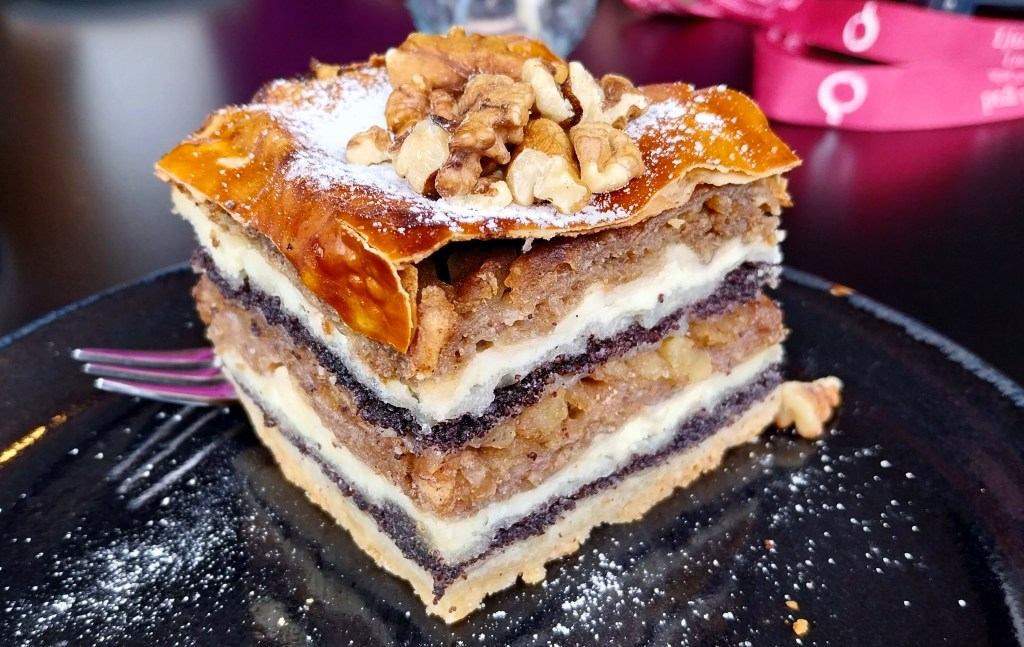
I am in Slovenia in Central Europe for a few days. I’ve been enjoying the Christmas market stalls and bars, and generally getting in the festive mood sampling delights like Gibanica, above.
For the benefit of those who may not know, Slovenia is a European country bordering Austria, Croatia, Hungary and Italy. It has been an independent state since 1991, following the break-up of the former Yugoslavia. Its capital, Ljubljana, is a compact and classy European city, with a medieval castle on a hill, an old town, cobbled squares and ornate bridges crossing a winding river. It is easy to walk around in a day, and can be reached in under three hours from London.
While here, it doesn’t take long to realise that the Slovenians really appreciate their regional food and drink. Gibanica, shown in my main photo above, is a traditional Slovenian cake, made with alternating layers of pastry, spiced apple, cream cheese, poppy seeds and crushed nuts.
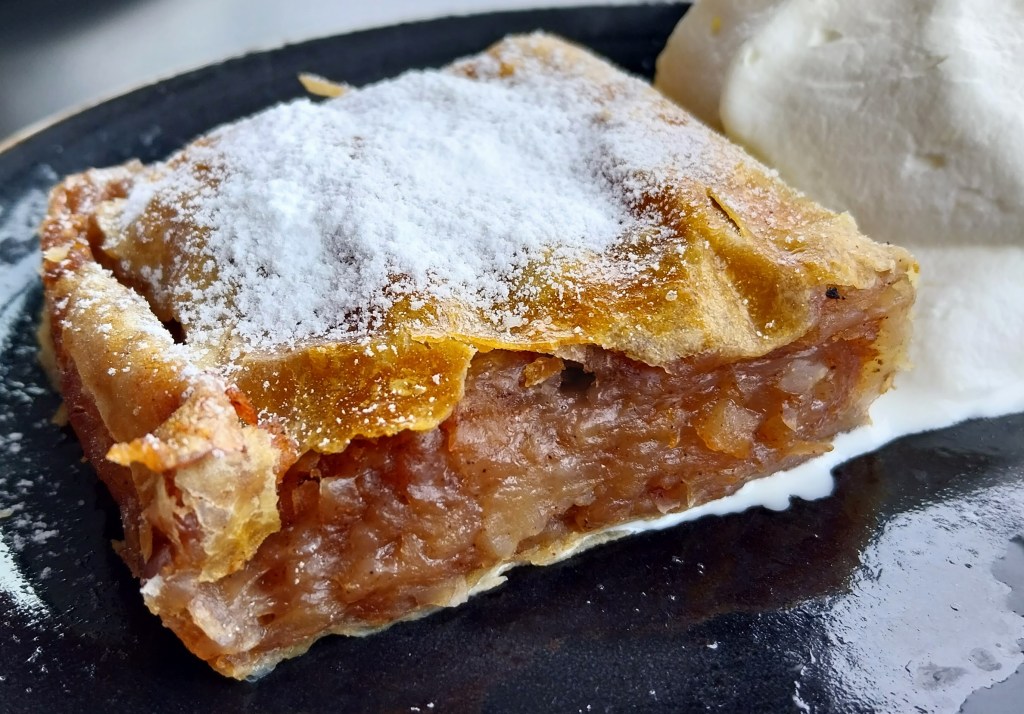
You can also be pretty sure that the Apple Strudel will be good quality – see the portion I enjoyed below.
The cafe where we savoured these is in the courtyard of Ljubljana’s 14th Century Castle, now restored into a cultural centre with cinema, several museums, restaurants and shops. Perched on a hill, it has superb views for miles around. I climbed the many steps of the spiral staircase inside the ancient clock tower, not only to work off the Strudel, but to take advantage of the viewing platform at the top. I was rewarded with this view – the layer of morning cloud lifted to reveal the snowy peaks of the Alps to the north-west.
I expect there will be more to come from Ljubljana before moving on, so keep tuned for future posts.
In the meantime, I now know the answer to the question posed by the Black-Eyed Peas: Where Is the Love? Answer: It’s in sLOVEnia, of course!
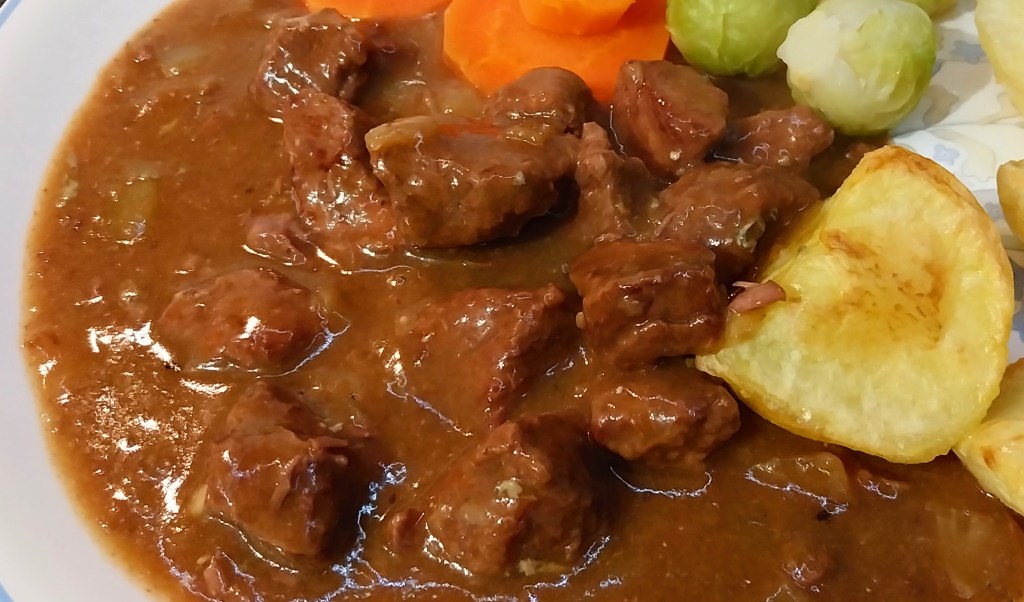
I first tasted the combination of beef and stilton cheese some years ago, as a hot filling in a Cornish Pasty. I thought the taste was divine and have been a fan ever since, enjoying it in casseroles as well as pies. Stilton adds a salty sharpness to the beef juices, making a rich and creamy gravy to coat and complement the tender and succulent beef.
What better dish to make, therefore, as the next in my slow cooker season.
Servings
6 adult servings, alongside your choice of veg.
Timings
20 mins to prepare, and 4 – 5 hours bubbling away in an electric slow cooker.
You Will Need
700g braising beef, cut into chunks
a few spoonfuls of plain flour
salt and pepper
oil
1 large onion
1 clove garlic
1 litre of beef stock
1 large glass of red wine
200g stilton cheese
some cornflour and tap water
Method
Turn on the electric slow cooker to the high setting.
Sprinkle the flour, salt and pepper on a dish, then roll the pieces of beef in it till they are coated all over.
Warm some oil in a frying pan and fry the beef until the pieces are seared all over. Transfer to the slow cooker bowl.
Crush the garlic clove and add to the remaining hot oil in the pan. Chop the onion and add also. Stir until softened, then add to the slow cooker bowl.
Pour the stock and wine into the hot pan, and heat until it is bubbling. Pour over the beef and onions in the slow cooker bowl.
Leave the slow cooker on high for around 30 mins, then reduce to the medium setting. Let it bubble away for 4 – 5 hours.
Using a fork, pull out a piece of beef to check that it is cooked. It should be tender and flake apart when pressed with the fork.
Cut the stilton into pieces and then crumble with your fingers into the slow cooker. Stir gently so that the pieces begin to melt into the gravy, thickening it as they go.
If you wish to make the gravy thicker, mix up a couple of teaspoons of cornflour with the same amount of tap water, and stir to dissolve. Add into the gravy. You can repeat this again if necessary, to reach the thickness you desire.
Serve with your choice of roasted, boiled or steamed veg. Mine in the photo is served with roast potatoes, boiled brussels sprouts and carrots.
Customise It!
If you wish, you can add veg directly into the slow cooker, and they will take on the flavours of the beef gravy as they cook. Root veg, such as carrots, swede, parsnips and celeriac will work well. You could also serve the dish with rice instead of roast potatoes, to soak up all that rich, stilton sauce.
Don’t worry if you do not have an electric slow cooker. You can use a casserole dish instead, and cook it in the oven. Start off with the oven at 180C, then reduce it to 160C at step 6 above.
It’s getting to that time when I receive my playlist from Spotify with all my most-played tracks of the year. This is one that will almost certainly feature, as I’ve listened to it many times. It’s by New York band Yeah Yeah Yeahs: Heads Will Roll.
I enjoy the flavour of toasted oats in baking. I brought a bag of medium oatmeal back from my recent trip to Scotland, and used it to make the flapjacks shown in my photo above.
They are based on a recipe by Paul Hollywood, of Great British Bake-Off fame, and combine the oatmeal, which is quite finely ground, with rolled oats. The theory is that the two different thicknesses of oat adds chewiness. It also helps the flapjack mixture meld together, rather than descending into a collection of crumbly clusters, as flapjacks sometimes have a tendency to do.
Most importantly, they taste great, the golden brown oats mixing in with coconut, ground almonds, raisins and cranberries.
Servings
Makes 16 square flapjacks.
Timings
15 mins to prepare, 25 mins to bake at 180C.
You Will Need
150g medium oatmeal
150g rolled oats
50g desiccated coconut
50g ground almonds
50g dried raisins and cranberries
200g baking spread
75g caster sugar
160g golden syrup
Method
Grease and line a baking tin – the one I used is 20 cm square. Turn on the oven to 180C.
In a bowl, mix together both varieties of oats with the almonds, coconut and dried fruit.
Put the spread, sugar and syrup in a saucepan and warm on the hob until it has dissolved into a sweet, sticky sludge. Pour into the bowl of oats and mix well, till there are no dry ingredients showing.
Scrape into the prepared tin and level the surface. Bake in the oven for 25 mins.
Remove from the oven – the top should be golden and there should be signs of toasting at the edges. Leave to cool in the tin.
While it is cooling, cut with a sharp knife into 16 squares, while still in the tin. When completely cool, you can then lift out each square to serve.
Customise It!
Add other dried fruit, like chopped apricots, in place of some of the raisins and cranberries, or possibly also some ground toasted nuts or seeds. Don’t add more than the overall quantity of 50g however, otherwise the mixture will be more prone to crumble apart.
I said I’d feature a track by The Chats, the Australian punk trio I saw supporting Queens of the Stone Age last week. They are a lot of fun and don’t take themselves that seriously – a cartoon-like Aussie punk version of The Monkees. Check out some of their videos on You Tube. Here they are with Smoko.
This week I’ve spent a few days down in Poole, on the Dorset coast, in connection with a very important event. I will tell you more about it in a moment, though the musically astute of you may be able to guess what it is, given the clue in the title of this post.
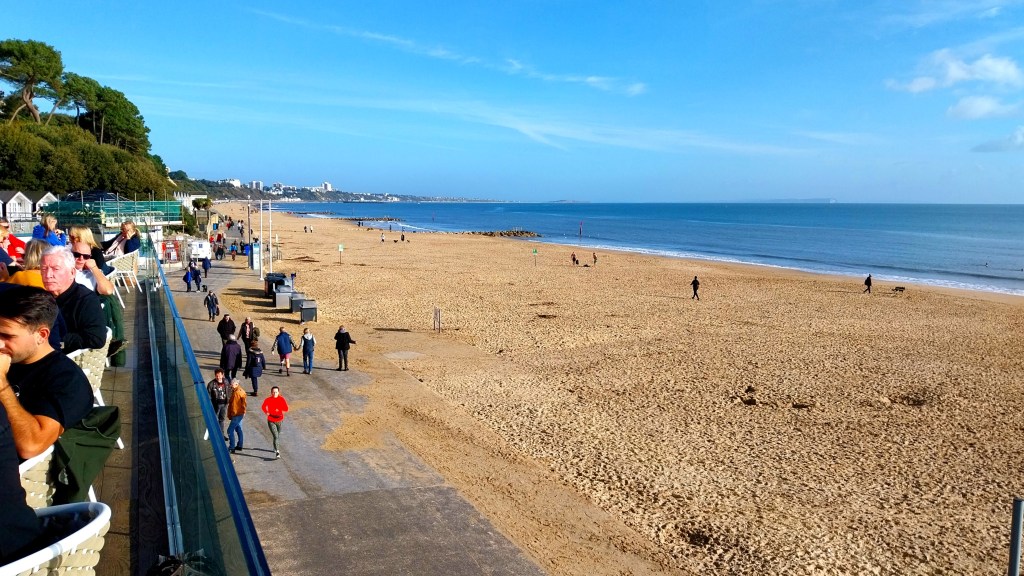
While you’re puzzling on that conundrum, I will tell you about the terrific place we visited for the morning coffees and pastries, shown in my main photo above.
It is a place called Rockwater, on the beach at Branksome Chine. It has been under construction for many months, and opened just recently. There was a cafe here before, but I do not recall it being anywhere near as stylish as this.
As you can see, it is right next to the golden beach. Look carefully and you may even spot some of the sand that the recent Storm Ciaran blew up against its entrance.
We sat on the upstairs terrace, which has terrific views right across the bay, from the hotels of Bournemouth and Hengistbury Head to the east, out to Sandbanks and Old Harry Rocks to the west.
Although it is mid-November, the sun was warm on the terrace. My pumpkin spice latte and croissant went down a treat. We discovered they serve breakfasts here on the terrace, and will definitely be back to sample those.
So have you solved my teaser yet? You may have guessed it is music-related. The main reason for my visit here was to see the California rockers, Queens of the Stone Age at the nearby Bournemouth International Centre. They arrived in the UK last week on this leg of their tour, which they have called The End is Nero. The band have been receiving top, top reviews so far, which I can confirm are fully justified.
I have liked QOTSA a lot for many years, and have now seen them live on four occasions. That puts them level with U2 as the group I have seen in concert the most times.
They played for 1 hour 45 minutes, with a setlist comprising tracks from across all 8 studio albums. They encored with Go With The Flow, and an electrifying version of Song For The Dead.
I also enjoyed the Aussie support act, The Chats, a punk trio from the Sunshine Coast which, incidentally, I will be visiting in Spring 2024. They have an energetic sound and don’t take themselves too seriously. I shall try to feature a track in a future post.
That is it now for live music for me in 2023. It has been a pretty good year, seeing many of my favourite bands including Fatboy Slim, Elton John, Inspiral Carpets, Arctic Monkeys, The Hives, Muse, Royal Blood, Billy Joel, and now QOTSA. I will try hard to equal that line-up in 2024.
In the meantime, here is a track from the 2013 album, …Like Clockwork. Something tells me Josh Homme didn’t write these lyrics about sitting in the sun by a beach, on a roof terrace with a terrific view, munching on a croissant and drinking a pumpkin spice latte. Then again, you never know 🙂
Time for a relaxing break from your busy day? Grab yourself a chamomile tea and settle down for a mindful 5 minutes, taking in this latest post.
Stourhead in Wiltshire is no ordinary landscape garden. We greatly enjoyed a visit there recently, while motorhoming in the west of England.
First opened in the 1740s, it was originally the brainchild of landowner Henry Hoare, who travelled widely and developed a taste for classical architecture. He commissioned the finest artists and designers of the day to create a series of temples, follies and curios that are scattered around the edges of a vast lake.
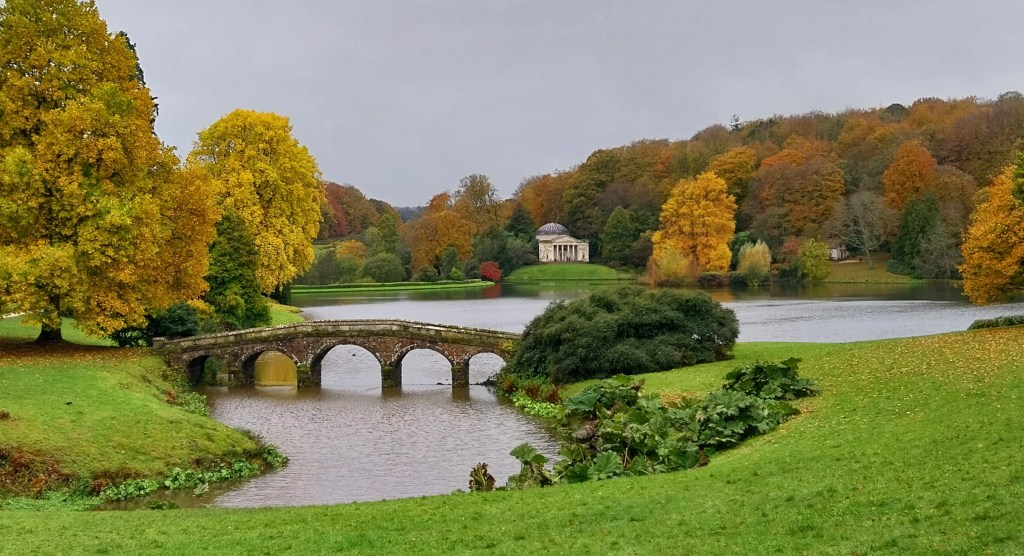
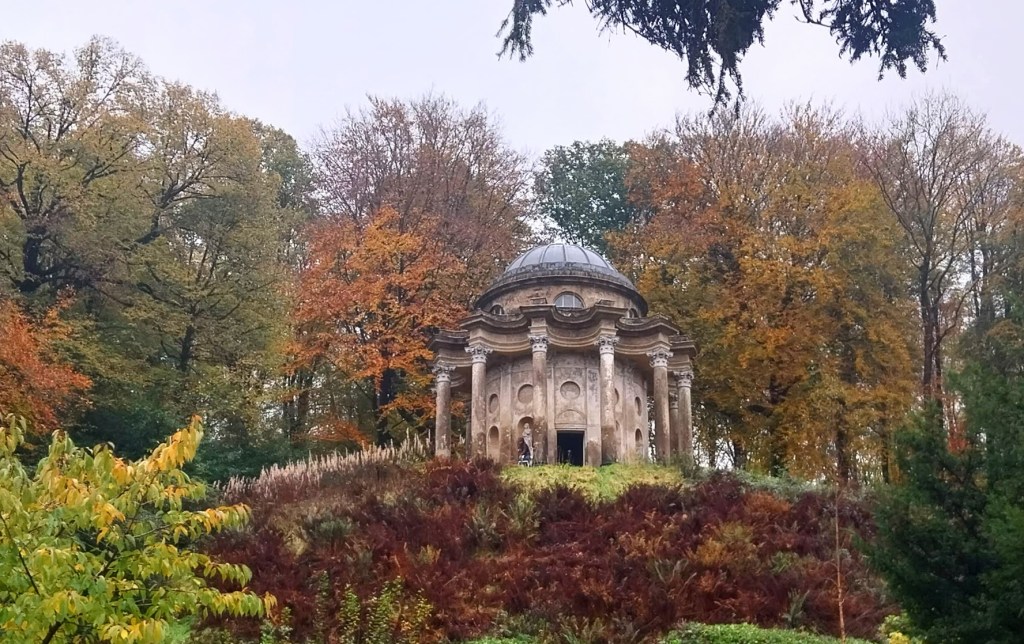
My main photo above shows the Palladian Bridge, with the Pantheon (modelled on the original in Rome) in the distance. My photo below shows the Temple of Apollo.
Stourhead has been impressing visitors for nearly 300 years, and the massive estate is managed nowadays by the National Trust. There is an accessible walk that goes right around the lake, and visitors can enter the idiosyncratic buildings along the way to discover the art and statues they hold. Here is the Temple of Flora looking particularly fine in the afternoon sun.
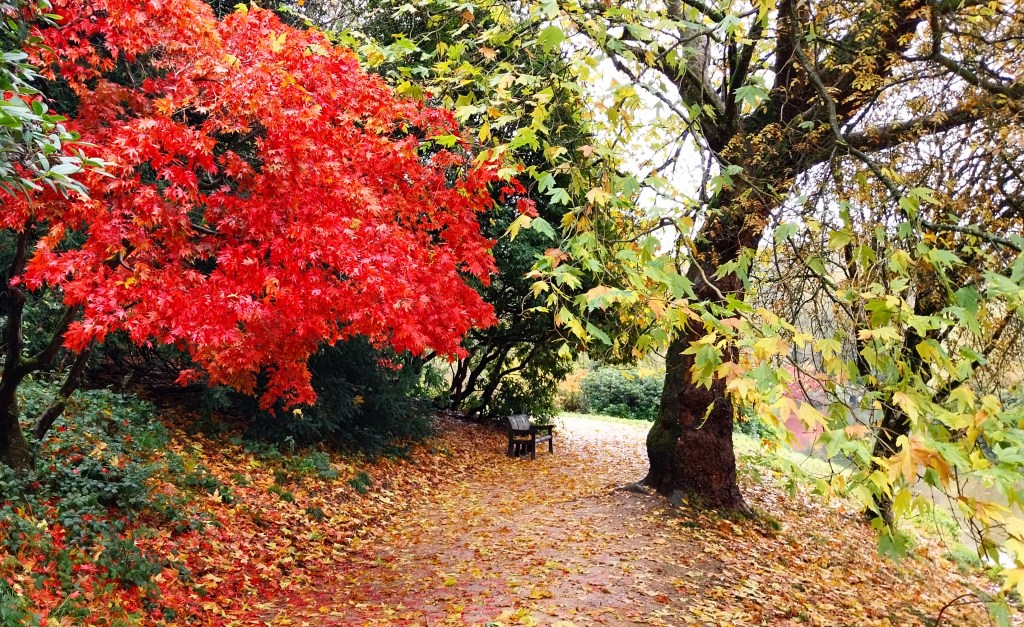
The mature trees and plants change colours with the seasons, meaning there are always new elements to experience and explore, whatever time of year you come. Autumn is special here, when the buildings nestle alongside shades of red, amber and gold.
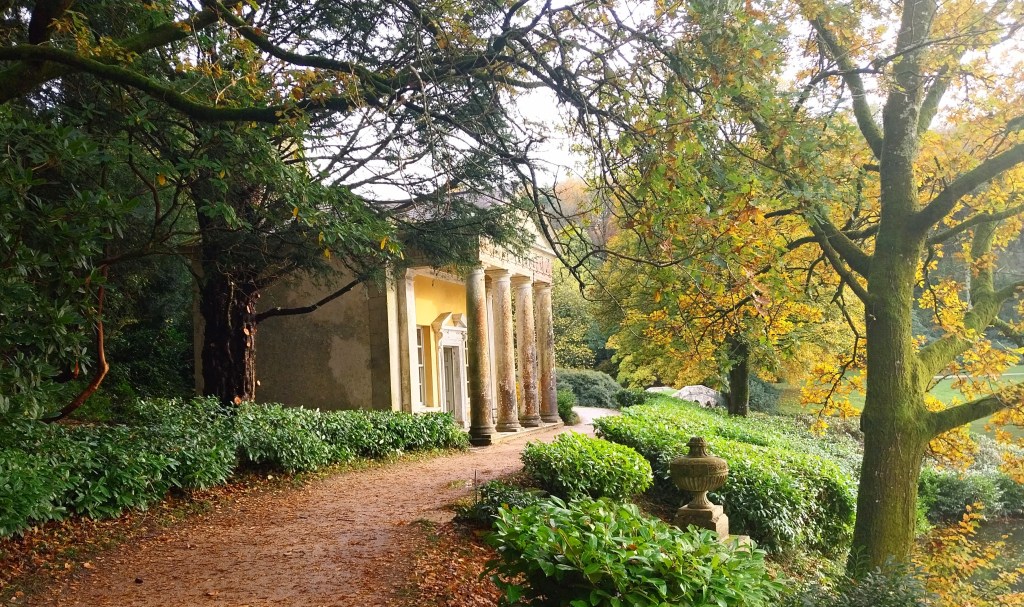
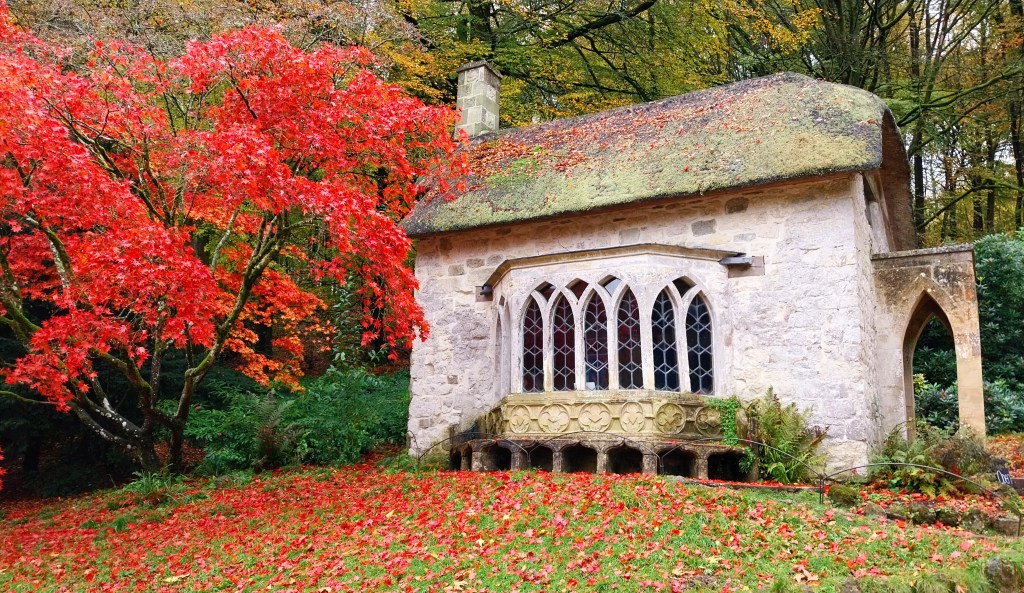
The Gothic Cottage looked splendid with this blazing carpet of autumn leaf fall.
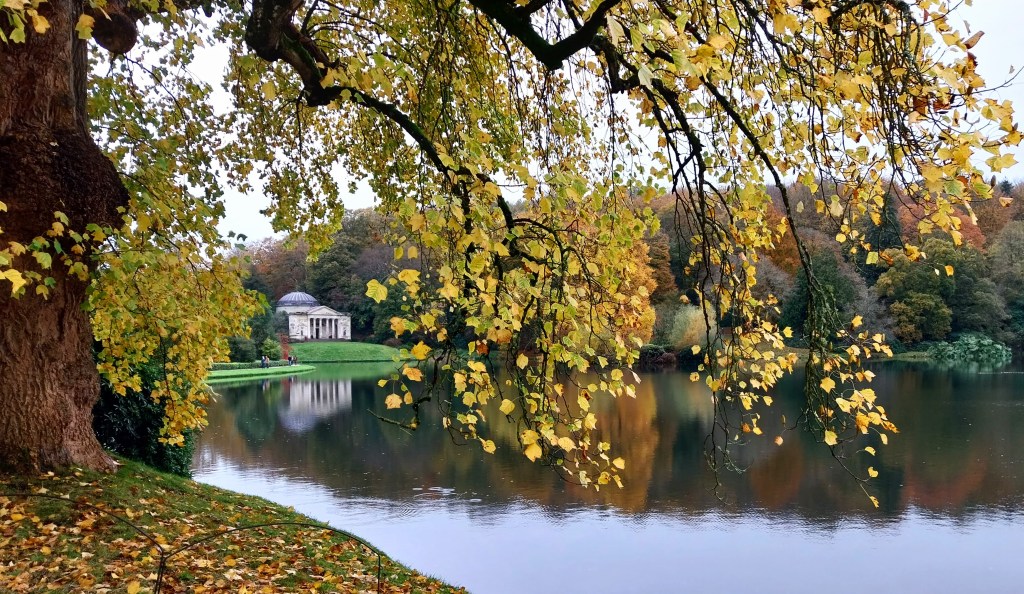
In my next shot, the Pantheon is seen from across the lake. Considerable thought has gone into the planning of the site, to create beautiful, ever-changing views from different perspectives.
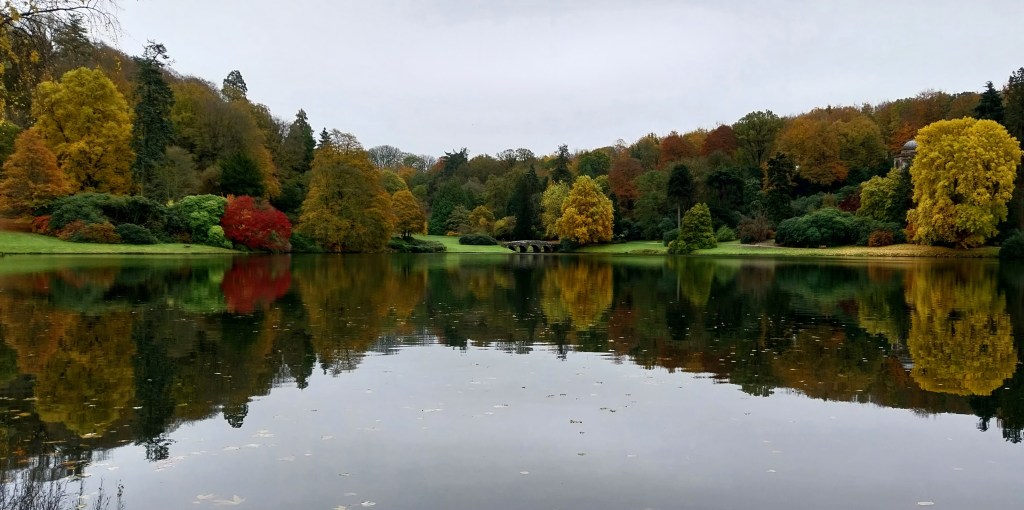
This photo below shows the view across the lake from the window of the Grotto – a little cave built into the lake’s shore. The stillness of the lake made for superb reflections.
The sensory overload even continues into lunchtime…
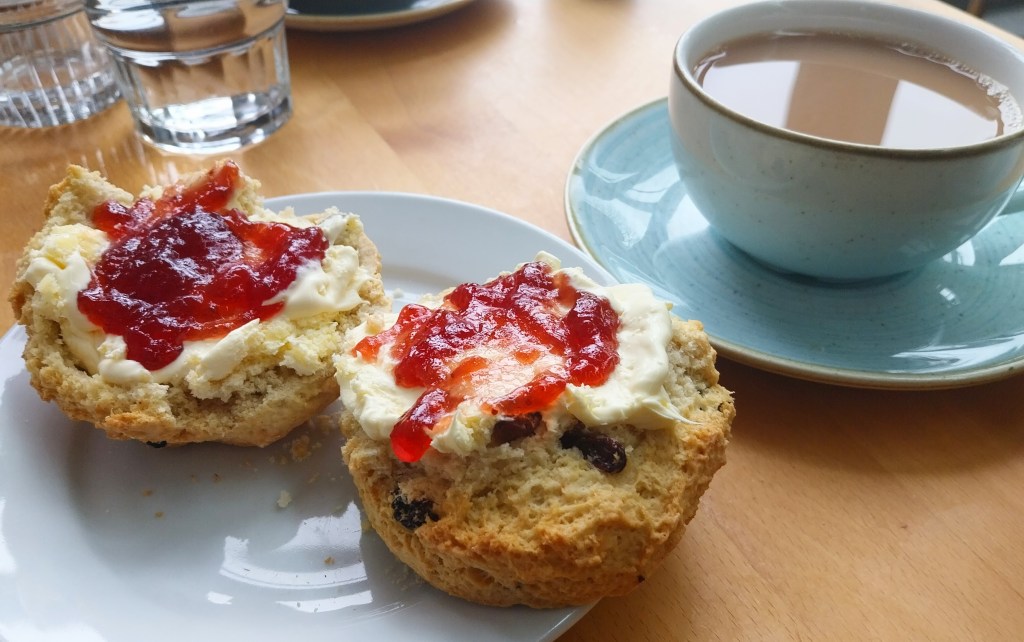
A real highlight of visiting a National Trust property is a visit to the tea room. I opted for a cream tea, pictured below – a freshly baked fruit scone spread with clotted cream from Cornwall and strawberry jam, served of course with a pot of tea. It is a classic combo that is very difficult to beat, and was delicious.
Incidentally, I was reading about a lady who has visited all the National Trust properties in the UK that have a tea room – there are 244 of them – and eaten a scone at each. She has written a blog about them, rating each scone, and produced an overall Top 5. Her top prize went to the one tasted at the Treasurer’s House in York.
244 is a lot of scones, by anyone’s standards. I can only assume she accompanied this pursuit with 244 brisk walks around the grounds of said properties, to burn off all those calories.
My visit to Stourhead really was a feast for all the senses – an 18th Century theme park devoted to mindfulness, if you like. I can’t wait to go back again in Spring, when the trees are in blossom and there will be a totally new colour palate to enjoy.
And another cream tea.
Musically, places like this always make me think of Kate Bush for some reason – probably something to do with classical, romantic England at its finest. So here’s a track by her that is suitably mellow and contemplative: Mrs. Bartolozzi.
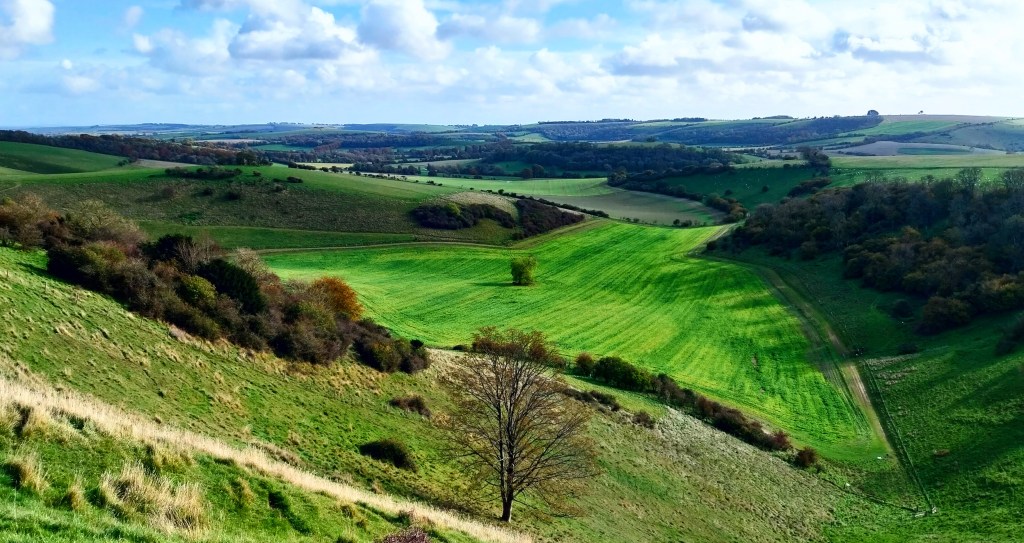
This week we have been away again in the motorhome, enjoying walks and views like this one in my photo above, at Cranborne Chase.
On the edge of England’s west country, it is officially designated an AONB – Area of Outstanding Natural Beauty – and it isn’t difficult to see why. Rolling countryside provides a backdrop for long autumn walks and close-up interaction with wildlife.
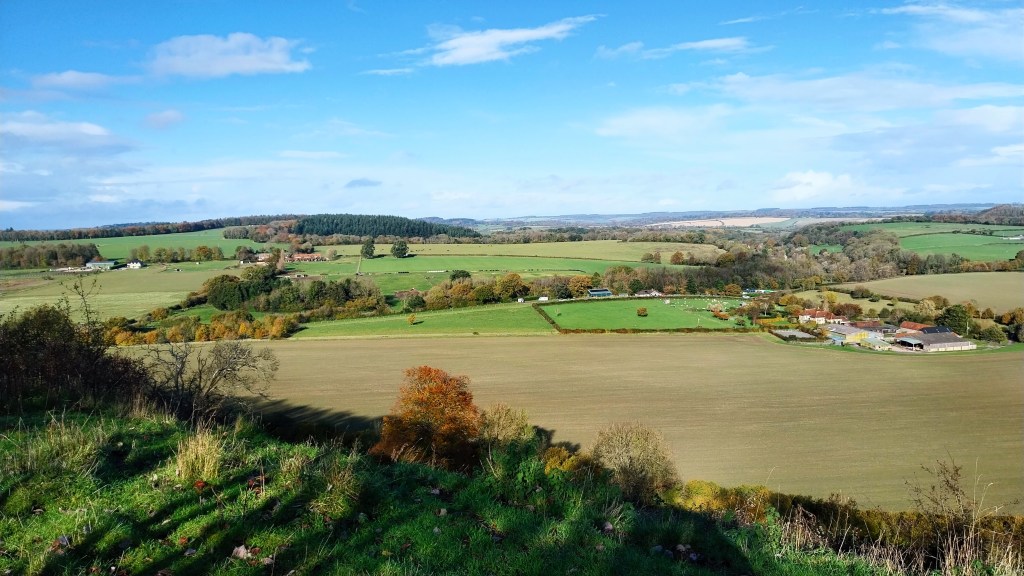
You may think my photo below shows a random wide ranging picture of the English countryside. Well, that’s true – but if you zoom in on the white speck, slap bang in the middle of the shot, you will have located our motorhome. We were on a small campsite that is part of a sheep farm.
I took this shot after hiking high up on the ridge that hosts a long distance footpath from Shaftesbury to Salisbury. It demonstrates how remote we were: just us, our caravanning next door neighbour, and a flock of sheep to the east.
Incidentally, I did try counting the number of sheep, but fell asleep before I could finish 🙂
Cranborne Chase is also an International Dark Sky Reserve, which means that, when night falls, it is bloomin’ dark. There is, literally, no artificial light from anywhere around on this vast landscape, and so the star gazing is first class. There was also the twit-twoo of the local owl to keep us company.
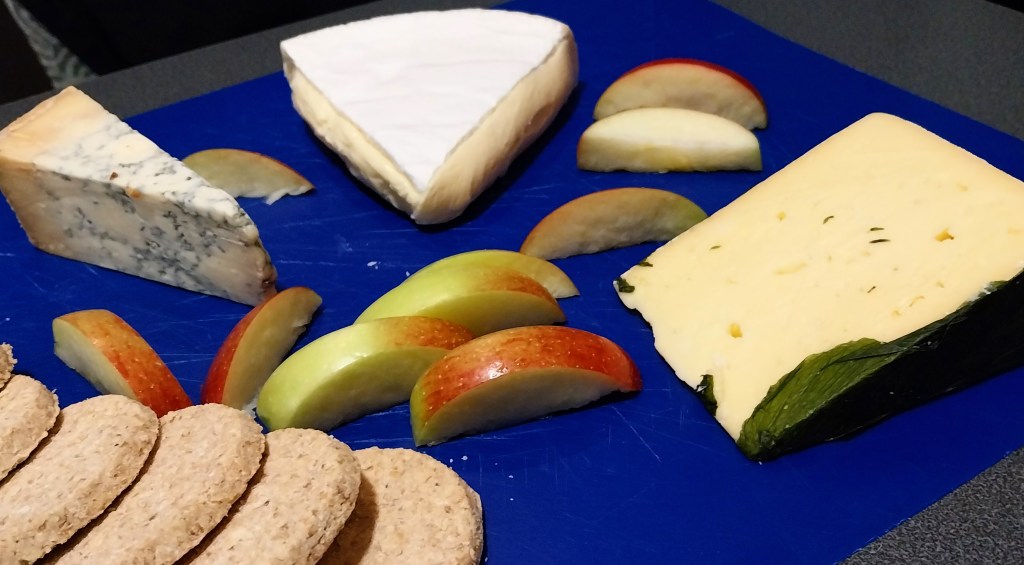
Way out here, the only local shop is a farm shop, doing a great line in west country cheese. Regular followers will know that I require little persuasion to put together a regional cheese board, such as this one below. The best of England’s west country is represented here with (from left to right) Dorset Blue Vinny, Somerset Brie and Garlic Yarg, from Cornwall.
A few years ago I visited the farm in Cornwall where they make Yarg. The garlic variety is hard to come by outside of the west country. They wrap the cheese in leaves from local wild garlic plants, and these infuse it with the flavour and scent of garlic as it ripens.
The oatcakes are from Bath and the apples local.
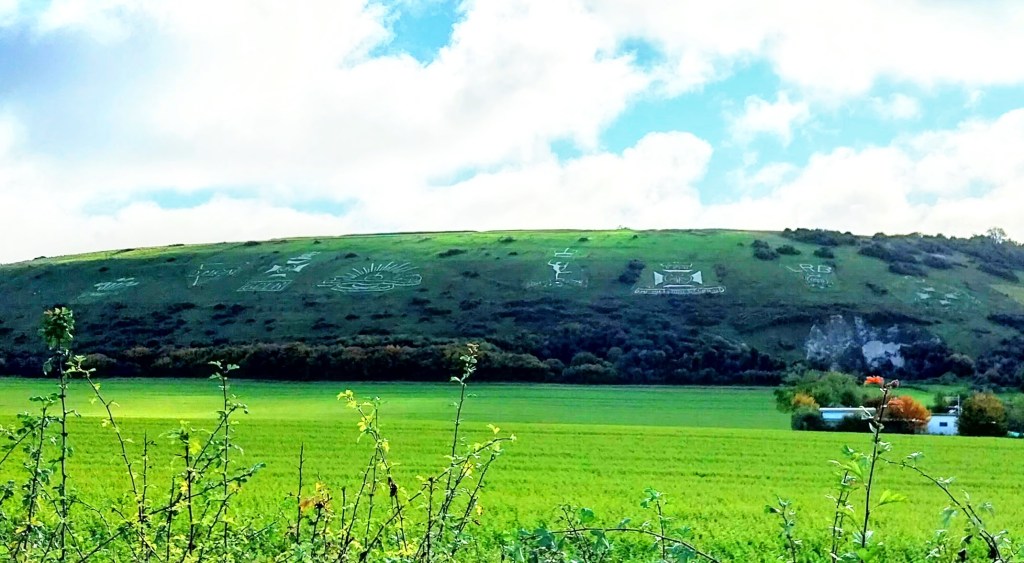
An interesting feature in the landscape is the Fovant Badges. At the time of the First World War, the British Army were stationed here, for final training before travelling over the Channel to the trenches in France. The young soldiers amused themselves (or kept their nerves at bay) by carving large scale versions of their regimental badges into the chalk grassland on the side of local hills. Through careful maintenance and restoration, they are still visible today.
The lady (and sheep farmer) who owned our campsite told me that her father-in-law was one of those young men stationed here, while waiting for the call to fight in what became the Battle of the Somme, where thousands of young soldiers tragically died. On the morning when he was due to travel to France, he required emergency dental treatment, and was excused from going. He went on to live and have a son, that she had been married to for 60 years, and with whom she’d had a family. Ain’t it strange, sometimes, how life works out.
You can find out more, here, about the Fovant Badges.
This weekend is, of course, Armistice Day and Remembrance Sunday, when we honour all those who weren’t quite so fortunate to escape with their lives. I have been wearing my poppy with pride this week, and will leave you with some fittingly inspirational music from Stevie Wonder: Higher Ground.
With the start of the November evenings, I’m declaring the opening of slow cooker season in our household.
The electric slow cooker is a fine invention, in my view. It means I can put the family Sunday dinner together in the morning, and let it spend the afternoon and early evening quietly bubbling away in the corner of the ADK Kitchen, with very little more for me to do. An important benefit of this is that I can then spend the lead-up to dinnertime on the sofa with a cold beer, watching the Premier League on Super Sunday, safe in the knowledge that all prep is taken care of. Get in!
First up is this slow cooked dish combining chicken with Spanish onion, red pepper, tomatoes, spicy chorizo, black olives, stock and Spanish white wine. Left to develop for 4-5 hours, all the flavours will gradually meld together and infuse the chicken. Delicioso!
Servings
4 adult servings.
Timings
20 mins to combine, 4-5 hours to slow cook.
You Will Need
3 chicken breasts
Oil
1 large Spanish onion
1 red pepper
1 whole chorizo sausage
700ml chicken stock
400g tin chopped tomatoes
1 large glass of Spanish white wine
15-20 pitted black olives
A handful of frozen peas
Method
Switch on an electric slow cooker at the hot setting.
Cut the chicken breast into chunks, and fry in oil in a pan until lightly browned all over. Transfer to the slow cooker bowl.
Chop the onion and pepper and fry. Slice the chorizo into discs, then cut each disc in half. Add to the onion and pepper, and after 5 mins, transfer to the slow cooker bowl.
Next into the pan, put the chopped tomatoes, stock and wine. Stir till it all begins to bubble, then add to the slow cooker bowl.
Put the olives and peas directly into the slow cooker bowl and give it all a stir. Place the lid on the slow cooker and turn the setting down to medium. Leave for 4-5 hours.
Serve with plain boiled rice.
Customise It!
If you don’t have an electric slow cooker, you can use a casserole dish. Put it in an oven at 180C and transfer in the ingredients from the frying pan as described above. When all have been added, turn the oven down to 160C, and leave for 4-5 hours.
You can add in other veg as you like – carrots and celery will go well. You can include a garlic clove or spices if you want, though I find the chorizo brings all the garlic, flavouring and colour needed.
Chicken thighs or drumsticks will work well in place of the chopped chicken breast, if you don’t mind eating meat off the bone.
The next track for the ADK Playlist has a Spanish feel, naturally. This band is one of the New York punk and new wave generation that grew out of CBGBs in the mid to late 70s: Mink DeVille with Spanish Stroll.
This autumn warmer of a soup combines seasonal sweet, silky smooth, roasted butternut squash with fiery red chillis. Energy prices being so high these days, a bowl may also save you some money – it gives all the central heating your body needs!
Servings
3 – 4 bowls.
Timings
40 mins – 10 mins to prepare the butternut, and 30 mins for it to roast. The rest of the soup can be made while the veg is roasting.
You Will Need
1 butternut squash, peeled, seeds and pith removed, and cut into chunks
1 red pepper, cut into 7 – 8 pieces
oil
1 clove of garlic, crushed
2tsp grund cumin
1 tsp turmeric, fresh or powdered
1 onion, chopped
2 medium red chillis, chopped
2 sticks celery, chopped
3 – 4 potatoes, peeled and chopped
700ml veg or chicken stock
salt and pepper
Method
Switch the oven on to 180C. Spread the butternut and red pepper pieces on a roasting tray, and drizzle with oil. Place in the oven when up to temp, and leave for 30 mins.
Pour some more oil into a large saucepan and warm on the hob. When the oil is hot, put in the garlic, cumin, turmeric, chillis and onion. Stir and let it cook for a few mins, before adding the celery and potatoes.
Let it all cook for another few mins – the onion should soften, and the celery/potatoes brown a little at the edges.
Pour in the stock and bring to the boil. Reduce and simmer until the butternut and pepper have had their full 30 mins in the oven.
Take the butternut and pepper from the oven – it should all have softened and become a little charred at the edges. Scrape it all into the soup and stir.
Finally, grind it all smooth with a hand blender. The soup should take on a creamy consistency, and orange colour, with red specks, as in my photo above.
Ladle into bowls and serve with freshly baked bread.
Customise It!
If you want to increase the creaminess you could add a swirl of single cream when serving.
Adjust the strength of the chillis to your personal taste – I used medium, but you can revert to mild, or fire up to hot!
A bit like changing their intensity from low to high, I suppose – a cue for me to add Ohio’s the Black Keys to the ADK Playlist. Here’s Lo/Hi.
This time of year always reminds me of an autumn family trip to Montreal in Canada a few years back. One of the places I particularly enjoyed was Atwater Market/Marche Atwater. It is a very large farmers’ market housed in a lovely old art deco building. There you will find all kinds of gourmet food, meat, veg, bread, cheeses and seasonal produce. See my main photo above for this shot I took of pumpkins resting in the autumn sun.
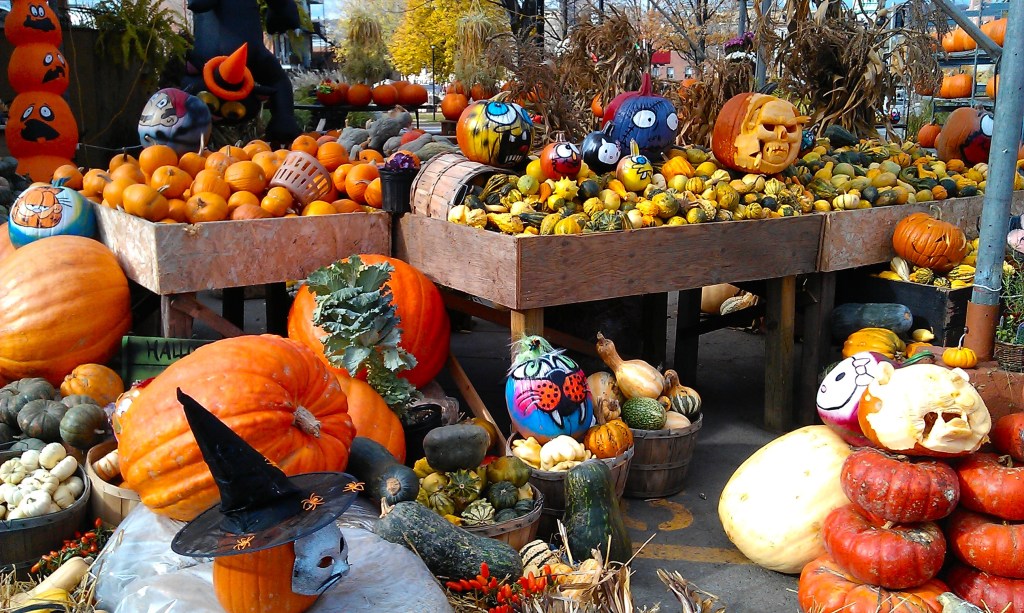
There was a buzz of excitement all around as it was Halloween. The scary, decorated pumpkin display was something else, as my photos below show.
That night in the city, we saw lots of little kids dressed up in cute but scary costumes, being escorted by their parents from house to house to trick or treat, as the darkness was drawing in.
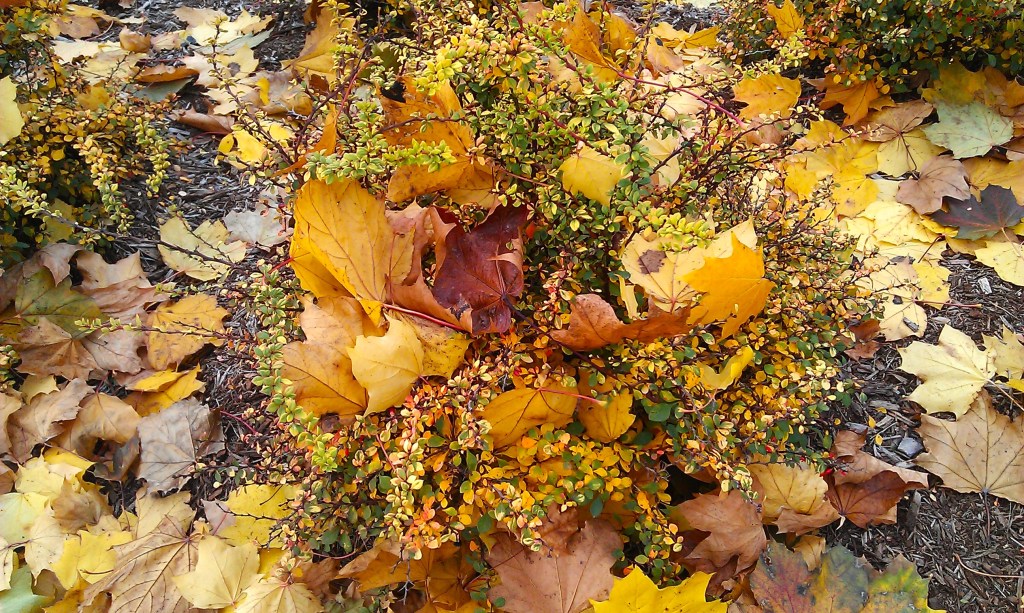
The parks were beautiful as the trees were turning all shades of amber and orange, leaving a golden carpet of fallen leaves on the paths, as my photo below shows.
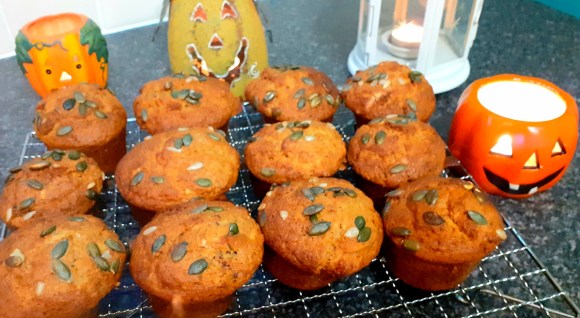
This Halloween I shall be baking one of my favourites – Pumpkin Spice Muffins, shown below. Check out the link for my full recipe and post.
Have a fun evening, whatever you are baking, cooking, eating or drinking. Just remember to have that jack o’lantern burning at the window to keep any spooky spirits at bay. After all, you don’t want end up in the same situation as R. Dean Taylor (also a Canadian), in this chiller thriller of a Motown classic I’m adding to the ADK Playlist: There’s a Ghost in My House.









 A Different Kitchen