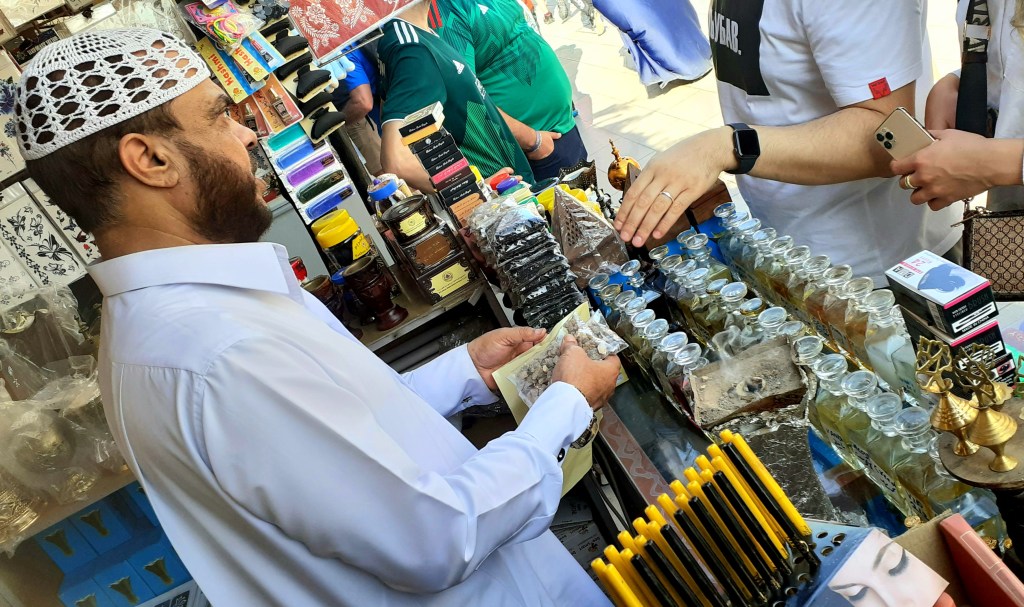
Most of Doha’s development has taken place in the last few decades, funded with the money from the oil industry. The notable exception to this is Souq Waqif, the origin of which dates back to the early 20th Century. Doha was then a small coastal town with an industry in pearl diving. The Souq is where bedouins – the inhabitants of the deserts across Arabia – would come to trade food and textiles with the local people.
By the early 2000s, it was a little worse for wear and, with the focus very much on new development in the city, consideration was being given to its demolition. However, what now seems a very inspired decision was made in favour of renovation. It is now a popular destination for visitors to the city – particularly at the moment with people here from all over the globe for the Football World Cup.
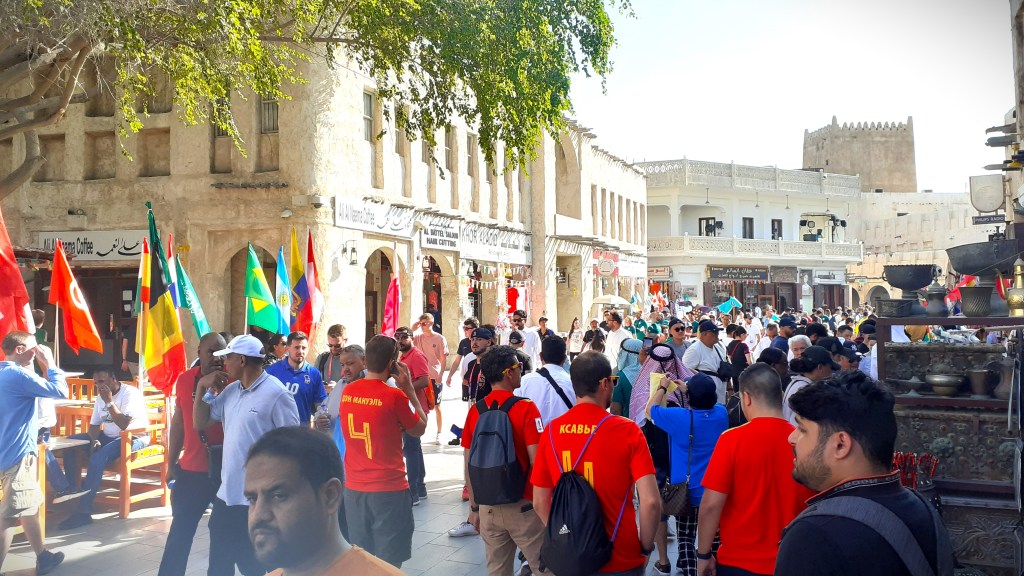
A walk through the Souq is a joy for anyone who recalls the old Arabian Nights legends. The low level sandstone buildings, and narrow, meandering alleyways could be a theme park land, or film set from an Indiana Jones movie, until you remind yourself that this is actually the real thing.
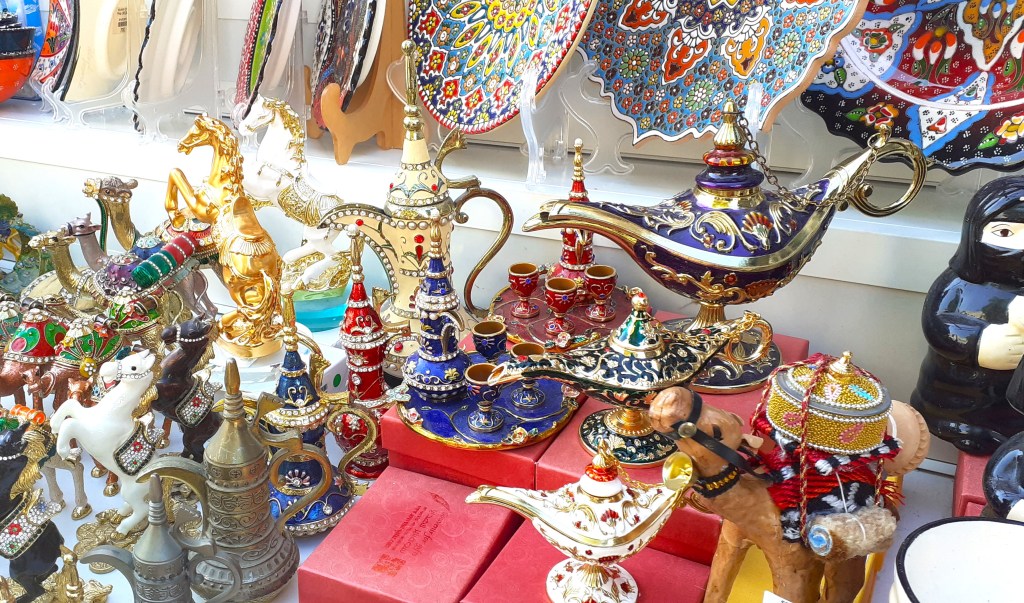
A tiny shop door leads to a cavernous collection of colourful and richly textured carpets. Hey, maybe one of those might fly? Street traders sell bejewelled plates and ornaments. Could a genie be hiding inside one of those lamps, I wonder?
Colourful birds chirp from their cages. You can buy everything you could possibly need for your falconry hobby (including the falcons).
The Souq is a real experience for the senses. Our arrival coincided with the call to prayers echoing from the tower of the nearby mosque, mingling with the hubbub of the crowd and haggling from the stalls. The air is filled with the scents of burning incense and people smoking from the sheesha pipes at the pavement cafes. Then there are the aromas and colours from the spice market.
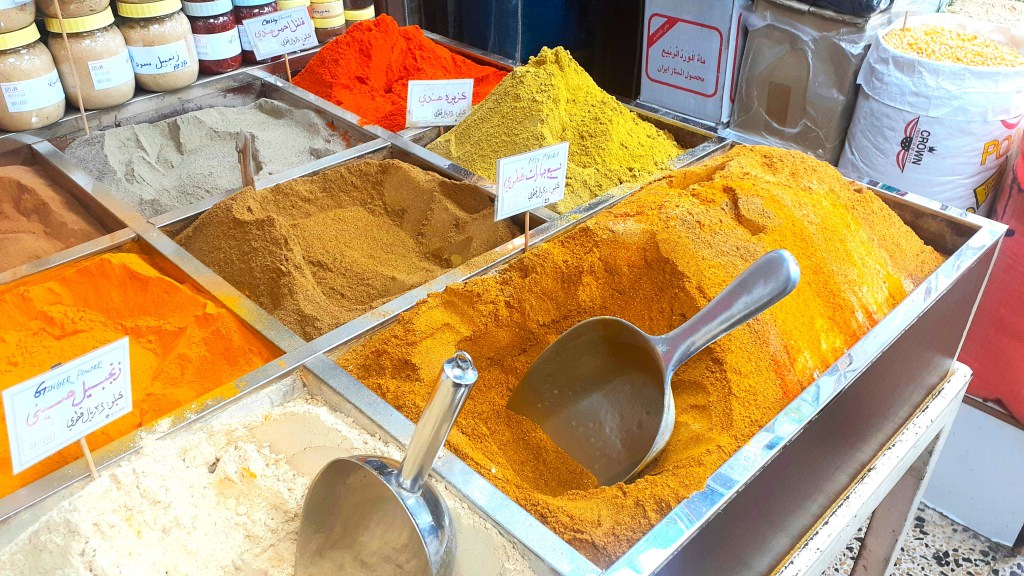
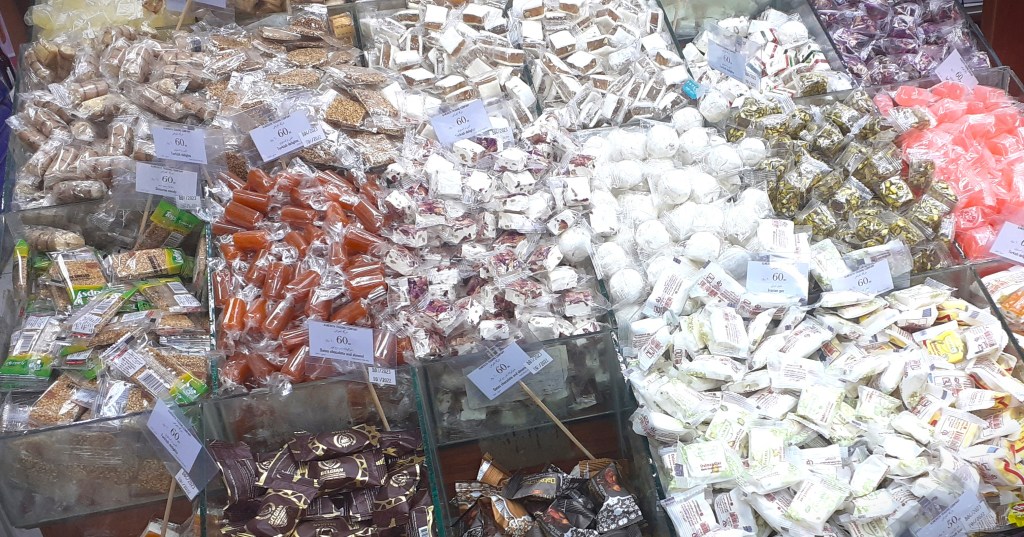
I had read about the spice market before coming here, and was looking forward to a visit. It is a whole subset of the Souq, with more shops than it seems possible could be sustained, selling every spice imaginable, along with nuts, dried fruits, seeds, loose tea and local sweets. The produce is mostly sourced from across the Middle East and Asia.
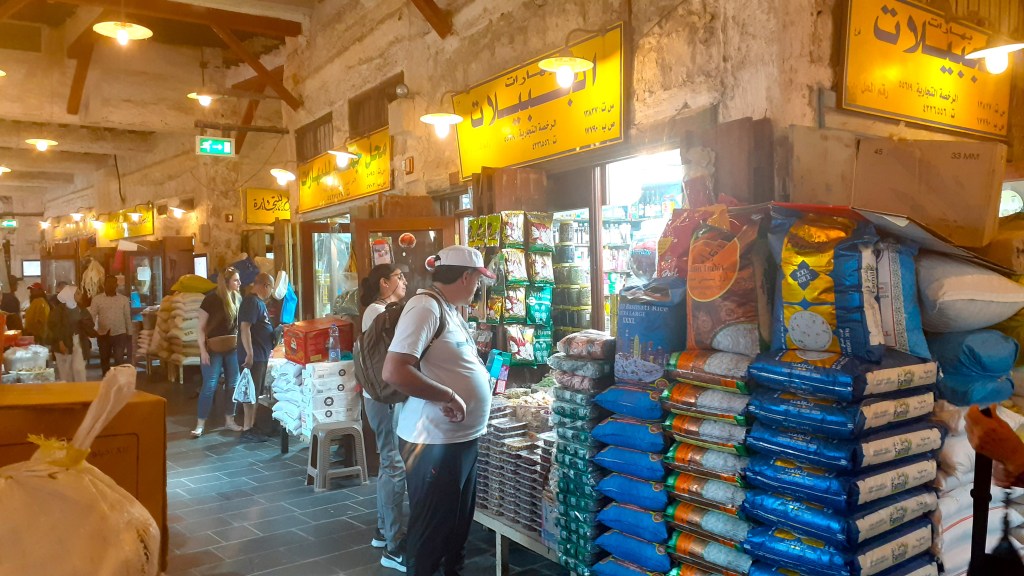
Everything is sold loose, so that you can buy as much or as little as you wish. The photos that follow give some impression.
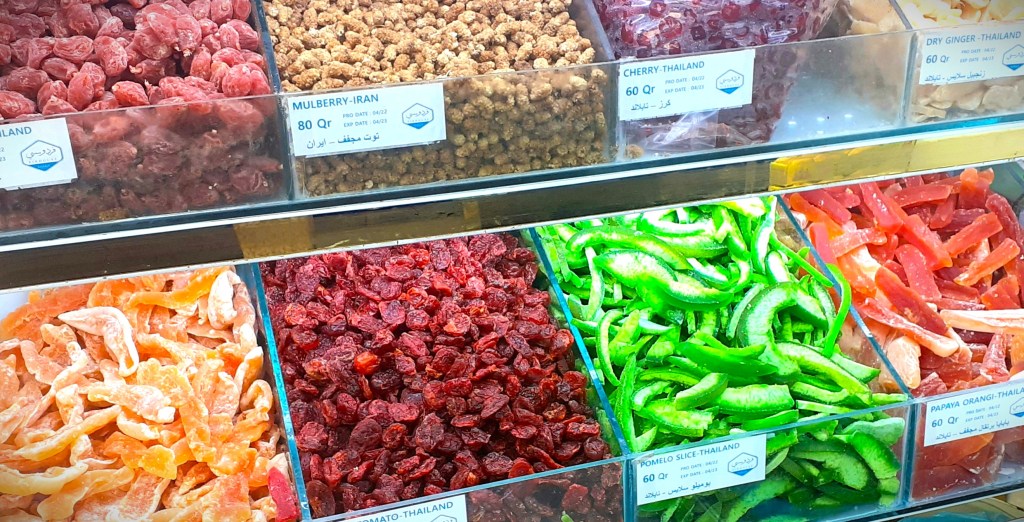
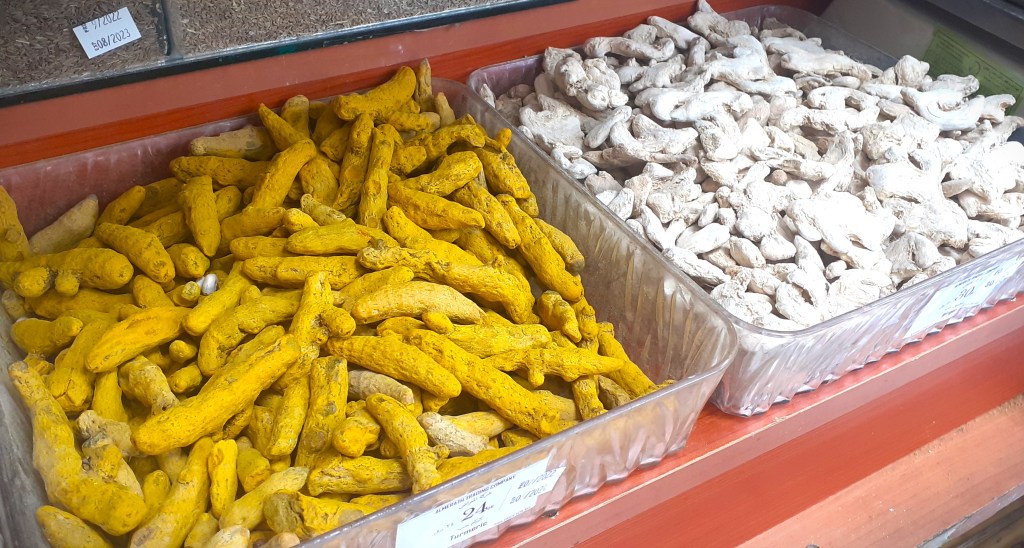
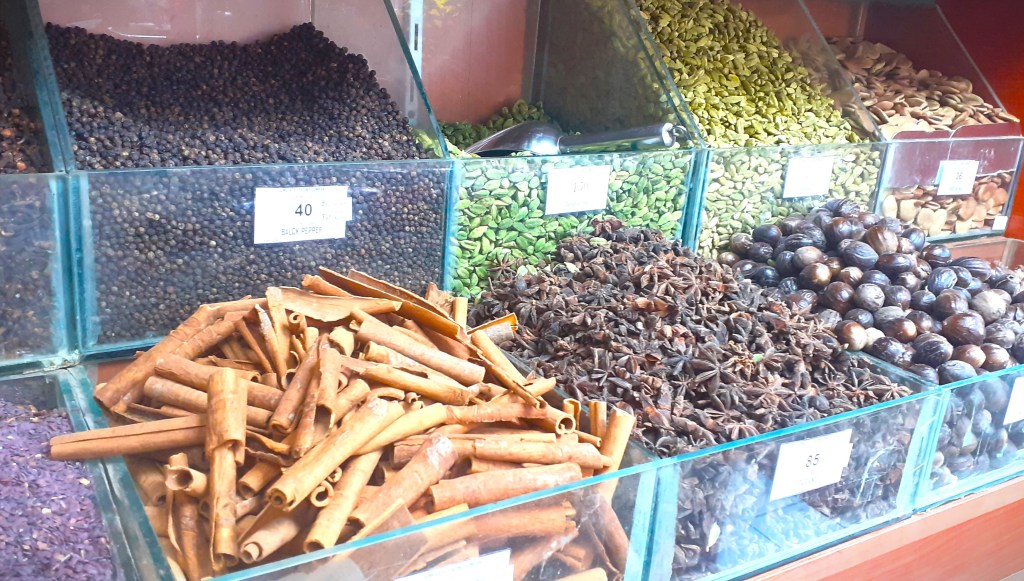
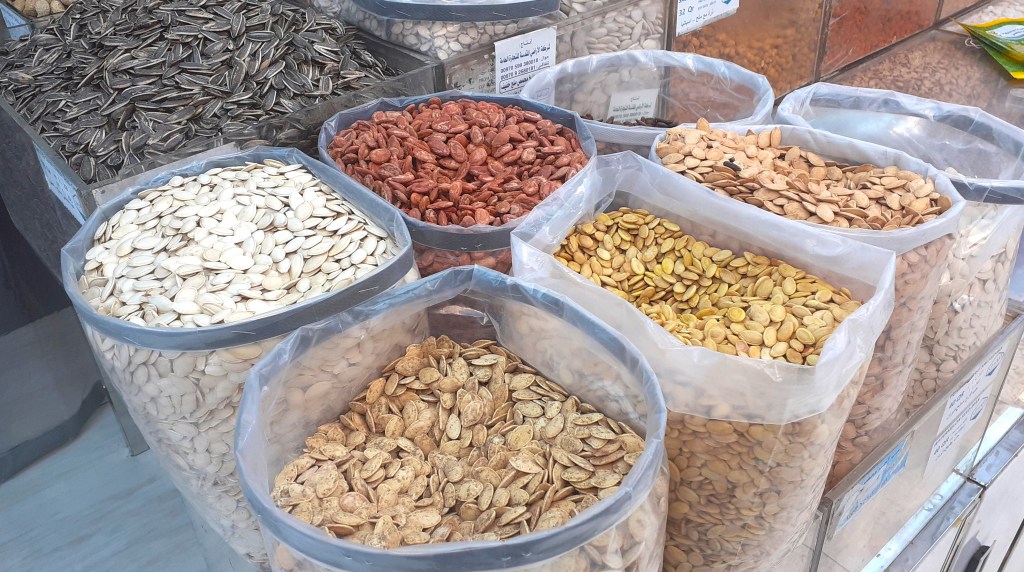
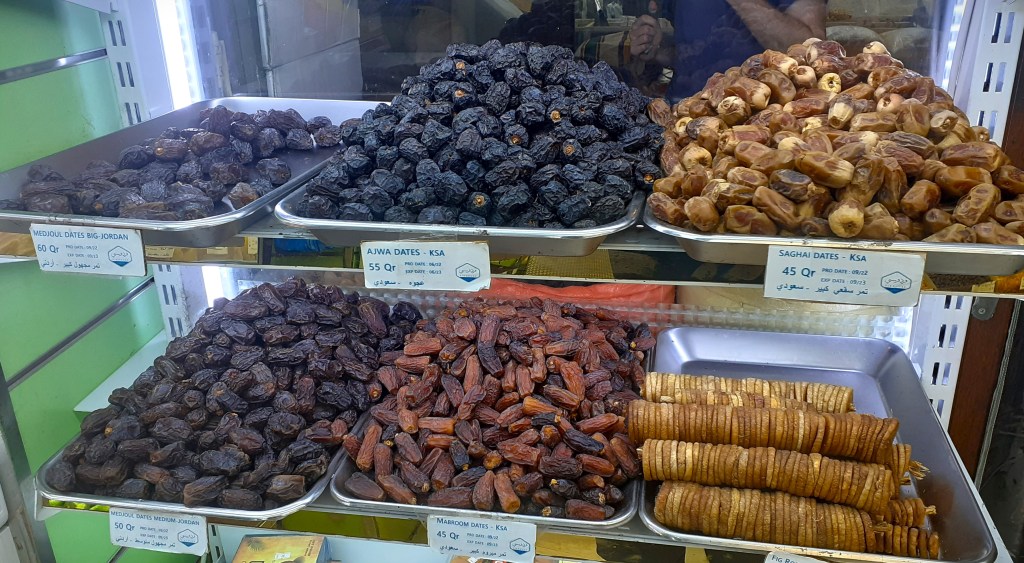
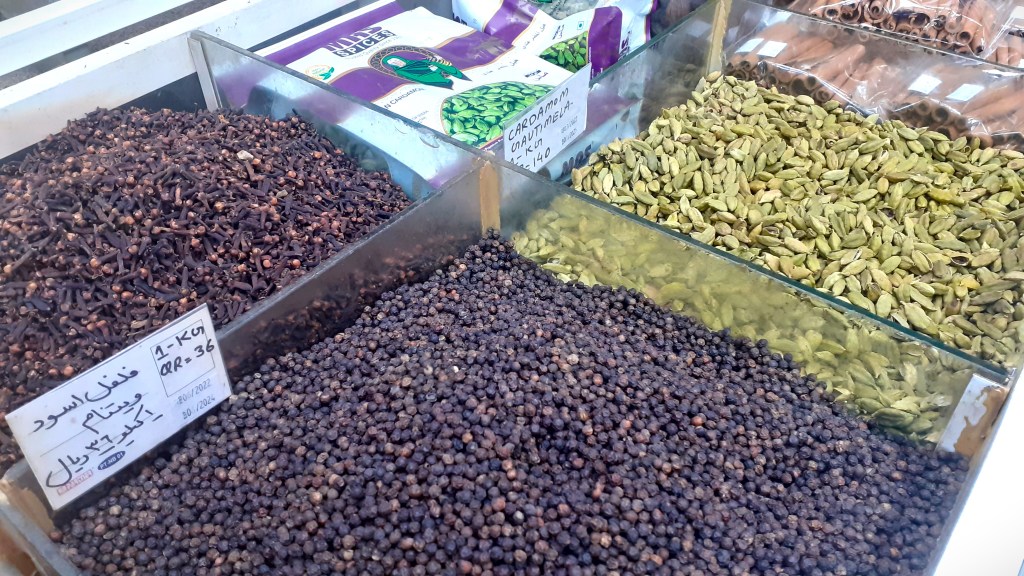
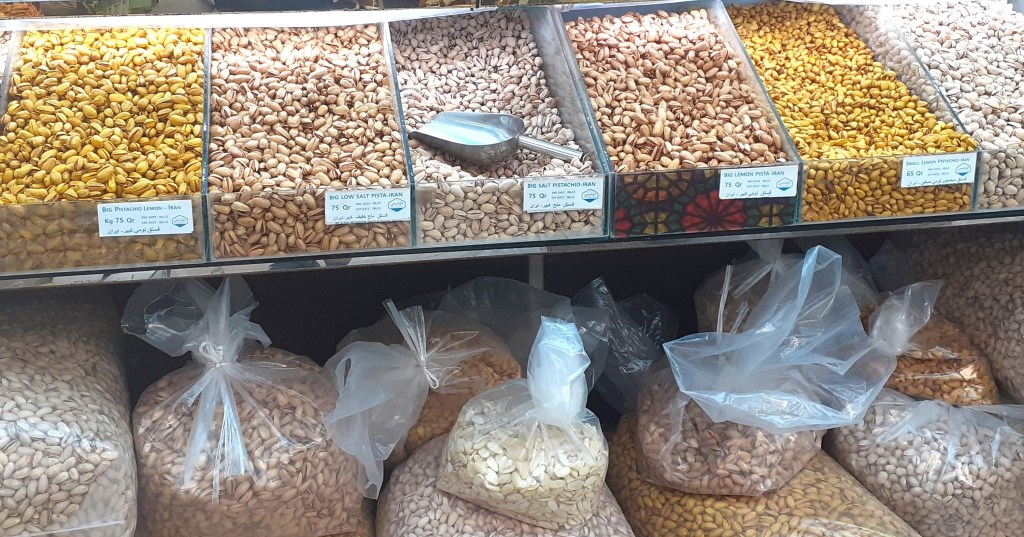
It is also very reasonably priced. I bought about 300g of Qatari spices – a local mix of 9 different spices – for 3 QAR, working out about 60p (or under 1 US Dollar). I also bought some loose green tea from Iran.
We chose a pick and mix bag of local sweets to eat as we walked around – mostly comprising nougat, nuts, dates and often with bitter fruit jelly or rose petal coatings.
As regular followers will know, the Middle East is a stop for me on the way to spending some time in Australia. A plan is developing in my head to marinade chicken pieces in the Qatari spices mixed with yoghurt, and barbecue them on skewers for our family and guests on Christmas Day in the sun. Future posts will tell if that comes off!
As for musical choice, I was astounded to realise recently that one of my favourite all-time bands, Siouxsie and the Banshees, have yet to appear on the ADK Spotify Playlist. With this post, however, your time has come, Sioux. Cue Arabian Knights.
 A Different Kitchen