Categories
Bakes Blog

VE Day 80 Scones

This week we’ve seen lots of events taking place across the UK, commemorating the 80th Anniversary of VE Day. VE Day is the day on 8th May 1945 when the Allied Nations’ Victory in Europe was confirmed, marking the end of World War Two across the continent.

The King, Queen and Royal Family have led the way, ensuring that the sacrifice made by so many is remembered. We’ve had the sharing of personal memories of veteran survivors in this week’s media, the lighting of beacons and special services in churches and cathedrals. There have been some timely messages, reminding the modern world that peace is hard won and should never be taken for granted.
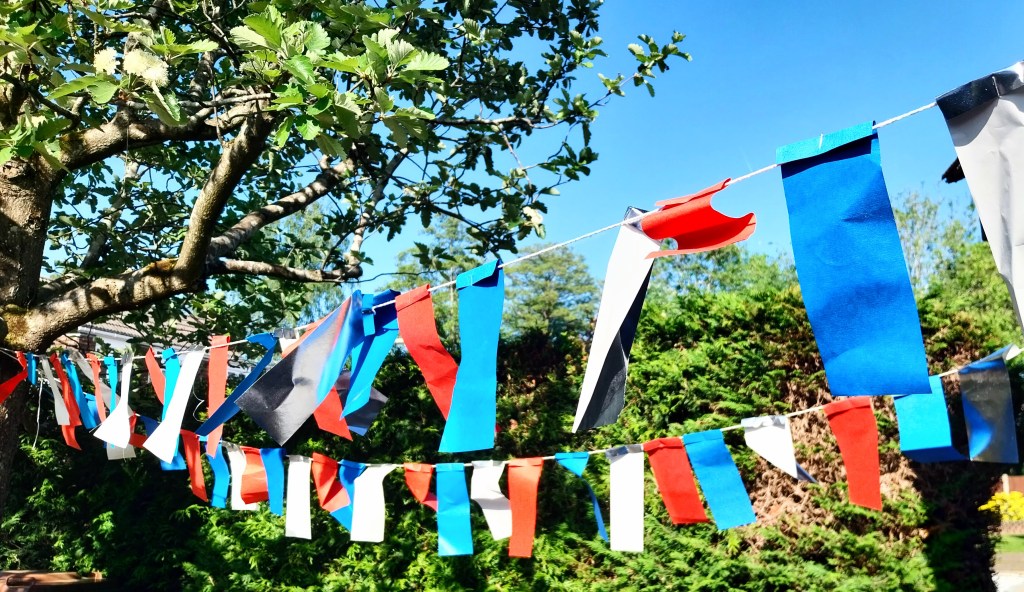
The nation has been encouraged to join in through organising street and garden parties locally. Our local street party was well-attended, with lots of houses and gardens decorated with red, white and blue bunting, glinting in the early summer sun.

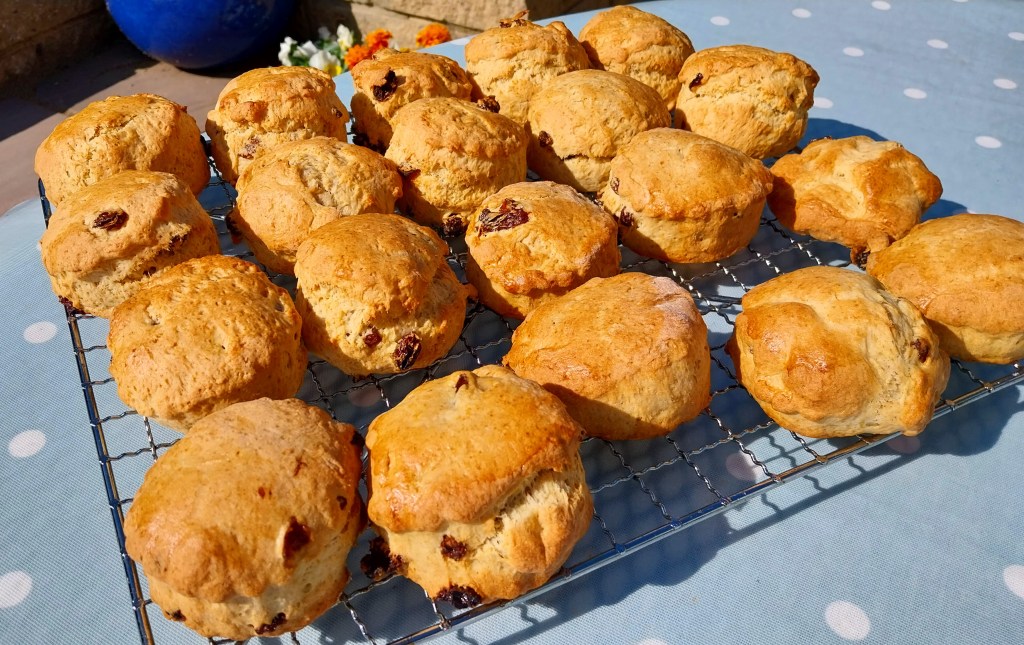
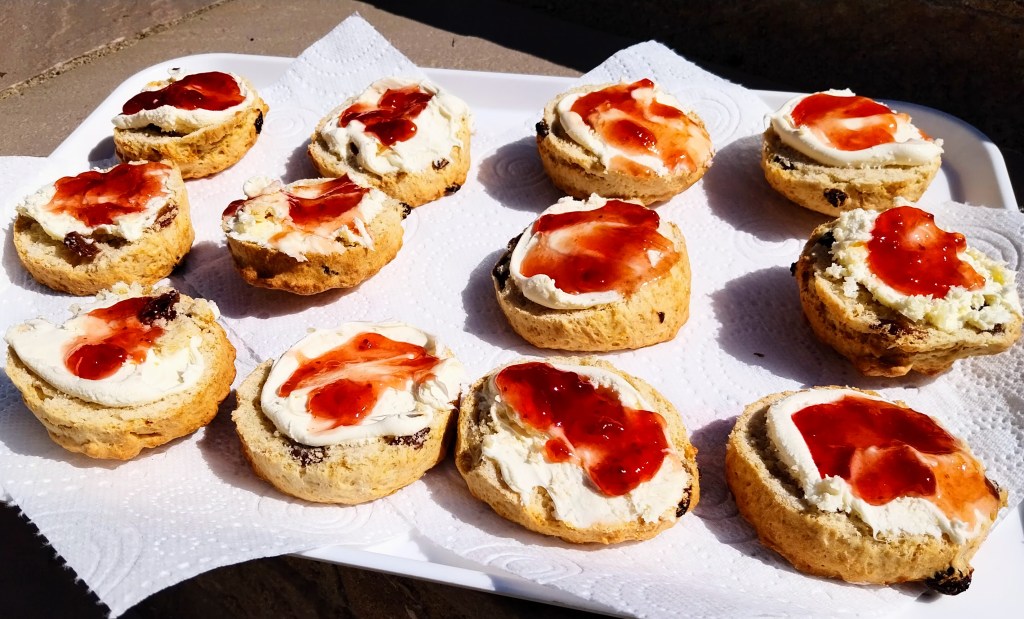
My contribution was some home-made scones, halved and topped with Cornish clotted cream and strawberry jam. The recipe I used is one of my stand-bys, already posted here on A Different Kitchen from a previous street party celebration, to mark the Coronation of our new King in May 2023: see Coronation Scones.

I’m pleased to say the scones went down well with the neighbours. In Britain, it seems we can always rely on the power of a large pot of tea and some home-made scones to bring communities together 🙂 .
I was chatting to an older gent who actually remembers VE Day – he was 4 years old in 1945 and has a vivid recollection of all the children in the neighbourhood sitting down together for some party food and drink. He said there were street parties everywhere. After going up to bed, he watched from the upstairs window as the adults carried on into the evening. It is difficult nowadays for us to imagine how much of a relief it must have been, to have finally brought an end to the bombings, the blackouts, and the long years of suffering and hardship of War.

Is VE Day being marked where you are? If so, in what way? I’ll be really interested to hear.

Here are Elbow, all the way from Manchester, with One Day Like This.
Categories
Blog Desserts

Stonehenge in the Spring

The clocks spring forward one hour this weekend into British Summer Time, and we have just had the Spring Equinox. Yes, it’s full speed ahead now towards sunshine, holidays and barbecues.

Time to bring the motorhome out of winterisation, therefore, and head off down to the west country. It’s turned out to be a pleasant few days experiencing the very old, and eating the very sweet!

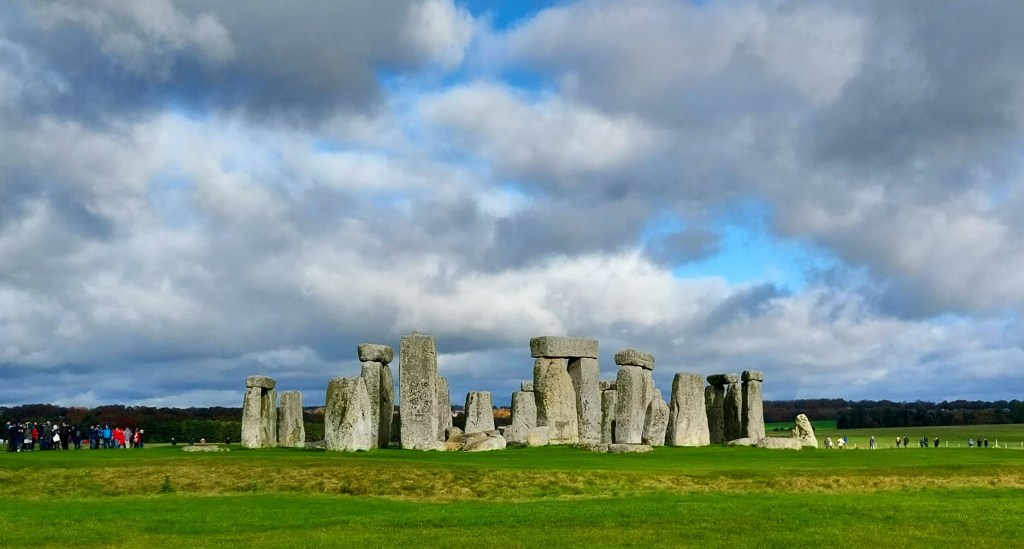
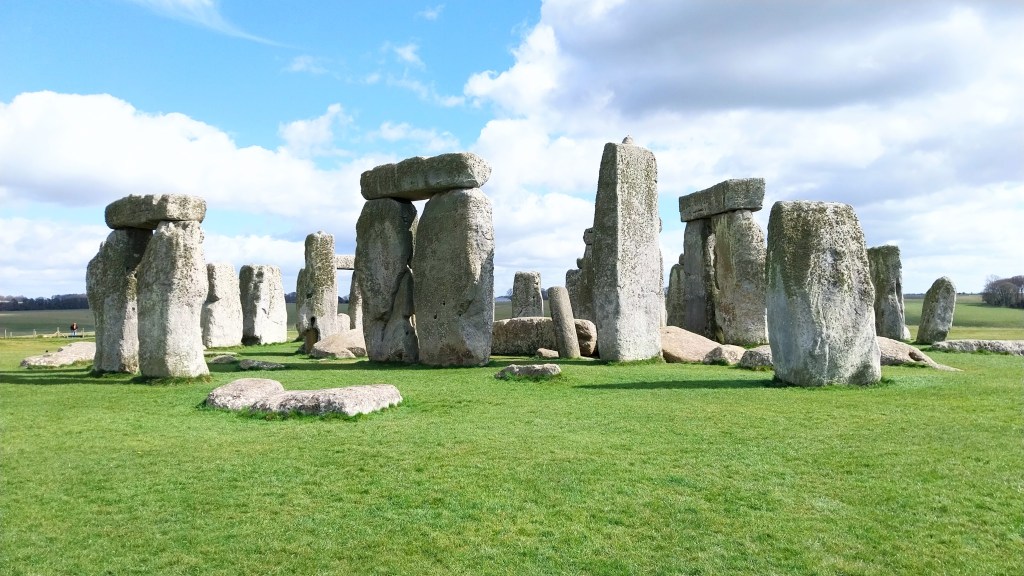
I’ll start with a visit to Stonehenge: somewhere I always enjoy going, whatever time of year. The last time I was there it was just before the winter solstice, with a brisk wind blowing and moody skies above (see my post here). In contrast, my photo above shows the Stones on a calm and sunny Spring day this past week.

We still do not fully know why our Neolithic ancestors transported these huge rocks, sometimes hundreds of miles, and positioned them here, carefully aligned to celebrate the movements of the Earth and its connection with the heavens above. The Stones have stood here for nearly 5,000 years, the toil and sacrifice of prehistoric man bringing pleasure and inspiration to many subsequent generations.

It is remarkable that this impressive feat of celestial engineering was achieved with only the most rudimentary tools and materials. Let’s see Artificial Intelligence do that, eh? 🙂

Every day, people travel here in their droves from all corners of the globe, to walk around, taking in the sight and its surroundings, and gaze in wonder. It is a World Heritage Site, and everyone is welcome, whatever religion, nationality or creed.

There is certainly something mysteriously compelling about being in the presence of the Stones. Perhaps their longevity is a modern day reminder that, whatever struggles there are in the world, fundamental values of indomitable spirit, endeavour, strong will and respect for others will always endure.

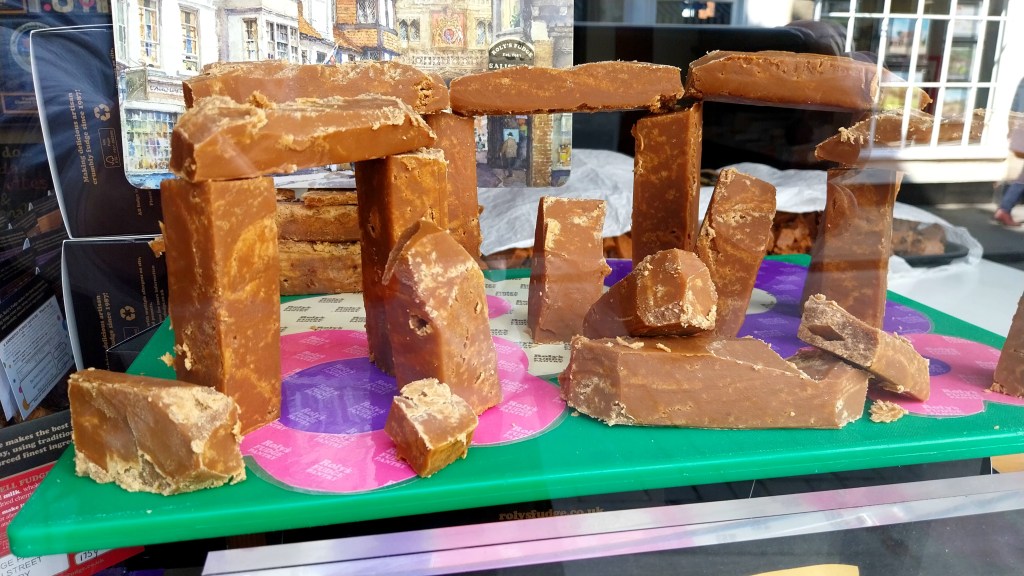
Inspiration comes in many forms, and this creation by Roly’s Fudge Shop, in nearby Salisbury, made me chuckle. Ladies and Gentlemen, I give you what Roly calls Fudgehenge.

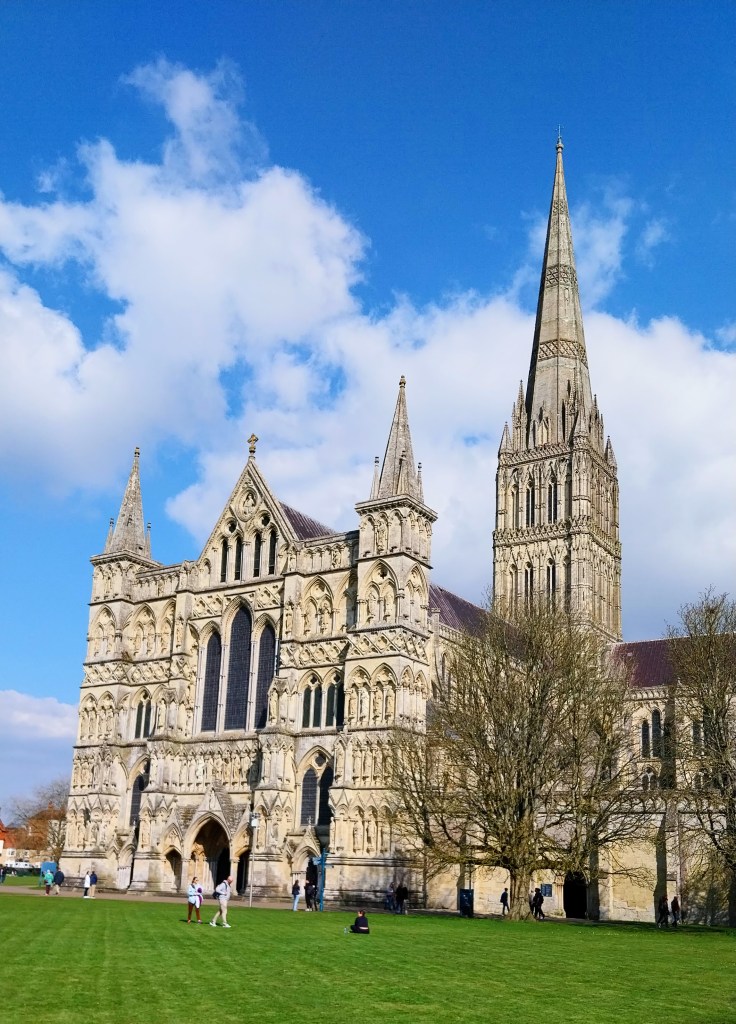
Roly’s can be found near the entrance to Salisbury’s Cathedral Close, providing the perfect opportunity down the years for weary pilgrims to top up those flagging energy levels. The Cathedral itself is gearing up for the Easter season, and was looking splendid in the Spring sunshine.

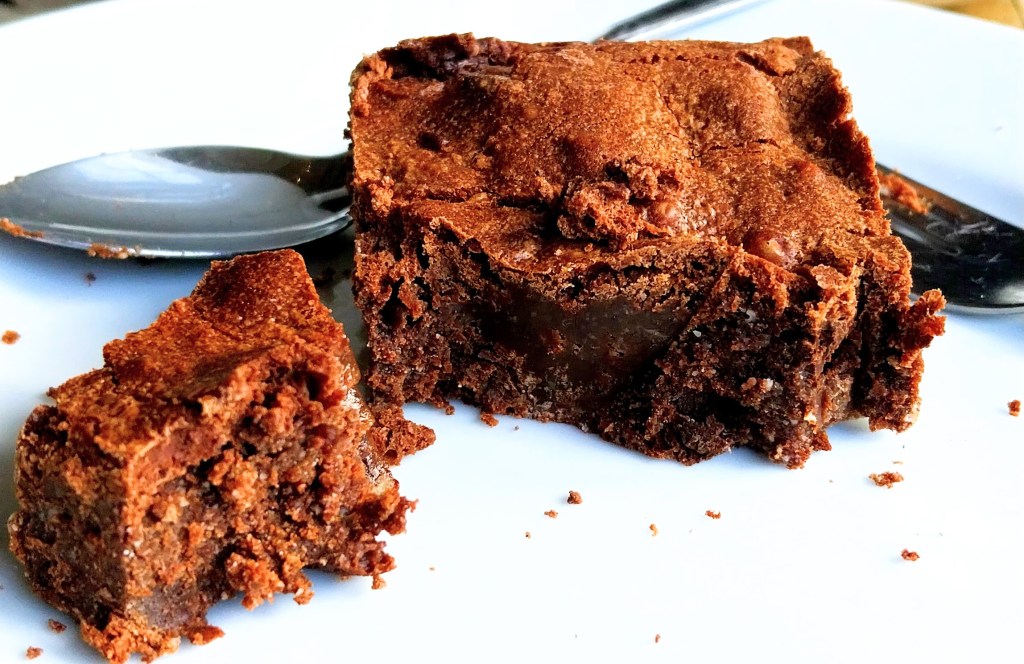
Another fave refuelling station in these parts is the Boston Tea Party. I first came across BTP in Bristol a few years ago, and they now have a small number of cafes dotted around select west country towns. They do great coffee and choc brownies, so I can recommend a visit if you ever get the chance.

Well, that’s enough of a sugar rush for this week. I shall have to get back down the Farm Shop when I get home and make something a little healthier next week to compensate, haha.

Here’s a track from a legendary band who hail from the west country, as you can tell from singer Andy Partridge’s accent. this is XTC from the Drums and Wires album, with Helicopter.

Categories
Blog

Autumn Escape

Our motorhome has been back in action this week, on an autumn trip to Cranborne Chase, in England’s south-west.

The area is designated as a National Landscape, which is the new official name given to what were formerly called Areas of Outstanding Natural Beauty.

The name may have changed, but the landscape certainly hasn’t – not for hundreds of years in fact. This makes it a perfect environment for long country walks across an expansive, rolling green terrain. Gentle climbs take you up high to reveal dazzling views, while paths weave their way through water meadows with clear trickling, bubbling streams past ancient mills. There aren’t many people around and it is really quite remote. Am I painting a clear enough picture here?

It is particularly special this time of year because, as everyone knows, the countryside generally looks even better with autumn colours.

My main photo at the top of the post shows Philipps House, dating from the early 19th Century. It is at the centre of the massive grounds of Dinton Park, which is fully open to public access. We had very clear skies, and from the highest points it was possible to see the spire of Salisbury Cathedral to the east.

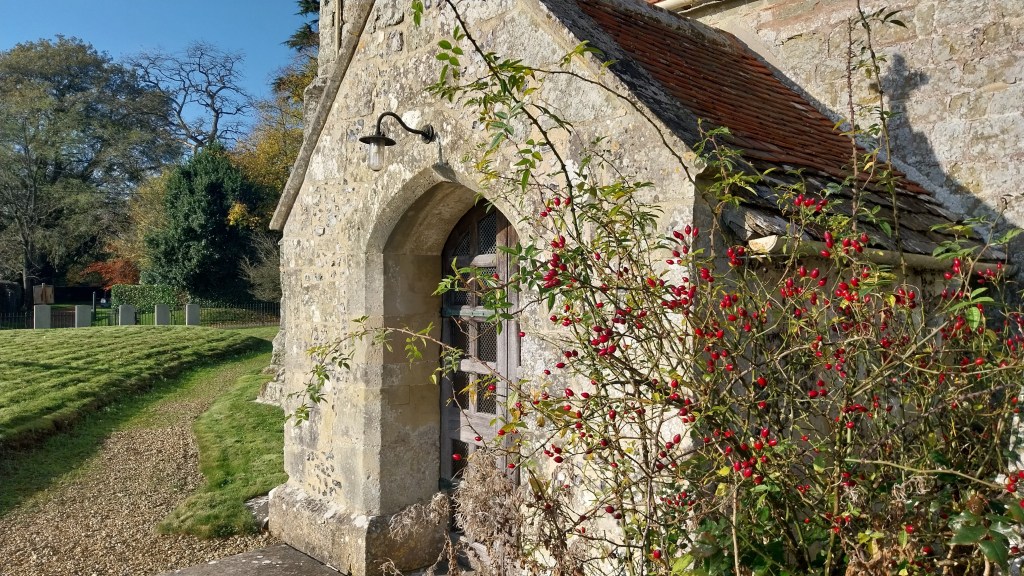
The intricate network of footpaths and bridleways takes in some very old buildings and traditional pubs. This photo shows St. Mary’s Church in Dinton village, dating from the 12th Century.

This photo was taken on a walk through woods and across fields to Baverstock, where St. Editha’s Church is located. It has been here since the 15th Century, and provided a perfect lunchtime picnic spot.

We pitched our motorhome in a small site in the middle of some woods, and spent the week off-grid with no electric hook-up. It is just as well the skies were clear and the sun shone as, along with our gas tank, we were rather reliant on that solar panel on the roof 🙂 .

In such a remote location, with no shops anywhere around within walking distance, we planned in advance and took a week’s worth of food and drink. Home-made butternut chilli soup helped keep us warm in the evening.

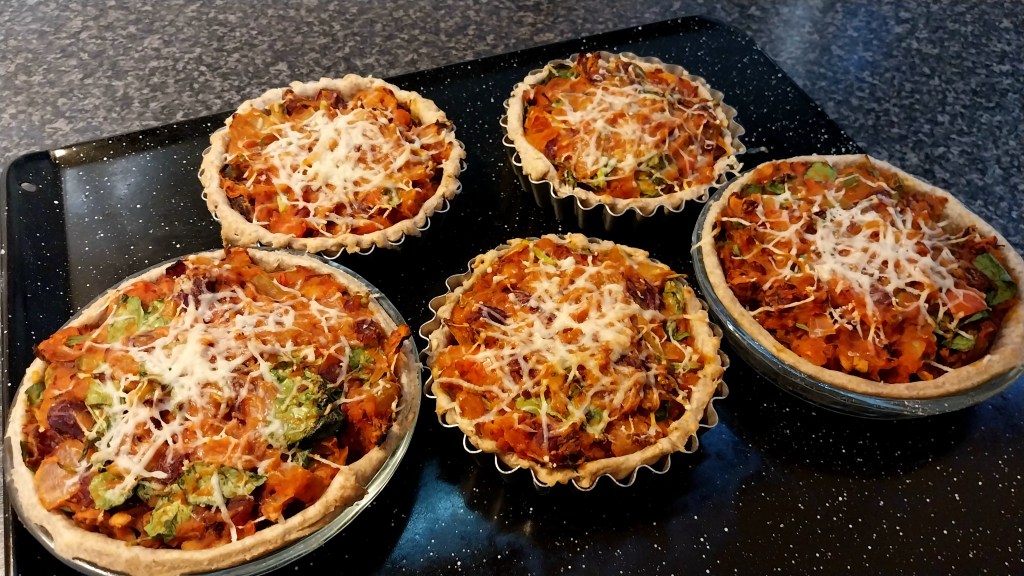
Quiches made the week before and warmed up in the gas oven came in very handy – those 10k treks certainly give one an appetite!

The solar powered battery helped keep my phone charged overnight, which meant I could still listen to the David Bowie Playlist I’d downloaded to my phone from Spotify. No first world problems here, mate 🙂 .

I can’t quite believe that it in just a few months it will be 50 years since the release of Young Americans, which is probably my fave album of his. Here’s a great track from it: Right.
There is one more motorhome trip planned for 2024, so watch this space for developments.
Categories
Blog Snacks

The Lost Gardens

Ssshh, tread quietly so you don’t wake her..
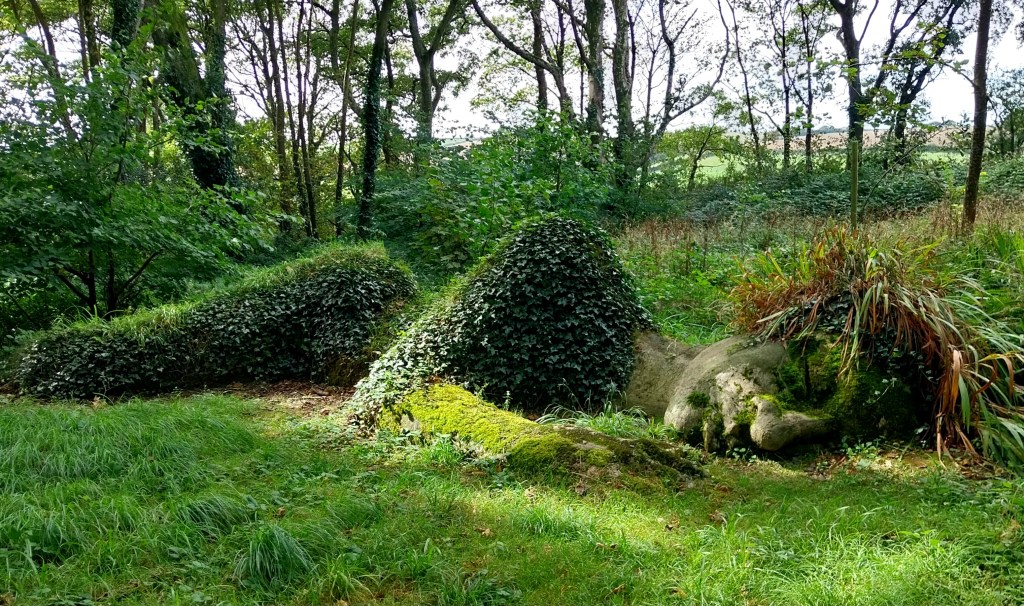
The Lost Gardens of Heligan, the latest stop on our travels around Cornwall, is full of surprises – just look who we stumbled upon having an afternoon nap in the woodland.

This 200 acre family-owned estate was founded in the 16th Century. For many decades, Heligan hosted a thriving and self-sufficient community, living off the produce of the land, including the substantial kitchen garden here.

Then it all changed after World War 1. A number of the gardening team went to fight in the war and, sadly, never returned. The estate fell into neglect, abandoned and overrun.

Until 1990 that was, when the efforts of an enthusiastic band of volunteers helped restore the Gardens to the horticultural wonder they are today. The old walled gardens and greenhouses are a centre for cultivation of heritage vegetables. Traditional livestock breeds are farmed and horticultural skills from a century ago are being practised once again.

Such is the interest in this heritage time capsule that Heligan is now one of modern Cornwall’s top visitor attractions.

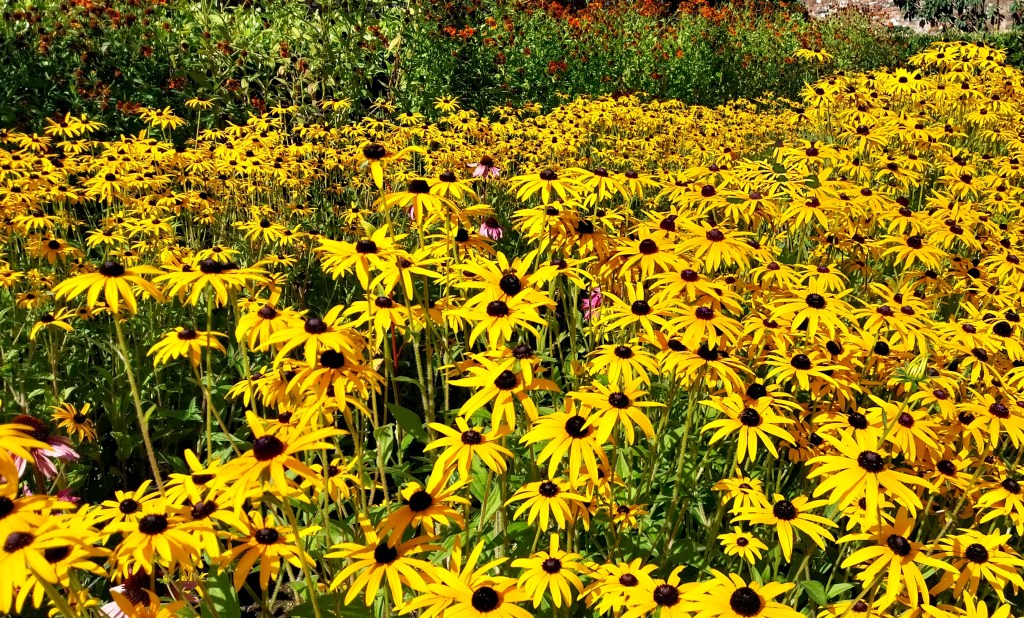
Many come to enjoy the blaze of colour from the flower displays.

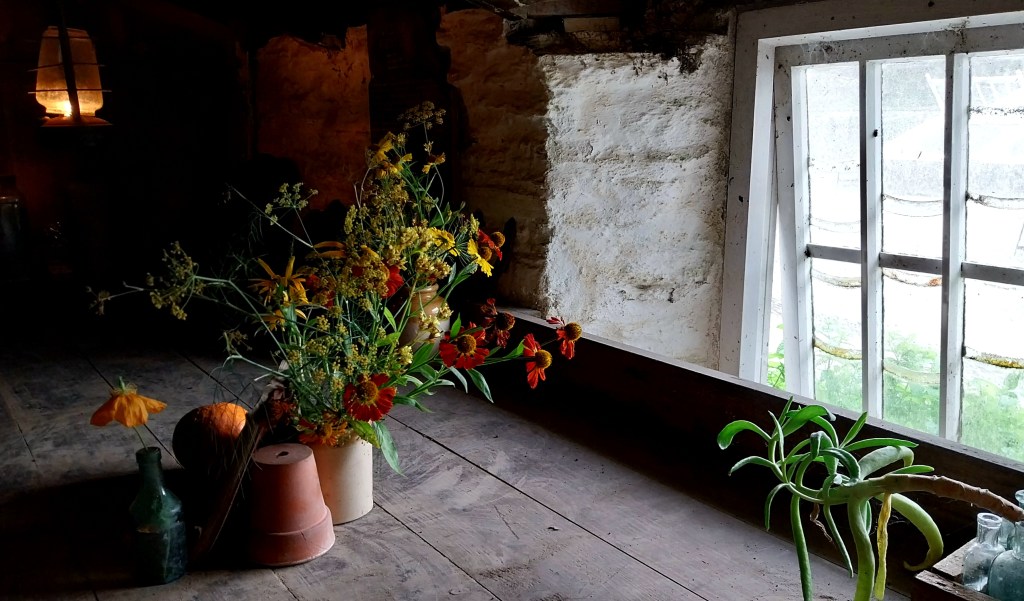
Seasonal produce grown here can be enjoyed through the dishes in Heligan’s cafe. The old buildings are well cared for, and beautifully presented, decorated with freshly cut flowers. I took this photo in the old potting shed.

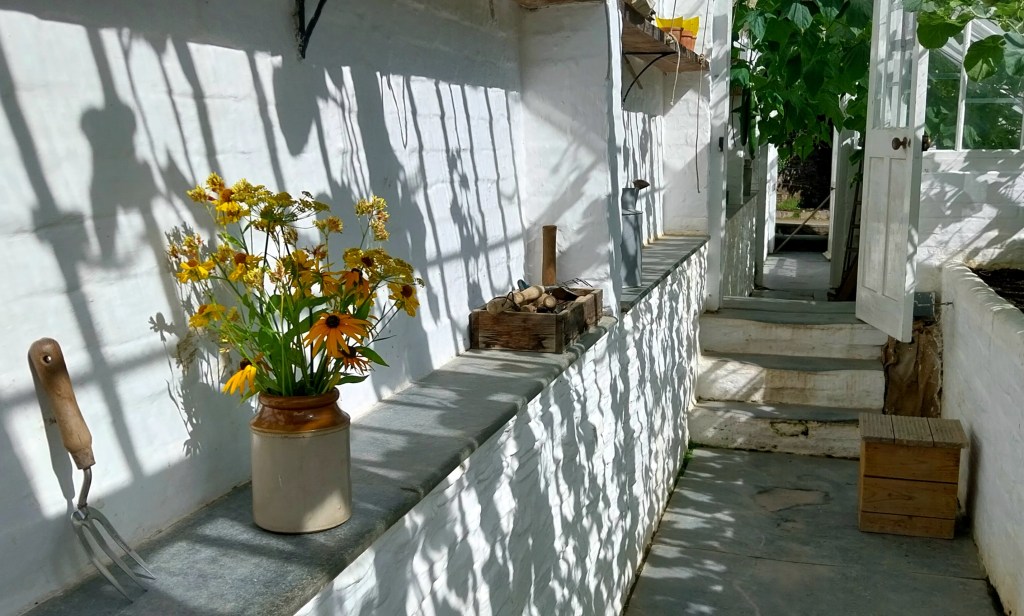
I liked this image of the whitewashed wall inside a greenhouse, with the sun streaming through.

Those wishing to venture deeper into the estate can seek out the Lost Valley, stretching down towards the coast at Mevagissey. What had become a largely overgrown and impenetrable jungle can now be crossed by boardwalk and rope bridge, enabling the Gardens’ many rare and veteran plant species to be enjoyed once more.

There are also one or two newer, enchanting surprises to be found along the way, such as the Mud Maid in my main photo at the top of the post.

Foodwise, another pleasant surprise on my travels has been my latest variety of Cornish Pasty! The name of this one is Veggie Power, which struck me as just a brilliant name for a dish.

The steak in the traditional filling has been replaced with mushroom and butternut squash, alongside the usual potato, onion and swede. The pastry looks and tastes like it has a higher content of wholemeal flour than the traditional version. Take a bow, Rowe’s Bakery in Falmouth for this tasty and innovative twist on the traditional Cornish Pasty.

The next track on the ADK Playlist is one that the sleeping Mud Maid might appreciate. This is The Cure with Lullaby.

Categories
Blog Snacks

Mount’s Bay, Cornwall

Our motorhome travels around Cornwall, in the south-west corner of Britain, have now brought us to Mount’s Bay.

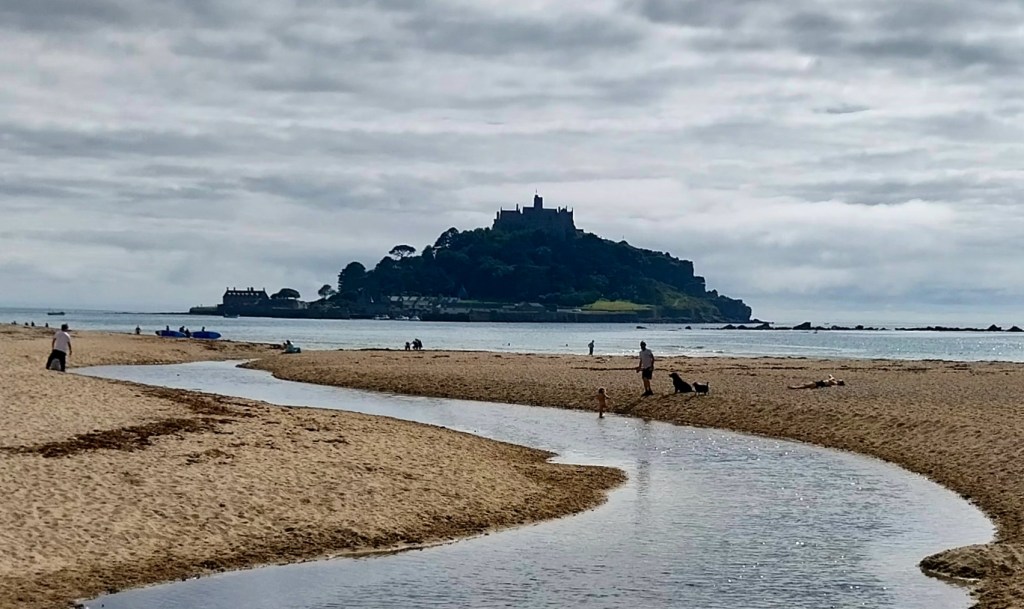
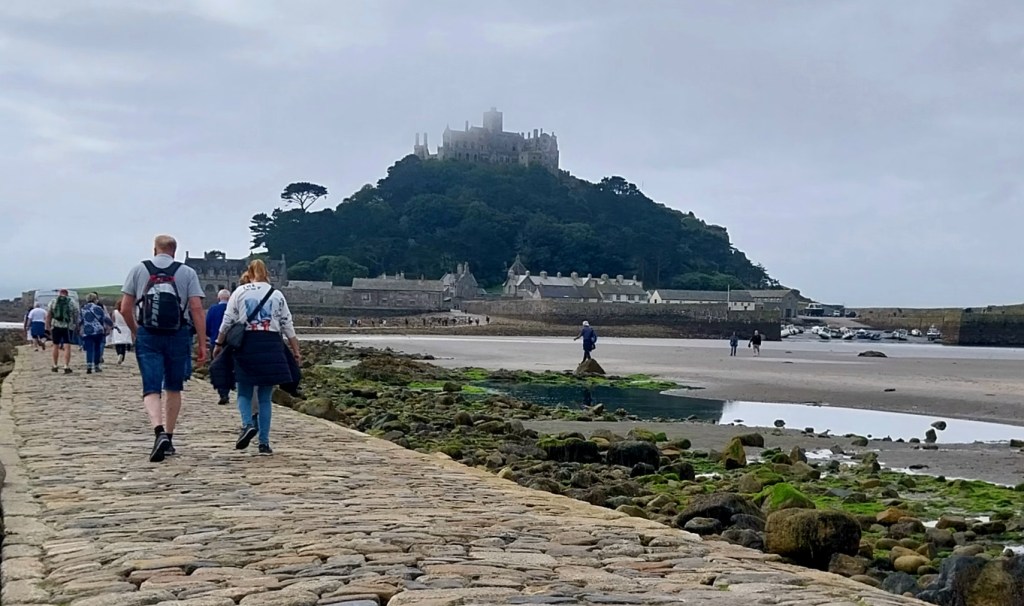
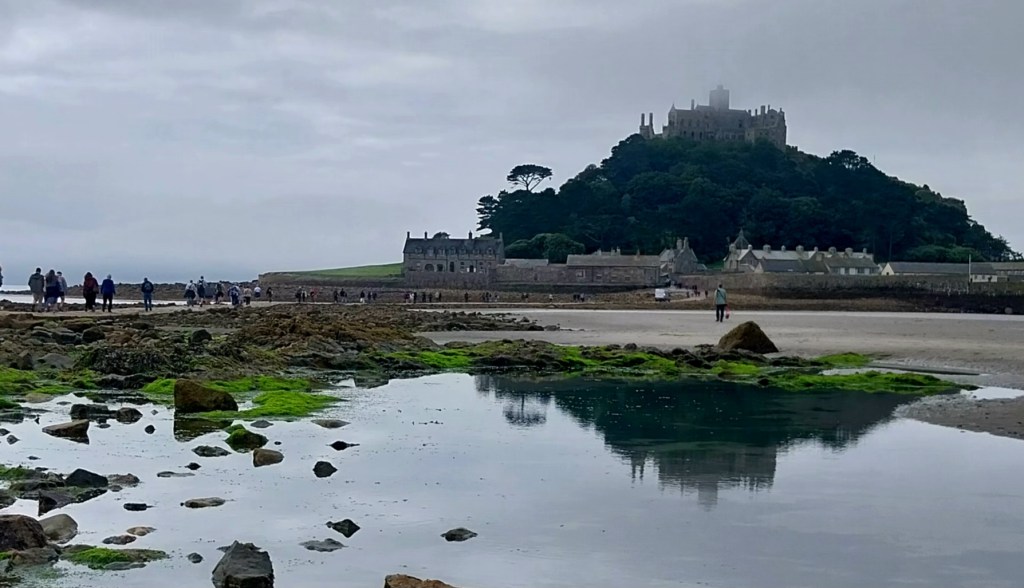
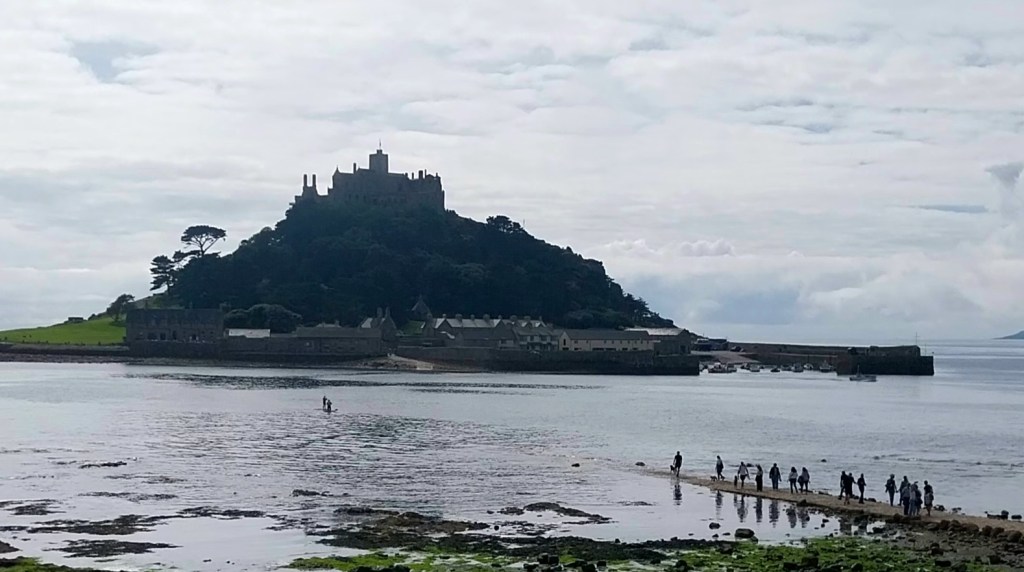
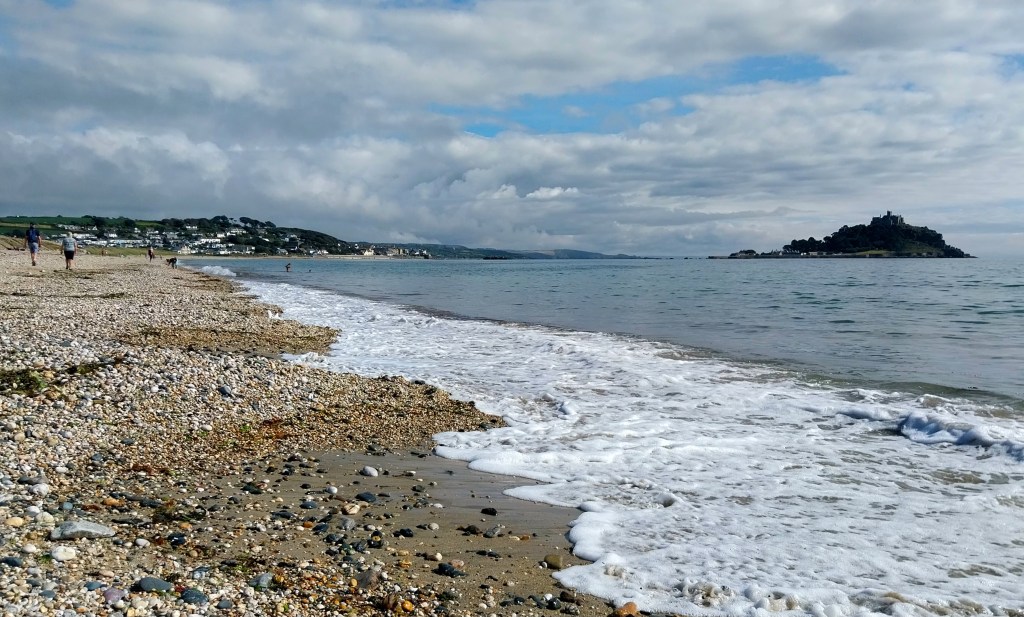
St. Michael’s Mount is visible all around the Bay, from Marazion to Penzance in the west. It is an ancient castle and sacred site high up on an island, accessed via a causeway at low tide, as shown in my photo below. It’s a path well-trodden down the centuries by pilgrims and travellers.

Low tide was early morning when we visited, and the mist around the Castle had yet to fully clear. I clambered across the sand to get a dramatic picture of the Mount reflected in this rockpool.

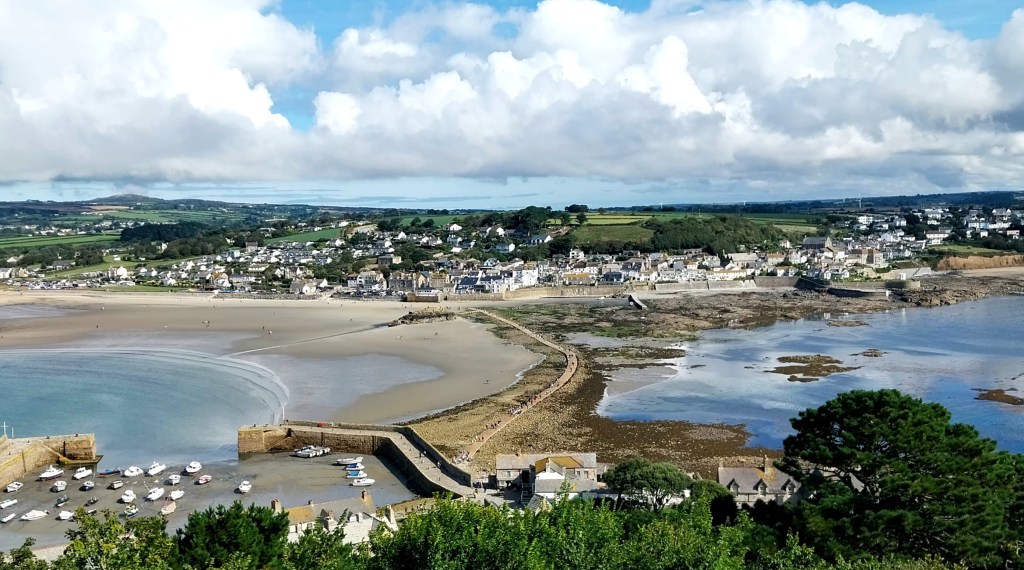
By the time we had crossed and climbed the steep cobbled lanes to the summit, the mist had cleared. There were terrific views back to Marazion, the sun now glinting on the stone causeway snaking its way across the golden sand.

We returned ashore again before the sea flowed back, a few hours later. Anyone leaving the journey too late will receive nature’s reminder that time and tide wait for noone.

The stretch of the South-West Coast Path around the Bay is also a cycle trail. We were treated to more scenic views as we rode it all the way to Penzance.

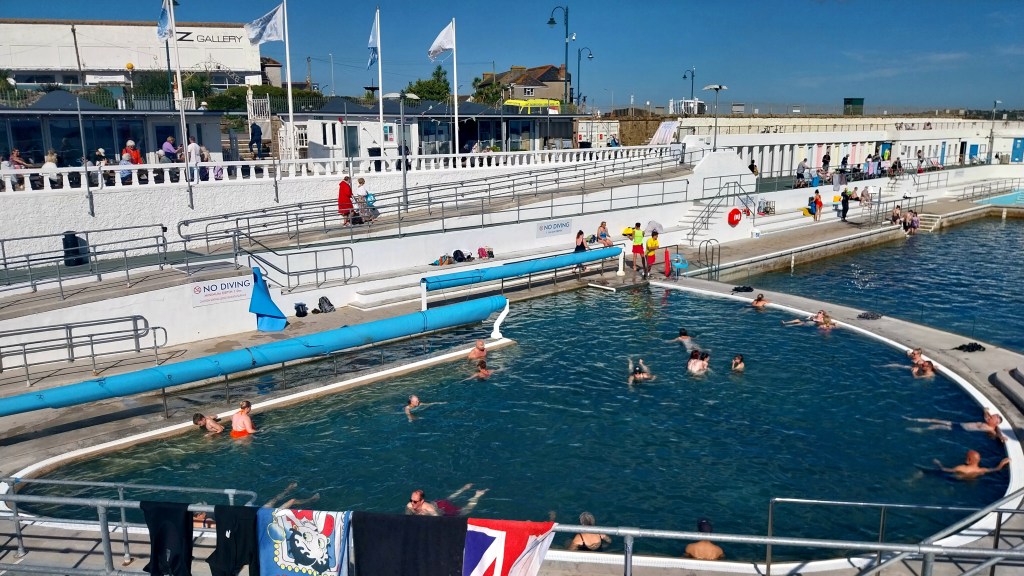
Arriving in Penzance, I enjoyed a swim in the Jubilee Pool, a vast, open air saltwater lido. It dates from the 1930s and has an art deco design.

The main pool is filled directly from the sea, and was a bracing 16C (it’s, er, ok once you’re in and moving around!) I then warmed up in the Jubilee’s star attraction, a large geothermal pool heated naturally by an underground spring to a much more amenable 30C.

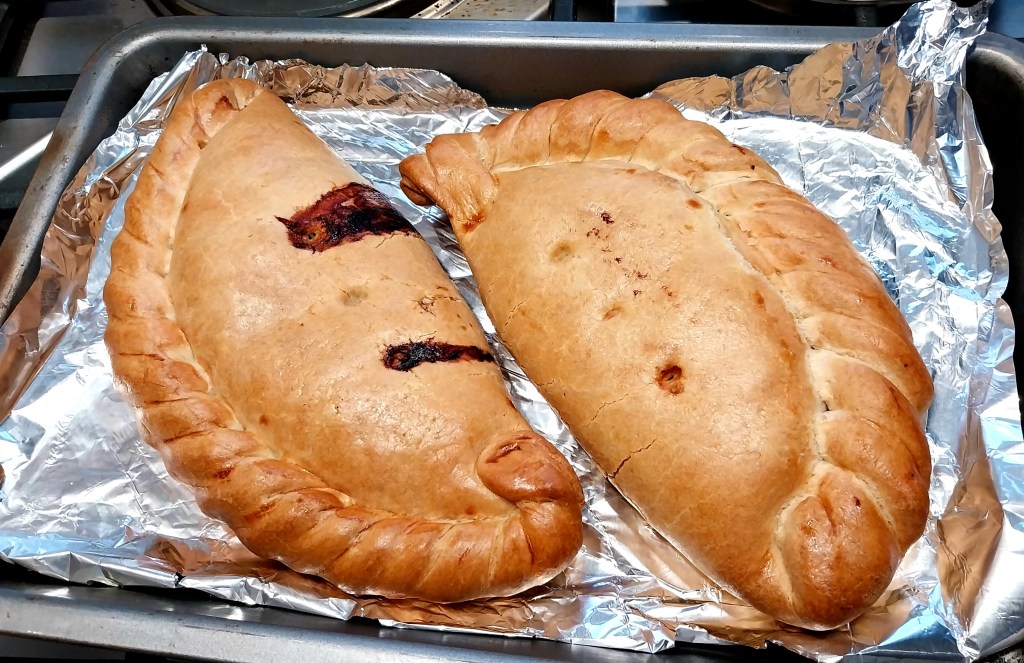
After all that walking, climbing, cycling and swimming, I reckon I had earned another Cornish Pasty.

These ones had a traditional filling of chopped steak, potato, onion, swede and black pepper, in a buttery, flaky pastry crimped together at the edge. They really are the most popular street food here, with thousands baked fresh every day by little independent bakeries. Warmed up that evening in the motorhome oven, it was delicious and filling.

Time for the next track on the ADK Playlist. Those misty, early morning images of the Mount kept reminding me of the lyrics in this track by Led Zeppelin ….pack your bags for the misty mountains, where the spirits fly….: This is Misty Mountain Hop.

Categories
Blog

Magical Cornwall

We’re off on our motorhome travels again, this time around Cornwall in the south-west corner of Britain. I’ll be visiting some interesting places and posting about the great regional food and drink to be found in this part of the world.

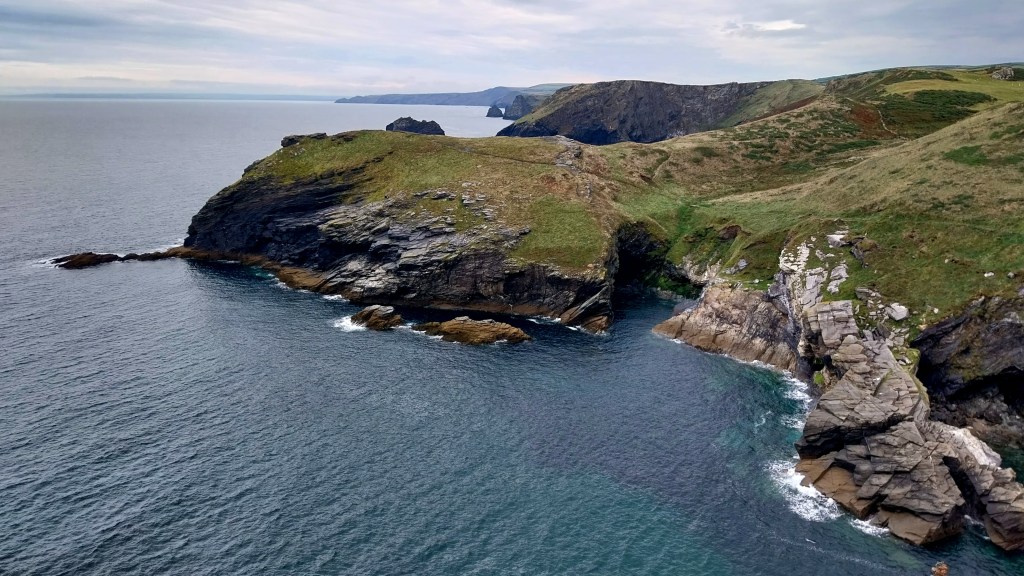
First stop is Tintagel on the north coast – an ancient castle up on a rocky headland, with views out to the Atlantic. The site is full of mystery, having links to the legend of King Arthur.

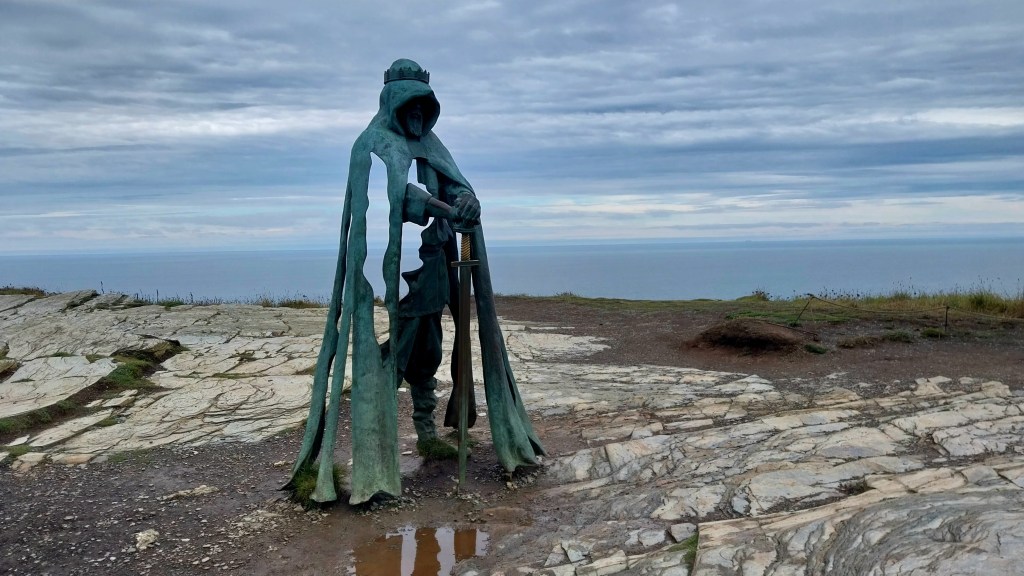
Those making it to the summit are greeted by the imposing figure of Gallos, shown in my main photo above. This statue in bronze symbolises the power of the ancient Cornish rulers who reigned here in the Dark Ages, around the 6th Century AD. His ghostly, semi-transparent, sword-wielding figure evokes the legend of Arthur.

We walked here from our campsite, 3km along this rugged coastline via the South-West Coast Path.

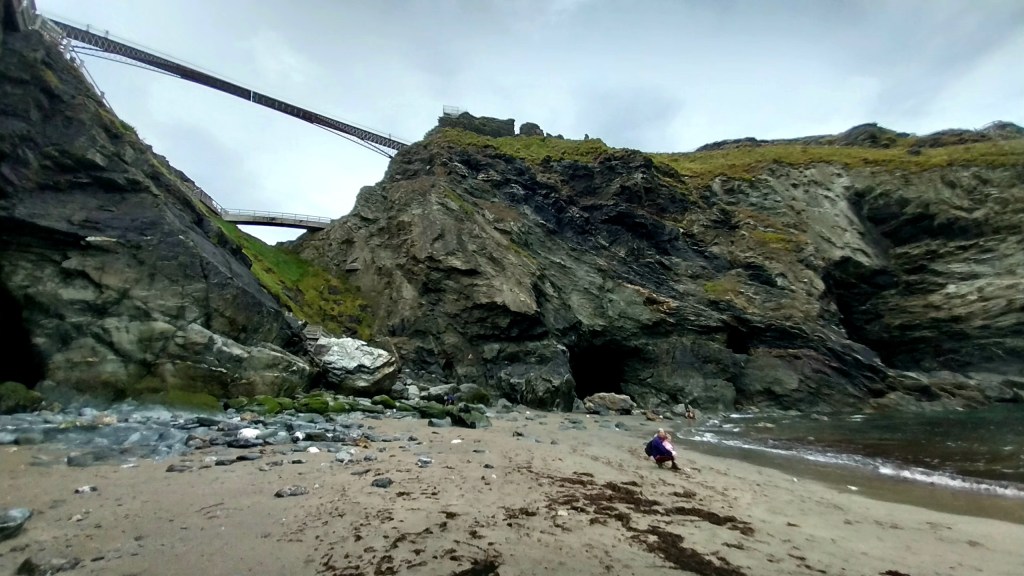
The Castle ruins are on an island, reached by walking across a high suspension bridge that’s replaced the causeway – long since eroded and tumbled down into the sea.

Several steep flights of steps take you down to the beach below, which can only be reached at low tide. The final set of steps has been washed away by the sea, leaving one to clamber over the rocky debris to reach the sand.

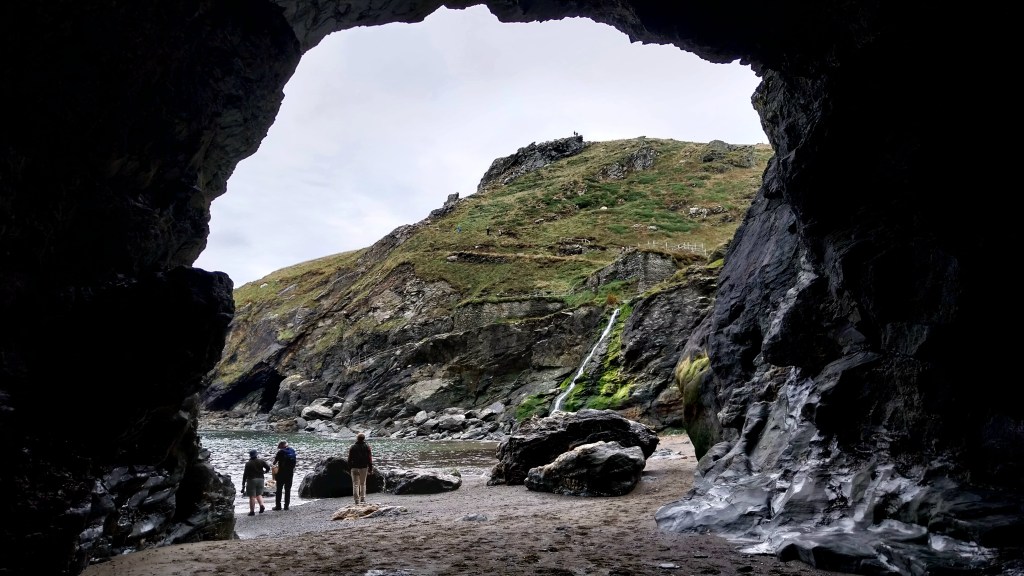
Many people make the descent to explore the vast hole cut into the rock face by the waves. It is known as Merlin’s Cave, supposedly the place where the famous wizard resided.

I was surprised how vast it was inside. I took this photo looking out towards the headland opposite and the crashing waves.

Excavations of the Castle site suggest that the people who lived here in the Dark Ages ate and drank well. There is evidence of a sea trading network with the Byzantine Empire, and fine foods and pottery imported from the Mediterranean.

The taste for fine food certainly continues in modern day Cornwall, as a walk up into nearby Tintagel village will show. There is no shortage of tempting pubs and cafes offering delicious Cornish Pasties, cream teas and clotted cream ice cream. Meanwhile, any budding wizards will also find a unique range of shops specialising in all things alternative therapy, sorcery and witchcraft.

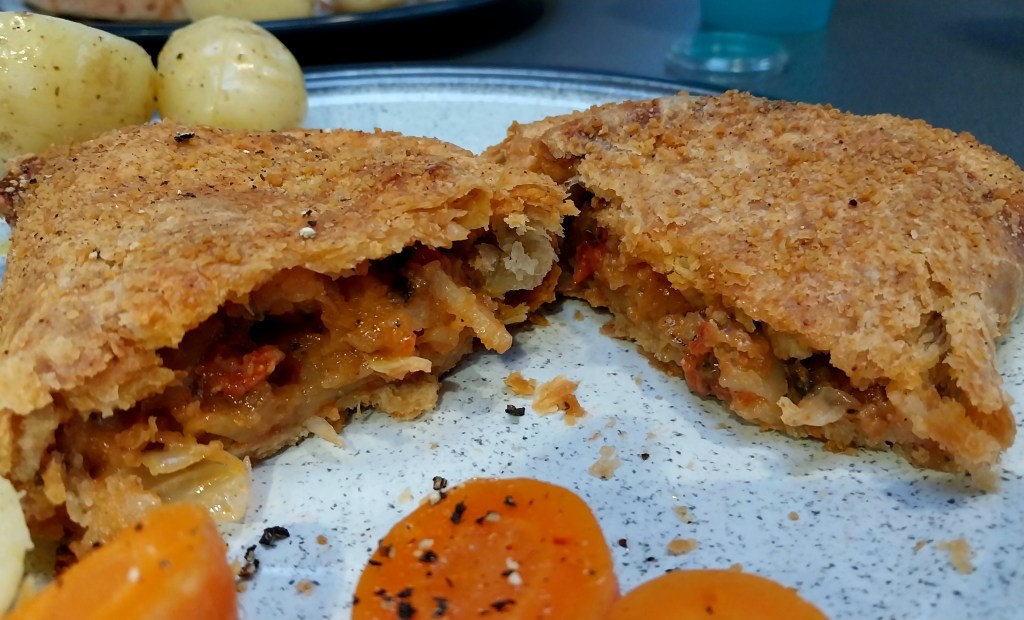
Hungry after a morning of walking, climbing and scrabbling over rocks, we settled at the Cornish Bakery, where I opted for this Cornish Pasty. It had a delicious filling of chorizo, mozzarella and Cornish sea salt.

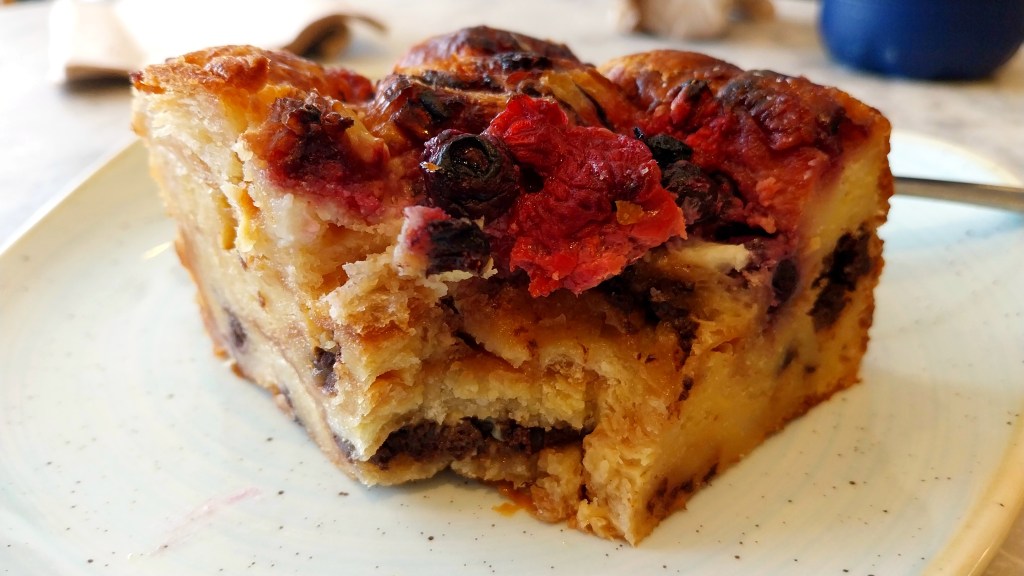
Sweet was a slice of Cornish Pudding, a local take on bread and butter pudding, with pastry baked in custard, laced with berries and chocolate.

Magical!

Today’s musical choice just has to be prog rock: there is enough mysticism about Tintagel to inspire an entire Led Zeppelin album. This track is a duet between Robert Plant and Sandy Denny, from Fairport Convention, over some intricate acoustic mandolin by Jimmy Page. Light up an incense stick and enjoy Led Zeppelin with The Battle of Evermore 🙂

Categories
Blog Drink

Chateau de Monbazillac

Vive la France!

This week I am off on my travels again. We are holidaying with our very good friends in the Dordogne Valley in south-west France. Expect to be hearing over the next few posts, therefore, about some of the lovely food and drink that this region has to offer.

The base for our stay is a delightful, restored stone farmhouse in the countryside, just west of Bergerac. Built in the 19th century, it retains all its character and, I am pleased to say, now has some 21st century luxuries (like wifi, ensuites and a dishwasher) incorporated.

Discovering that we are situated along the Route des Vins, we set out to find our bearings on a tour that takes in one vineyard after another. The climate and soil conditions here are near-perfect for growing grape vines, making the Dordogne Valley one of France’s prolific wine-producing regions.

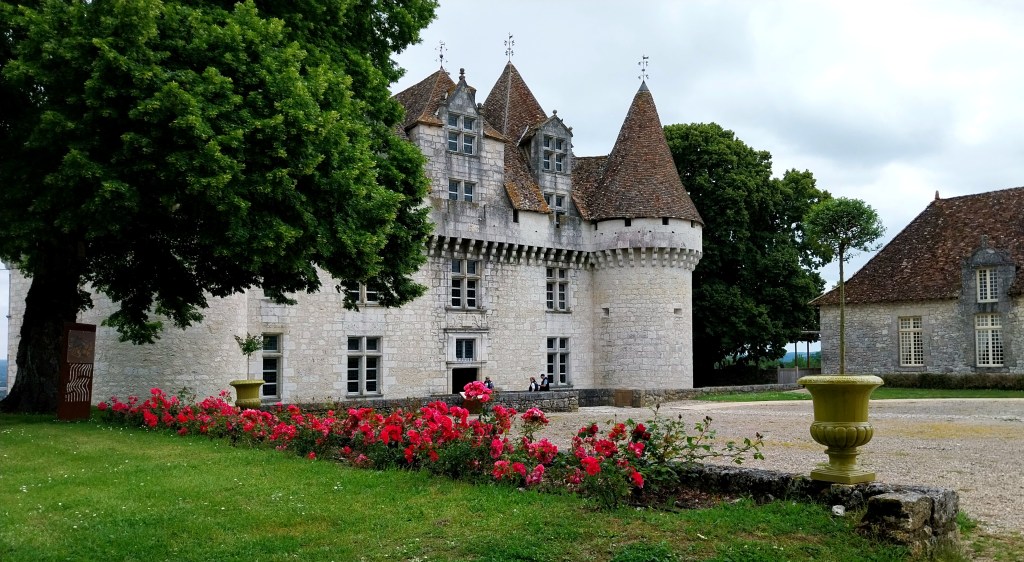
To learn a little more, we stop at one of the major vineyards along the route for a tour and some wine tasting. Chateau de Monbazillac is a microcosm of modern French history – a splendid, ornate chateau and estate that flourished in the 16th Century, before being brought down to earth by the revolting local peasants in the revolution of 1789. After some period of flux, it eventually found its feet again, being taken over by a wine producers’ co-operative that now markets its wine collectively under the Monbazillac name.

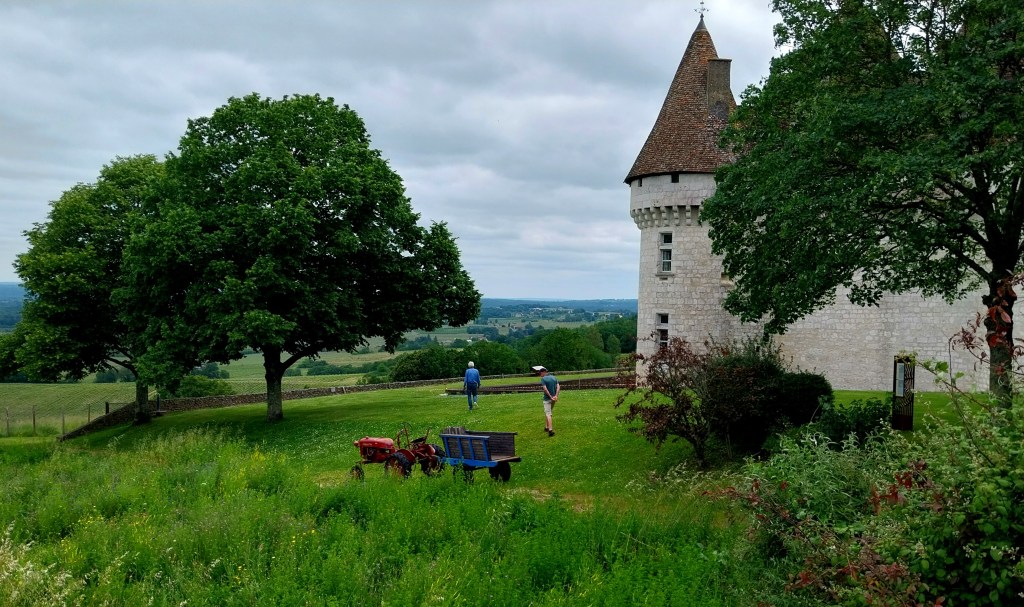
The Chateau is beautifully restored and maintained, with exhibitions on modern wine production, and glorious views out across the Dordogne Valley towards the town of Bergerac, taking in row after row of vines.

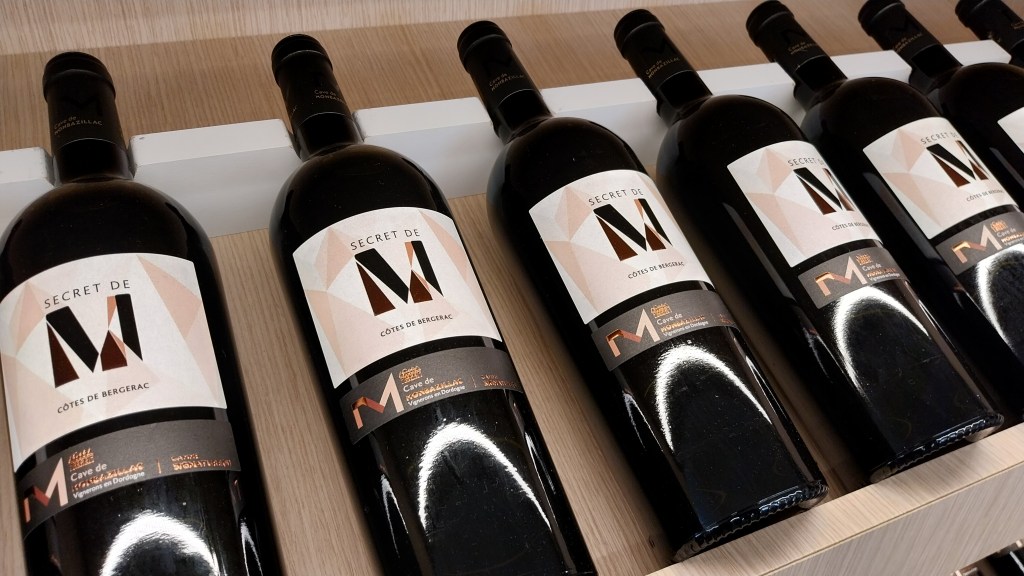
The choice of wines for our tasting took in a Bergerac blanc, a rosé, a fresh and fruity red and a deep red with the scent of oak barrels and a hint of saline on the throat. After some deliberation, our group opted to buy a bottle each of the two reds.

I can assure you these are being fully savoured on our terrace in the evening with a few platters of cheese, ham, pate and locally baked bread (I will go into further details in coming posts about that cheeseboard 🙂 )

After a relatively wet spring here, the weather is warming up, and we are looking forward to a relaxing few days of good food and wine with sunshine. Check back this weekend for a further report.

In the meantime, I shall leave you with a track that has a distinct French connection via the bassist, Jean Jacques Burnel. Here are The Stranglers with La Folie.

À bientôt!

Categories
Blog Drinks Mains

Lo/Hi

We’re nearing the end of 2023. I’ve been fortunate to travel to many interesting places this year, and have enjoyed sharing my experiences of the local food, drink, culture and the music it inspires, in my posts here on A Different Kitchen. As the year draws to a close, there is one more fun place to tell you about.

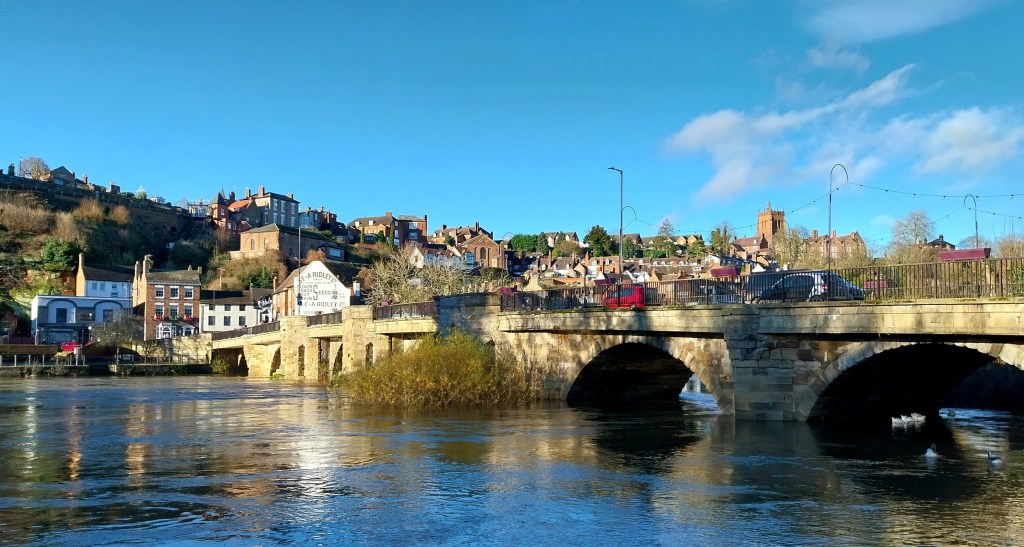
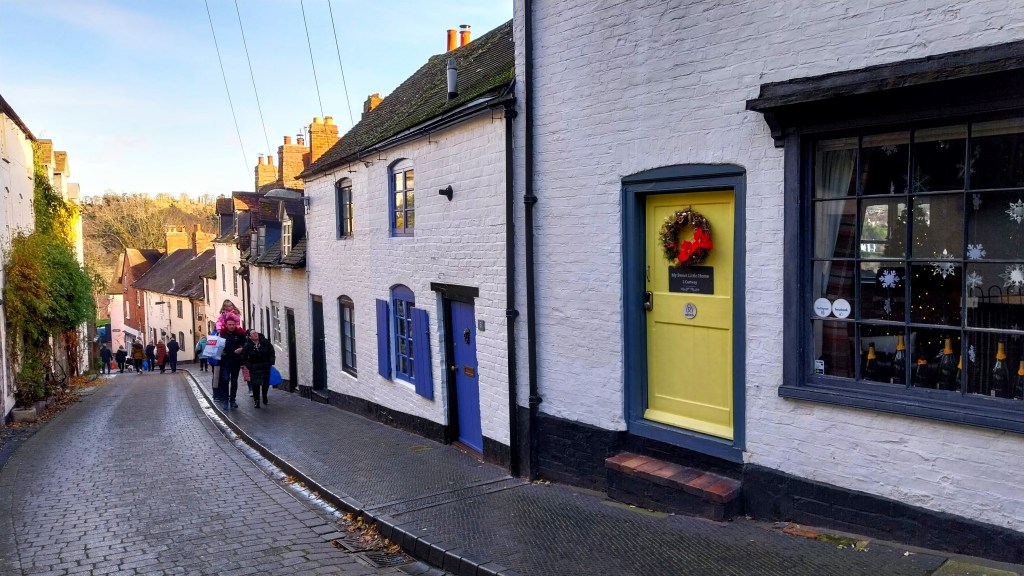
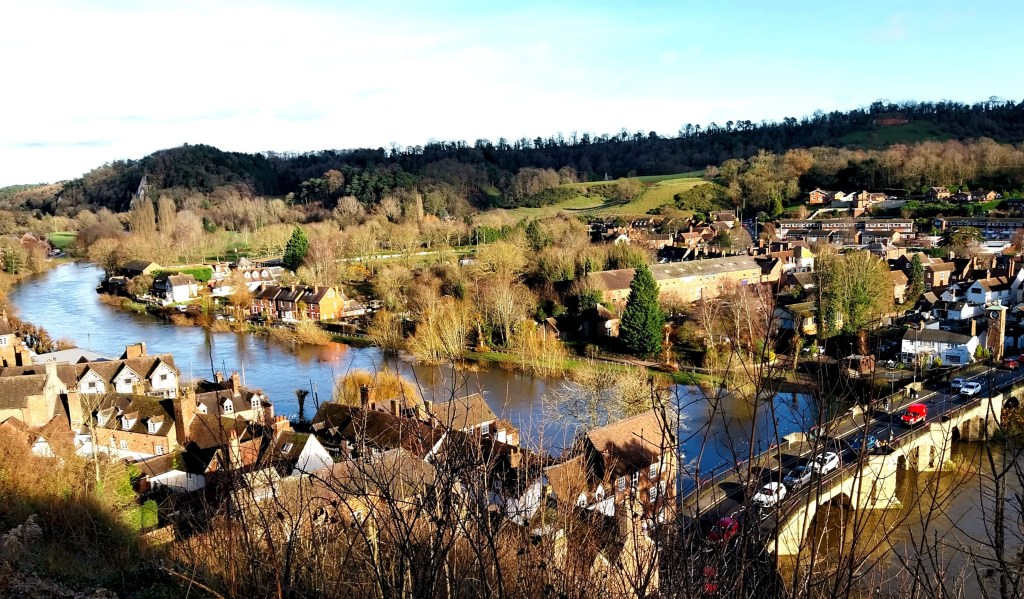
In December I spent a few motorhoming days in the picturesque town of Bridgnorth in Shropshire. The place is actually made up of two distinct towns: my main photo above is taken in Low Town, by the banks of the River Severn, looking up towards High Town.

My photo below is then taken having climbed up to High Town, where there are great views looking out over, er, Low Town.

From the Middle Ages, traders’ boats travelled up the River Severn to unload their cargo at the Quay in Low Town. The goods were then wheeled up by hand cart to the market hall in High Town via The Cartway – a twisting, cobbled path. You can still walk this route today, see my photo below.

It is as steep and winding as ever, though many of the cottages along the way are now cosy, bijou holiday residences, judging by the number of lockboxes on the frontages.

The goods imported were mainly rum, spices and exotic foods from distant lands, and they were exchanged for local ceramics, metalwork and coal. The market hall still stands in the centre of High Town and hosts a market, though these days it features regional meats and speciality cheeses.

Trade continued until the mid 19th Century when, according to the Town Guide, it was overtaken by the arrival of the railways. My own alternative theory is that, after years of hauling their beautiful rum, spices and exotic foods up to High Town, to exchange them for a few of our pots, pans, and pieces of coal, the tired and hungry importers eventually realised they were getting rather the bum end of the deal.

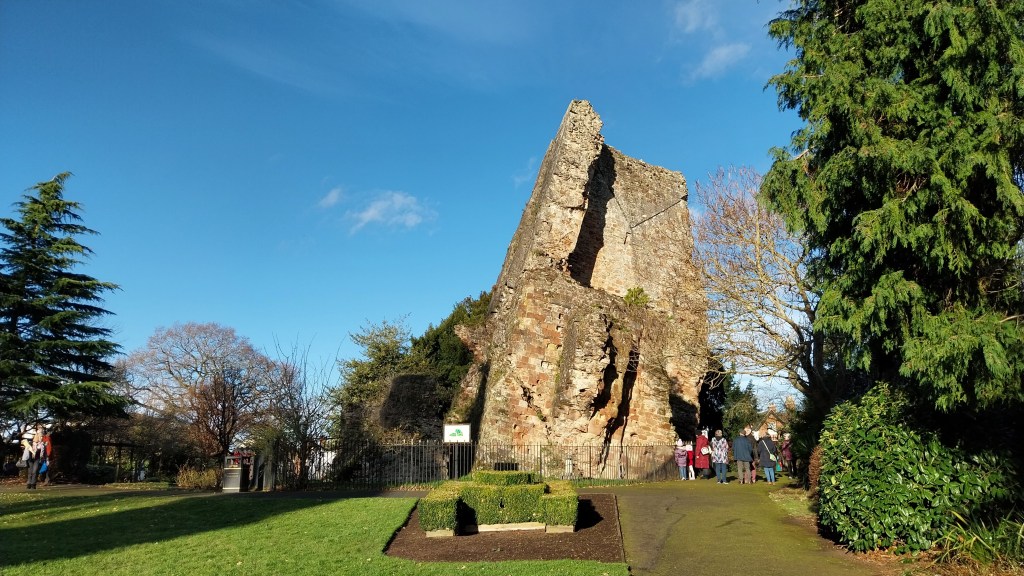
Among the many curious features of High Town is the Castle Keep. It is all that remains standing of the Castle, which was largely destroyed in the English Civil War of the mid 17th Century. I say standing, but leaning is a more apt description – see below.

To borrow a word styling from American Football commentators, it is amongst the most leaningest structures in the world. In fact, it is 4 times more leaningest than the Tower of Pisa in Italy. How it hasn’t fallen over, I don’t know. Even though it moves a few degrees each year, it is reportedly safe – there are no cones or hazard warning tape to keep pedestrians at a distance. I can only assume the Town Council’s Health and Safety Department has a commendably relaxed attitude to risk. Still, I wouldn’t dawdle while going past/under it, if I were you.

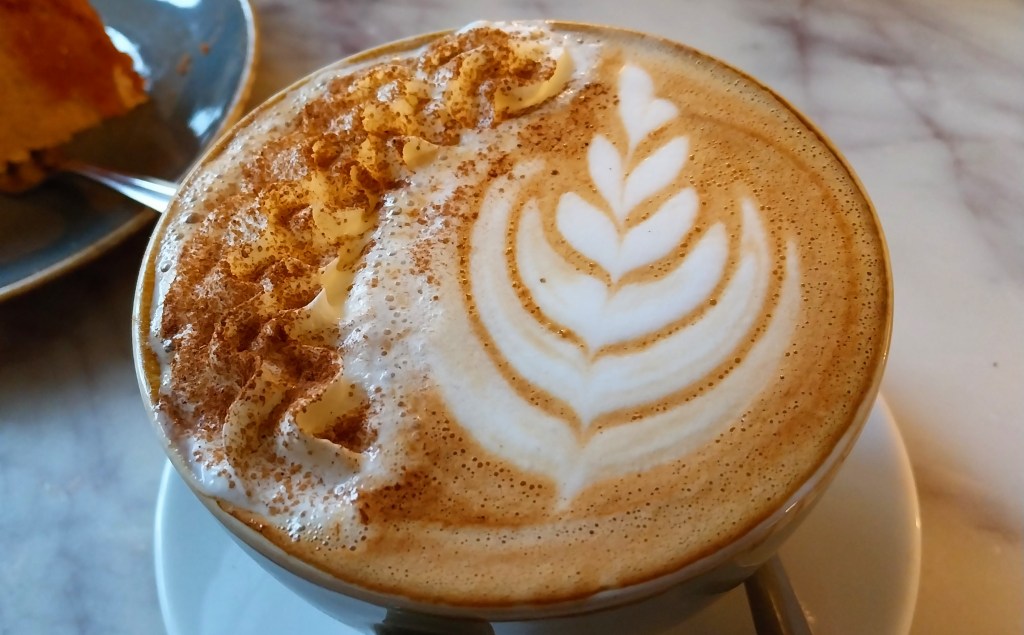
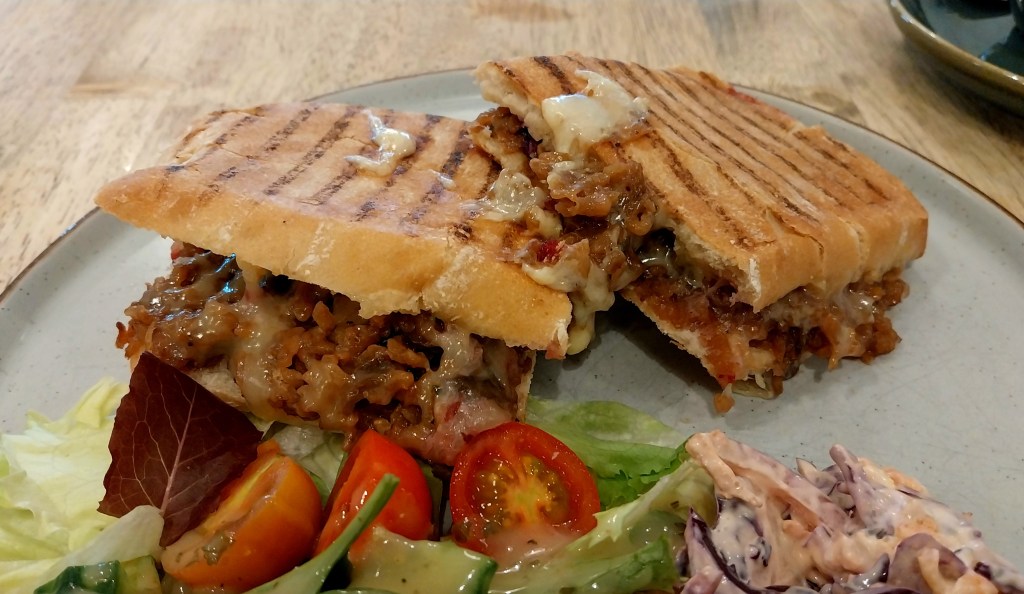
Food options are many, varied and good quality. I stopped for lunch in High Town’s Coffee at d’Arcy’s, tempted by the seasonal vegan toasty – a hot panini filled with slices of nut roast and cranberry sauce. Delish!

I accompanied this with a Pumpkin Spice Latte. I have to confess to being somewhat late to the party with this concoction. For some time I have held the puritan view that, if the coffee beans are good quality, roasted with expertise and ground by a skilled barista, the drink should not then be ruined with a shot of sweet syrup. That was before I had the benefit of trying one, however, when I realised how great it tastes. I am now a convert who believes that, used correctly, a shot of syrup can complement and enhance a good quality coffee, rather than overpower it.

The unique geography of Bridgnorth kept reminding me of this track, which played a few times on my headphones as I walked around exploring. I am quite sure The Black Keys – those heavily blues-influenced rockers from Ohio – didn’t write this about a picturesque market town in Shropshire, but it’s a great song and the title fits well. Here they are with Lo/Hi.

Happy New Year everyone! Onwards to more travel, sounds, food and frivolity in 2024.

Categories
Blog Breakfast

Solstice at Stonehenge

Fancy an online breakfast watching the sun rise over Stonehenge on the Winter Solstice this Friday? Read on.

We’re approaching that time of the year when those of us here in the northern hemisphere experience the shortest day. The Winter Solstice is a special time at Stonehenge, which I visited during my recent motorhome trip to England’s west country.

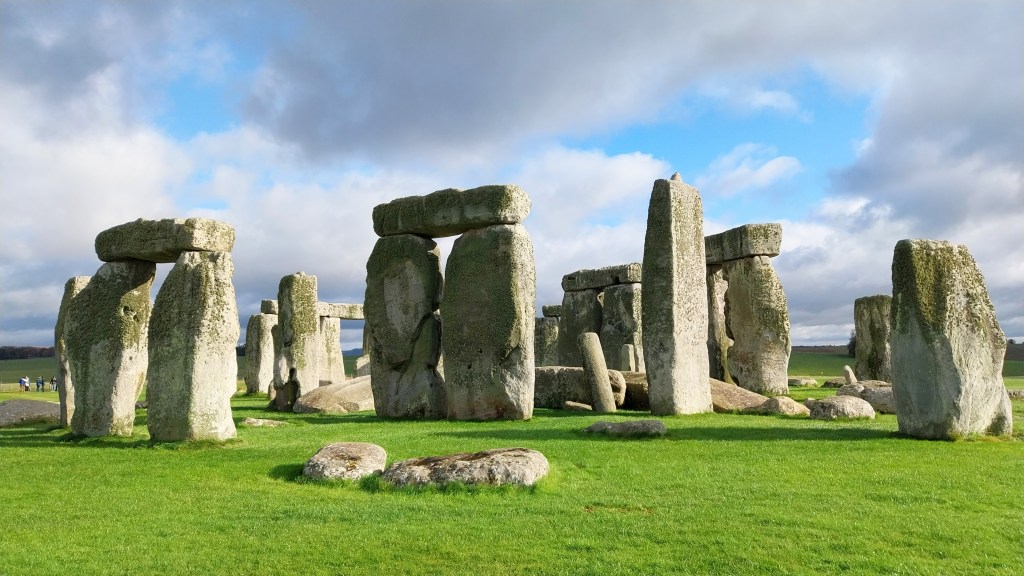
Now a World Heritage Site, Stonehenge is a very mysterious place. Historians still do not fully know how or why our Neolithic ancestors built this grand arena of standing stones some 5,000 years ago, when tools were primitive and scientific knowledge rare. However, the stone circle manages to correctly align with the movement of the sun at two key points in the year, every year – sunrise on the Summer Solstice, 21 June, and sunset on the Winter Solstice, 22 December.

The mystery has imbued the place with a magical significance. Coachloads of people from all over the world visit the stones every day of the year, to stand and gaze up in awe and wonder as to their original purpose (see my photo at the top of the post). And on the Solstice, many people make a pilgrimage here to witness the event for themselves.

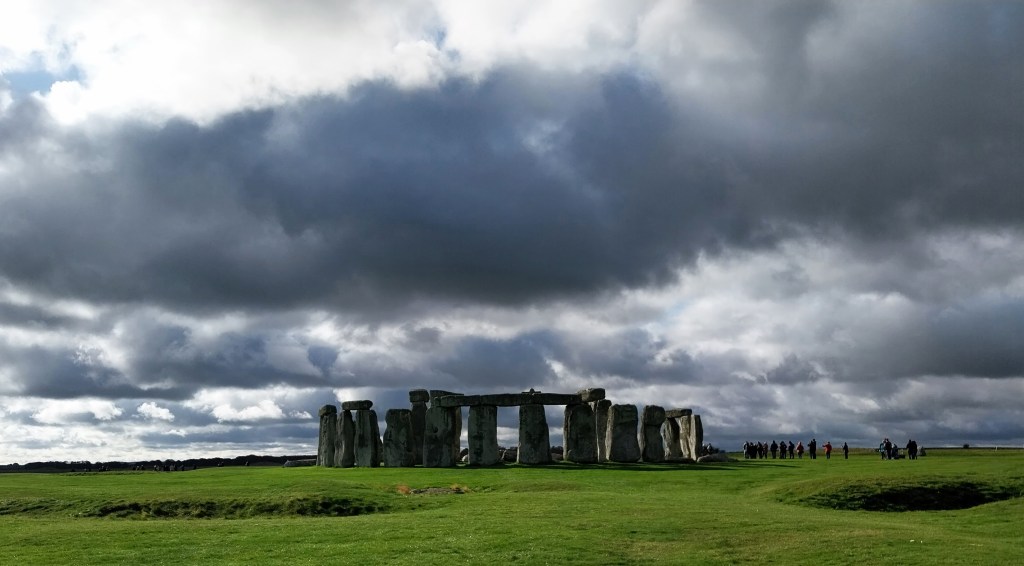
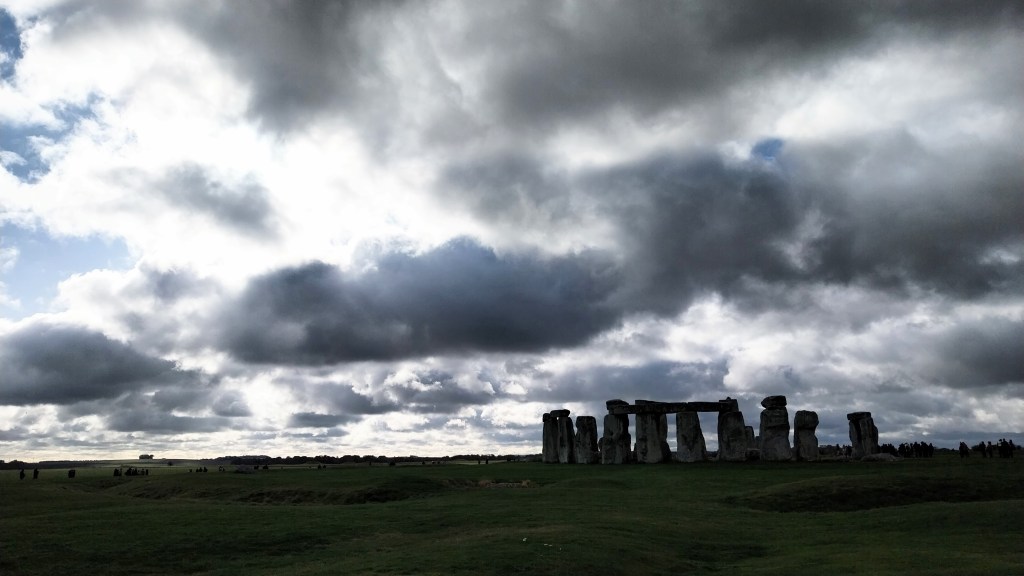
To give a sense of the mystery, I took some photos of the scene under a turbulent, evolving sky. All of the shots in this post were taken within a span of around 15 mins, while I walked around the stones. A cold wind was whipping across the exposed landscape, the quality of light was changing, and the clouds gathered and churned. My final photo below shows how the scene can suddenly turn very dark and brooding. Quite an atmosphere.

This Friday, I’ll be settling down with a breakfast bowl of Brainfood to watch English Heritage’s free, live streaming of the sunrise from Stonehenge, here. Expect things to kick off after 7.00am, with the actual sunrise forecast for 8.09am. All times are GMT, so check the corresponding time for wherever you are in the world. North America, you may need to set an alarm!

Comments below will be open if anyone wishes to chat, while I’ll also be on my Twitter/X channel @differentkitch.

There aren’t many hippie artists on the ADK Playlist, but I think the nature of this post, and the time of year, justifies the addition of this track: Jethro Tull with Ring Out, Solstice Bells.

Categories
Blog Snacks

Higher Ground

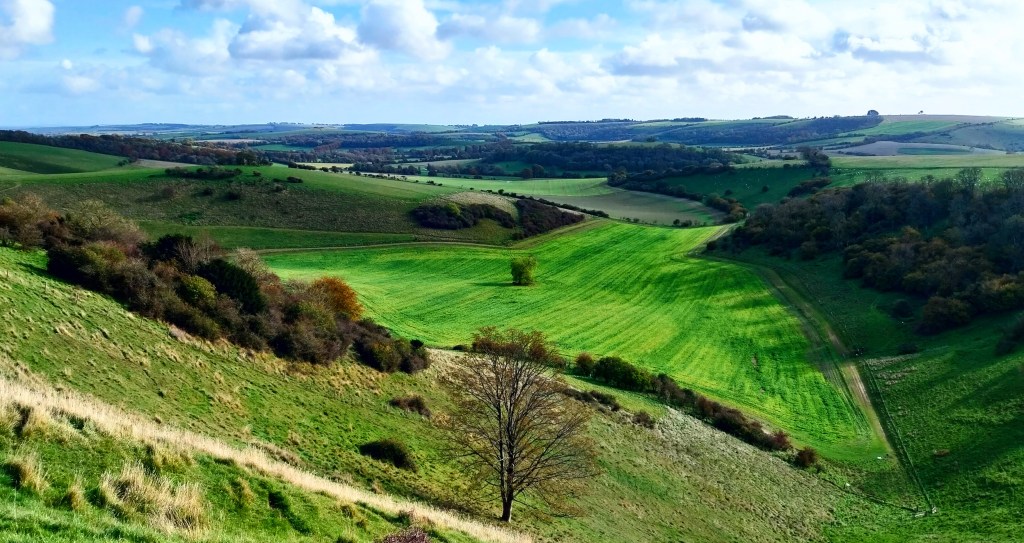
This week we have been away again in the motorhome, enjoying walks and views like this one in my photo above, at Cranborne Chase.

On the edge of England’s west country, it is officially designated an AONB – Area of Outstanding Natural Beauty – and it isn’t difficult to see why. Rolling countryside provides a backdrop for long autumn walks and close-up interaction with wildlife.

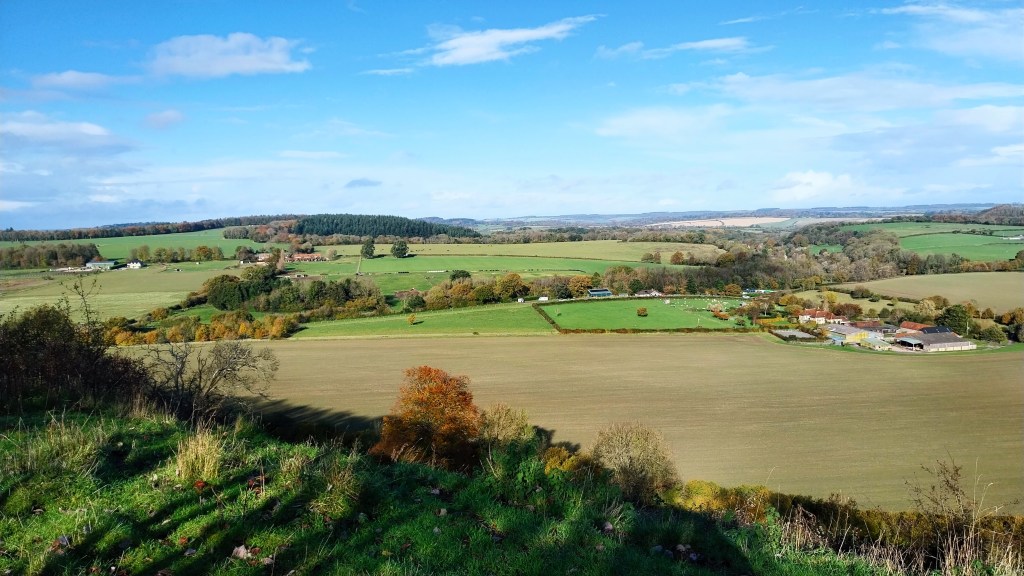
You may think my photo below shows a random wide ranging picture of the English countryside. Well, that’s true – but if you zoom in on the white speck, slap bang in the middle of the shot, you will have located our motorhome. We were on a small campsite that is part of a sheep farm.

I took this shot after hiking high up on the ridge that hosts a long distance footpath from Shaftesbury to Salisbury. It demonstrates how remote we were: just us, our caravanning next door neighbour, and a flock of sheep to the east.

Incidentally, I did try counting the number of sheep, but fell asleep before I could finish 🙂

Cranborne Chase is also an International Dark Sky Reserve, which means that, when night falls, it is bloomin’ dark. There is, literally, no artificial light from anywhere around on this vast landscape, and so the star gazing is first class. There was also the twit-twoo of the local owl to keep us company.

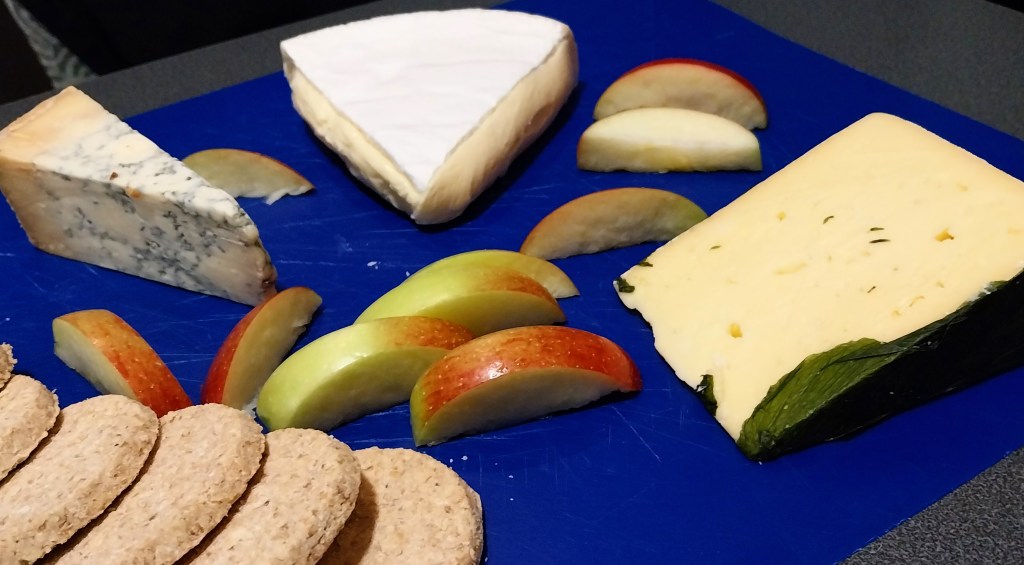
Way out here, the only local shop is a farm shop, doing a great line in west country cheese. Regular followers will know that I require little persuasion to put together a regional cheese board, such as this one below. The best of England’s west country is represented here with (from left to right) Dorset Blue Vinny, Somerset Brie and Garlic Yarg, from Cornwall.

A few years ago I visited the farm in Cornwall where they make Yarg. The garlic variety is hard to come by outside of the west country. They wrap the cheese in leaves from local wild garlic plants, and these infuse it with the flavour and scent of garlic as it ripens.

The oatcakes are from Bath and the apples local.

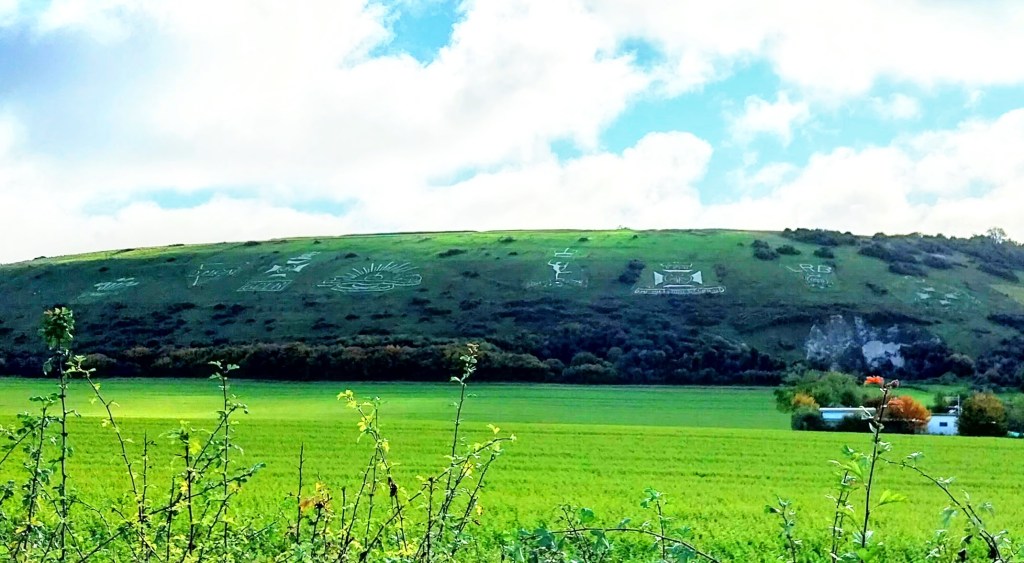
An interesting feature in the landscape is the Fovant Badges. At the time of the First World War, the British Army were stationed here, for final training before travelling over the Channel to the trenches in France. The young soldiers amused themselves (or kept their nerves at bay) by carving large scale versions of their regimental badges into the chalk grassland on the side of local hills. Through careful maintenance and restoration, they are still visible today.

The lady (and sheep farmer) who owned our campsite told me that her father-in-law was one of those young men stationed here, while waiting for the call to fight in what became the Battle of the Somme, where thousands of young soldiers tragically died. On the morning when he was due to travel to France, he required emergency dental treatment, and was excused from going. He went on to live and have a son, that she had been married to for 60 years, and with whom she’d had a family. Ain’t it strange, sometimes, how life works out.

You can find out more, here, about the Fovant Badges.

This weekend is, of course, Armistice Day and Remembrance Sunday, when we honour all those who weren’t quite so fortunate to escape with their lives. I have been wearing my poppy with pride this week, and will leave you with some fittingly inspirational music from Stevie Wonder: Higher Ground.