Categories
Recipes Sides

Semmelknödel

‘Tis the season of roast dinner feasts approaching, so why not liven up your dinner plates this winter with some traditional Austrian bread dumplings?

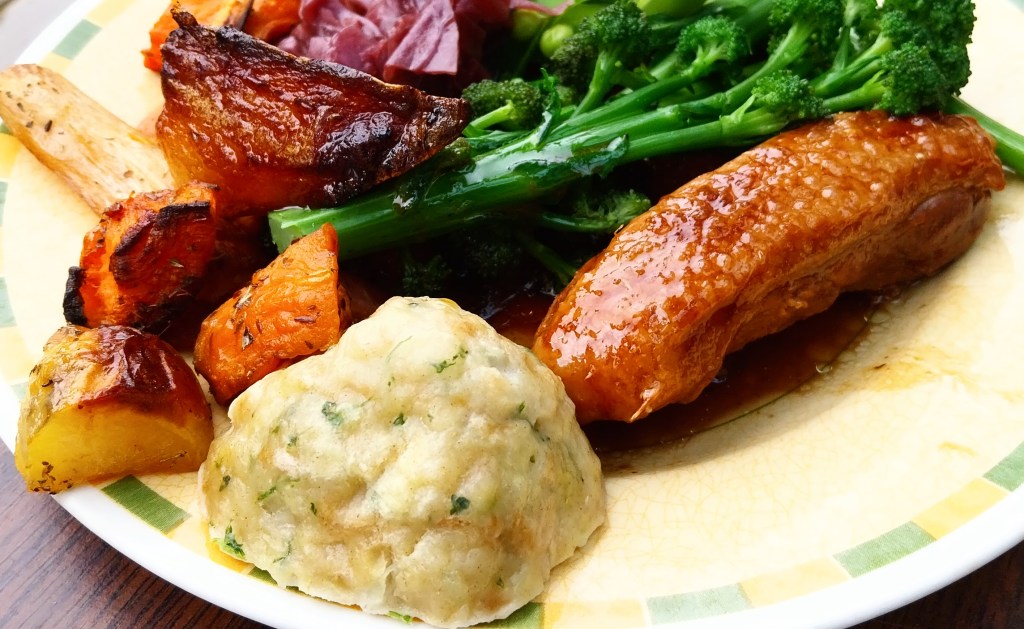
We were treated to a delicious lunch recently, prepared by our good friend Eva, an excellent cook specialising in Austrian cuisine. Home-made dumplings, or Semmelknödel, were served as an accompaniment to a tender roast duck breast, with roast vegetables, braised red cabbage and greens. You can see my filled plate in the main photo at the top of the post.

I especially enjoyed the dumplings – they have a light, succulent consistency with delicate herb flavouring, and absorb the gravy juices from the meat. I’m pleased to say that Eva has agreed to share this old family recipe. Many thanks, Eva and Happy Christmas!

Servings

Makes 18 dumplings.

Timings

15 mins to prepare the mixture, then 1 hour for it to soak. Then about another 30 mins to shape and boil the dumplings.

You Will Need:

  • 500g of dried white bread, which has to be cut into small 1-1.5cm cubes
  • 4 large onions
  • 2 eggs
  • 500-750ml of milk
  • Flour
  • 120-150g of fresh chopped parsley

Method

  1. Put all the bread cube pieces into a very large bowl.
  2. Chop the onions and fry until slightly browned, then add to the bread cubes.
  3. Add the milk, eggs and parsley, mix well together and let it stand for 1 hour so all the milk gets absorbed by the bread. Then cover with self-raising flour (you shouldn’t see any bread through the flour).
  4. Work the flour into the mixture, it should feel firm and not too soggy. You can adjust with either more milk or flour if needed.
  5. Start forming small dumplings (the mixture should make roughly 18 dumplings). Roll each individual one in flour (this will stop them from sticking to your hands or plate) and boil them in salted water, using a large enough pot to give them space for surfacing, after about 20 minutes of boiling.
  6. You can either eat them straight away or freeze the rest (after having been cooked) for another day! They keep very well in the freezer!

Dumplings are served with any type of roast as an alternative to rice or potatoes. They go particularly well with Gulasch.

Eva has chosen the latest track for adding to the ADK playlist, nominating this happy festive song: José Feliciano with Feliz Navidad.
Categories
Blog

Déjeuner à Mélange

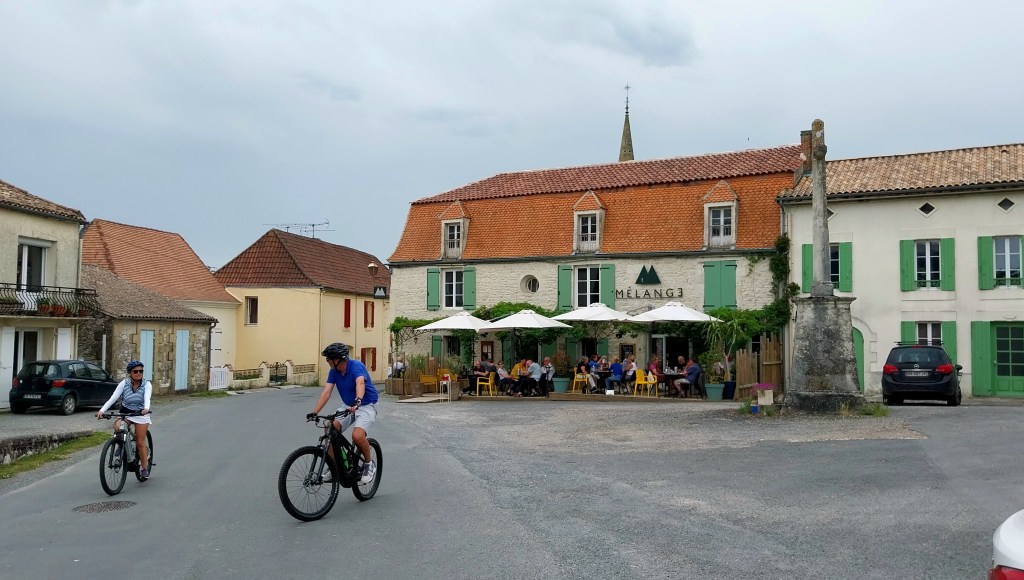
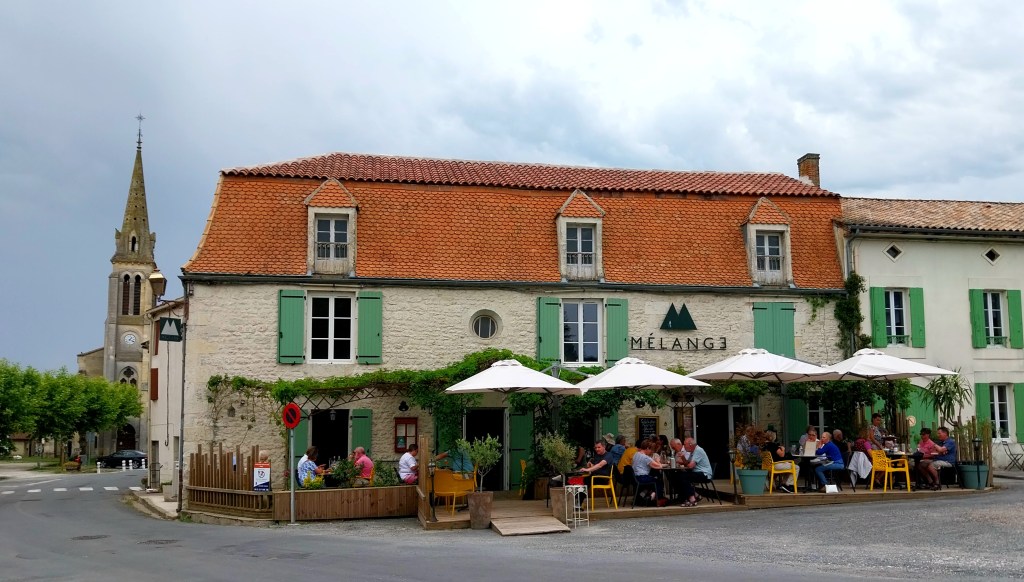
On holiday in France, and keen to experience some top regional cuisine, we book a table for 4 at Melange, a restaurant in our nearest village, Saussignac.

Like many rural villages we have seen in the Dordogne, it is small and sleepy. There is a lovely old church, a war memorial dressed for the D-Day commemorations, and a cobbled square. There is little traffic and few people to be seen out.

That changes, though, when the churchbells chime to say that midi – 12 noon – has struck, and this charming old building opens its doors.

Soon cars were arriving and all the tables on the terrace were filling up. Aren’t I glad that we booked!

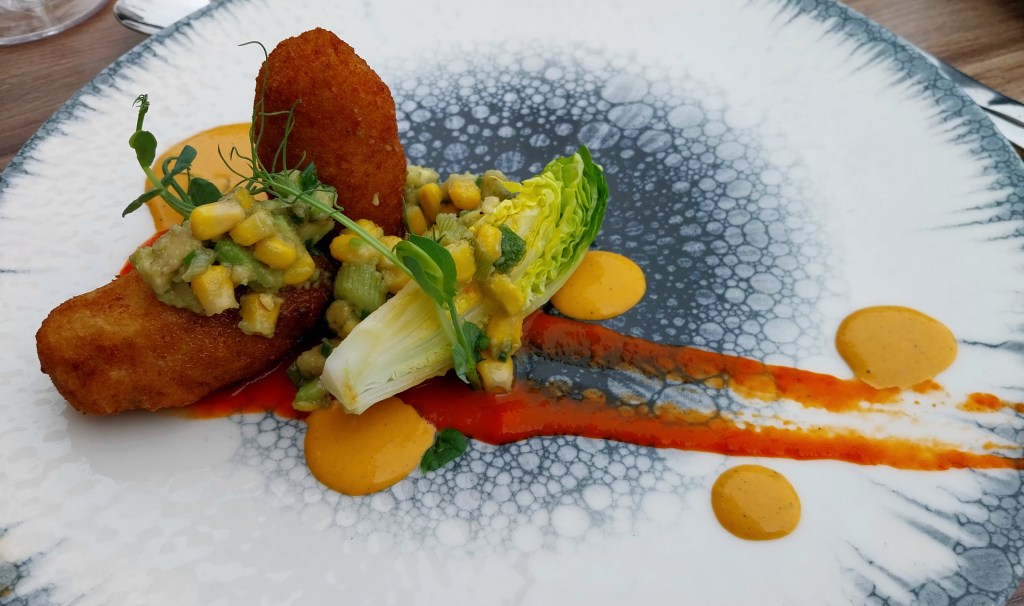
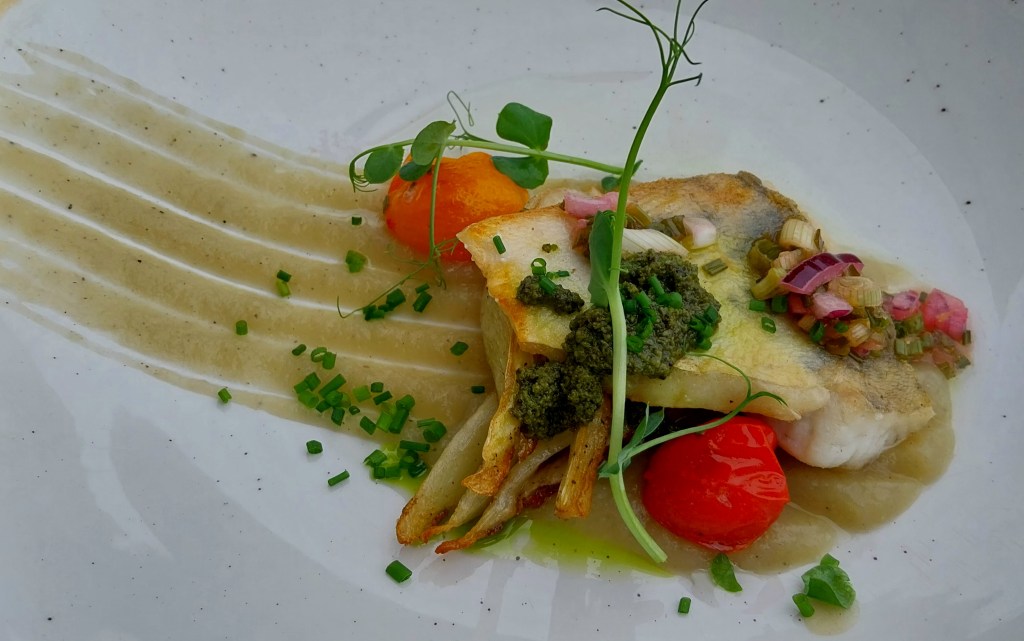
Our 3 course menu du jour was delicious, and beautifully presented. The restaurant’s chef clearly has an artistic streak, judging by the stylish way the dressings and sauces are swept around the plate to get the mouth watering. Well, this country has quite some pedigree when it comes to art: Cezanne, Matisse, and Monet to name a few. Why shouldn’t that extend to culinary creation?

For my Entree, I chose the cod and yuzu croquette, which was served with baby gem lettuce and a sweetcorn and avocado salsa. That is red pepper aioli you can see in the photo below, swept across the dish in broad brush strokes, with carefully positioned blobs of yuzu dressing.

Yuzu is something I hadn’t come across before, and I do not even recall seeing it in any of our shops. Of Asian origin, and now grown in France, it is a citrus fruit that is kind of a cross between a lemon and a mandarin orange. It’s a natural for pairing with the fish in the croquette, therefore.

My Plat, or main course, was a fillet of sardine, served with rocket pesto, roasted cherry tomato, and chive and lemon gremolata. The fennel came en deux facons: firstly as a roasted bulb, and secondly as a puree that looks like it has been extravagantly combed across the plate with traditional Gallic flourish – see below.

The gremolata I hadn’t come across before, and I will definitely have a go at making this back in the ADK Kitchen. It is a garnish comprising seasonal European ingredients all minutely chopped: red onion, garlic, chives, citrus zest and herbs, blended with olive oil.

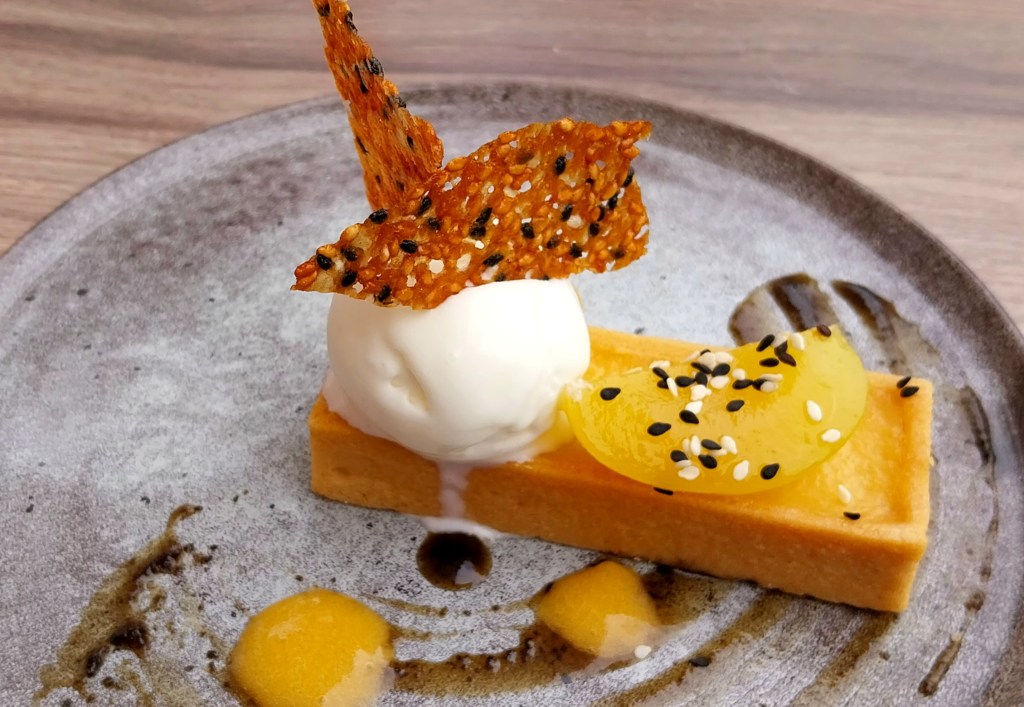
Dessert, shown below, was Tarte a l’abricot – apricot on a biscuit crumb base – with olive caramel wafers and a scoop of yoghurt ice cream.

The apricot had a real zing, and the yoghurt slightly less sweet than more traditional ice cream. The olive caramel wafers are made from pureed black olives and sugar, giving a sweet yet slightly bitter taste that I think goes well in a fruity sweet.

I rounded things off with a cappuccino that was served with a Canelé de Bordeaux, a small caramel pastry that is traditional in this region of France.

A thoroughly enjoyable couple of hours with great food, much inspiration for future cooking, and the company of family and friends. The price was reasonable also – my 3 course menu du jour was €24 (£20 or $25), which I considered fair value.

A glimpse into the unrushed life of a quiet village in the Dordogne that enjoys its food. As Dublin’s B*Witched put it, C’est La Vie !

Categories
Blog Drink

Chateau de Monbazillac

Vive la France!

This week I am off on my travels again. We are holidaying with our very good friends in the Dordogne Valley in south-west France. Expect to be hearing over the next few posts, therefore, about some of the lovely food and drink that this region has to offer.

The base for our stay is a delightful, restored stone farmhouse in the countryside, just west of Bergerac. Built in the 19th century, it retains all its character and, I am pleased to say, now has some 21st century luxuries (like wifi, ensuites and a dishwasher) incorporated.

Discovering that we are situated along the Route des Vins, we set out to find our bearings on a tour that takes in one vineyard after another. The climate and soil conditions here are near-perfect for growing grape vines, making the Dordogne Valley one of France’s prolific wine-producing regions.

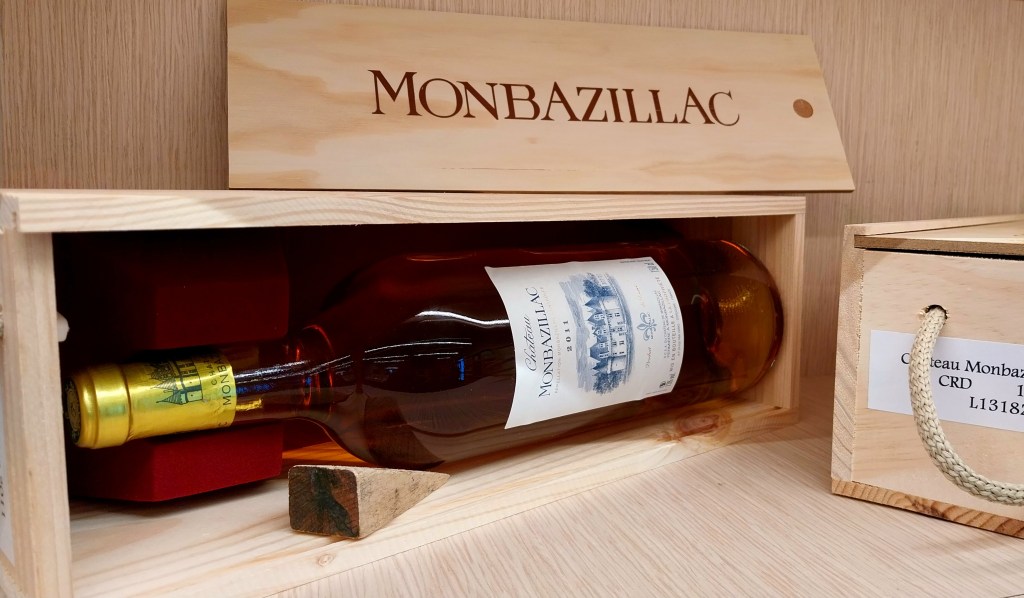
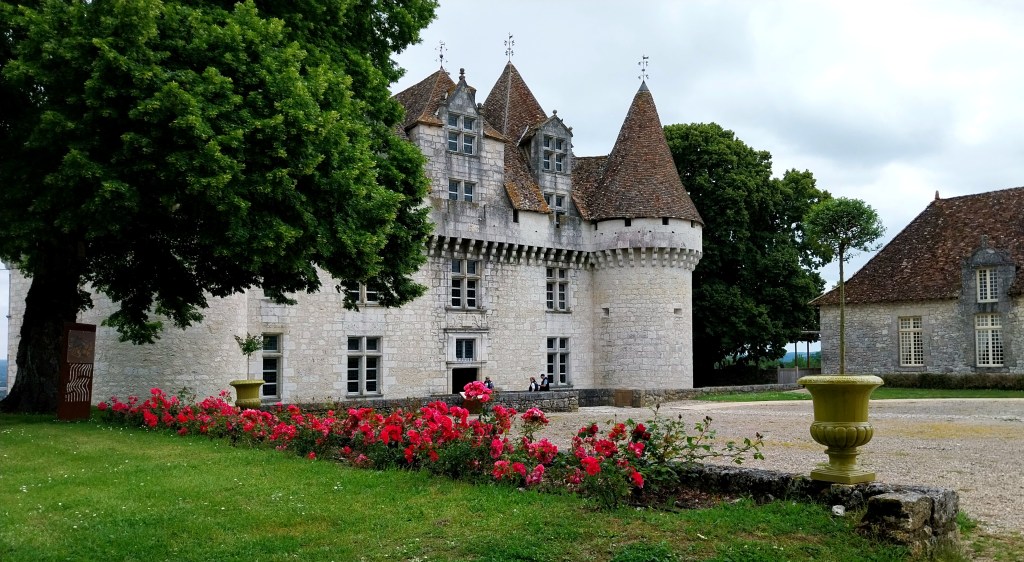
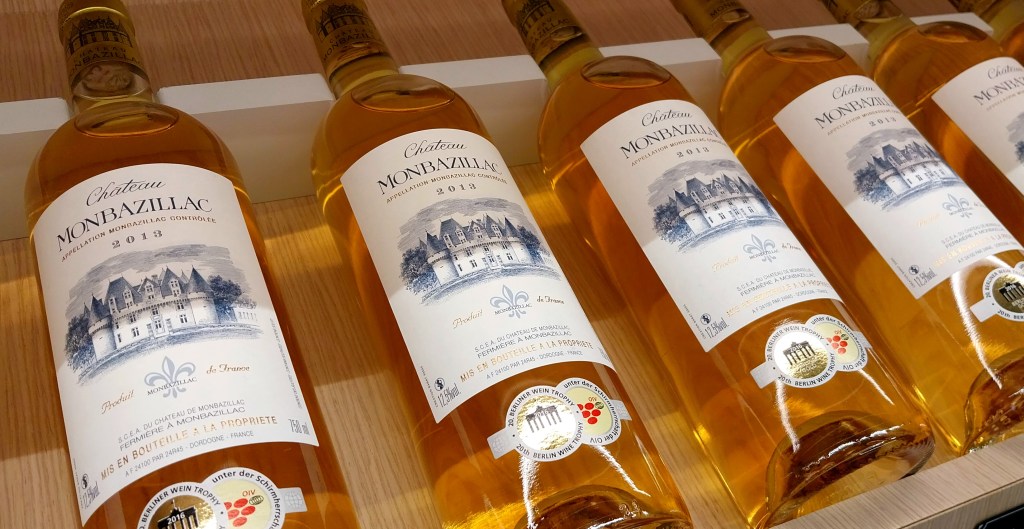
To learn a little more, we stop at one of the major vineyards along the route for a tour and some wine tasting. Chateau de Monbazillac is a microcosm of modern French history – a splendid, ornate chateau and estate that flourished in the 16th Century, before being brought down to earth by the revolting local peasants in the revolution of 1789. After some period of flux, it eventually found its feet again, being taken over by a wine producers’ co-operative that now markets its wine collectively under the Monbazillac name.

The Chateau is beautifully restored and maintained, with exhibitions on modern wine production, and glorious views out across the Dordogne Valley towards the town of Bergerac, taking in row after row of vines.

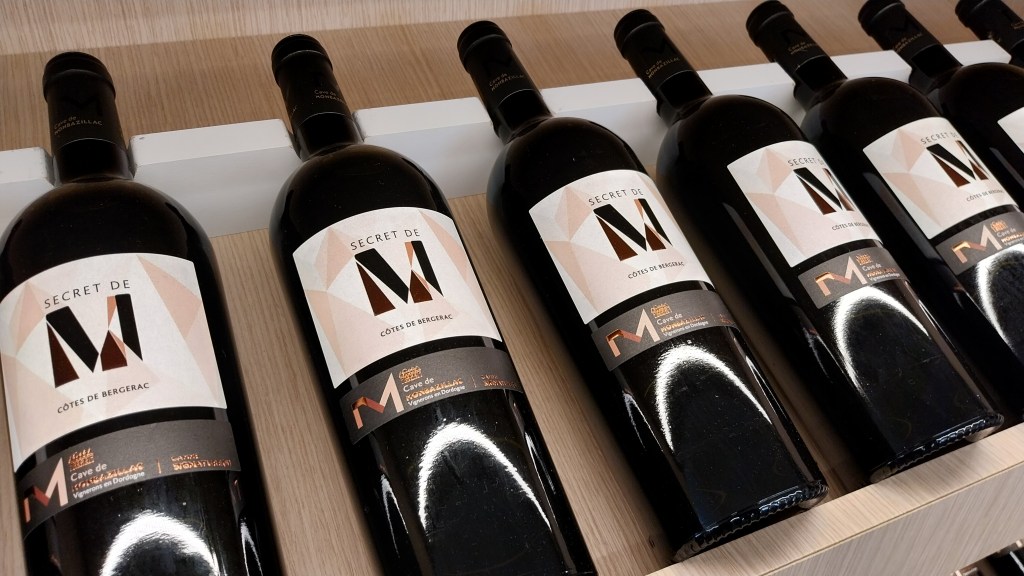
The choice of wines for our tasting took in a Bergerac blanc, a rosé, a fresh and fruity red and a deep red with the scent of oak barrels and a hint of saline on the throat. After some deliberation, our group opted to buy a bottle each of the two reds.

I can assure you these are being fully savoured on our terrace in the evening with a few platters of cheese, ham, pate and locally baked bread (I will go into further details in coming posts about that cheeseboard 🙂 )

After a relatively wet spring here, the weather is warming up, and we are looking forward to a relaxing few days of good food and wine with sunshine. Check back this weekend for a further report.

In the meantime, I shall leave you with a track that has a distinct French connection via the bassist, Jean Jacques Burnel. Here are The Stranglers with La Folie.

À bientôt!

Categories
Recipes Snacks

Eurovision Popcorn

This weekend I am looking forward to watching the Eurovision Song Contest. It is, believe it or not, the 67th year of Eurovision. How much it has grown in that time, with hundreds of millions of viewers around the world each year, on TV and online.

This year is something of a one-off, however. The tradition is that the country that wins, hosts it in the subsequent year. 2022’s winner was Ukraine, immediately presenting a challenge as to the 2023 host. As most of you will have noticed, our friends in Ukraine are currently otherwise engaged in repelling an act of aggression from a neighbouring state, to the extent that hosting a massive, televised, international song contest is not exactly a top priority right now.

Step in the UK, who were runners-up in 2022 and have kindly offered to act as host this year. The musical extravanganza will take place on Saturday night, in Liverpool. The acts will follow in the footsteps of the city’s considerable pop music heritage, including the Beatles, Gerry & the Pacemakers, Echo & the Bunnymen, Teardrop Explodes, Frankie Goes to Hollywood, The Lightning Seeds, The Farm, and more…the list goes on. No pressure then!

Most of us in the UK have grown up with Eurovision as an annual event. In the early years, the UK had a reasonable degree of success, but wins, and indeed high rankings, have been hard to come by in recent years. The suspicion was that our well-publicised rejection of certain European institutions (I am refusing to mention the ‘B’ word) was translating into low scores from the juries of our neighbours. That theory was thrown into doubt last year, however, when Sam Ryder’s Space man came 2nd in the voting overall, teeing up the UK to act as surrogate host for Ukraine.

Over the years, Eurovision has grown into what is now a week-long event, with semi-finals in the lead-up to Saturday’s final. It’s a sign of its success, with so many more countries (including EU accession states from the former Soviet bloc, and even our friends down under in Australia – G’Day!) now wanting to associate themselves with membership of such a great European institution (I am still refusing to spoil the mood by mentioning the ‘B’ word).

Eurovision night is television party night, so get those finger foods ready. My staple, while watching the show live, will be homemade popcorn. The recipe for this is already posted, from my last major televised party occasion, the NFL Superbowl – please see Smoked Paprika Popcorn for details. It really is very easy to make, nutritious, fills the kitchen with a wonderful aroma and tastes great!

As it’s Eurovision, here are some alternative, themed options for toppings you can add at stage 6 in the recipe:

  • France: infuse a crushed clove of garlic in some olive oil, then shake over the popcorn to coat, with a few sprinkles of herbes de provence
  • Italy: drizzle over olive oil and a shake of pizza seasoning, then mix to combine
  • UK: drizzle rapeseed oil over the cooked popcorn, with a few twists of Cornish seasalt and cracked black pepper, then combine
  • Australia: an homage to our friends down under – mix a couple of tbsp Vegemite with the same amount of boiling water, to loosen, then coat the popcorn and mix

Feel free to come up with your own combinations for popcorn toppings and give them a try – German Mustard, Swiss chocolate, Balsamic vinegar and Scotland’s Irn Bru are all just waiting to take their place in this – a kind of crazy Eurovision Popcorn Contest, no less.

Musical choice for the ADK Playlist has to be the track that has brought Eurovision to the UK this year. Here is Sam Ryder with Space man.

Enjoy Eurovision, enjoy the popcorn.

Categories
Mains Recipes

Cassoulet

This week, positive scenes in the news have inspired me to come up with a dish that brings together some British and European ingredients. It looks like we may now be getting back to being on (at least) speaking terms with our lovely neighbours across the Channel in Brussels.

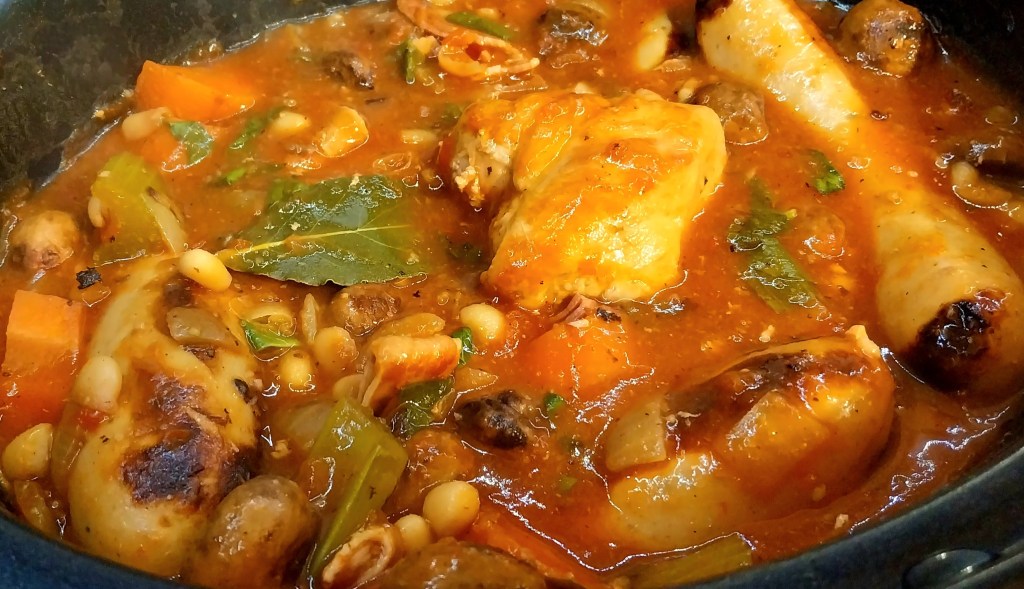
My take on Cassoulet, the classic French stew, combines British seasonal winter veg, German Bratwurst, and French white wine. It’s a fine taste of cross-border goodwill and co-operation – Rishi and Ursula would love it!

There are many different cassoulet recipes, and most contain garlic, poultry (usually chicken or duck), sausages, a ham or bacon, a pulse (e.g. cannellini or haricot beans), stock and white wine. Outside of these, there is scope to use your imagination, what is in season or (erm, a consideration in some parts of Britain at the moment) what is actually in stock in the shops.

Servings

There should be enough here for 6 generous servings.

Timings

About 20 -25 mins to prepare. It then simmers away on its own for 2 – 3 hours.

You Will Need

  • 4 chicken breasts
  • 6 Bratwurst (or any other good pork sausages)
  • 12 rashers streaky bacon
  • 1 onion
  • 2 celery sticks
  • 1 carrot
  • 100g button mushrooms
  • 400g can of chopped tomatoes
  • 400g can of cannellini beans
  • 300ml chicken stock
  • 200ml white wine
  • torn basil leaves
  • 1 bayleaf
  • 2 tbsp cornflour
  • 2 tbsp cold water

Method

  1. Prepare a large casserole dish or slow cooker to cook the cassoulet in.
  2. Cut each chicken breast in half, then shallow fry each in a frying pan or wok until browned. Transfer to the cassoulet dish.
  3. Chop the bacon and fry with the sausages till browned. Add to the cassoulet dish.
  4. Chop the onion, celery, carrot and mushrooms and add to the frying pan. Let the veg soften for a few minutes, then transfer to the cassoulet dish.
  5. In the warm frying pan, tip in the tomatoes, stock, wine and beans. Give them a stir and, when warm and combined (you guessed it) transfer to the cassoulet dish.
  6. Tear in the basil leaves and add a few twists of salt and black pepper. Dunk the bayleaf in the middle.
  7. Let it stew for 2 – 3 hours. I used an electric slow cooker, which sits simmering away in the corner of the kitchen. If you use a casserole dish, put it in the oven at 180C.
  8. When the cassoulet is cooked, combine the cornflour and water in a ramekin until fully dissolved. Pour into the cassoulet and stir to combine. You should see the sauce start to thicken straight away. It is then ready to serve.

Customise It!

As suggested above, provided you have the core elements that every cassoulet should have, you can feel free to play around. Slices of garlic sausage from the deli can take the place of the bacon, for example, and you can vary up the veg if you wish.

I served this with boiled waxy potatoes and steamed shredded cabbage – both of which are good at soaking up the sauce. Boiled rice is another good call.

Turning to the next track for the ADK Playlist, all this talk about European relations brings me to Kraftwerk. I saw them play a few years ago, in the Royal Albert Hall in London. There aren’t many bands who can go off stage half way through for a nice cup of tea, leaving four robots to play their instruments in their absence. The machines performed We Are the Robots, without any dip in quality.

This is one of my favourite tracks of theirs, taking us on an atmospheric journey from Paris, through Vienna to Berlin, on the Trans-Europe Express.