Categories
Blog Snacks

The Lost Gardens

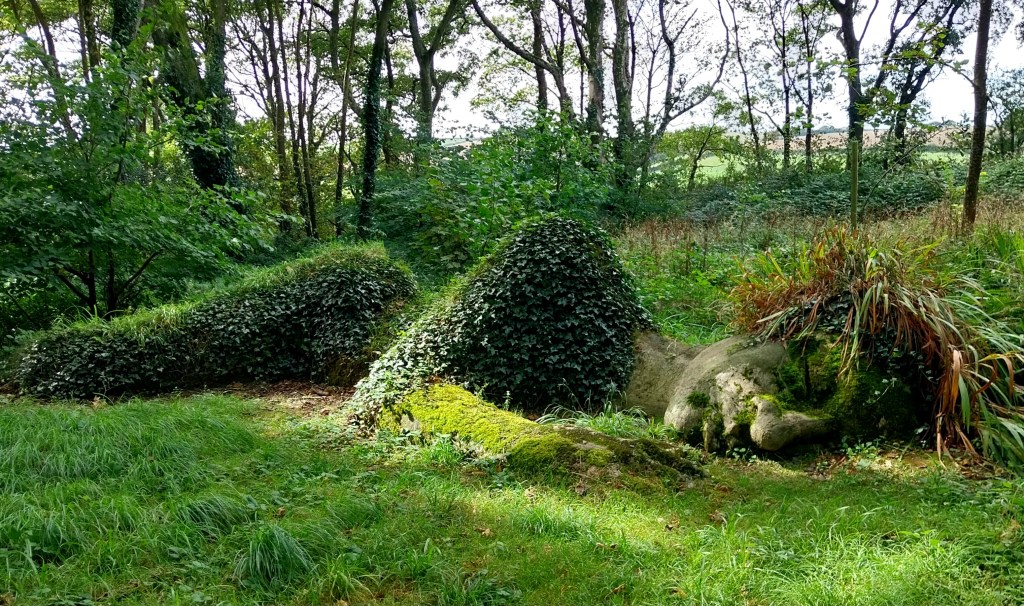
Ssshh, tread quietly so you don’t wake her..

The Lost Gardens of Heligan, the latest stop on our travels around Cornwall, is full of surprises – just look who we stumbled upon having an afternoon nap in the woodland.

This 200 acre family-owned estate was founded in the 16th Century. For many decades, Heligan hosted a thriving and self-sufficient community, living off the produce of the land, including the substantial kitchen garden here.

Then it all changed after World War 1. A number of the gardening team went to fight in the war and, sadly, never returned. The estate fell into neglect, abandoned and overrun.

Until 1990 that was, when the efforts of an enthusiastic band of volunteers helped restore the Gardens to the horticultural wonder they are today. The old walled gardens and greenhouses are a centre for cultivation of heritage vegetables. Traditional livestock breeds are farmed and horticultural skills from a century ago are being practised once again.

Such is the interest in this heritage time capsule that Heligan is now one of modern Cornwall’s top visitor attractions.

Many come to enjoy the blaze of colour from the flower displays.

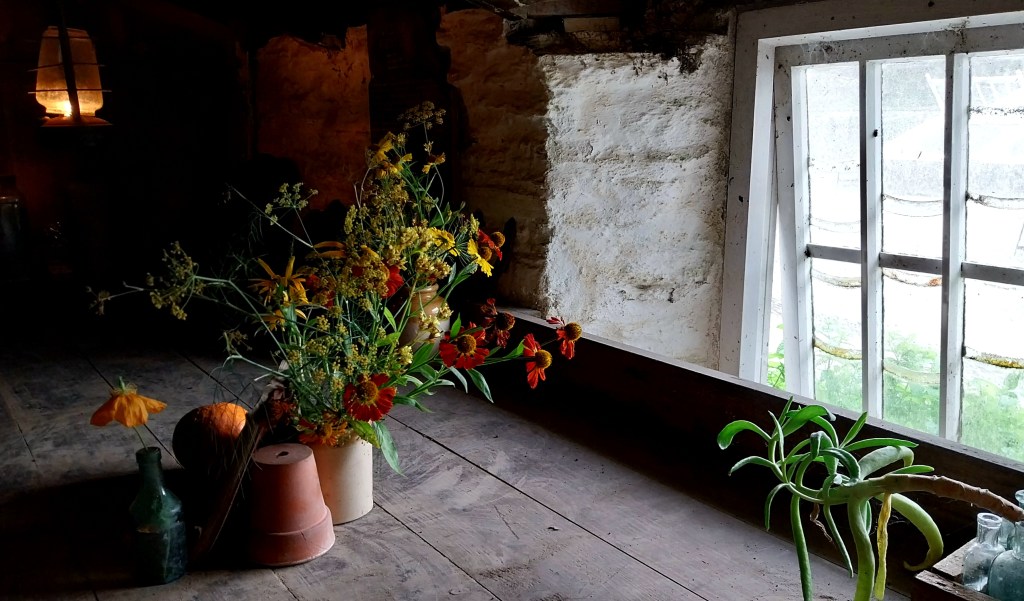
Seasonal produce grown here can be enjoyed through the dishes in Heligan’s cafe. The old buildings are well cared for, and beautifully presented, decorated with freshly cut flowers. I took this photo in the old potting shed.
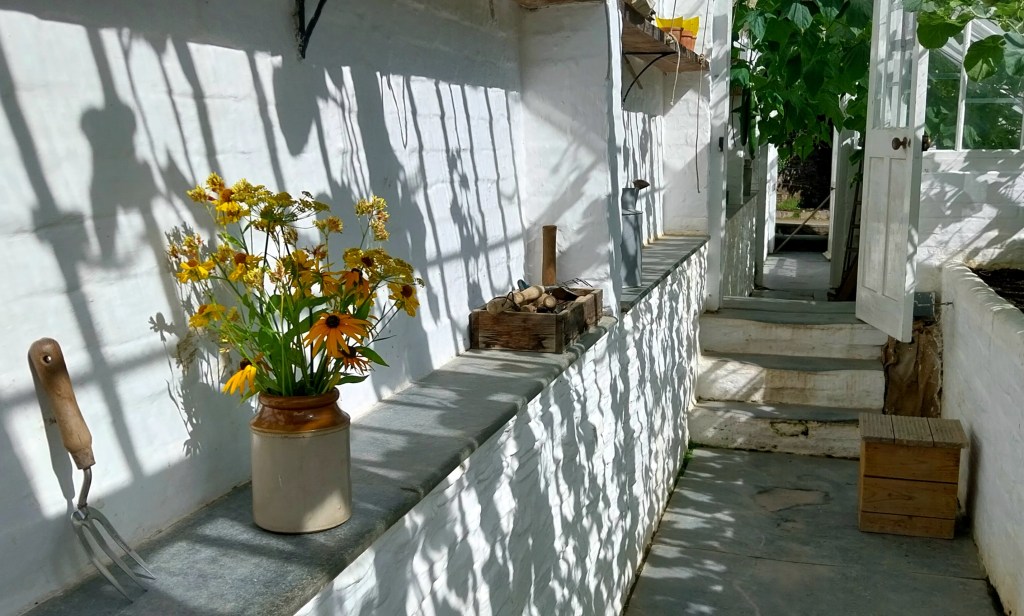
I liked this image of the whitewashed wall inside a greenhouse, with the sun streaming through.
Those wishing to venture deeper into the estate can seek out the Lost Valley, stretching down towards the coast at Mevagissey. What had become a largely overgrown and impenetrable jungle can now be crossed by boardwalk and rope bridge, enabling the Gardens’ many rare and veteran plant species to be enjoyed once more.

There are also one or two newer, enchanting surprises to be found along the way, such as the Mud Maid in my main photo at the top of the post.

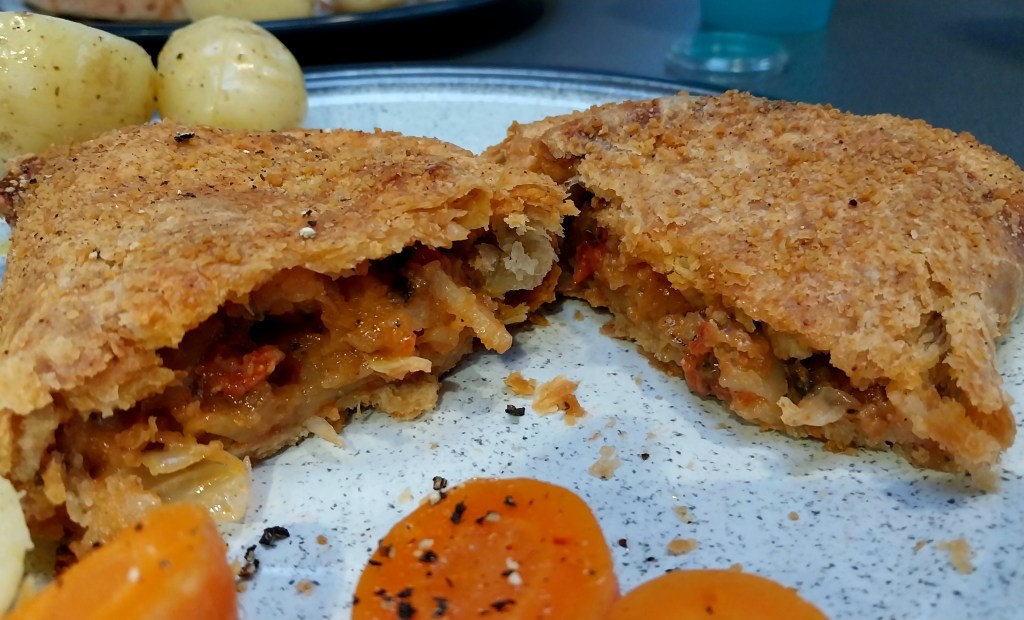
Foodwise, another pleasant surprise on my travels has been my latest variety of Cornish Pasty! The name of this one is Veggie Power, which struck me as just a brilliant name for a dish.

The steak in the traditional filling has been replaced with mushroom and butternut squash, alongside the usual potato, onion and swede. The pastry looks and tastes like it has a higher content of wholemeal flour than the traditional version. Take a bow, Rowe’s Bakery in Falmouth for this tasty and innovative twist on the traditional Cornish Pasty.

The next track on the ADK Playlist is one that the sleeping Mud Maid might appreciate. This is The Cure with Lullaby.


Categories
Blog Snacks

Mount’s Bay, Cornwall

Our motorhome travels around Cornwall, in the south-west corner of Britain, have now brought us to Mount’s Bay.

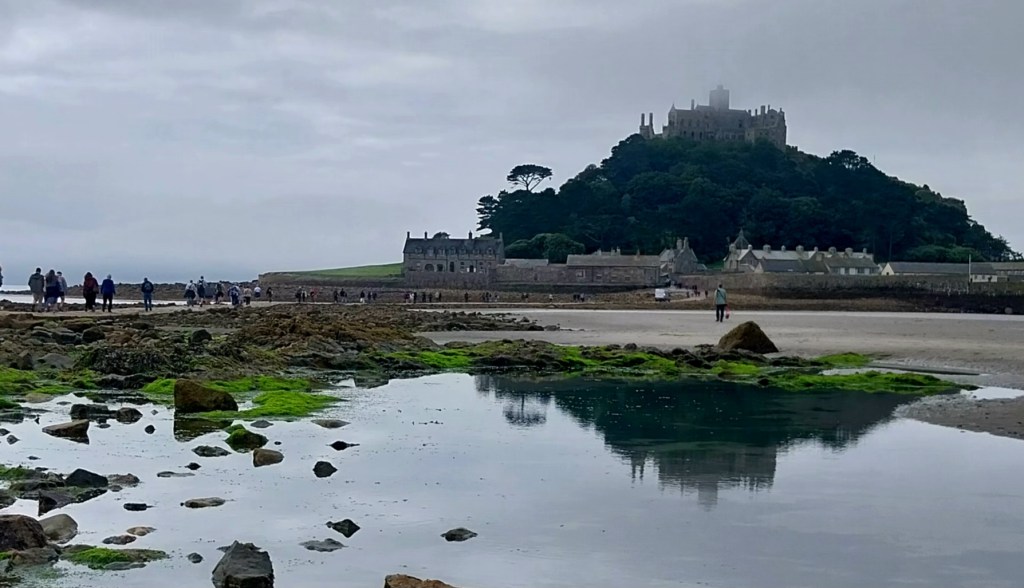
St. Michael’s Mount is visible all around the Bay, from Marazion to Penzance in the west. It is an ancient castle and sacred site high up on an island, accessed via a causeway at low tide, as shown in my photo below. It’s a path well-trodden down the centuries by pilgrims and travellers.

Low tide was early morning when we visited, and the mist around the Castle had yet to fully clear. I clambered across the sand to get a dramatic picture of the Mount reflected in this rockpool.

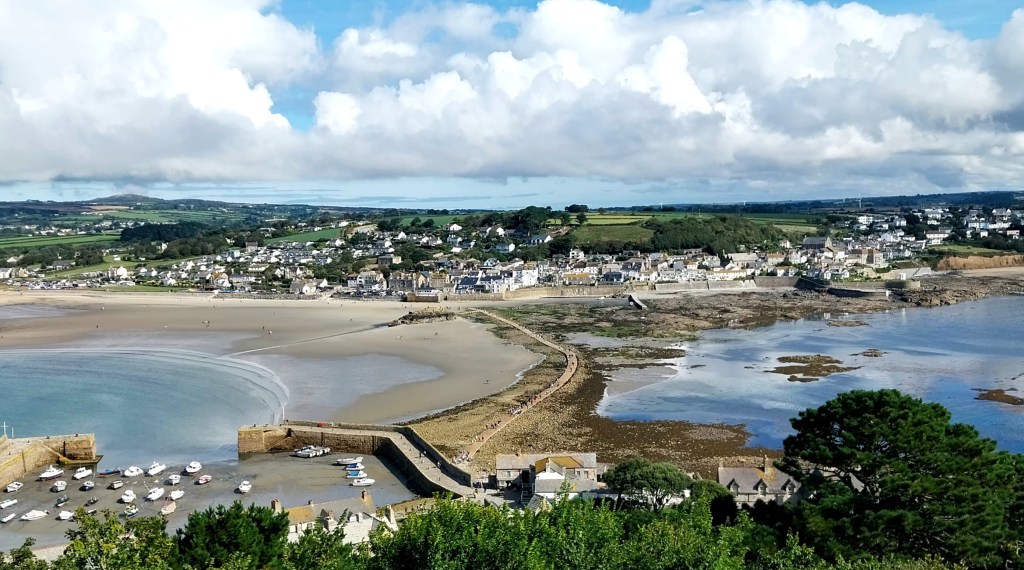
By the time we had crossed and climbed the steep cobbled lanes to the summit, the mist had cleared. There were terrific views back to Marazion, the sun now glinting on the stone causeway snaking its way across the golden sand.

We returned ashore again before the sea flowed back, a few hours later. Anyone leaving the journey too late will receive nature’s reminder that time and tide wait for noone.

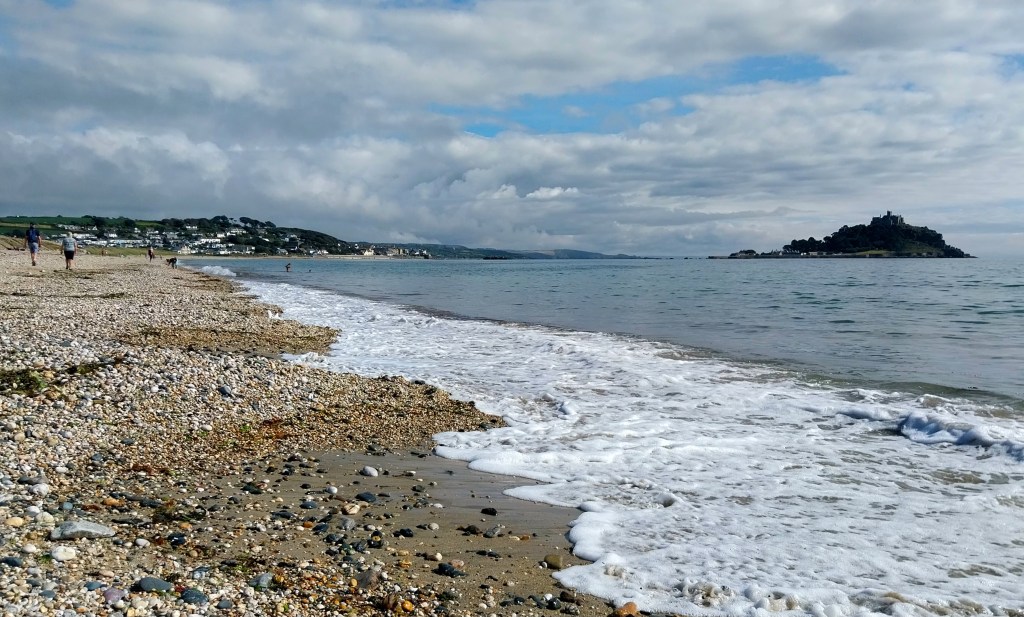
The stretch of the South-West Coast Path around the Bay is also a cycle trail. We were treated to more scenic views as we rode it all the way to Penzance.

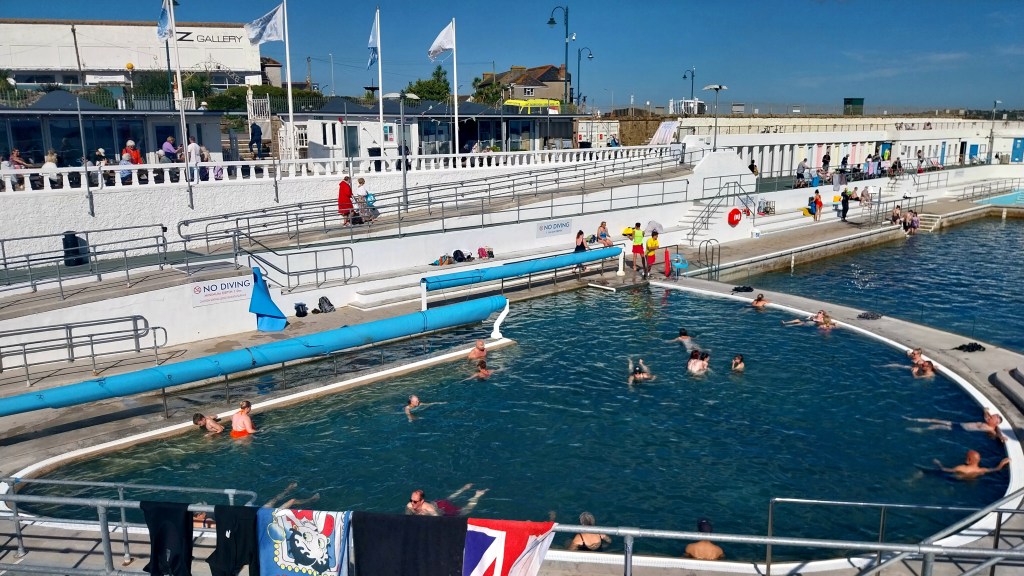
Arriving in Penzance, I enjoyed a swim in the Jubilee Pool, a vast, open air saltwater lido. It dates from the 1930s and has an art deco design.

The main pool is filled directly from the sea, and was a bracing 16C (it’s, er, ok once you’re in and moving around!) I then warmed up in the Jubilee’s star attraction, a large geothermal pool heated naturally by an underground spring to a much more amenable 30C.

After all that walking, climbing, cycling and swimming, I reckon I had earned another Cornish Pasty.

These ones had a traditional filling of chopped steak, potato, onion, swede and black pepper, in a buttery, flaky pastry crimped together at the edge. They really are the most popular street food here, with thousands baked fresh every day by little independent bakeries. Warmed up that evening in the motorhome oven, it was delicious and filling.

Time for the next track on the ADK Playlist. Those misty, early morning images of the Mount kept reminding me of the lyrics in this track by Led Zeppelin ….pack your bags for the misty mountains, where the spirits fly….: This is Misty Mountain Hop.

Categories
Blog

Magical Cornwall

We’re off on our motorhome travels again, this time around Cornwall in the south-west corner of Britain. I’ll be visiting some interesting places and posting about the great regional food and drink to be found in this part of the world.

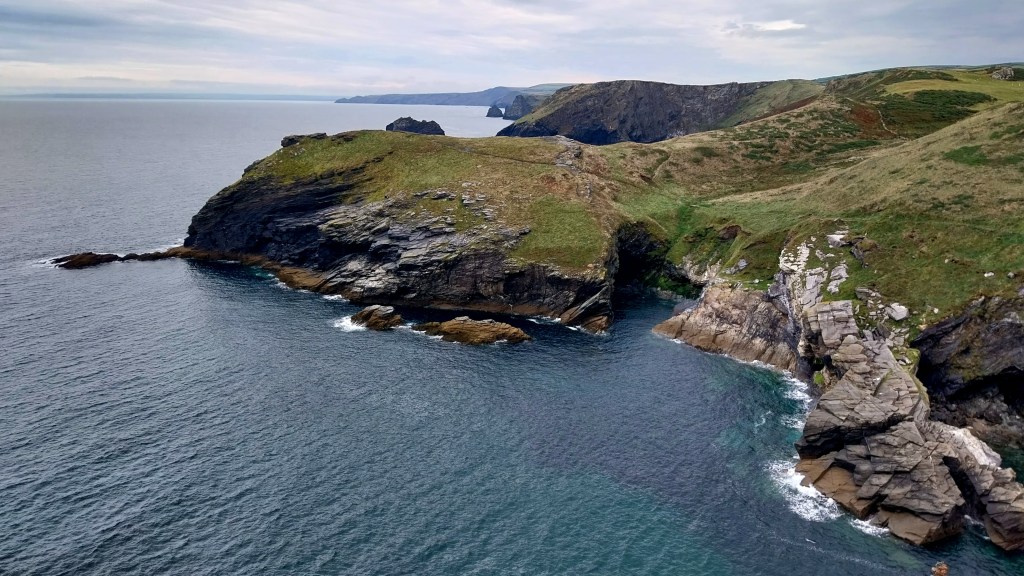
First stop is Tintagel on the north coast – an ancient castle up on a rocky headland, with views out to the Atlantic. The site is full of mystery, having links to the legend of King Arthur.

Those making it to the summit are greeted by the imposing figure of Gallos, shown in my main photo above. This statue in bronze symbolises the power of the ancient Cornish rulers who reigned here in the Dark Ages, around the 6th Century AD. His ghostly, semi-transparent, sword-wielding figure evokes the legend of Arthur.

We walked here from our campsite, 3km along this rugged coastline via the South-West Coast Path.

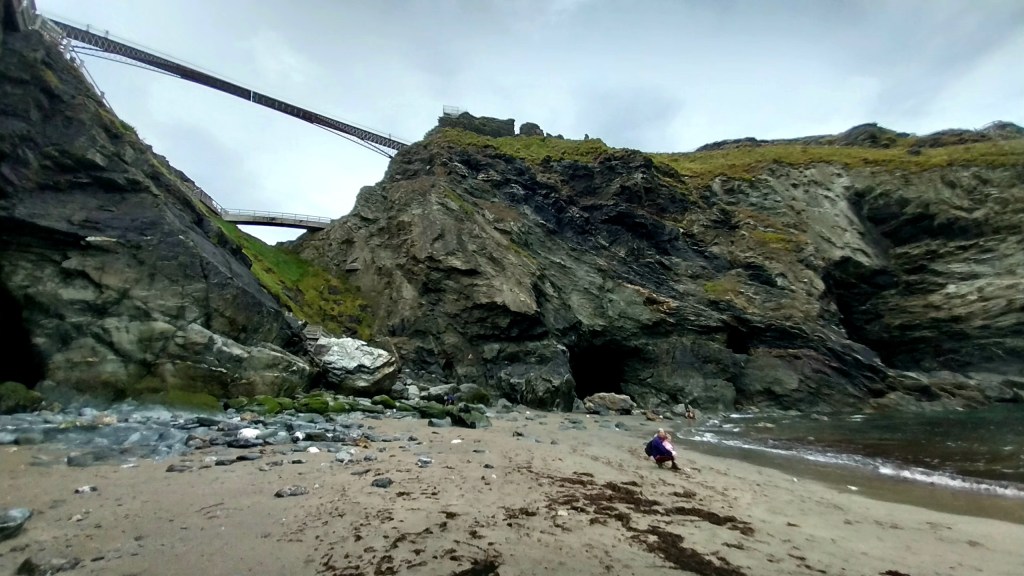
The Castle ruins are on an island, reached by walking across a high suspension bridge that’s replaced the causeway – long since eroded and tumbled down into the sea.

Several steep flights of steps take you down to the beach below, which can only be reached at low tide. The final set of steps has been washed away by the sea, leaving one to clamber over the rocky debris to reach the sand.

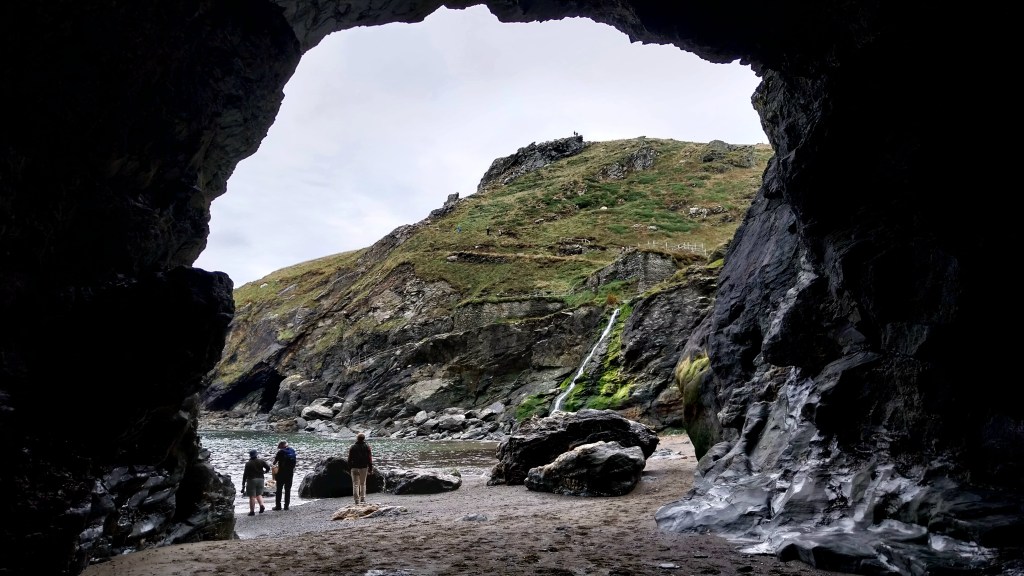
Many people make the descent to explore the vast hole cut into the rock face by the waves. It is known as Merlin’s Cave, supposedly the place where the famous wizard resided.

I was surprised how vast it was inside. I took this photo looking out towards the headland opposite and the crashing waves.

Excavations of the Castle site suggest that the people who lived here in the Dark Ages ate and drank well. There is evidence of a sea trading network with the Byzantine Empire, and fine foods and pottery imported from the Mediterranean.

The taste for fine food certainly continues in modern day Cornwall, as a walk up into nearby Tintagel village will show. There is no shortage of tempting pubs and cafes offering delicious Cornish Pasties, cream teas and clotted cream ice cream. Meanwhile, any budding wizards will also find a unique range of shops specialising in all things alternative therapy, sorcery and witchcraft.

Hungry after a morning of walking, climbing and scrabbling over rocks, we settled at the Cornish Bakery, where I opted for this Cornish Pasty. It had a delicious filling of chorizo, mozzarella and Cornish sea salt.

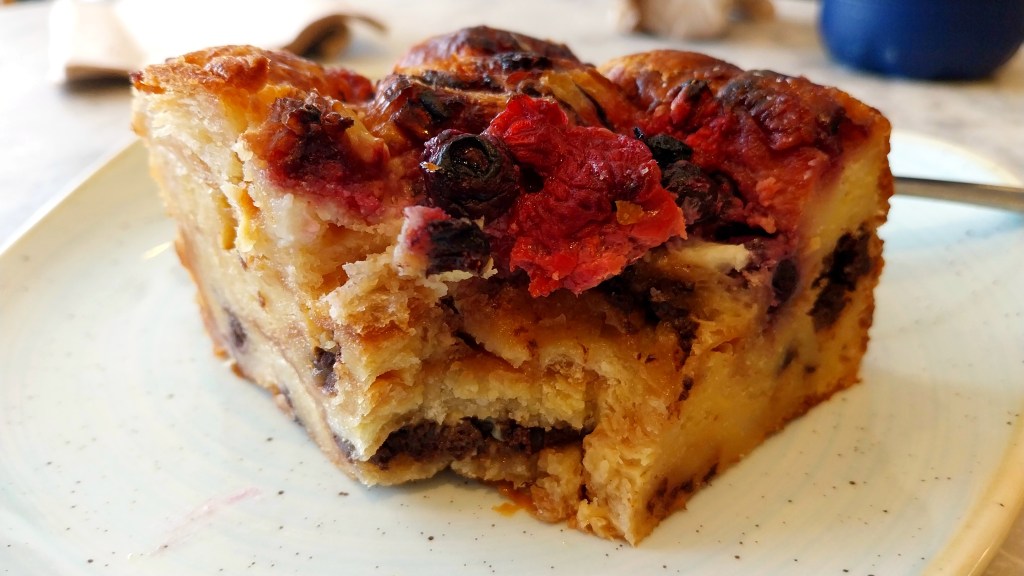
Sweet was a slice of Cornish Pudding, a local take on bread and butter pudding, with pastry baked in custard, laced with berries and chocolate.

Magical!

Today’s musical choice just has to be prog rock: there is enough mysticism about Tintagel to inspire an entire Led Zeppelin album. This track is a duet between Robert Plant and Sandy Denny, from Fairport Convention, over some intricate acoustic mandolin by Jimmy Page. Light up an incense stick and enjoy Led Zeppelin with The Battle of Evermore 🙂

Categories
Bakes Recipes

Coronation Scones

Today I’m featuring a recipe that is, quite literally, fit for a King!

Across the UK this weekend, people will be watching history in the making, as our new King and Queen are crowned at Westminster Abbey, in London.

On Saturday, the procession route will be lined with Union Jack waving wellwishers, and those that can’t be there are able to watch the whole proceedings live on free to air TV. With all the pageantry on show, events are guaranteed to be quite some spectacle.

Sunday is the day for street parties in local communities, finishing with a major concert at Windsor Castle, also live on TV.

On Monday, we are being given a day’s national holiday so that we can recover from all this partying and excitement. Hey, we haven’t had one of these for 70 years, when most of us (me included) weren’t even alive. Coronations only come around once every few generations, so there’s no surprise it’s getting this much special attention.

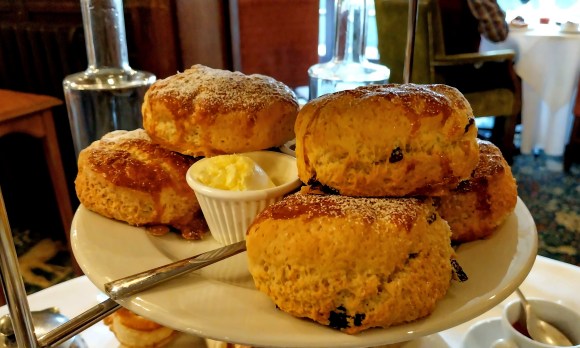
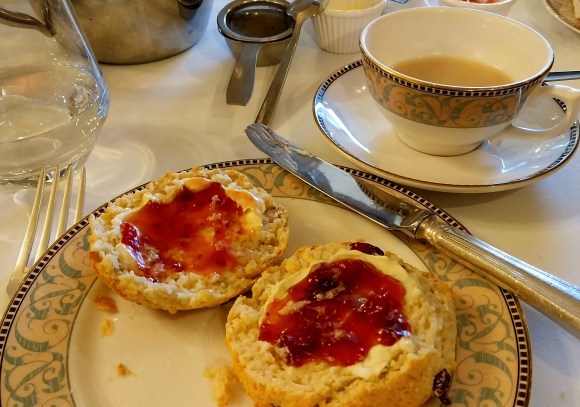
Here’s what I’m making for our own local street party – a Coronation take on a Brit classic – the scone with jam and clotted cream. Served with a pot of tea, of course.

Happy and Glorious!

Servings

Makes 8 scones.

Timings

15 mins to prepare, 15 – 20 mins to bake at 180C.

You Will Need

  • 450g self-raising flour
  • 115g soft margarine or spread
  • 85g caster sugar
  • 85g sultanas
  • 1 egg, beaten
  • 200ml milk
  • strawberry jam and clotted cream to serve
  • Union Jack flag to wave (optional)

Method

  1. Put the flour and margarine into a bowl and mix with an electric mixer until it resembles fine breadcrumbs.
  2. Stir in the sugar and sultanas.
  3. Mix in the egg, and gradually add in 150ml of the milk to make a soft dough.
  4. Turn it on to a floured surface and knead slightly. Roll out to a 2cm thickness.
  5. Stamp out circles with a 7cm diameter fluted biscuit cutter, and transfer to a baking sheet covered in a layer of baking paper. Reroll the dough as necessary till you have 8 shapes cut.
  6. Brush the tops with the remaining milk and bake for 15 – 20 mins at 180C.
  7. Serve warm or cold, split and topped with the jam and clotted cream.
  8. Wave a little Union Jack flag as you eat!

Customise It!

If you’re watching your cholesterol, you can replace the clotted cream with low fat spread. Other fruit jams, like raspberry or cherry, will work just as well if you prefer.

What better time than the Coronation to add some joyous Britpop to the ADK Playlist. I am sure Charles and Camilla would approve. Here’s Blur with Parklife.

Categories
Mains Recipes

Cassoulet

This week, positive scenes in the news have inspired me to come up with a dish that brings together some British and European ingredients. It looks like we may now be getting back to being on (at least) speaking terms with our lovely neighbours across the Channel in Brussels.

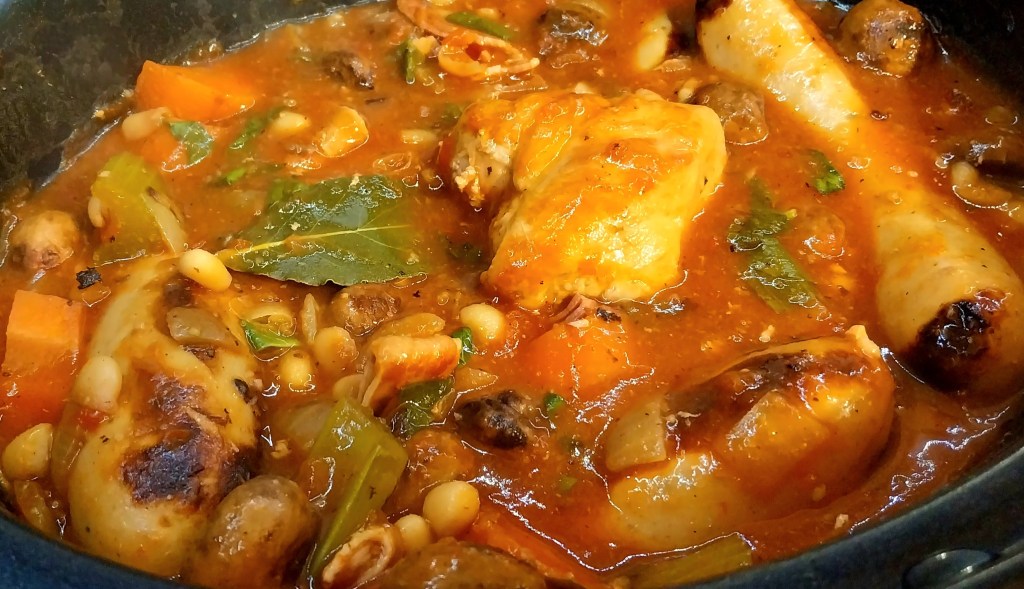
My take on Cassoulet, the classic French stew, combines British seasonal winter veg, German Bratwurst, and French white wine. It’s a fine taste of cross-border goodwill and co-operation – Rishi and Ursula would love it!

There are many different cassoulet recipes, and most contain garlic, poultry (usually chicken or duck), sausages, a ham or bacon, a pulse (e.g. cannellini or haricot beans), stock and white wine. Outside of these, there is scope to use your imagination, what is in season or (erm, a consideration in some parts of Britain at the moment) what is actually in stock in the shops.

Servings

There should be enough here for 6 generous servings.

Timings

About 20 -25 mins to prepare. It then simmers away on its own for 2 – 3 hours.

You Will Need

  • 4 chicken breasts
  • 6 Bratwurst (or any other good pork sausages)
  • 12 rashers streaky bacon
  • 1 onion
  • 2 celery sticks
  • 1 carrot
  • 100g button mushrooms
  • 400g can of chopped tomatoes
  • 400g can of cannellini beans
  • 300ml chicken stock
  • 200ml white wine
  • torn basil leaves
  • 1 bayleaf
  • 2 tbsp cornflour
  • 2 tbsp cold water

Method

  1. Prepare a large casserole dish or slow cooker to cook the cassoulet in.
  2. Cut each chicken breast in half, then shallow fry each in a frying pan or wok until browned. Transfer to the cassoulet dish.
  3. Chop the bacon and fry with the sausages till browned. Add to the cassoulet dish.
  4. Chop the onion, celery, carrot and mushrooms and add to the frying pan. Let the veg soften for a few minutes, then transfer to the cassoulet dish.
  5. In the warm frying pan, tip in the tomatoes, stock, wine and beans. Give them a stir and, when warm and combined (you guessed it) transfer to the cassoulet dish.
  6. Tear in the basil leaves and add a few twists of salt and black pepper. Dunk the bayleaf in the middle.
  7. Let it stew for 2 – 3 hours. I used an electric slow cooker, which sits simmering away in the corner of the kitchen. If you use a casserole dish, put it in the oven at 180C.
  8. When the cassoulet is cooked, combine the cornflour and water in a ramekin until fully dissolved. Pour into the cassoulet and stir to combine. You should see the sauce start to thicken straight away. It is then ready to serve.

Customise It!

As suggested above, provided you have the core elements that every cassoulet should have, you can feel free to play around. Slices of garlic sausage from the deli can take the place of the bacon, for example, and you can vary up the veg if you wish.

I served this with boiled waxy potatoes and steamed shredded cabbage – both of which are good at soaking up the sauce. Boiled rice is another good call.

Turning to the next track for the ADK Playlist, all this talk about European relations brings me to Kraftwerk. I saw them play a few years ago, in the Royal Albert Hall in London. There aren’t many bands who can go off stage half way through for a nice cup of tea, leaving four robots to play their instruments in their absence. The machines performed We Are the Robots, without any dip in quality.

This is one of my favourite tracks of theirs, taking us on an atmospheric journey from Paris, through Vienna to Berlin, on the Trans-Europe Express.