Categories
Mains Recipes

Vietnamese Rice Soldiers

I first came across Vietnamese Rice Soldiers on my travels to Australia, where there is a varied range of Asian cuisine and the quality is high.

Initially I thought they were uncooked sausages when I saw them in a deli takeaway. I soon learned that in fact they contain a mix of finely chopped protein, veg, herbs or spices, with rice or noodles, all wrapped up in a piece of transparent, edible rice paper. They are eaten cold as finger food, with a sauce for dipping, and usually accompanied by a stir fry side or noodles.

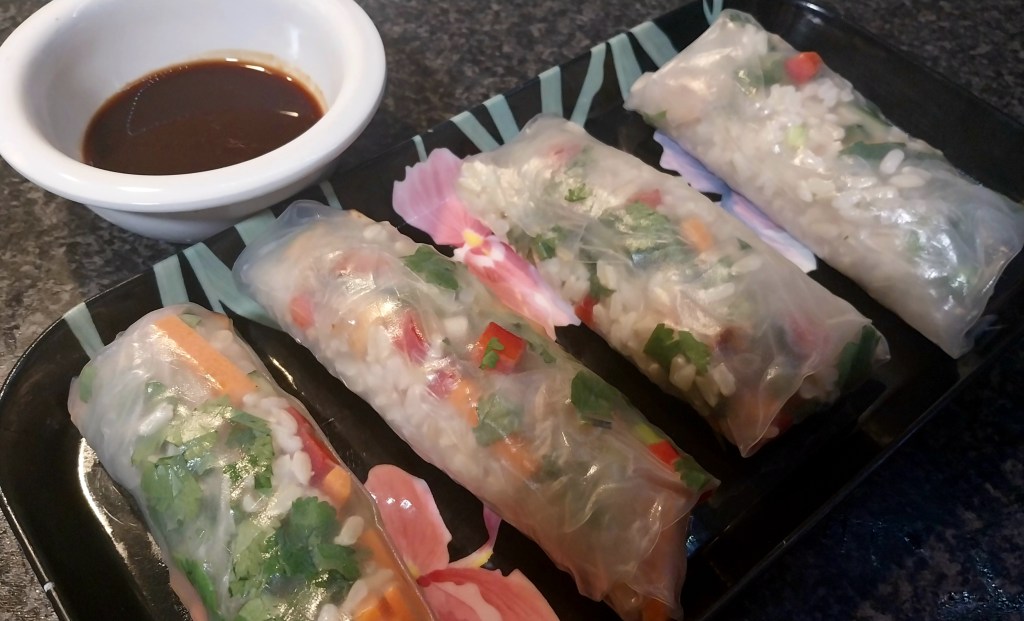
I sampled them in a restaurant in Little Vietnam, the name given locally to Victoria Street in Melbourne, and immediately became a fan! I brought home a pack of rice papers and am now able to make my own at home. Here is a photo of my latest batch:
A pack of rice papers is essential if you want to give these a try. I bought mine (below) in Aussie supermarket chain, Coles. Availability will depend on where you are in the world, but in the UK I have seen some smaller packs in M&S. The best bet may be a specialist Asian food store or online.
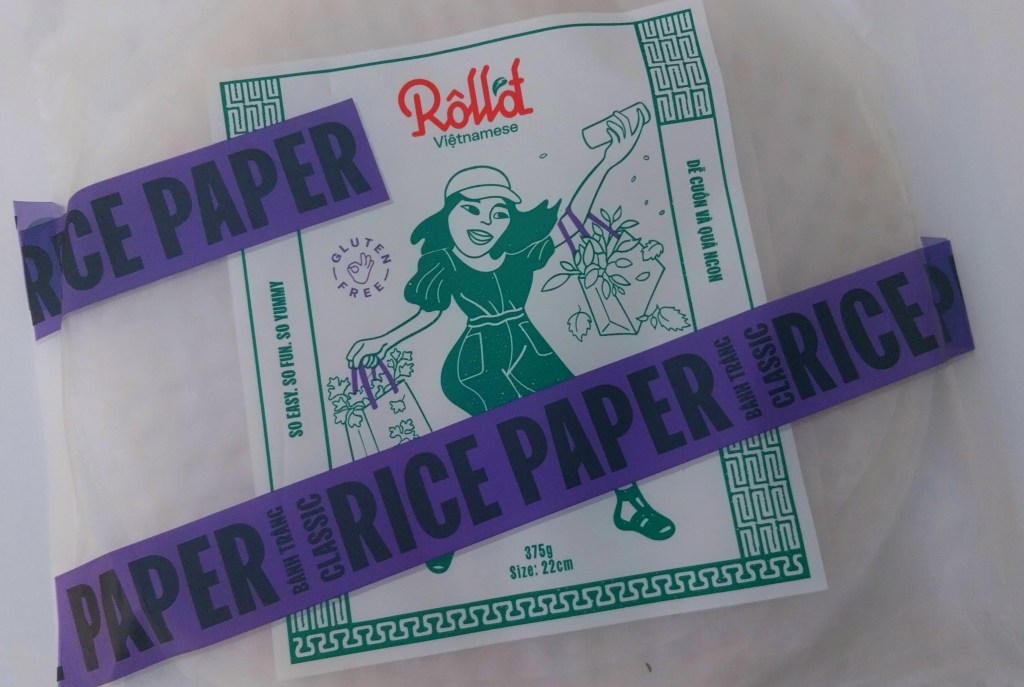
They are made from simply flour, salt and water, requiring just some fresh, lukewarm water to rehydrate and make them soft and flexible.

Servings

This made 8 soldiers. At 2 per serving, that makes 4 adult portions.

Timings

30 mins to chop and prepare the filling. Rolling up takes seconds. The soldiers can be made up in advance and kept in the fridge for a day or two.

You Will Need:

  • 8 circular rice papers
  • a shallow dish filled half with just boiled water, and half with water cold from the tap (so that overall the water is lukewarm, around 50C)

    For the filling:
  • 120g boiled rice, cooled
  • 1 marinaded chicken breast, cooled
  • 1 carrot
  • around 10cm length of cucumber
  • 2 – 3 scallions/spring onions
  • half a red pepper
  • small bunch of coriander/cilantro

    For the dipping sauce
  • 2 tbsp chilli paste
  • 1 tbsp each of soya sauce, rice vinegar, honey and orange juice
  • a good squidge of tomato passata.

Method

  1. Chop the carrot and cucumber into tiny little batons. Chop the other filling ingredients into small pieces and lay everything out on a board.
  2. Take one of the rice papers and submerge it in the lukewarm water. It will begin to soften and take on a slightly, sticky, stretchy feel. Lay it down on a chopping board and put a line of rice across the middle.
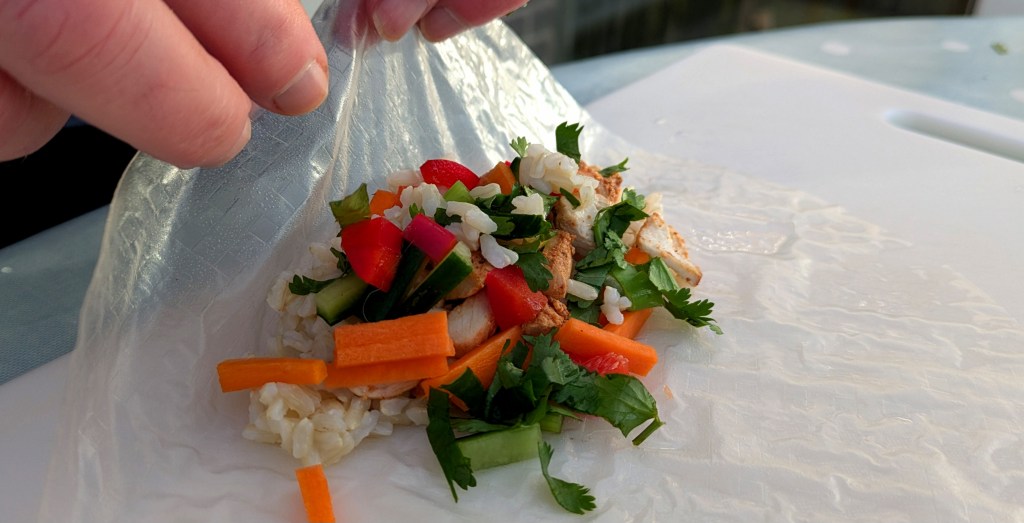
  3. Lay a line of chicken pieces on top of the rice, then follow with the carrot, cucumber, scallions, coriander and pepper. Use a little judgment here – you want the soldier to be well-filled but not overstacked.
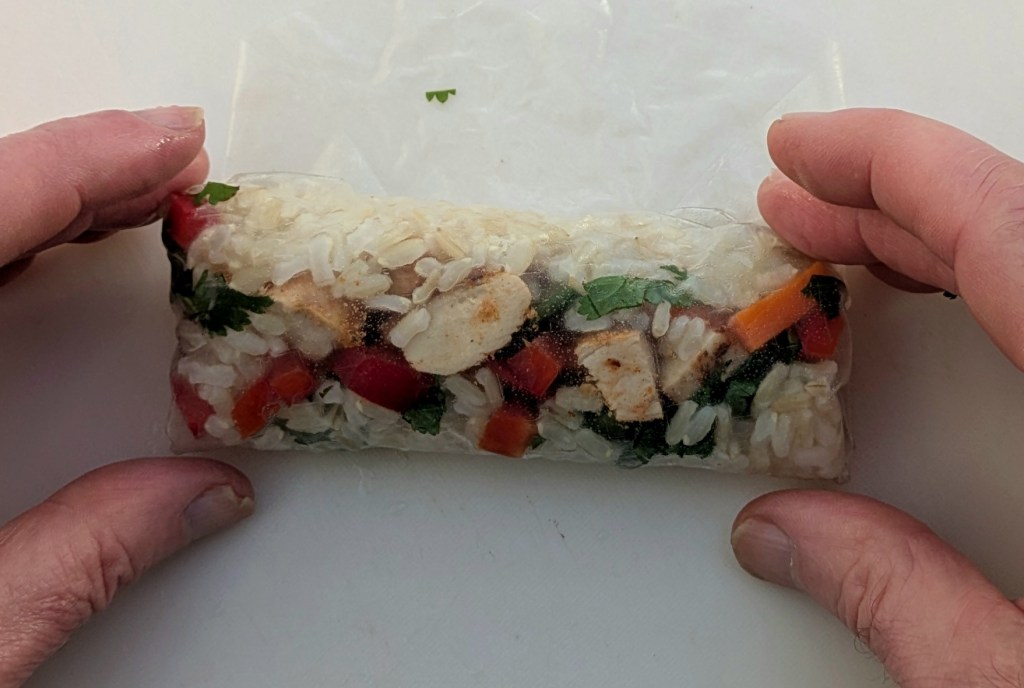
  4. Lift the flap of the rice paper nearest you and fold over the filling. Tuck in both sides, then roll the whole soldier forward until you have a sealed parcel. Check out my photos below, showing the rolling up in action! Set aside on a tray.
  5. Carry on until all the soldiers are made up.
  6. Put all the dipping sauce ingredients in a clean, screw top jar with lid on. Give it a good shake to combine, then pour into a serving bowl. The soldiers can be dipped into the sauce, or alternatively, once you’ve bitten off the top, spoon it on and let it drizzle down to mingle with the filling. Yum!
Customise It!

Vary the protein to include small pieces of fish, or use chopped cashews if you want to go vegan. A sprinkle of sesame seeds would be an excellent idea. Swap in fine, vermicelli noodles or bean shoots for the rice. Finely chopped root ginger, corn, celery are also options. As always on A Different Kitchen, use your imagination and go with the ingredients you like.

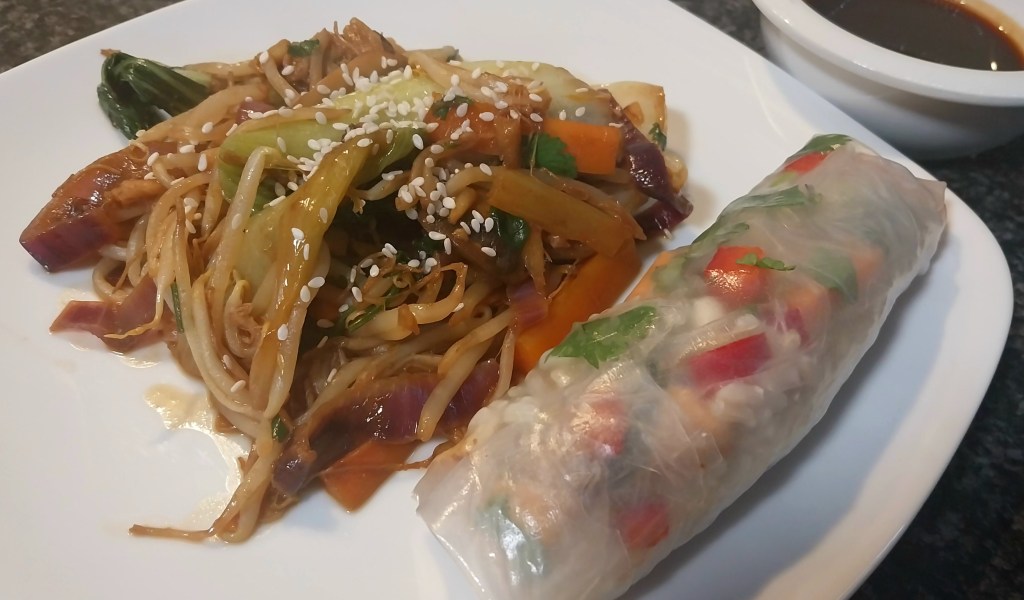
I served these with a side of stir fried bean shoots, pak choi, root ginger, garlic, red onion, carrot and mushroom topped with a sprinkling of sesame seeds (as shown in my main photo at the top of the post). For the stir fry sauce I simply made up more of the dipping sauce and poured that in. Hey – keep things simple!

It’s Superbowl weekend once more, and I am looking forward to staying up late this Sunday to watch the game. I can’t see any other outcome than the Kansas City Chiefs winning again, as they seem to be invincible when it comes to play-off season. Apologies to any Philly Eagles fans, but who knows, maybe you will surprise me?

Here’s a piece of classic Americana – Tom Petty with Running Down a Dream. Enjoy the Superbowl, everybody.
Categories
Mains Recipes

Gochujang Lentil Roast

This week, my continuing search for comforting winter dinners has brought me to the Korean aisle in my local supermarket, to pick up a jar of Gochujang paste. I have used it before in a few recipes here on A Different Kitchen (Korean Pulled Pork Sandwich, Cauli Roast, Salmon Noodles) and am a real fan of its sweet and smoky taste.

Gochujang is a spicy condiment made from red chilli peppers and fermented soya beans, and is definitely worth a try if you haven’t come across it before. Find it in the Asian section of a reasonable-sized supermarket or in a specialist deli.

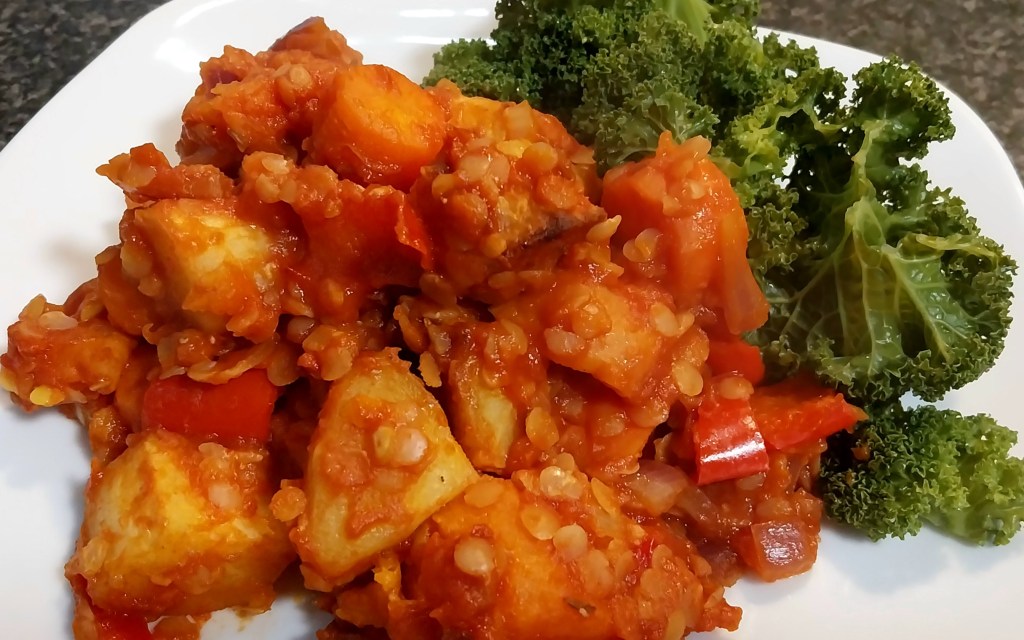
In this dish its magical spicy warmth is the base for a hearty lentil dahl-like stew with char-roasted winter veg.

Servings

4 adult portions.

Timings

30 mins to make.

You Will Need

  • a large roasting tray’s worth of chopped root veg – I used carrot, parsnip and sweet potato
  • 1 red pepper
  • oil
  • 1 clove garlic
  • 1 medium red chilli
  • 1 tbsp cumin seeds
  • 2 tbsp gochujang paste
  • 1 red onion
  • 3 celery sticks
  • 500g carton tomato passata
  • 100g red lentils

Method

  1. Switch on a fan oven to 180C.
  2. Chop the root veg and red pepper into chunks and spread out in the roasting pan. Drizzle with oil and place in the oven when it’s up to temp. Leave for 30 mins.
  3. Crush the garlic and place in a wok with a drizzle of oil, over a medium heat. Finely chop the chilli and add to the wok with the cumin seeds. Give it all a gentle stir and leave to sizzle for a few moments.
  4. Add the onion and celery, chopped, and stir again, and add in the gochujang paste. Stir once more so the veg is coated in the lovely smokey red paste.
  5. Tip in the passata. Fill the empty carton with tap water and add this also, then sprinkle in the lentils. Bring to the boil, then turn down to a simmer and leave to reduce and thicken.
  6. When the roasting veg have had their 30 mins, remove the tray from the oven and scrape them into the wok. The veg should be softened and a little charred at the edges. Stir so all the veg is coated, then serve. I served mine with steamed fresh kale, as shown in my photo at the top of the post.

Customise It!

Feel free to swap in whatever roasting veg you have to hand – swede, potato, celeriac can all be contenders, so can mushroom or aubergine.

Dance classic season continues here on A Different Kitchen. Next up is the legendary Teddy Pendergrass, in the form of Harold Melvin & The Blue Notes, with Don’t Leave Me This Way.

Categories
Blog Mains

Asian Fusion

Today I’m featuring some dishes from our visit to Light Years Asian Bar and Diner in Noosa, Queensland. We were a party of four, and we chose a variety of plates to share. I always enjoy doing this at a restaurant that has an interesting menu, as it means each member of the group can savour and experience so many more new tastes.

The menu at Light Years (and before anyone asks – no, it has nothing to do with Buzz of the same name 🙂 ) is what I would call Asian Fusion, bringing together the sights and tastes from culinary traditions in India, Thailand, Korea, Indonesia, China and Japan in new and innovative ways.

We began with some steamed dumplings, brought to the table in a bamboo steamer basket and served with a type of hoisin dipping sauce. Here is one, up close. The filling is wild truffled mushrooms, with black vinegar, sesame and chilli.

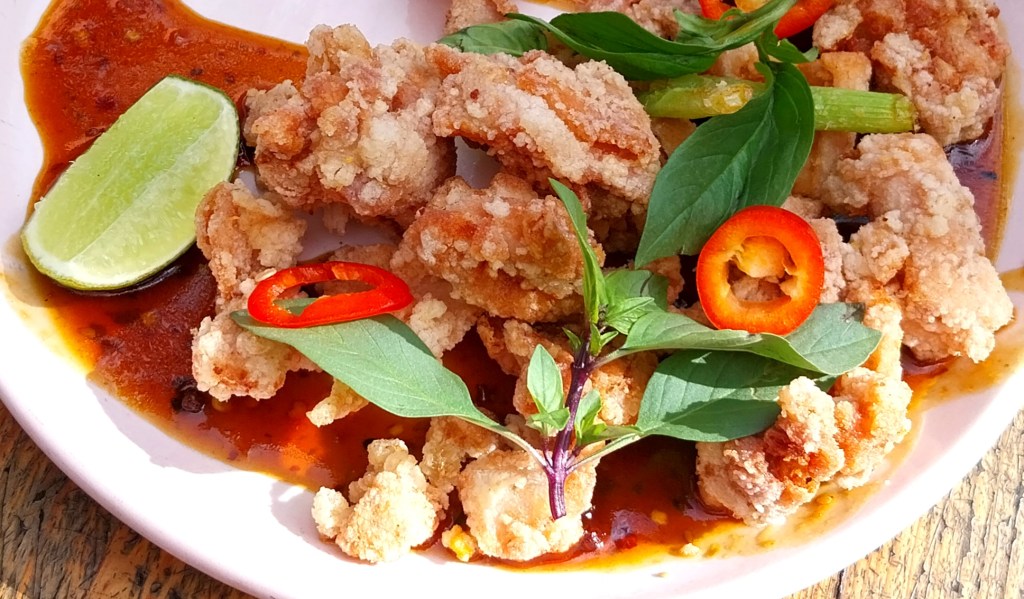
Next up is Firecracker Chicken. The menu describes this as Mee Goreng spiced fried chicken, with hot firecracker sauce and Thai basil leaves. I don’t exactly know the make-up of that firecracker sauce, but it certainly brought some heat to the table (and our mouths).

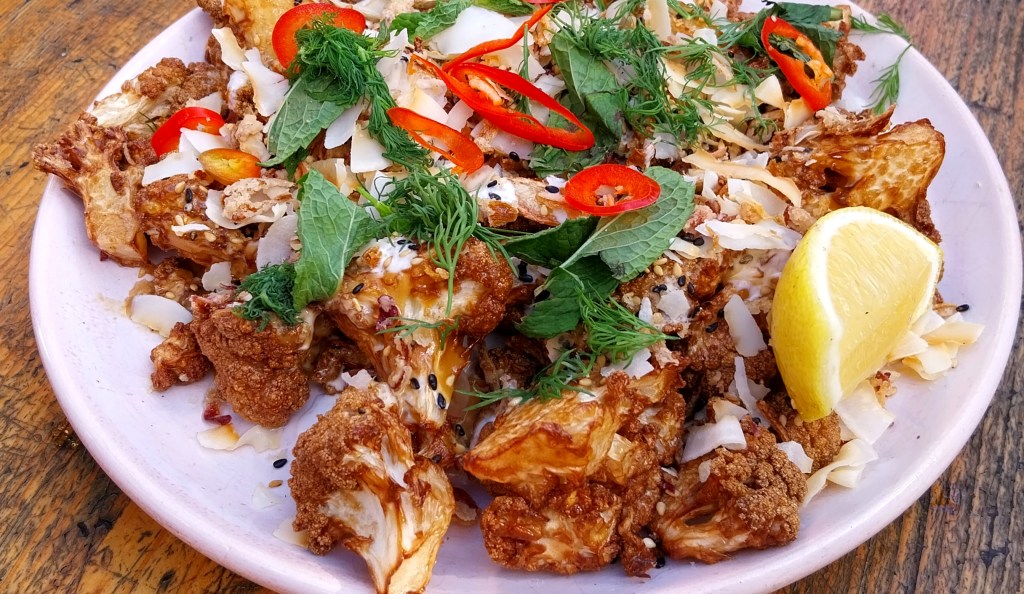
This dish is Cumin Spiced Fried Cauliflower, with creamy coconut, dill and mint. The menu is somewhat coy about this dish, merely saying it comes with “strange flavour sauce” and “crunchy things”. Hmm, not giving away any culinary secrets there, guys!

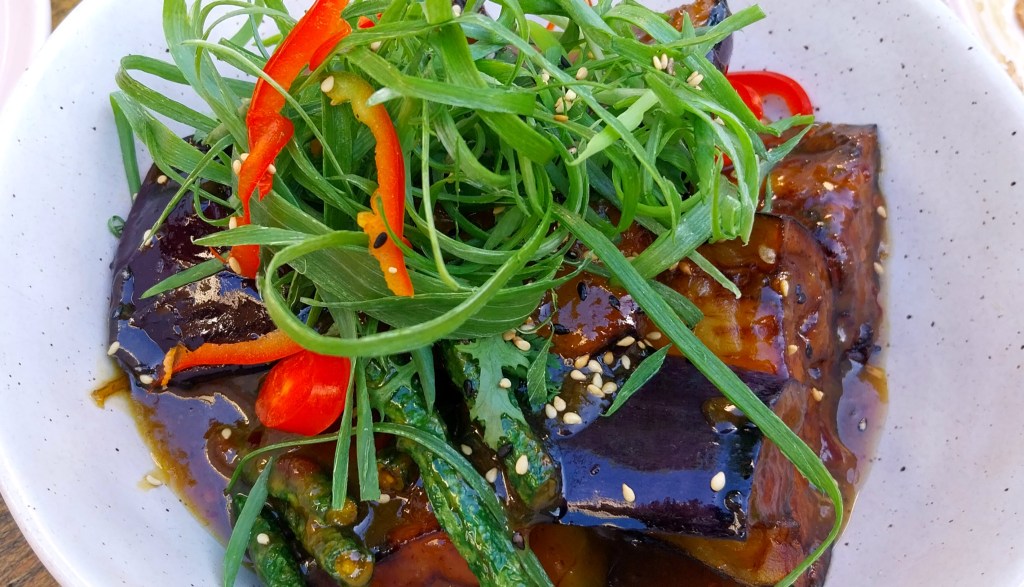
My overall fave dish was Miso Caramel Eggplant, shown in my main photo at the top of the post. This consisted of chunks of roasted aubergine coated in a sticky sauce, topped with spliced snake beans, coriander and sesame.

As with other trips to restaurants on our travels around Australia, this has given me some more ideas to try out when I get home. I will definitely be having a go at the chunks of roasted aubergine in that sticky miso “caramel” sauce.

Time to hear from another great Aussie band. This is Deadstar with Deeper Water.

Categories
Recipes Sides

Korean Cauli Roast

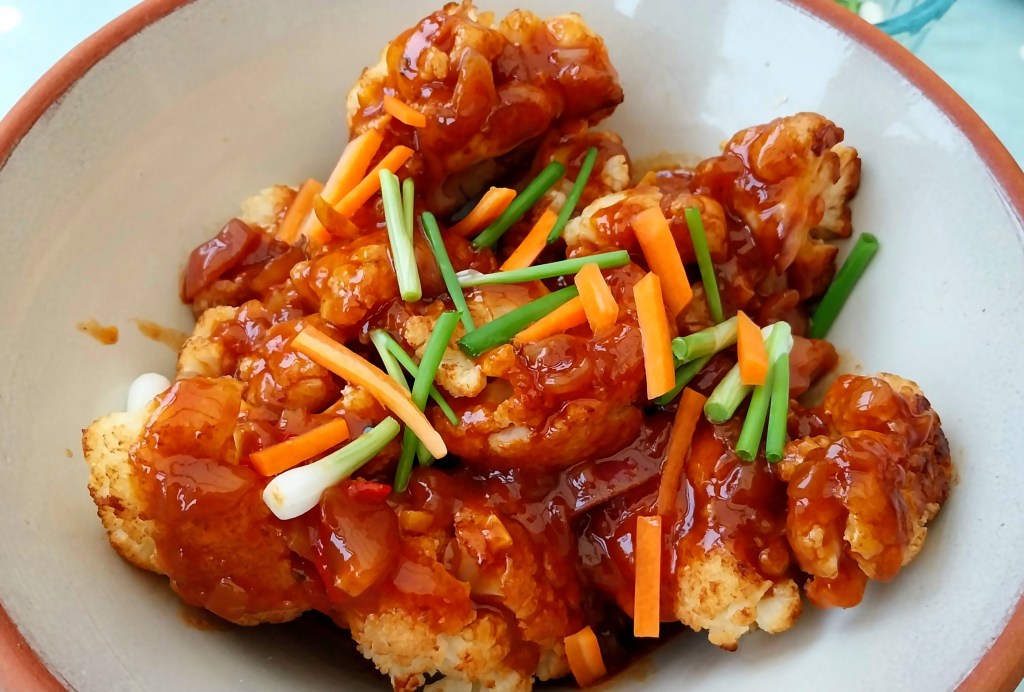
Here’s a delicious side dish that is built for sharing as part of a spicy banquet or feast, ideally with some cold drinks. Give everyone a fork each and let them tuck in, choosing a roasted floret or two and twirling it round to become coated in the spicy Korean Sauce.

The recipe for the Korean Sauce can be found in my Korean Pulled Pork Sandwich post. Although I made the Sauce originally to pour over pulled pork, I found it goes equally well with other dishes, as shown here with roasted cauliflower florets. If you’re not making the pulled pork, or if you want the Sauce to be vegetarian or vegan, just add water in place of the pork juices.

Servings

Served alongside other sides and mains, this will feed 4.

Timings

5 mins to steam the cauli, then 20 mins to roast.

You Will Need

  • 1 head of cauliflower, cut into florets
  • a saucepan of Korean Sauce (vegetarian version)
  • 3 – 4 scallions
  • half a carrot
  • a handful of sesame seeds

Method

  1. Heat the oven to 180C.
  2. Put the cauli florets in a steamer basket over a pan of boiling water for 5 mins (I find this helps the cauli become tender and succulent in the roasting process).
  3. Warm the Korean Sauce on the hob or in the microwave.
  4. Remove the cauli from the steamer and lay out on a roasting tray.
  5. Brush all over with the Korean Sauce, and put in the oven for 20 mins.
  6. Remove the roasted cauli and place in a serving bowl. Drizzle over some generous spoonfuls of the Korean Sauce, and garnish with chopped scallions, carrot sticks and sesame seeds.

Customise It!

There will already be chopped chilli in the Korean Sauce, but you can add a bit more as a topping if you want an extra fiery kick. Matchsticks of cucumber also work well as a topping, and give a kind of antidote to the heat!

Here’s an old track I heard in a friend’s car the other day, and which I hadn’t heard in years. It has a really catchy chorus, so you may find yourself humming it, as I have been this week. This is Dr. Feelgood with Don’t You Just Know It.

Categories
Mains Recipes

Korean Pulled Pork Sandwich

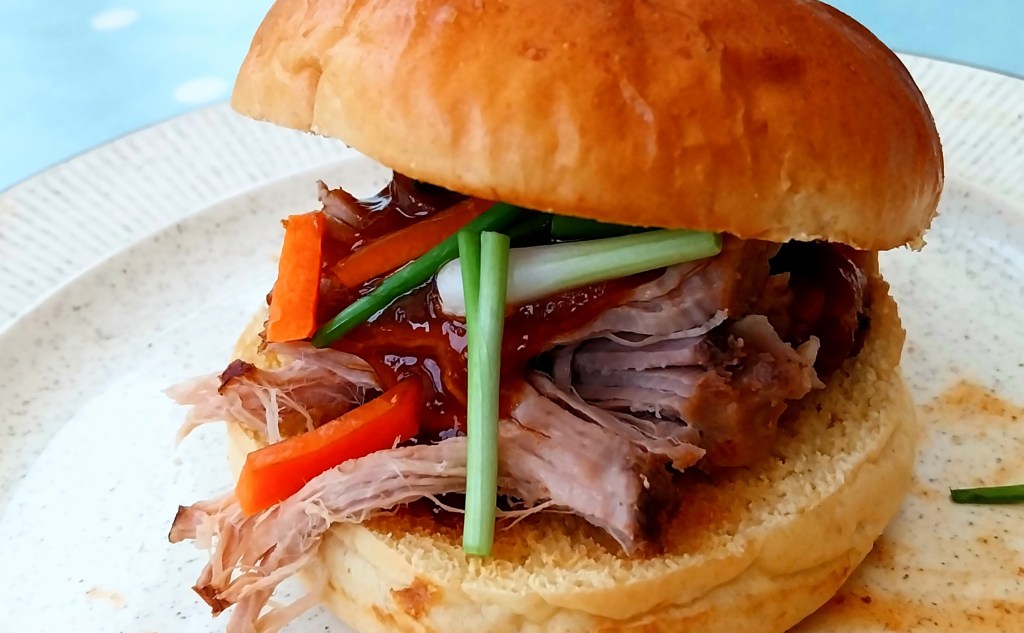
I ordered this for lunch recently in a hipster cafe-bar that had a very tempting variety of dishes on the menu. I thought it was amazing so decided I would try to recreate it myself.

I’ve roasted pulled pork before in my electric slow cooker, but hadn’t really created anything I could call a Korean sauce.

After a bit of reading up, I treated myself to a couple of specialist ingredients I hadn’t bought before, but which seemed to be quite key to the whole concept: rice vinegar and Gojuchang paste. The rest of the ingredients, such as dark soy sauce, honey, garlic, ginger and so on, are things that I tend to have in usually.

I’m glad I invested in the specialist foods – particularly the Gojuchang paste, which has a distinctive dark and smoky taste with a chilli kick. I found both in the Asian aisle of my local Sainsbury’s.

Servings

A meal for 4 with some left over for lunch the next day.

Timings

20 mins to prepare the pulled pork, then 6 hours in a slow cooker. It took me about 25 mins to make the sauce while the pork was finishing off.

You Will Need

For the Pulled Pork

  • Joint of shoulder of pork between 1kg – 1.4kg
  • sea salt and black pepper
  • 1 onion, chopped
  • 1 clove of garlic, crushed
  • 1 500g carton of tomato passata
  • 60ml cider vinegar
  • 1tsp paprika
  • 1tsp ground cumin

For the Korean Sauce

  • oil
  • 1 small red onion, finely chopped
  • 1 garlic clove, crushed
  • 2cm piece of root ginger, peeled and finely chopped
  • 1 red chilli, chopped into fine rings with seeds removed
  • 60ml dark soy sauce
  • 2tbsp rice vinegar
  • 50ml runny honey
  • 1tbsp Gojuchang paste
  • cornflour
  • water

To Serve

  • Brioche rolls
  • spring onions
  • half a carrot

Method

  1. Switch on the slow cooker and turn to a high setting.
  2. Heat a little oil in a wok or large frying pan and sear the pork on all sides. When nicely browned, transfer to the slow cooker bowl and season with a few twists of sea salt and black pepper.
  3. Put the other ingredients into the wok or pan, and stir to combine in the heat. When warmed, pour over the joint of pork. Put the lid on the slow cooker and leave on a high heat for 30 mins. Then reduce to medium setting and leave for 5 and a half hours more.
  4. Start making the sauce about 40 mins before the pork is due to finish.
  5. Heat some oil in a saucepan and add the onions, garlic, ginger and chilli. Leave until sizzling and softened.
  6. In a jug, combine the soy, rice vinegar, honey and Gojuchang paste, then pour into the saucepan. Give it all a stir and leave to simmer.
  7. When the pork has completed its 6 hours, remove it from the slow cooker and leave to rest in a rectangular serving dish.
  8. Tip the juices from the slow cooker into the saucepan and stir.
  9. Add a paste of 2 tbsp cornflour and 1 tbsp water, stirred so it forms a creamy liquid. Stir it in and watch the sauce thicken. Do this again until the sauce has a thickish consistency so it will cling to the pork when poured over.
  10. Using 2 forks, dive into the pork joint and pull it apart from the centre. You should have lovely soft, flaky fibres of tender meat. Pop one in your mouth to appreciate how good it tastes.
  11. Pour the sauce into a jug and serve alongside the dish of pulled pork.
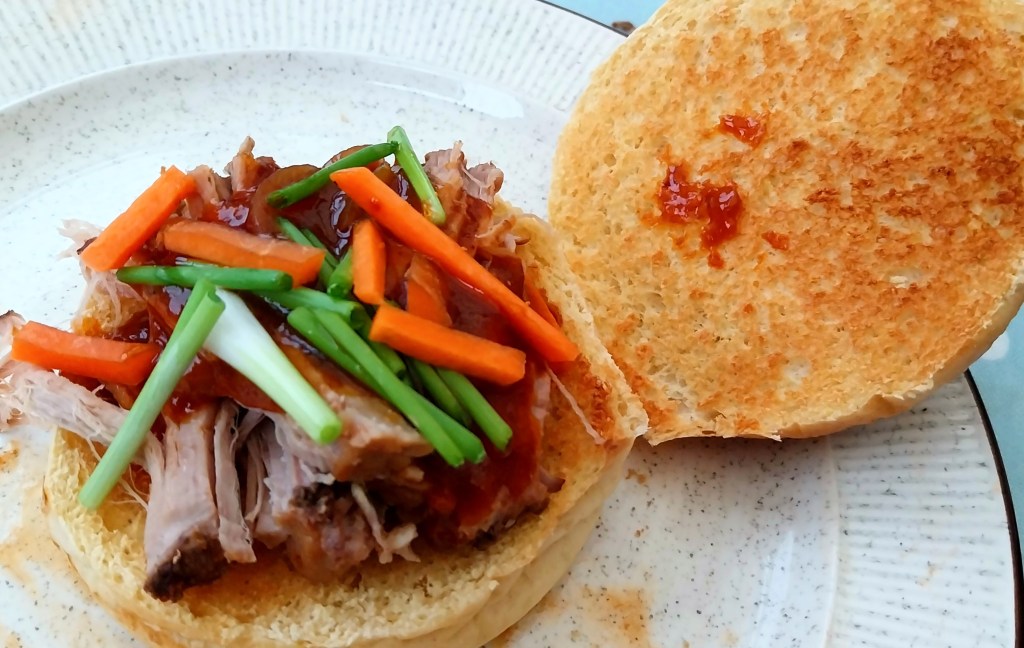
  12. Serve with the rolls, halved and lightly toasted on the inside, with a garnish of chopped scallions and carrot sticks.

Customise It!

I will be posting other recipes that use the Korean Sauce, but which will be vegetarian or vegan. For these, don’t add the pork juices, and use water instead.

Here’s a track for the Playlist from The Wedding Present. I’ve seen them live a few times and they are always worth the ticket price. Their sound is a cross between Buzzcocks and Orange Juice, so no surprise that I’m a fan. This is My Favourite Dress.

Categories
Blog Mains

Little Vietnam

Victoria Street, in Melbourne’s inner city east, is known locally as Little Vietnam. It has earned this name through the number of Vietnamese restaurants and food stores that stretch out along both sides – a reflection of the sizable Vietnamese community that has settled in the city over recent generations.

I haven’t eaten Vietnamese before, so took the opportunity to try it out. A little research identified Van Mai as a good place to visit, and I’m pleased to say I would recommend it.

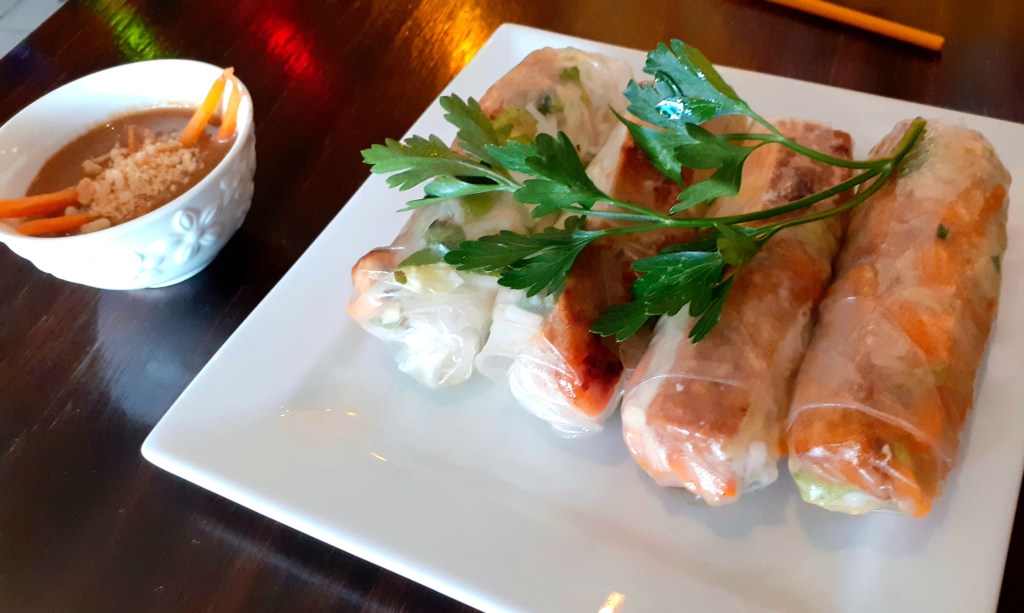
As a starter, we shared a plate of Rice Paper Rolls. I had seen these in some Vietnamese street food stalls in the city, and fancied trying them. Visually, they resemble sausages (see photo below), the contents wrapped in edible, transparent rice paper. Unlike sausages, however, they are eaten cold. The fillings included shredded carrot, beansprouts and crispy chicken, with fresh coriander. They were served with a dipping sauce that had a satay flavour.

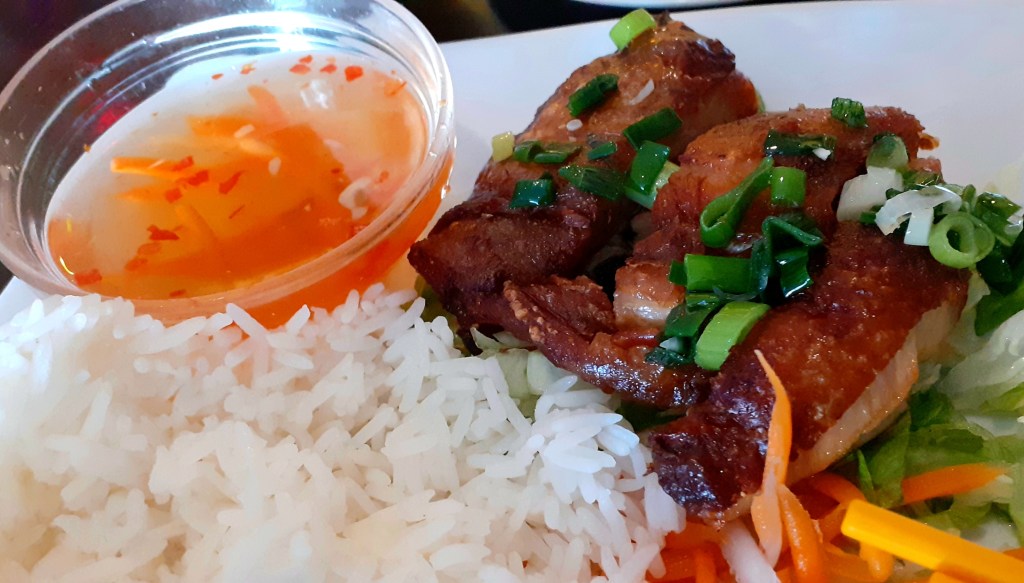
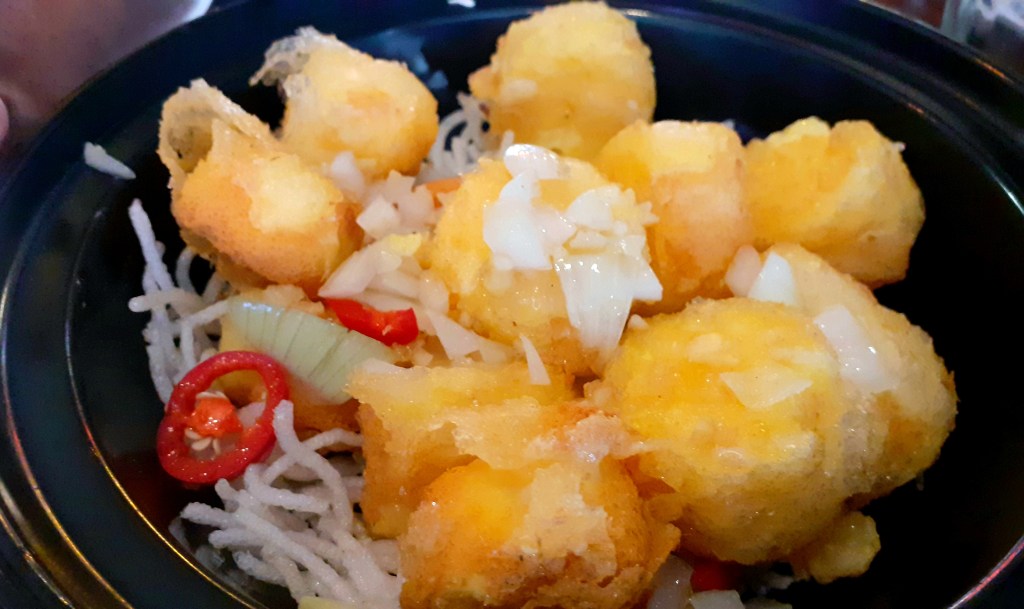
For mains we chose three dishes. My main photo at the top of the post shows Crispy Chicken with Steamed Rice, served with vegetables and a chilli and ginger dipping sauce. We also tried the Salt and Pepper Tofu, deep fried and presented on a bed of crispy vermicelli (see below).

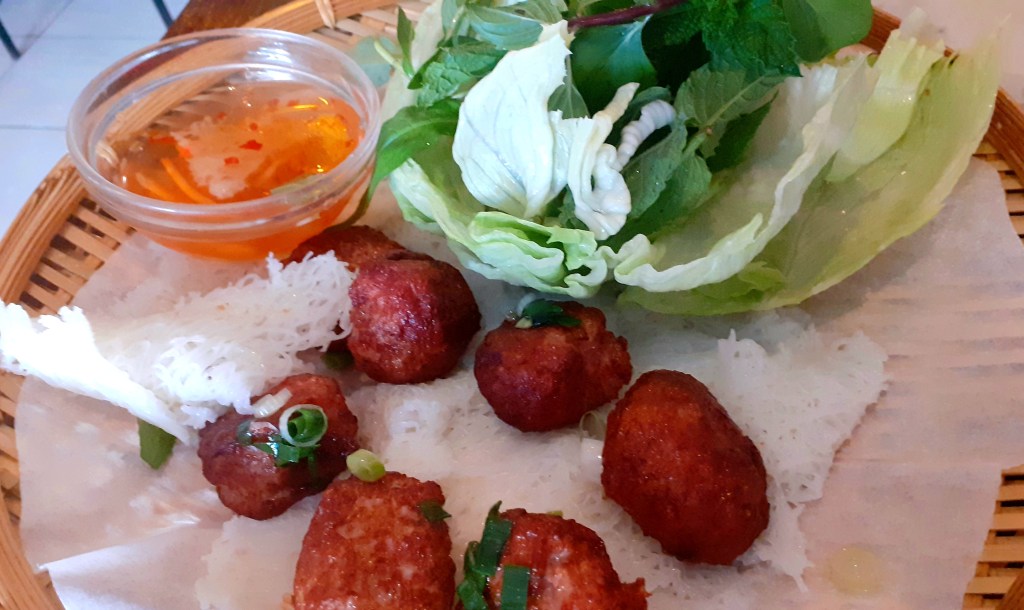
Our third dish was Steamed Fine Rice Vermicelli with BBQ Pork Balls. This was served with fried onions and shallots, fresh mint and crushed peanuts (see below).

This dish was eaten by handrolling the food in large crispy lettuce leaves, and dipping the parcel in a bowl of fish sauce.

I liked the food very much, particularly the pairing of hot and spicy with fresh, uncooked ingredients like lettuce, hand-torn mint and coriander. I also had fun eating with my fingers, though my hands were very sticky by the end of the meal.

Another joy of visiting Victoria Street is the sight of the Skipping Girl – a much-loved Melbourne icon dating back to the 1930s. It was the city’s first neon sign, advertising the Skipping Girl Vinegar brand. Walk down the street after your meal to see her as dusk is falling – she will be illuminated and, magically, skipping.

For the next track on the ADK Spotify Playlist we take inspiration from the Skipping Girl. This is Malcolm McLaren with Double Dutch.