Categories
Mains Recipes

Roasted Winter Veg Curry

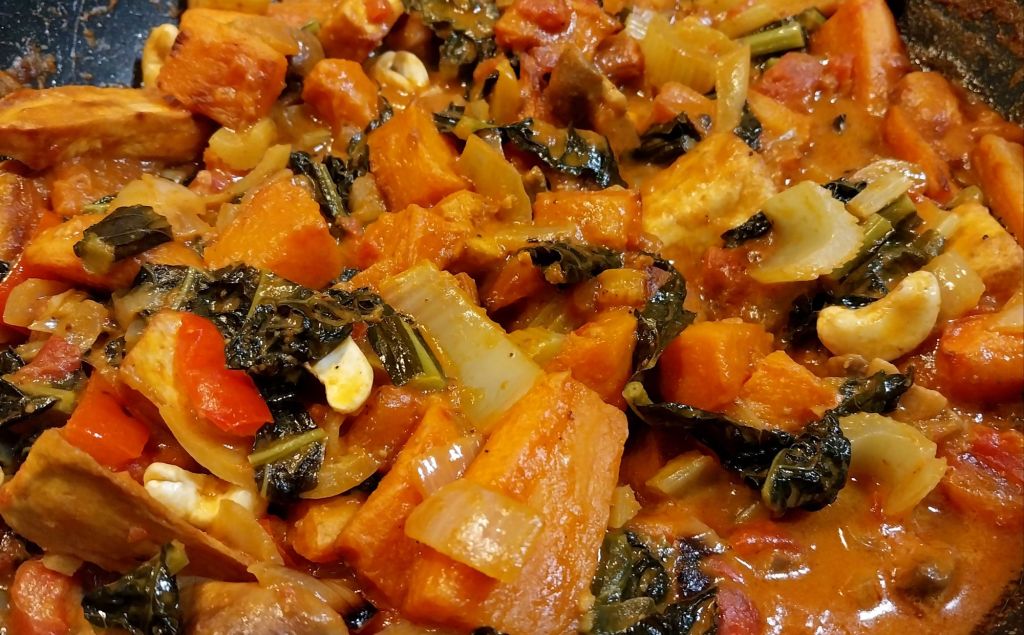
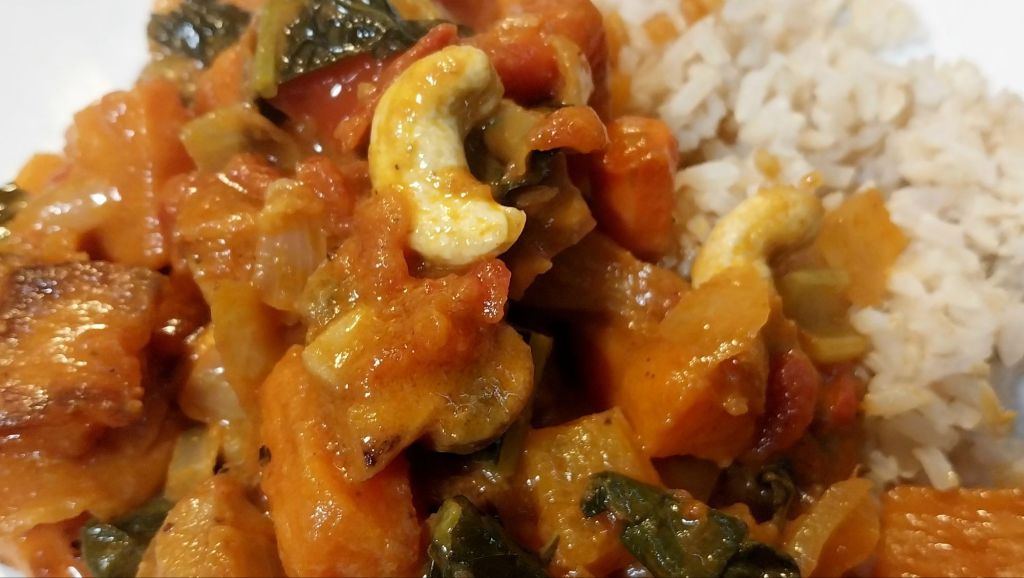
For this dish, which is suitable for both vegetarians and vegans, I’ve given a selection of seasonal squash and root veg a long, slow roast in the oven before coating it in a thick curry sauce. The roasting makes the veg soft, sweet and just a little caramelised around the edges.

We’ve just been experiencing our first few snow showers of the winter here, so all that deliciousness and comforting heat has turned out to be very timely!

Servings

4 adult portions.

Timings

1 hr to roast the winter veg, during which time the rest of the dish is prepared.

You Will Need:

  • 1/2 a butternut squash
  • 2 medium sweet potatoes
  • 2 medium parsnips
  • 3 – 4 medium carrots
  • Oil
  • 1 garlic clove
  • 3cm piece of root ginger
  • 1 onion
  • 2 tbsp curry powder
  • 2 celery sticks
  • 1/2 red pepper
  • 1/2 yellow pepper
  • 5 – 6 chestnut mushrooms
  • 1 400ml tin coconut milk
  • 1 400g tin chopped tomatoes
  • 4 – 5 leaves of cavalo nero
  • A handful of unsalted cashew nuts

Method

  1. Switch a fan oven on to 180C.
  2. Peel and roughly chop the squash, sweet potatoes, carrots and parsnips into chunks. Spread them out in a roasting dish and drizzle with oil. Place the dish in the hot oven for about an hour. Check on them every so often just to check they’re not burning, and give them a scatter with a spatula so they get evenly roasted.
  3. Meanwhile, crush the garlic and finely chop the ginger. Put both in a wok with some oil and heat. When the pan is sizzling, add in the onion, celery, mushrooms and peppers, all chopped. Sprinkle over the curry powder and toss with a spatula so all the veg is coated in a mix of the spices and oil.
  4. When the veg has softened, empty in the coconut milk and tomatoes. Give it all a good stir to mix and bring to a bubble, before turning down to a simmer. Let it slowly reduce to make a thick, spicy sauce.
  5. Shred the cavalo nero and wilt in for about 10 mins.
  6. When the tray of veg has finished roasting, take it from the oven and scrape all the lovely contents into the wok. Give it all a stir again, so that the veg chunks get coated in the thick curry sauce.
  7. Chuck in the cashews and mix, a few mins before serving. It should resemble my main photo at the top of the post.
  8. Serve up with rice on the side – see below.
Customise It!

Lots of scope here – substitute other root veg like potatoes or celeriac, or other types of squash, and vary the proportions between them if you wish, as long as you have 1 large roasting pan’s worth of it all.

Use your own favourite spice combo if you wish – I used the ready mixed blend I brought back from the Souq Waqif in Doha, which I really like. Why not chuck in a few nigella seeds? Play around and have fun!

No cavalo nero? Try other greens like spinach or chard.

Time to treat you to my most streamed song of 2024, as confirmed by Spotify Unwrapped, which landed this week. I first came across this indie band while on my travels to Australia earlier this year. They make a terrific sound and, I’m sure you’ll agree, this really is a very good track. Enjoy These New South Whales with Changes.
Categories
Mains Recipes

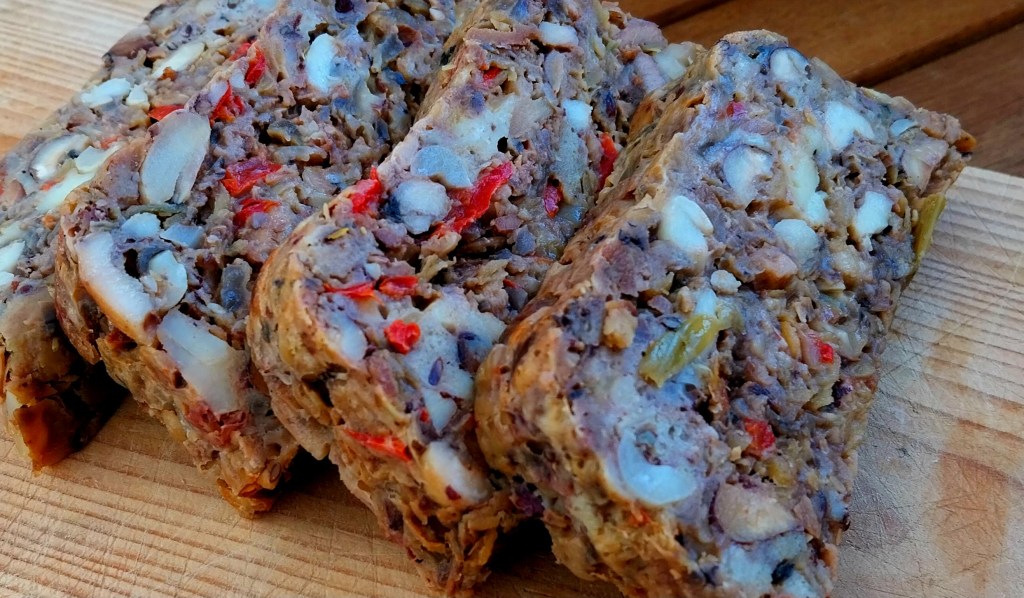
Nut Roast

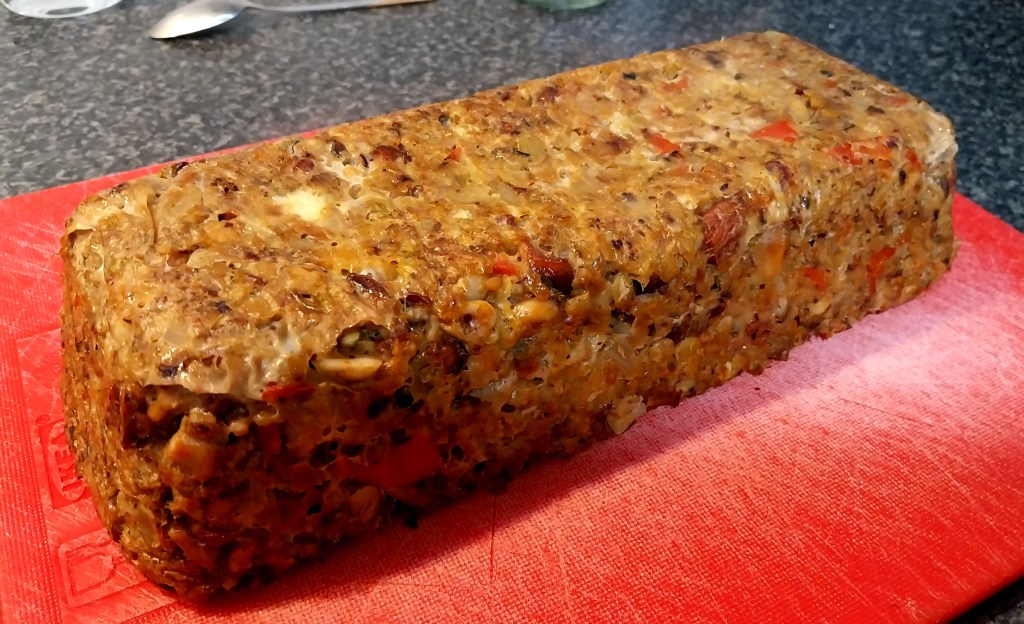
Toasted on the outside and packed to the core with creamy, crunchy nuts, red lentils and softened veg. If you’re looking for a vegetarian mains to grace the centre of your table this winter, this delicious, homemade Nut Roast is hard to beat.

Servings

6 adult servings of 2 generous slices each.

Timings

30 mins to prepare and 50 mins to roast in a fan oven at 160C.

You Will Need:

  • 150g chopped mixed nuts
  • 1 onion
  • 2 celery sticks
  • 1/2 a red pepper
  • 1/2 a yellow pepper
  • 6 – 7 chestnut mushrooms
  • oil
  • 1 clove garlic
  • 75g red lentils
  • a good squelch of tomato ketchup
  • 300ml boiling water
  • 1 tbsp vegemite
  • 75g wholemeal breadcrumbs
  • 75g mature cheddar cheese, grated
  • sea salt and black pepper
  • 2 medium eggs

Method

  1. Switch a fan oven on to 160C. Grease a 1 litre loaf dish and line it with baking paper.
  2. Spread the nuts on a baking tray and place in the oven once its reached its temperature.
  3. While the nuts are roasting, place the onion, celery, pepper and mushrooms in a food processor with blade fitted. Blitz to small pieces.
  4. Heat some oil in a large frying pan and crush in the garlic. Add in the blitzed veg and stir. Leave to gently soften.
  5. Once the nuts have roasted for 10 mins, remove from the oven and roughly chop in a food processor with blade fitted. Scrape into a large bowl and set aside.
  6. Chuck the lentils into the frying pan with the veg. Dissolve the vegemite in the boiling water and pour into the pan with the ketchup. Bring to the boil, then reduce to a simmer for about 15mins. The liquid will reduce as the lentils soften.
  7. Add the breadcrumbs and grated cheddar to the nuts and mix in.
  8. Leave the pan of veg and lentils to cool slightly for 5 mins, then add to the bowl with the nuts, breadcrumbs and cheese. Twist in a little sea salt and black pepper to your taste. Crack in the eggs and mix thoroughly.
  9. Spoon the mixture into the prepared loaf dish and compact it down with the back of a spoon. Cover with foil and place in the oven for 30mins. Then remove the foil and leave it in the oven for another 20 mins.
  10. Remove and set aside for 10 – 15 mins before inverting onto a chopping board. The nut loaf should ease out of the upturned dish, and look something like my main photo at the top of the post.
  11. You can cut slices straight away, but it will become progressively easier to cut clean slices as it cools. Slices can be reheated if necessary by microwaving for 30 – 60 seconds.

Customise It!

Try adding in fresh herbs, or shreds of cavalo nero. Swap some or all of the cheddar for crumbled blue cheese.

Serve it with some green veg and a simple sauce made from a can of chopped tomatoes, garlic and chopped onion. If you’d prefer to save on effort, serving with condiments like ketchup or relish is fine.

Exciting musical news this week is that one of my favourite bands has been announced as headliner at next year’s Victorious Festival. I have already seen Queens of the Stone Age live 4 times and am very keen to make it 5. I’ll be hoping a surprise gift ticket may find its way to me under the Christmas Tree this year! I expect they will play this one: Queens of the Stone Age with Sick, Sick, Sick.

Categories
Mains Recipes

Beautiful Borlotti

This harvest of borlotti beans, fresh from the pod (shown in my photo above) has been a very welcome arrival recently in the ADK Kitchen. I always think they are one of the most beautiful foods in their natural uncooked form.

They’re not bad cooked, either. The beans do tend to lose that magical, mottled sheen, but more than make up for it in their creamy, smoky taste. They also provide generous amounts of protein and fibre.

For this dish (shown in my photo below), I have given them a starring role in a chilli suitable for vegetarians, vegans and, indeed, anyone who enjoys a bowl of rich, warm and creamy comfort food this time of year.

Servings

4 adult portions.

Timings

The beans soak overnight, and are then boiled/simmered for at least an hour. Once these stages are complete, the rest will take about 30 mins to cook.

You Will Need:

  • 120g uncooked borlotti beans
  • cold water
  • 1 onion
  • 1 garlic clove
  • 1 tsp chilli powder
  • 1 tsp cumin seeds
  • oil
  • 1/2 a red pepper
  • 1/2 a green pepper
  • 2 celery sticks
  • 1 carrot
  • 6 -7 chestnut mushrooms
  • 1 400g carton of tomato passata

Method

  1. Wash the beans, then place in a bowl with enough cold water to cover them. Leave for 24 – 36 hours.
  2. Drain and rinse the beans under cold running water. You should find that they have doubled their weight through the water they have absorbed. Place the beans in a saucepan with enough fresh water to cover them, and bring to the boil. Reduce and simmer for 50 mins.
  3. Drain the cooked beans and wash again under cold running water. Set aside.
  4. Heat some oil in a wok, and add in the garlic, chilli and cumin. When it sizzles, add in the onion, peppers and celery, chopped into chunks.
  5. About 5 mins later, add in the mushrooms and carrot, also chopped into bitesize chunks.
  6. Stir with a spatula until all the veg is nicely softened, then add in the passata and the cooked borlottis. Top up with about half an empty carton’s worth of fresh water, and turn it up to boil.
  7. Bring to a simmer for about 15 mins, by which time the sauce will have reduced to provide a thick, creamy coating for the beans.
  8. Serve up with a portion of brown rice.

Customise It!

Replace the onion with chopped leeks, and add in some roasted squash if you wish. Shred in some spinach, cavalo nero or chard leaves.

Skip the rice and wrap a few spoonfuls up in a warmed tortilla. Perhaps with some soured cream on the side. This is making me hungry again…

It’s getting to that time of year when I receive messages from Spotify that my Unwrapped Playlist – containing my most played tracks of 2024 – is imminent. Here’s one track that will almost certainly be on it, and which seems to go well with the subject of this post: Leftfield with Pulse.

Categories
Mains Recipes

Roast Butternut & Celeriac Risotto

So, we’ve now had Halloween and Bonfire Night, and the clocks have gone back marking the end of British Summer Time. Yes, we’re well into autumn, a fact well reflected in the fresh veg now making its way into the ADK Kitchen from our local community farm.

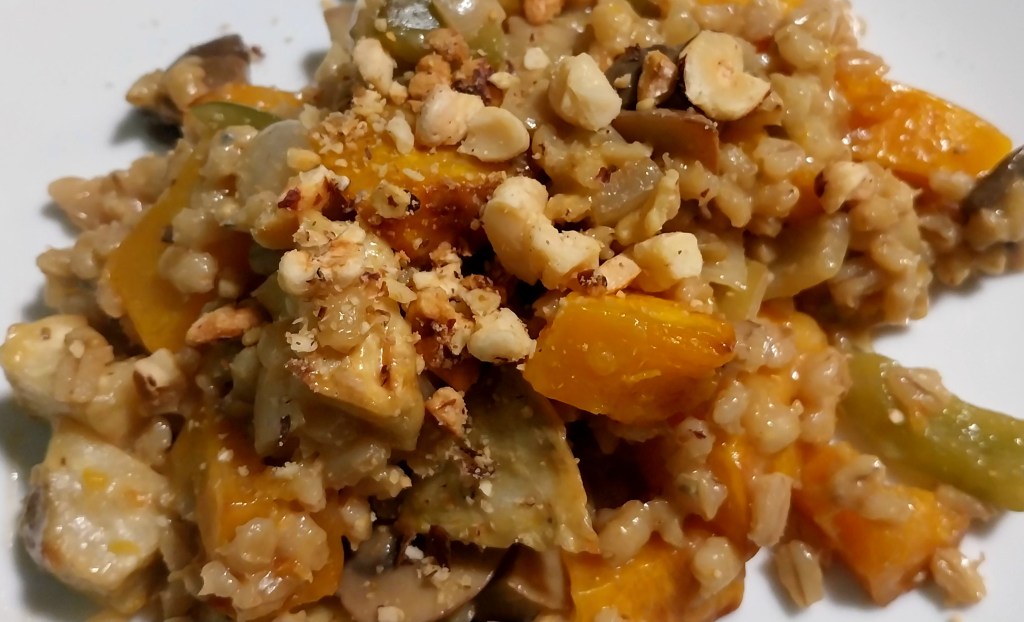
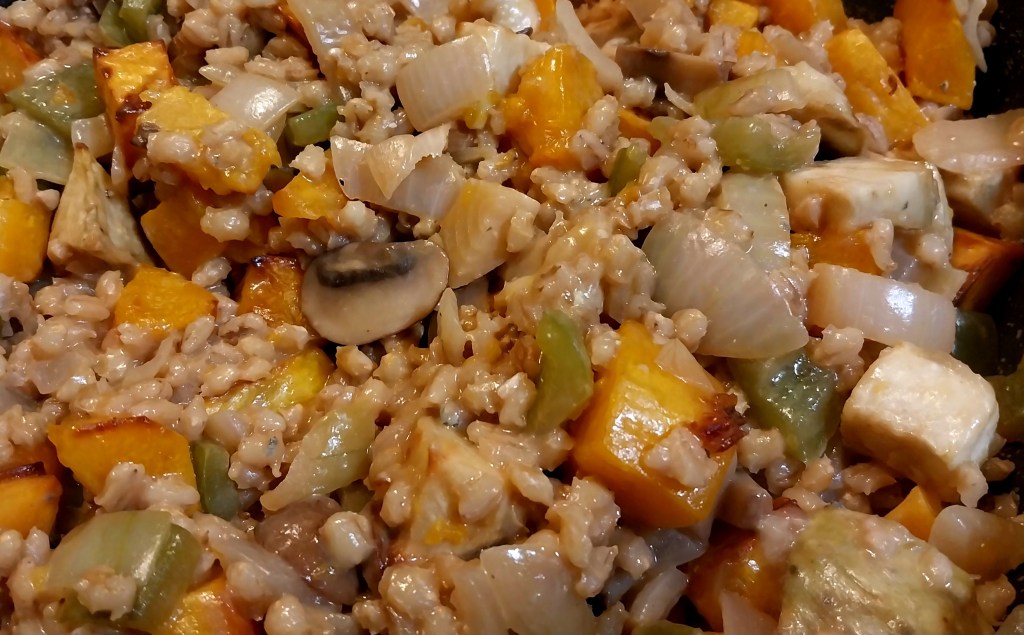
All of which has inspired this warming, filling and satisfying vegetarian mains. I peeled, chopped and roasted a butternut squash and a celeriac – each having its own distinct flavour, and together giving the colours and tastes of autumn. I then tipped the softened, caramelised chunks into a pearl barley risotto. Crumbled stilton cheese is melted in at the end of cooking to provide a creamy, slightly salty consistency, with a final garnish of chopped toasted nuts.

Fetch your hat and gloves – here’s a dish to greet you, warming on the hob, at the end of a long, crisp autumnal walk.

Servings

4 adult portions.

Timings

Around 45 mins to make.

You Will Need

  • 1 medium butternut squash
  • 1 medium celeriac
  • oil for roasting
  • 100g pearl barley
  • 1 clove garlic
  • oil to drizzle
  • 1 onion
  • 1 green pepper
  • 3 – 4 chestnut mushrooms
  • 300ml veg stock
  • 50g stilton cheese
  • handful of chopped toasted nuts

Method

  1. Switch on a fan oven to 180C. Chop, peel and chunk the butternut squash and the celeriac. Place the chunks in a roasting dish and drizzle with oil. Place in the hot oven for 30 mins.
  2. Bring the pearl barley to the boil in a saucepan of water. Reduce to a simmer and leave for 30 mins.
  3. Crush the garlic and warm in a drizzle of oil in a wok. Chop and add in the onion, mushrooms and green pepper. Stir and let soften for around 10 mins.
  4. Drain the pearl barley and add to the wok. Tip in the veg stock and bring to the boil. Reduce and leave to simmer. You want the liquid to gradually reduce while finishing cooking the pearl barley, until it is soft but still slightly chewy in texture. Add in a few more drops of hot water from the kettle, if required.
  5. Take the roasting dish from the oven. The roast veg should be soft in the centre and slightly browned on the outside, with caramelised edges. Scrape the veg into the wok and crumble in the stilton, before stirring it all in.
  6. Serve on warmed plates, garnished with the toasted nuts.

Customise It!

I’ve been using pearl barley in risotto recently as I like its taste and bite, while it reduces the carb count. However, you can use arborio rice if you wish – just remember to adjust the cooking time as it takes about half that required by the barley.

Play around with some of the veg in the risotto base to include what you have – yellow or red pepper is fine. Try wilting in some autumn greens, spinach or shredded kale/cavalo nero for the last 5 – 10 mins of cooking.

Musical choice today reflects the fact that there is a rather important election taking place in the world. This track is dedicated to all our American friends, therefore: Muse with Will of the People.

Categories
Mains Recipes

Butternut, Goat’s Cheese & Walnut Tartlets

Out at a restaurant recently, I spotted rosary goat’s cheese tartlet on the menu, and thought it sounded interesting. It was delicious – mixing the soft, slightly acidic creaminess of goat’s cheese with caramelised onion in a short, biscuity pastry base. I came away inspired to try making my own – always a sign that I’ve enjoyed a good meal.

For my version, I decided to pair the creamy goat’s cheese with toasted walnuts, over an autumnal-coloured base of wholemeal shortcrust pastry and sweet, roasted butternut squash.

I was pleased with the result, in particular how well the tastes of the goat’s cheese and toasted walnuts complement each other, so am sharing it here. I’ll say more below on options for sides, to serve it up as an attractive vegetarian mains.

You’ll need 4 tartlet or shallow mini-pie dishes – the ones I used are each about 11cm diameter.

Servings

Enough here for 4 tartlets.

Timings

30 mins initially to roast the butternut and prepare the pastry. 10 mins to assemble the tartlets, and another 25 mins to bake them.

You Will Need:

  • half a large butternut squash, peeled and cut into small chunks
  • olive oil to drizzle
  • 125g plain flour
  • 100g plain wholemeal flour
  • pinch of salt
  • 100g butter
  • several drops of cold water
  • 1 rosary goat’s cheese
  • 60g walnuts

Method

  1. Turn on a fan oven to 180C. Spread the butternut squash chunks on a baking tray and drizzle with olive oil. Add to the oven once it’s up to temp, and leave for 30 mins.
  2. Next, make the pastry. Sieve the flours and salt into a food processor bowl, with blade fitted. Cut the butter into chunks and add in, pulsing the mix a few times till it resembles breadcrumbs.
  3. Pour in a few drops of water and pulse again. Repeat until the pastry comes together and is whirling round the bowl in one large ball, with the blade.
  4. Remove to a floured surface and finalise shaping it into a roundish ball. Wrap in cling film and put in the fridge for 10 mins.
  5. Take the tartlet dishes and spread with oil or butter, so that they won’t stick. Remove the pastry from the fridge and roll out to about 1/2cm thickness on a floured surface. Cut off a round or square that will cover one of the tartlet dishes. Drape over the dish, then press down and trim the edge for a neat finish. Repeat with the other 3 tartlet dishes.
  6. Remove the butternut from the oven. It should be soft and a little charred at the edges. Press down all over with a fork to make it into a soft, orange mash.
  7. Scoop forkfuls of butternut mash into the tartlet pastry bases, and spread it out towards the edges. Arrange 2 – 3 discs of rosary goat’s cheese on top. Place in the oven for 20 – 25 mins.
  8. For the final 5 mins of baking, remove the tray from the oven and sprinkle the walnut pieces on top. Press down gently into the soft cheese so that they hold in place.
  9. Remove from the oven when they’re looking like mine in the main photo above – you want the butternut and goat’s cheese discs to be browning and caramelising at the edges, but not burning.

Customise It!

I served the tartlets warm on a bed of celeriac mash, with steamed purple sprouting broccoli on the side. Any seasonal veg will work well as an accompaniment. You could also drizzle some baby potatoes with oil and add a few twists of seasalt, putting them on a roasting tray in the oven alongside the tartlets. You can also enjoy them cold with a salad, and maybe some leaves scattered over.

Music-wise, I’ve been very encouraged recently by the comments Robert Smith’s been making in the media about playing some gigs again next year. I’m a long time fan of The Cure since seeing them in their very early days supporting Siouxsie & the Banshees. There is also a new album fully due out next month, which I’m looking forward to. For now, here’s a classic from their early days: The Cure with Jumping Someone Else’s Train.

Categories
Blog Mains

Return to Eden

Cornwall’s Eden Project really is a modern day wonder. Not only is it a great day out – it really makes you think.

Walking around this vast green and floral park on a sunny September day, it is difficult to believe that, until just a few years ago, this was an abandoned mining quarry, grey and ugly, ravaged by decades of underground metal extraction.

The transformation began in the 1990s, with an ambitious vision to turn it into a vast green oasis, showcasing plant life from all around the world, over a 30 acre site. I visited it soon after it opened in 2001, and found it very impressive.

On my current travels around Cornwall I was keen to return, to see how it was progressing. I’m pleased to report it is thriving and continues to be a very popular destination for visitors to Cornwall.

The central attraction is the Biomes – the huge, golf ball-shaped structures nestled in the centre of the valley. The first maintains a warm temperate, Mediterranean climate all year round. The second contains a fully grown rainforest, no less. Both are big enough to lose oneself in, and host mature, fully grown trees.

I enjoyed climbing the steps to the Lookout high up in the Rainforest Biome. It was very humid up there, and the steps did swing around a bit, but the views were great looking down over the whole of the rainforest.

These are more than just large scale greenhouses. The Eden Project is on a mission to highlight the modern day challenges to the natural world through climate change and human behaviour. They do a great job of taking complex subjects and explaining them in terms that are easy to understand.

Amongst the cacao and coffee trees in the Rainforest Biome, I learned how deforestation simultaneously reduces carbon safely stored in trees and underground, and increases the carbon in our atmosphere, thereby contributing to global warming. Deforestation is largely driven by economic pressures on producers, and countries like Costa Rica come in for praise for their efforts to combat these through sustainable reforestation. I learned that we can all do our bit to support them by choosing to buy Fair Trade coffee and chocolate, which I will now try to do.

I like the art that is scattered around the landscape, such as the Rites of Dionysus, Greek god of wine, in the Mediterranean Biome.

We came across this mirrored tree goddess high up in the outdoor gardens, just inside what used to be the rim of the quarry, now known as the Wild Edge.

The art carries a loose theme that cultural diversity is important, and that resource management is better led by local communities than big corporations.

We had lunch in the Biome Kitchen. All the ingredients used are seasonal and locally grown. Suppliers are all Cornwall-based businesses, like soft drinks from Jolly’s, and ice cream from Roskilly’s. Even the catering promotes a sustainable local economy.

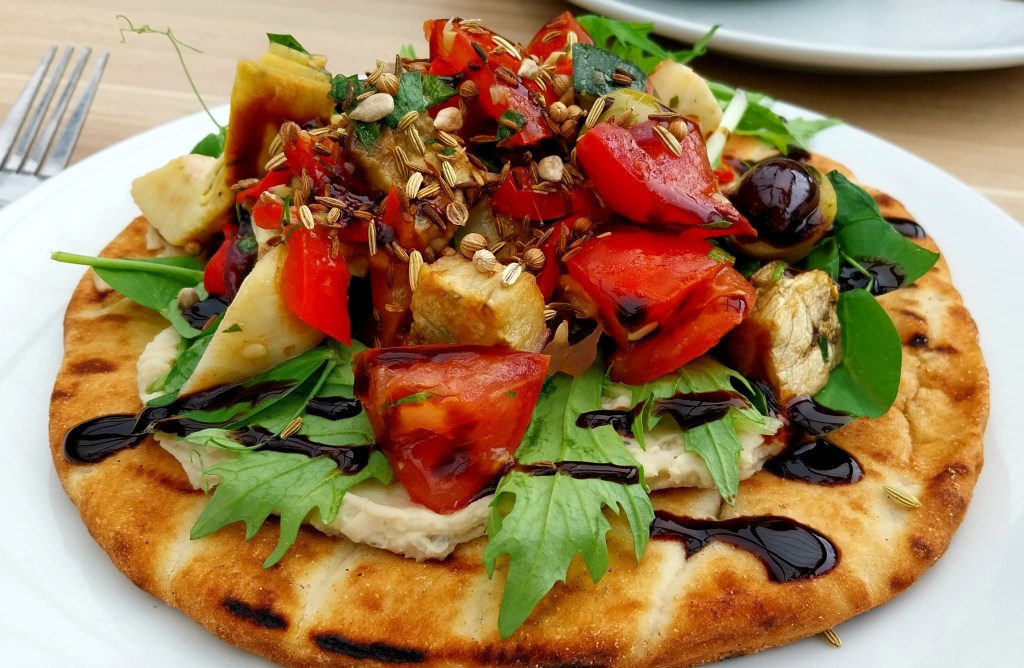
My choice for lunch was this griddled flatbread, topped with white bean pate, leaves, marinated roasted vegetables, tomatoes, balsamic drizzle, herbs and toasted seeds.

The overall message from the Eden Project is one of hope. If a team of people can successfully transform a disused quarry into a beautiful, green paragon of sustainability, then most things are possible. We learn that every one of us can do our bit – small changes made locally can contribute to wider scale positive change. It is never too late.

Time to add Coldplay to the ADK Playlist, with Paradise.

Categories
Blog Drink Mains

Atlantic Coast Express

The next adventure on our foodie travels around Cornwall is a trip to Padstow, by bike along the Camel Trail.

Padstow, shown in my photo above, is a compact, picturesque and very popular little fishing port on the north coast of Cornwall.

The Camel Trail follows a disused railway line along the bank of the River Camel estuary all the way from Wadebridge.

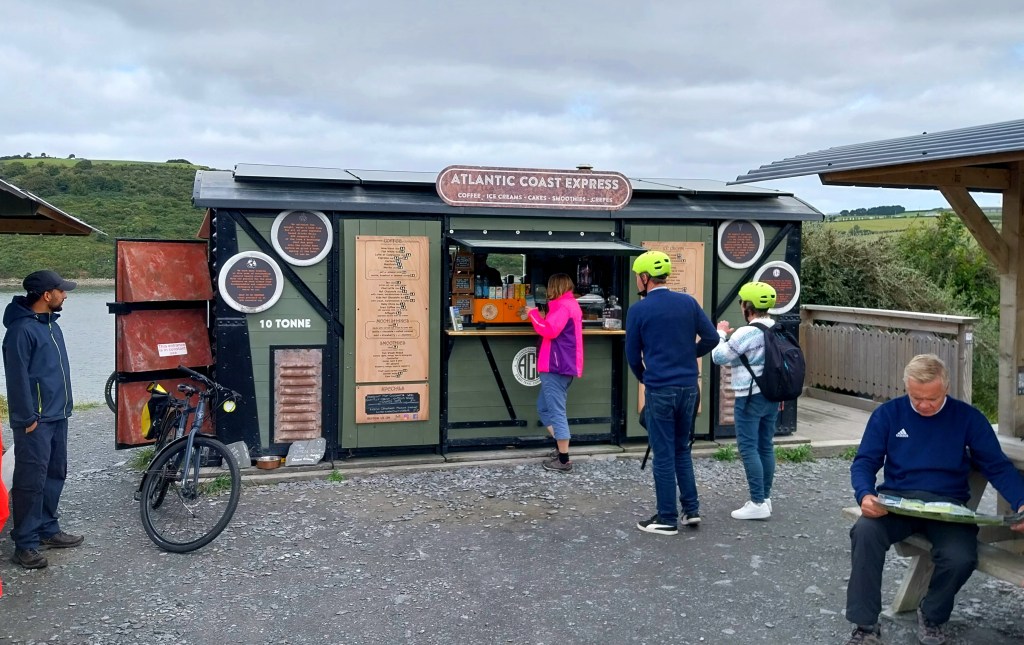
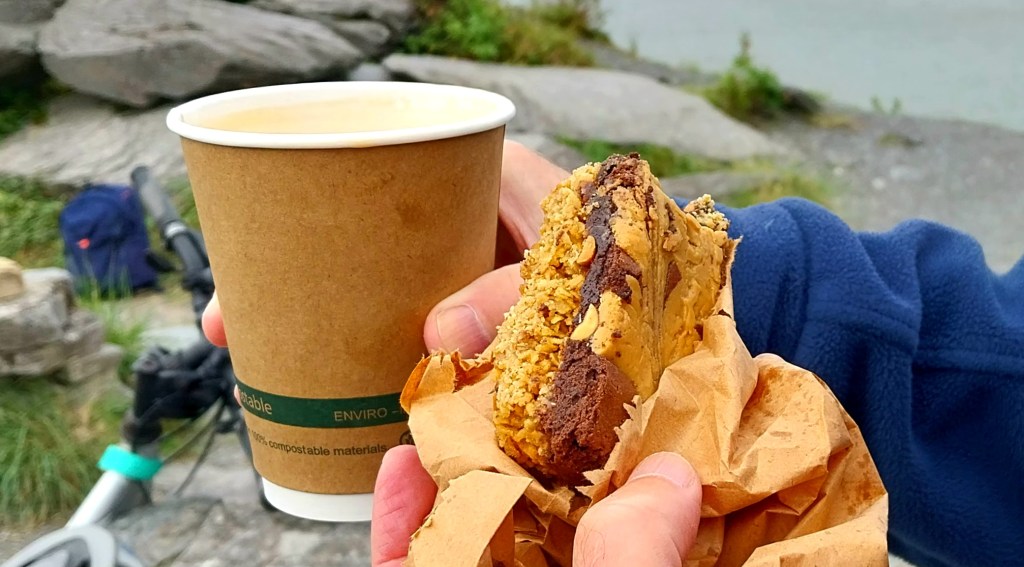
This coffee stop along the route is housed in a refurbished railway carriage. It takes its name from the train service that used to travel this line back in the day: the Atlantic Coast Express. You place your order, then collect it when the toot-toot of the old steam whistle sounds.

There’s a relaxed vibe, with people chatting, checking the map, or just enjoying the views across the estuary.

It’s a good place for a spot of bird watching.

The cakes at Atlantic Coast Express are all locally sourced and look great. We shared a peanut butter chocolate brownie, giving us the energy boost we needed to complete the 5 mile ride into Padstow.

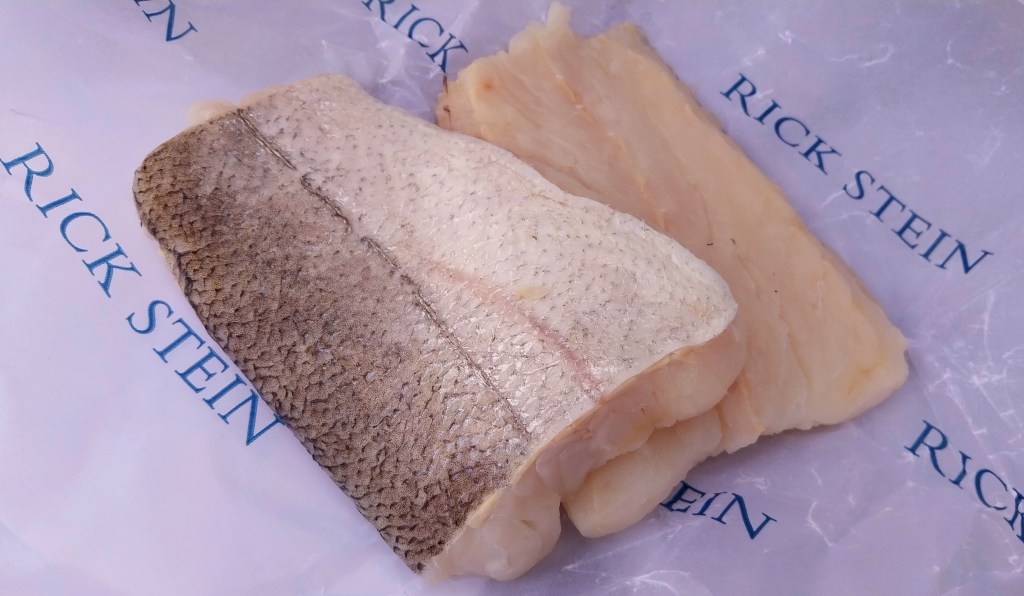
Padstow has been rather thrust into the foodie scene since celebrity chef, Rick Stein, set up his seafood restaurant here. It’s proven such a success that he’s followed it up with a cafe, deli and cookery school. Other restaurants and outlets have followed,  meaning the town now boasts a varied and quality food offering, whether sit-in or takeaway, to suit every taste and budget.

We bought these fillets of Cornish hake from the wet fish counter in his deli.

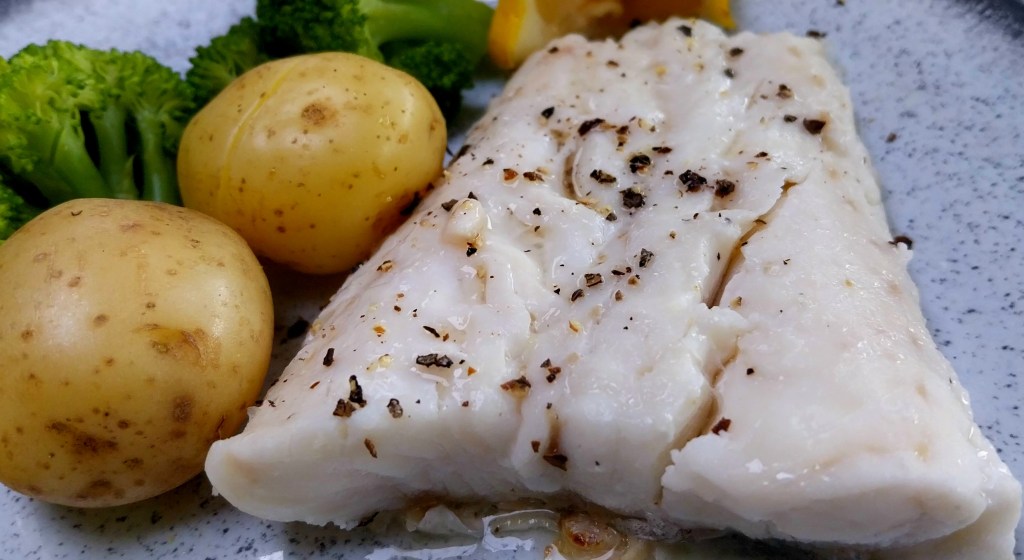
Arriving that evening at our next motorhome stopover, I cooked them in a foil parcel on the Cadac (my gas bbq). Ten minutes was all that was required, then a squeeze of fresh lemon and a few twists of black pepper. We served them up with Cornish new potatoes and broccoli.

A bottle of Cornish IPA was a perfect accompaniment to the meal, also biked back to the van in my pannier, from the Padstow craft brewery.

We had live music at our campsite last night, and this timeless classic is one of the tracks the band performed. It could be a motivational song when it comes to cycling, considering all the hills here in Cornwall! This is Jackie Wilson with (Your Love Keeps Lifting Me) Higher and Higher.

Categories
Mains Recipes

Golden Corn Chowder

Fresh, golden sweetcorn is now arriving on the shelves of our supermarkets and market stalls. This is normally the time of year when I make a pot of sweetcorn soup, or chowder as it is traditionally known. This week’s creation is shown in the photo above, garnished with a sprinkling of cayenne pepper and some snipped scallions from the garden.

We are so used to having sweetcorn processed and ready-prepared for us, whether in tins, freezer packs or in cellophaned trays, that it can seem a bit strange at first to see them in natural form.

However, preparation isn’t difficult – I pull back the outer leaves to reveal the plump golden corn on the cob. Gathering the peeled-back leaves with my fist to form a grip, I stand the ear of corn in a flat-bottomed dish, and cut down the side with a sharp knife. Moving around the cob, all the corn then gathers in the bottom of the bowl.

And don’t discard those trimmed stalks just yet – snap one up to put into the chowder as it cooks, and it will add extra corn flavour (just remember to remove it before wading in with your blender, however).

One of the special pleasures about using fresh corn in this way is that one can appreciate why it is called sweet corn – taste a spoonful of this chowder and you may well wonder whether sugar has been added. However, there is no artificial sweetener involved – the pleasant taste is genuinely coming from the natural sweetness of the fresh corn.

Servings

For me, this made 2 adult portions with some leftovers for a lunch serving the next day.

Timings

10 mins to prepare, 20 mins to cook on the hob.

You Will Need

  • 1 clove garlic, crushed
  • 1 large onion
  • 2 – 3 celery sticks
  • 1 red pepper
  • 3 ears of fresh sweetcorn
  • 400ml vegetable stock
  • a few sprigs of fresh thyme
  • salt and pepper
  • a dash of milk
  • 3 scallions
  • 1 tsp cayenne pepper

Method

  1. Drizzle some oil in the bottom of a large saucepan and place over a medium heat on the hob. Add in the crushed garlic.
  2. Roughly chop the onion, celery and pepper, and add to the pan. Put the lid on the pan and let it all cook for 5 mins, while the veg sizzles and softens.
  3. Meanwhile, peel back the outer leaves of one ear of corn and gather it as a grip with your fist. Stand the cob up in a flat-bottomed bowl and cut down through the corn with a sharp knife, moving around the cob so that all the kernels fall and collect in the bowl. Repeat with the other two ears of corn.
  4. Lift the lid of the pan and add in the corn. Give it a good stir, then pour in the veg stock.
  5. Bring to the boil, then reduce to a simmer for 20 mins or so. Tear in the thyme leaves and add a few twists of salt and pepper.
  6. If you wish, snap one of the trimmed corn stalks in two and drop it into the pan – this will help add extra corn flavour as the chowder cooks.
  7. After 20 mins, remove the corn stalks and add a splash of milk.
  8. Blitz the soup with a handheld blender so that it takes on a thick and creamy texture, but with some of the corn kernels still clearly visible.
  9. Ladle into 2 bowls, topping it off with a sprinkling of cayenne pepper and chopped scallions.
  10. Serve on its own or with some fresh, crispy bread.

Customise It!

A couple of spuds will help bulk out the texture of the chowder if you wish. I have kept the dish vegetarian, but if you don’t mind your meat, then some finely chopped strips of salty bacon will also go down well as a garnish.

When it comes to pairing a fave musical track with Golden Corn Chowder, I am rather spoilt for choice. David Bowie’s Golden Years? The Stone Roses with Fool’s Gold? Maybe The Black Keys with Gold on the Ceiling? All would be excellent choices, as is this: Anymore by Alison Goldfrapp.

Categories
Mains Recipes

Courgette & Feta Fritters with Mint Raita

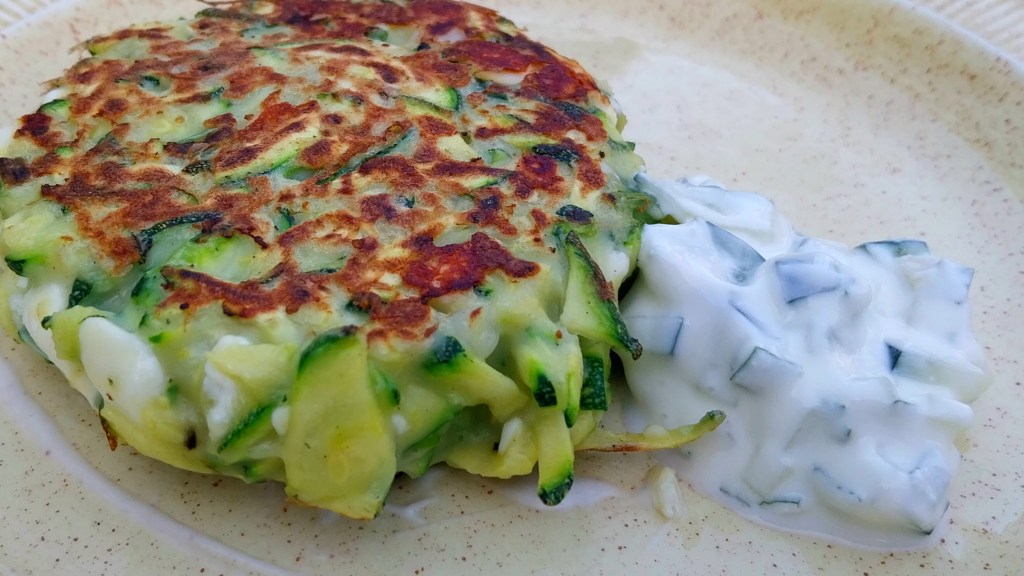
Here’s a dish that really does make the best of all the seasonal summer produce around at the moment. It’s a great way to use up some of the Jenga-like pile of organic courgettes that builds up on the ADK Kitchen table around this time of year – 3 medium-sized ones went into this batch of fritters, and the taste works really well with the chunks of creamy feta.

The scallions are also fresh from the garden, as are the cucumber and mint leaves in the cooling raita served alongside.

An excellent choice for a summer evening meal on the patio – maybe to celebrate the second birthday of A Different Kitchen! More of that in a moment…

Servings

This will make 4 fritters.

Timings

15 mins to make and about 10 mins to fry.

You Will Need

  • 350g courgettes (around 3 medium-sized ones)
  • 100g feta cheese
  • 3 – 4 scallions (spring onions)
  • 50g plain flour
  • 1 egg
  • oil for frying

For the raita:

  • 4 – 5 dessert spoonfuls of natural yoghurt
  • 3 – 4 slices of cucumber, finely chopped
  • 4 – 5 leaves of fresh garden mint, finely chopped

Method

  1. Wash the courgettes and trim off the ends. Grate coarsely, either by hand or (as I did) using the speed grating tool on the food processor. Tip into a large mixing bowl.
  2. Chop the feta into cubes and add to the grated courgette. Chop the scallions into little rounds and add also.
  3. Sieve in the plain flour and crack in the egg. Now the fun begins – having washed and dried your hands, plunge them into the bowl and squish all the ingredients together between your fingers to make a well-mixed courgette batter.
  4. Next, make the raita by combining the yoghurt, cucumber and mint in a small bowl. Stir and place in the fridge until it is time to serve (for the avoidance of doubt, no plunging of fingers is required for this bit 🙂 )
  5. Warm a drizzle of oil in a frying pan. When sizzling, lift in a handful of the courgette batter. Put in another alongside and let them cook.
  6. After a minute or so, give them a gentle push around the pan with a spatula, to make sure they are not sticking. After 3 – 4 minutes, lift each fritter carefully with the spatula and flip them over, to cook on the other side.
  7. After another 3 – 4 mins, remove each fritter to a plate and keep warm. Repeat the process with the rest of the batter, to make another 2 fritters.
  8. Plate up the fritters and serve with the bowl of raita as a side.

Customise it!

Some recipes for courgette fritters advise to squeeze the water from the veg at the outset. I didn’t do this and it didn’t cause any problems, however – just sayin’.

If you wish, you could add some lemon zest, crushed garlic and ground black pepper to the batter, before cooking. Additional salt shouldn’t be necessary as there is some already in the feta.

The height of summer brings a second birthday for A Different Kitchen: that’s 2 years, 222 posts, and 3.5k followers from all around the world, now over 3 online platforms. Sadly, WordPress stats can’t tell me how much self-raising flour, caster sugar, extra virgin olive oil, garlic cloves etc have been consumed in that time, but I reckon it’s enough to fill a small branch of Tesco Express.

Maybe that’s something the WordPress engineers could get on to before next year’s anniversary? Cool – always happy to give feedback 🙂 .

Here’s Depeche Mode with World in My Eyes.

Categories
Mains Recipes

Summer Greens over Chorizo Hash

It’s the time of year when freshly picked, green summer veg is coming into the ADK Kitchen on a daily basis. French beans, mange tout, cavalo nero, cabbage leaves – they’re all tasty and nutritious, needing just the lightest touch in cooking, usually no more than a few minutes in the steamer basket.

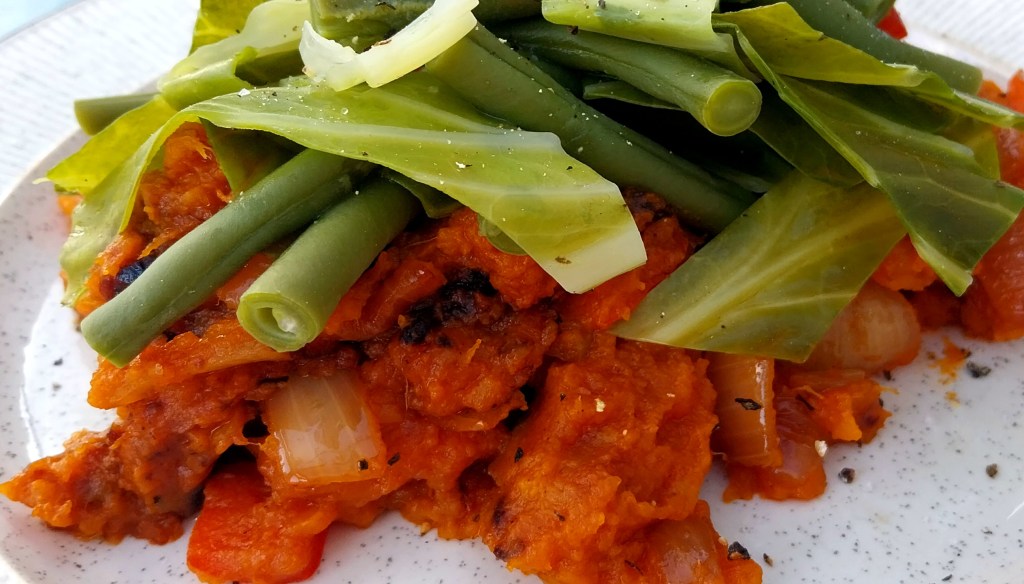
In a continuous challenge to find new, tasty ways to serve up this delightful produce, this dish sees it generously topped over sweet potato and chorizo hash. The spicy, saltiness of the hash complements the natural simplicity of the veg, while the scent, and the bright orange and red underneath that summer garden green, ensures this is a feast for all the senses.

Servings

A main meal for 2.

Timings

20 mins to prepare/cook.

You Will Need

  • 1 medium to large sweet potato
  • around 20 French beans, ends trimmed, and cut into 3cm pieces
  • 4- 5 cabbage leaves, cut into shreds
  • a knob of butter
  • 225g spanish chorizo ring, sliced
  • 1 onion, chopped
  • 1 red pepper, chopped
  • a few splashes of tomato passata

Method

  1. Peel the sweet potato and cut into 1 – 2cm chunks. Place in a saucepan of water and bring to the boil. Reduce to a simmer.
  2. After 5 mins, place the beans and cabbage in a steamer basket and put it on top of the saucepan. Bring the water back to the boil then reduce to a simmer again. Cover with a lid and leave to simmer for 10 more mins.
  3. Meanwhile, put the chorizo, onion and pepper in a frying pan and stir over a medium heat. There is no need to add oil, garlic or spices as the chorizo already contains everything required!
  4. When the sweet potato has boiled, drain it and mash with the butter. Tip into the frying pan with the passata. Turn up the heat and stir in – you want the liquid to begin to evaporate and get some of the underside pieces crispy and charred.
  5. When cooked to your desired texture, mound the hash up on 2 plates. Take the greens from the steamer and plonk them on top. It should all look as in my photo at the top of the post.

Customise it!

Basically, anything green and seasonal goes here – broad beans, runner beans, garden peas, mange tout, cavalo nero etc will all look and taste great.

Staying on theme for the next track on the ADK Playlist, I did toy momentarily with the New Order track Everything’s Gone Green (it being an apt description of the ADK Kitchen table these past few days). However, I’ve plumped in the end for one of many tracks I love by Scritti Politti (the lead singer being the very talented Green Gartside 🙂 ). Here they are with Boom! There She Was.